


Landing in Calgary on your way to Banff National Park is a classic Canadian Rockies arrival. The question many travelers face in 2026 is simple but important: is Calgary worth more than a quick overnight, or should you grab your rental car and head straight for the mountains? The answer depends on how much time you have, what you like to do, and how you want to balance urban energy with alpine scenery.
Get the latest updates straight to your inbox!
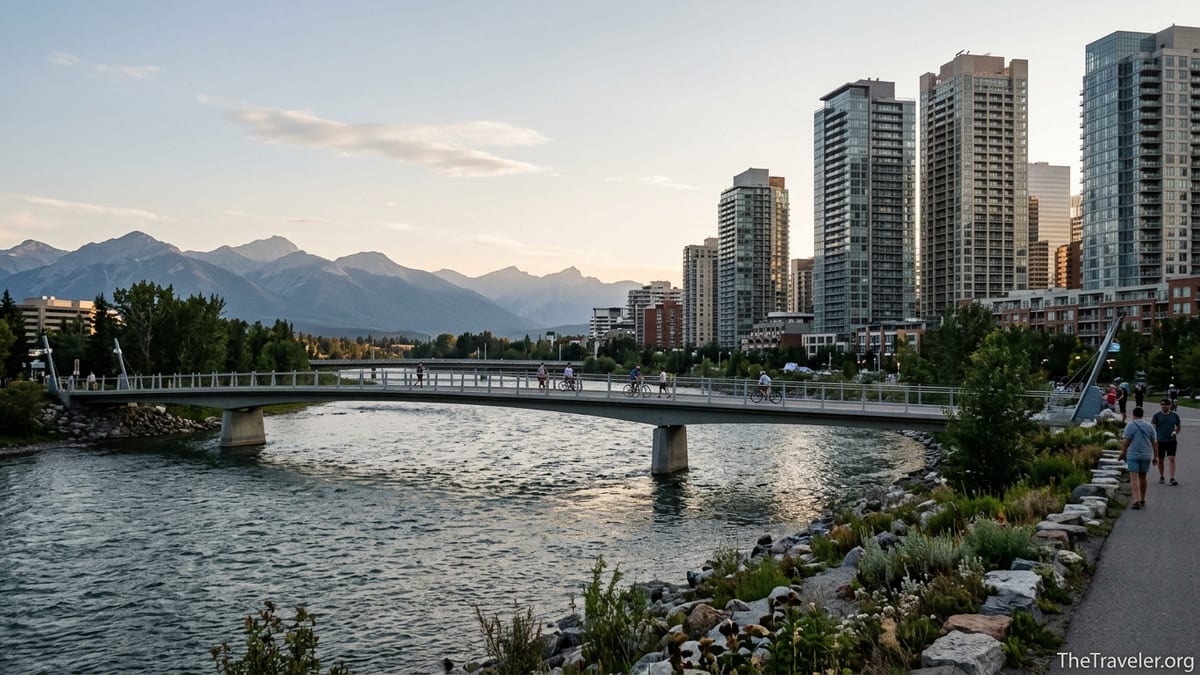
Calgary vs Banff at a Glance
Calgary and Banff offer very different experiences. Calgary is a modern prairie city of well over a million people with a lively food scene, major events and easy transit. Banff is a small resort town inside Canada’s first national park, surrounded by jagged peaks, turquoise lakes and hiking trails. On a typical first trip, most visitors are drawn more strongly to Banff, but Calgary can add context, culture and convenience to a Rockies itinerary.
From Calgary’s downtown, you are roughly a 90-minute drive from the Banff townsite along the Trans Canada Highway, a route that leaves the flat prairie and gradually climbs through rolling foothills into the Rockies. Many visitors underestimate how dramatic this transition feels; even the drive itself is often described as part of the experience. Banff’s town center is compact and walkable, while Calgary’s core spreads along the Bow River with distinct neighborhoods like the East Village, Kensington and 17th Avenue.
In practical terms, Banff is usually more expensive for lodging and dining, and it operates with the rhythms of a resort: busy weekends, seasonal crowds and a strong focus on outdoor activities. Calgary tends to offer a broader range of prices and a more local vibe, along with big-city services like large supermarkets, gear shops and medical facilities that can be useful before or after time in the mountains.
What Calgary Offers That You Will Not Get in Banff
Calgary is worth visiting if you enjoy urban culture, food and events in addition to mountain scenery. Tourism Calgary highlights more than a hundred things to do in and around the city, from major attractions such as the Wilder Institute/Calgary Zoo and Heritage Park Historical Village to newer food halls, breweries and public art along the Bow River pathway. Recent guides emphasize that Calgary remains one of Canada’s sunniest large cities with an extensive system of riverfront trails, so you can still be active outdoors without leaving town.
For many visitors, the city’s character really comes through in its neighborhoods. A common pattern is to spend an afternoon wandering 17th Avenue SW for patios and independent restaurants, then move on to Inglewood for craft breweries and live music in the evening. On another day you might head up to the Calgary Tower area and the East Village, combining a visit to the National Music Centre with a walk or scooter ride along the river. These are experiences Banff does not replicate; there you will find more souvenir shops and hotels than diverse city districts.
Timing your visit can make Calgary particularly appealing. In early July, the Calgary Stampede transforms the city with rodeos, concerts and pop-up pancake breakfasts on downtown sidewalks. In winter, the city hosts hockey games, festivals and outdoor skating, creating an atmosphere that is very different from Banff’s quieter, snow-bound evenings. Travelers who like nightlife, concerts or big sporting events will find far more options in Calgary, especially if they stay two or three nights.
Why Banff Still Steals the Spotlight
Banff’s pull is simple: world-class scenery in every direction. The town sits within Banff National Park, a protected area of more than six thousand square kilometers of mountain landscapes. A standard first-day circuit might include strolling Banff Avenue with its views toward Cascade Mountain, soaking in the Banff Upper Hot Springs, and driving the short but panoramic route up to viewpoints such as Surprise Corner, which looks across to the historic Fairmont Banff Springs Hotel.
Within an easy drive, you can reach iconic spots such as Lake Minnewanka, Johnston Canyon and, further afield, Lake Louise and Moraine Lake. These names show up on calendars and social media feeds worldwide for a reason. For hikers, the access to trails from town is exceptional compared with most cities. Even modest walks, such as the Bow River trail in Banff or the short climb up Tunnel Mountain, reward you with the kind of mountain views that simply do not exist in Calgary.
Most travelers who have limited time in the Rockies prioritize nights in or near Banff, Canmore or Lake Louise because they want to wake up in the mountains and avoid commuting back and forth from the city. Sunrise and sunset are often when the light is best for photography and when wildlife such as elk or bighorn sheep are most active near the roads. Staying in Banff gives you the flexibility to head out early for parking-sensitive spots, rest midday, then go back out in the evening without a long drive.
Time, Budget and Logistics: How a Calgary Stop Changes the Math
Your decision about whether to linger in Calgary or head directly to Banff often comes down to time and money. As of 2026, typical hotel rates in downtown Calgary commonly fall in the mid-range price bracket, with business hotels and chains offering competitive weekend rates when conference traffic is lighter. In contrast, rooms in Banff and nearby mountain resorts are often significantly higher on peak summer dates, reflecting strong demand in one of Canada’s most popular national parks.
If you arrive late at night, spending your first evening in Calgary can make sense purely from a safety and comfort perspective. Night driving to Banff, especially after a long flight, means tackling an unfamiliar highway in potential wildlife zones when you are tired. Booking an airport or downtown Calgary hotel, having a proper meal, and starting the drive rested the next morning is a common strategy. Travelers who have done this often comment that watching the mountains emerge gradually on that first morning drive feels like a memorable start to the trip.
Transport logistics also matter. From Calgary’s city center and the airport, several shuttle and bus operators run services to Banff, with one-way fares commonly starting around the equivalent of a modest restaurant meal. In recent seasons, companies like The Canada Bus and other private shuttle services have offered routes that pick up at downtown hotels or near the airport and drop travelers in Banff’s town center or at specific hotels. Services and timetables shift year to year, so checking current schedules and whether regional options like On-It transit are running in a given summer is essential.
For those renting cars, Calgary is where you will likely comparison-shop vehicle classes and pickup locations. Airport rentals can be more expensive than in-town branches, particularly in peak summer. Some travelers choose to spend a day or two in downtown Calgary without a car, using the CTrain and rideshares, then pick up a rental at a city location just before heading to Banff to save on costs and parking fees.
Sample Itineraries: When to Stay in Calgary and When to Skip It
On a very short trip of three or four days focused mainly on scenery, many travelers choose to go almost directly to Banff. A common itinerary looks like this: overnight in an airport hotel after a late arrival, then drive to Banff the next morning and spend all remaining nights in the park or in nearby Canmore. In this scenario, Calgary functions as a convenient gateway, and the limited time is better spent on mountain viewpoints, lakes and short hikes.
If you have five to seven days, adding at least one full day and night in Calgary becomes more attractive. For example, you might land in the afternoon, check into a downtown hotel, walk the river pathways and have dinner in Kensington. The next morning, after brunch and a visit to the zoo or Heritage Park, you would drive to Banff in the mid-afternoon, arriving in time for an evening walk along the Bow Falls trail. On the way back to the airport at the end of your trip, you could then stop at an outlet center in Calgary’s southeast for last-minute shopping.
On longer trips, some visitors anchor their arrival and departure days in Calgary and spend the middle portion entirely in the Rockies. This works particularly well for families. Parents can let kids burn off energy at city playgrounds and pools while adjusting to the time zone, then head to Banff for a deeper dive into hiking, canoeing or gondola rides. Returning to Calgary for the final night puts you close to the airport and opens up one last dinner in a neighborhood you may not have explored earlier.
There are also travelers who prefer to base themselves in Calgary for cost reasons and do day trips to Banff. This is physically possible, especially in summer when daylight is long; the drive each way typically takes around an hour and a half in good conditions. A sample day might involve leaving Calgary by 7 a.m., arriving in Banff mid-morning, hiking Johnston Canyon, having late lunch in town and driving back in the evening. The trade-off is spending three hours each day on the highway rather than waking up in the mountains.
Who Should Prioritize Calgary, Who Should Not
Calgary deserves at least a full day if you enjoy cities with a strong local dining scene, craft breweries and cultural attractions. Solo travelers and couples who like to explore neighborhoods on foot or by scooter, try different coffee shops and browse galleries will find plenty to do. Visitors who happen to be in town during major events such as the Calgary Stampede, the Folk Music Festival or large sporting tournaments often find the city atmosphere alone justifies an extra night or two.
Families with younger children often appreciate Calgary’s mix of kid-friendly attractions and wide-open play spaces after a long flight. A full afternoon at the zoo or a visit to a science center can be easier with strollers and nap schedules than starting immediately with higher-elevation hikes in Banff. Parents also like having access to large supermarkets and pharmacies in Calgary to stock up on snacks, diapers or medications before heading into the park, where options are more limited and prices tend to be higher.
On the other hand, if your main goal is alpine scenery, hiking and quiet evenings under the stars, Banff should hold the bulk of your nights. Travelers who have already visited major cities like Vancouver, Toronto or Montreal on the same trip sometimes choose to minimize time in Calgary because they feel that one large Canadian city is enough and that their remaining days are better spent in the Rockies. People who are highly sensitive to budget may also aim to split time between Banff and the slightly more affordable mountain town of Canmore rather than using Calgary as their primary base.
Seasonality matters too. In shoulder seasons like late October or early May, Banff can be quieter, and some higher-elevation roads or trails may still be snow-covered or closed. In those windows, an extra day in Calgary visiting museums, restaurants and indoor markets can be a smart hedge against unpredictable mountain weather. In midsummer, when Banff’s trails and lakes are at their best but parking and crowds peak, you might prefer to spend almost every available night close to the mountains to make early starts easier.
The Takeaway
Deciding whether Calgary is worth a proper visit or primarily a gateway to Banff is less about one place being better than the other and more about matching each destination to your interests and schedule. For trips of three or four days devoted almost entirely to mountain scenery, it usually makes sense to head to Banff as soon as you are rested enough to drive safely, using Calgary mainly as an arrival and departure hub.
Once you have five days or more, deliberately including at least one full day in Calgary can pay off. You gain a taste of Alberta’s urban culture, benefit from easier logistics for shopping and transit, and still have plenty of time among peaks and lakes. Travelers who enjoy both city life and the outdoors often find the combination of a Calgary city break followed by several days in Banff and Lake Louise makes the whole trip feel more complete.
There is no rule that you must choose one or the other. In 2026, with improved visitor information, reliable shuttle options and a growing calendar of events in both places, it has never been simpler to design an itinerary that starts with skyline sunsets over the Bow River and ends with sunrise over a glacial lake. Used thoughtfully, Calgary is more than just a stop on the way to Banff; it is part of the story of a Rockies journey.
FAQ
Q1. Is Calgary worth visiting if I only care about scenery?
Calgary has attractive river pathways and distant mountain views, but if your main priority is dramatic alpine scenery, it is better to focus most of your time in Banff and nearby mountain areas, using Calgary mainly as a travel hub.
Q2. How many days should I spend in Calgary before going to Banff?
Many travelers find that one full day and one or two nights in Calgary is enough to see key neighborhoods and attractions before moving on to Banff, unless you are visiting during a major event like the Calgary Stampede and want more time.
Q3. Is it cheaper to stay in Calgary and do day trips to Banff?
Hotel rates in Calgary are often lower than in Banff, especially on busy summer weekends, so day trips can save on accommodation, but you should factor in rental car costs, fuel, highway time and any national park fees when comparing the overall expense.
Q4. Do I need a car to get from Calgary to Banff?
No, several shuttle and bus companies operate between Calgary and Banff, including services that pick up at downtown hotels or the airport, though availability and schedules change each season, so it is important to confirm current options before you travel.
Q5. Is driving from Calgary to Banff at night safe?
The highway is well maintained, but night driving is less ideal because of reduced visibility, potential wildlife on the road and traveler fatigue after flights, so many visitors choose to stay in Calgary on late arrival and drive to Banff the following morning.
Q6. When is the best time to include Calgary in a Banff trip?
Calgary is especially rewarding to include during major festivals, concerts or sports events, and in shoulder seasons when mountain weather can be unpredictable and you may appreciate having more indoor attractions available.
Q7. Can I visit Banff as a day trip from Calgary without feeling rushed?
You can see some highlights on a day trip if you leave Calgary early and return late, but you will spend several hours driving, so most people prefer at least one or two nights in or near Banff for a more relaxed experience.
Q8. Is Calgary a good base for families visiting Banff?
Calgary can be a helpful base at the start or end of a family trip thanks to its kid-friendly attractions and services, but for easy access to lakes and trails, families usually spend most nights in Banff or nearby mountain towns.
Q9. Should I stay in Calgary at the end of my Banff trip before flying out?
Staying in Calgary the night before an early flight is often more relaxing than driving from Banff on the same morning, especially in winter or during busy summer weekends when highway traffic and conditions can be unpredictable.
Q10. If I have one extra night, should I add it to Calgary or Banff?
If you already have ample time in the mountains and enjoy urban food, nightlife or shopping, adding the night to Calgary makes sense; if your mountain time is short and scenery is your priority, add that extra night to Banff instead.