


Banff National Park has never been more famous. Social media feeds are full of Lake Louise’s turquoise water and Moraine Lake’s jagged peaks, and record-breaking visitor numbers prove people are showing up in person too. In 2025 the park welcomed roughly 4.5 million visitors, its highest total on record, and local authorities report vehicle counts through the tiny town of Banff climbing year after year. For travelers, that raises a fair question: is Banff still worth visiting, or has it become a victim of its own success?
Get the latest updates straight to your inbox!
The Crowds: Just How Busy Is Banff Now?
Banff National Park is no longer a “hidden gem.” Parks Canada data shows visitation has grown roughly 30 percent over the past decade, and recent management reports indicate the park now sees more than 4.5 million visitors a year, with the sharpest spike between June and September. On peak summer days, the town of Banff, which covers only about four square kilometers, records more than 24,000 vehicles entering. Local traffic managers openly acknowledge that when vehicle counts hit that threshold there is almost guaranteed congestion somewhere in town.
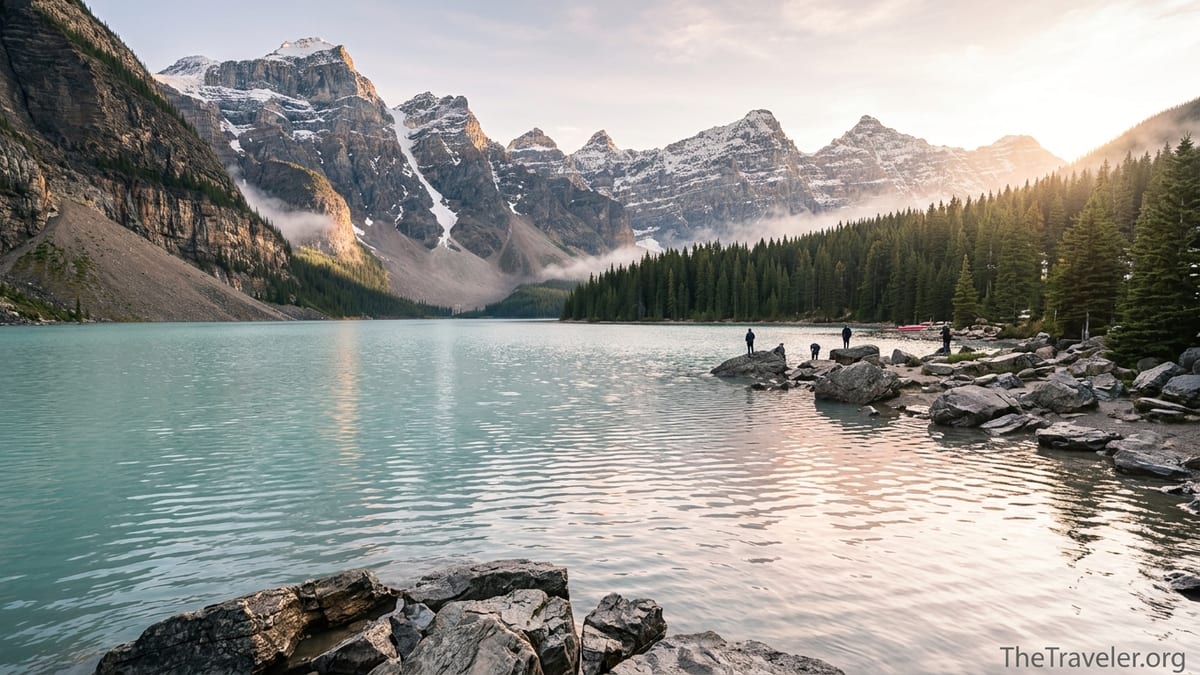
That demand is concentrated in a handful of world-famous hotspots. Lake Louise and Moraine Lake are the clearest examples. At Lake Louise, paid parking in the lakeshore lot often sells out early in the morning during summer, and day visitors who arrive after 8 or 9 a.m. can find gates closed and digital signs on the highway indicating lots are full. Moraine Lake has become even more tightly controlled. Since 2023, private vehicles have been banned from the Moraine Lake Road; access is now limited to Parks Canada shuttles, Roam public transit and a small number of commercial tour operators. For anyone imagining a spontaneous midday visit by car, that era is over.
Even on the trails, you will not always feel alone. Popular hikes such as Johnston Canyon, the Lake Agnes Tea House trail above Lake Louise, and the shoreline paths at Moraine Lake can feel like promenades at midday in July and August. Visitors report queueing to take a photo at the “Instagram spots” on the Rockpile at Moraine Lake or the lower falls catwalk in Johnston Canyon. The reality is that Banff now operates on a scale closer to Yellowstone or Yosemite in the United States, not a quiet mountain backwater.
Yet it is important to note that the intensity is very uneven. While the main viewpoints can feel like outdoor malls, many backcountry valleys, secondary peaks, and even roadside pullouts remain quiet, especially outside the peak midday window. Understanding that contrast is key to deciding whether Banff is “too touristy” for your taste.
Why People Still Fall in Love With Banff
Despite the crowds, Banff’s pull is powerful for good reason. The combination of glacier-fed lakes, steep limestone peaks and accessible viewpoints is rare even among mountain destinations. Within a single three-day visit it is possible to watch sunrise at Vermilion Lakes with Mount Rundle reflecting in glassy water, ride a gondola to panoramic ridgelines above town, paddle on a turquoise lake, and drive the Icefields Parkway past hanging glaciers and sheer rock walls. Few destinations combine that variety with paved roads and well-run visitor services.
Lake Louise and Moraine Lake are obvious headliners, but they are only part of the story. A short drive from Banff town, the Minnewanka Loop offers quieter viewpoints over Lake Minnewanka and Two Jack Lake, where you can often rent a canoe without major lineups and find picnic spots with relatively few people, especially in the evening. The Bow Valley Parkway, an older parallel route to the Trans-Canada Highway, winds through forest and meadows and offers access to lesser-known stops such as Silverton Falls or the tranquil shoreline at Baker Creek. Wildlife sightings are common here in the early morning, and traffic speeds are lower than the main highway, contributing to a much calmer feel.
For hikers willing to go beyond the top ten lists, Banff still feels wild. Trails like Healy Pass near Sunshine Village, the Sawback area, or longer routes toward Egypt Lake have long stretches where you might meet only a handful of people, even in high season. In autumn, larch forests in places such as Arnica Lake or Gibbon Pass turn gold, offering an experience similar in beauty to the famous Larch Valley above Moraine Lake, but without the parking bans and shuttle logistics.
The town of Banff itself adds another layer of appeal. Yes, it can feel commercial, with brand-name outdoor retailers and busy patios along Banff Avenue, but it also provides comforts that many mountain towns lack. It is possible to arrive on a late-night shuttle from Calgary, check into a mid-range hotel, grab groceries or a casual dinner, and be on a trail early the next morning without needing a car. For some travelers, that balance of dramatic nature and small-town conveniences is exactly what makes the destination worthwhile, even if it means sharing the sidewalk with other visitors.
How Overtourism Shows Up on the Ground
To gauge whether Banff is “too touristy,” it helps to visualize what overtourism looks like there in practice. The most visible symptom is traffic. On a busy Saturday in July, you might encounter a slow-moving line of cars crawling into town from the highway, with electronic signs directing drivers to a large free lot near the train station instead of central streets. Within the townsite, paid parking in the core pushes longer-stay visitors to peripheral areas, and local authorities have invested in express bus lanes to shuttle people between hotels, trailheads and attractions such as the Banff Gondola.
At icon sites, overtourism takes the form of capacity limits and reservation systems. For example, reaching Moraine Lake now requires a pre-booked shuttle ticket from a designated park-and-ride near Lake Louise or a seat on Roam regional transit. In summer 2024, Parks Canada shuttles cost roughly the price of a casual sit-down lunch per adult, with children discounted, and many departures sold out within minutes when new blocks of seats were released in spring. Travelers who missed those early sales sometimes scrambled for “last-minute” releases two days prior to their target date, refreshing browsers at set times and still facing disappointment when popular sunrise slots vanished in seconds.
Accommodation pressure is another front. Banff and Lake Louise have a fixed number of hotel rooms and campground sites by design, to protect the park’s ecological integrity. On long weekends and in peak summer, mid-range hotels that might cost a moderate amount in shoulder season can double in price, and vacancy becomes scarce. Even simple front-country campgrounds near the Bow River or Tunnel Mountain can book out as soon as reservations open, leaving late planners with overflow sites or less convenient options outside the park.
These pressures affect the character of the experience. In the height of summer it is common to hear multiple languages on every street corner, see busloads of day trippers unloading near the gondola, and find tour groups gathering around interpretive signs. For some visitors, that cosmopolitan energy is exciting; for others seeking solitude, it is exactly what they hope to escape by heading into nature, and it can make Banff feel more like an outdoor resort complex than a wilderness park.
What Banff Is Doing to Manage the Crowds
Banff is not ignoring the problem. Parks Canada, the Town of Banff and Banff & Lake Louise Tourism have spent the past several years rolling out measures intended to shift people out of private vehicles and spread visitation more evenly. The Moraine Lake vehicle ban and shuttle system are the most high-profile of these steps. By removing private cars from the narrow access road and relying on shuttles, Roam buses and commercial operators, managers have sharply reduced the chaotic pre-dawn lineups of cars that once backed up onto the main highway, creating safety and wildlife issues.
At Lake Louise, paid parking has been introduced during peak season at the lakeshore, and overflow lots on the highway are tied to shuttle systems that route visitors to either Lake Louise or Moraine Lake. Roam public transit has expanded routes that connect the town of Banff to Lake Louise and nearby attractions, offering tap-on fares and day passes that can be more economical than paying daily parking fees. Local authorities frame these changes not just as crowd control but as part of a broader “transportation shift” campaign encouraging people to leave their cars at their hotels or the free train station lot and explore by bus, bike or on foot.
Within the townsite, traffic management plans include paid parking in the downtown core, one-way street adjustments and dedicated bus lanes on busy corridors, such as the road to the Banff Gondola and hot springs area on Sulphur Mountain. The goal is to keep visitor vehicles from endlessly circling for a spot while still making it feasible for day visitors to park once and then move around by shuttle or on foot.
From a visitor’s perspective, these measures can be a mixed blessing. On one hand, they reduce random gridlock and make wildlife corridors safer. On the other, they add layers of planning, from booking shuttle seats months ahead to deciphering which pass covers which routes. Travelers who arrive expecting a simple, drive-up-to-every-viewpoint kind of national park can be surprised by how urban the logistics feel. Understanding the system in advance is now part of making Banff feel rewarding instead of frustrating.
Who Will Find Banff Worth It, and Who Might Not
Whether Banff is “too touristy” really depends on what you want from a trip. If your dream is to see a few world-famous sights efficiently, enjoy comfortable lodgings, and have a choice of restaurants and cafes in the evening, Banff remains a superb destination. Families with children often appreciate the paved trails around Bow Falls or the short boardwalks at the Cave and Basin historic site, as well as the relative security of well-marked, popular paths and the availability of guided tours and rental gear.
Photographers who like early mornings may also find Banff far from overrun. In high season, a sunrise session at Two Jack Lake, Vermilion Lakes or Peyto Lake often includes a handful of other tripods rather than crowds. By mid-morning, those same locations can be busier, but they rarely reach the density seen at the most iconic Moraine Lake rockpile viewpoint. Travelers who plan their days around first light and late evening frequently report that Banff still feels peaceful, even in August.
On the other hand, if your ideal national park experience centers on long, quiet days without seeing many people, Banff’s front-country may not fit. You will share space at major attractions, and even some moderate trails are busy for the first few kilometers. Visitors who dislike structured logistics might also feel that shuttle reservations, timed entries and parking rules sap some of the spontaneity they seek. For these travelers, nearby alternatives such as Jasper National Park to the north, or provincial parks in British Columbia and Alberta, can offer similar scenery with fewer people, albeit with more limited services.
Budget-conscious travelers also need to weigh whether the combination of park entrance fees, transport costs and accommodation prices aligns with expectations. An example itinerary for a couple in peak summer might include a national park day pass, a round-trip shuttle to Moraine Lake, mid-range hotel rates that spike on weekends, and restaurant meals priced similarly to major North American cities. For many visitors this is a fair trade for a once-in-a-lifetime landscape; for others, it may push Banff into “overhyped and overpriced” territory, especially when compared to less famous but cheaper mountain regions.
Strategies to Experience Banff Without the Worst of the Crowds
If you decide Banff is worth it, a few practical choices can dramatically improve your experience. The first is timing. Visiting in late May or early June, or again in late September, generally means cooler temperatures and a higher chance of snow patches at altitude, but also noticeably lighter crowds. During these shoulder seasons, shuttle buses still run to major lakes, but parking, restaurant reservations and trailhead congestion are less intense. Winter, from December to March, transforms Banff into a ski and snowshoe destination. While certain attractions, like Moraine Lake, are inaccessible, the overall vibe is quieter and more local, aside from holiday periods.
Time of day matters just as much. Even in July, arriving at Lake Louise or a popular trailhead before 7 a.m. can feel almost serene compared to midday. Many visitors sleep in or linger over breakfast in town, so those willing to start early often enjoy cooler temperatures, easier photography conditions and more wildlife sightings. Likewise, evenings after 6 or 7 p.m. can be magical around lakes such as Minnewanka, Two Jack or Johnson Lake, when day-trippers have returned to Calgary and the last tour buses have departed.
Route choice is another powerful lever. Instead of spending all your time at the top three attractions, consider building an itinerary around a mix of classics and lesser-known stops. For instance, you might devote one sunrise to Lake Louise but spend the rest of the day exploring the Bow Valley Parkway and its quieter trailheads, or trade Johnston Canyon’s crowds for nearby alternatives with similar canyon scenery but fewer people. On the Icefields Parkway, pulling over at unnamed viewpoints or smaller trailheads between the Columbia Icefield and Saskatchewan River Crossing can yield wide-open vistas with only a handful of other visitors.
Finally, consider leaving the car parked. Many Banff hotels and campgrounds are within walking distance of transit stops, and Roam buses link the town with nearby attractions as well as Lake Louise. Using transit removes the stress of hunting for parking and often saves money once you factor in park entry and parking fees. Some visitors also find that traveling by bus or shuttle shifts their mindset from “racing between checklists” to a slower pace that fits better with the park setting.
The Takeaway
Banff National Park has undeniably become busier and more complex to visit. Record-breaking attendance, shuttle reservation systems and downtown traffic management are signs of a destination grappling with its own popularity. For travelers who remember quieter days a decade or two ago, the current reality can feel jarring, and for purists who equate national parks with near-solitude, Banff’s front-country will likely feel too touristy.
Yet the core reasons Banff became famous have not changed. The mountains still rise sharply from the valleys, the lakes still glow in improbable shades of blue, and wildlife still moves through forests and meadows just beyond the busiest viewpoints. With realistic expectations, thoughtful timing and a willingness to look beyond the most shared Instagram spots, many visitors still come away from Banff deeply moved rather than disappointed.
If you value easy access, infrastructure, and the chance to see some of the world’s most recognizable alpine scenery in a relatively short trip, Banff remains well worth visiting. If your priority is unstructured solitude above all else, you may be happier treating Banff as a brief gateway to quieter corners of the Rockies rather than your main base. In the end, Banff is not ruined, but it is no longer simple. Whether it is “too touristy” is less a verdict on the park and more a question of how you choose to experience it.
FAQ
Q1. Is Banff National Park still worth visiting in 2026 despite the crowds?
Yes, for most travelers Banff is still worth visiting. The scenery remains spectacular and management measures like shuttles and paid parking, while sometimes inconvenient, help keep the most popular areas functioning. If you plan around peak times and mix famous spots with quieter areas, you can still have a rewarding experience.
Q2. When is the best time to visit Banff to avoid the worst of the crowds?
Late May to early June and late September are usually the best balance between open facilities and lighter visitation. Summer school holidays, especially July and August weekends, are the busiest. Winter can also be pleasantly uncrowded away from ski hills and holiday periods, although some roads and attractions are closed.
Q3. How bad is traffic and parking in Banff during peak season?
In July and August, expect heavy traffic into the townsite and limited central parking after mid-morning. Paid parking in the downtown core encourages visitors to use a large free lot near the train station and switch to walking or local buses. At Lake Louise, the lakeshore lot often fills early and Moraine Lake is entirely closed to private vehicles in summer.
Q4. Do I really need to reserve shuttles for Lake Louise and Moraine Lake?
For Moraine Lake in summer, yes. Access is by Parks Canada shuttles, Roam transit or commercial tours, and seats on early buses can sell out quickly. For Lake Louise, reserving a shuttle or arriving very early to park is strongly recommended in peak season. Without reservations or an early start, you may be turned away when lots are full.
Q5. Is Banff too touristy if I want a more wilderness-style experience?
The main attractions and townsite will likely feel busy if you are seeking solitude. However, many longer hikes and backcountry areas are still relatively quiet, particularly at sunrise, on shoulder-season weekdays or beyond the first few kilometers of popular trails. For a consistently quieter feel, some travelers combine a short Banff stay with more time in nearby parks such as Jasper.
Q6. How expensive is a trip to Banff compared with other mountain destinations?
Banff is not a budget destination. In summer, mid-range hotel rates in town often rival those in major North American cities, and park entry, shuttle fares and restaurant meals add up. Visiting in shoulder seasons, cooking some meals, staying in campgrounds or basic lodgings, and using public transit instead of paid parking can help manage costs.
Q7. Can I enjoy Banff without renting a car?
Yes. Many visitors base themselves in the town of Banff and rely on Roam public transit, hotel shuttles and Parks Canada buses. You can reach popular sites such as Lake Louise, the Banff Gondola area, and several lakes and trailheads this way. A car provides more flexibility for early starts and less-visited areas, but it is not strictly necessary.
Q8. Are there still quiet places to go in Banff if I avoid the famous lakes?
Yes. Areas such as the Bow Valley Parkway, lesser-known day hikes, and certain lakes near Banff town can be much calmer, especially early or late in the day. Even along the busy Icefields Parkway, many pullouts and trailheads see far fewer people than the marquee viewpoints. Spending time in these spots can balance out the busier highlights.
Q9. How far in advance should I plan a Banff trip now?
For peak summer, it is wise to book accommodation several months ahead and monitor when campground and shuttle reservations open. Shoulder-season trips offer more flexibility, but popular weekends and holidays still fill quickly. Leaving plans to the last minute in July or August risks limited lodging options and difficulty securing shuttle seats to Moraine Lake and Lake Louise.
Q10. If Banff sounds too busy for me, where else should I consider?
If Banff’s crowds are a concern, consider splitting your time with Jasper National Park, Kootenay or Yoho National Parks, or provincial parks in Alberta and British Columbia. These areas often have similar alpine scenery with fewer visitors and less complex logistics, though services and transit options are more limited than in Banff.