


Spreading out the cost of a big trip can be tempting, especially when a glossy "Pay in 4 with PayPal" button pops up at checkout. From flights to vacation rentals, PayPal Pay Later is now woven into many booking flows, promising interest-free installments or longer-term financing. But should you actually trust PayPal Pay Later to fund your next vacation, or are you setting yourself up for nasty surprises just when you should be relaxing on a beach?
Get the latest updates straight to your inbox!
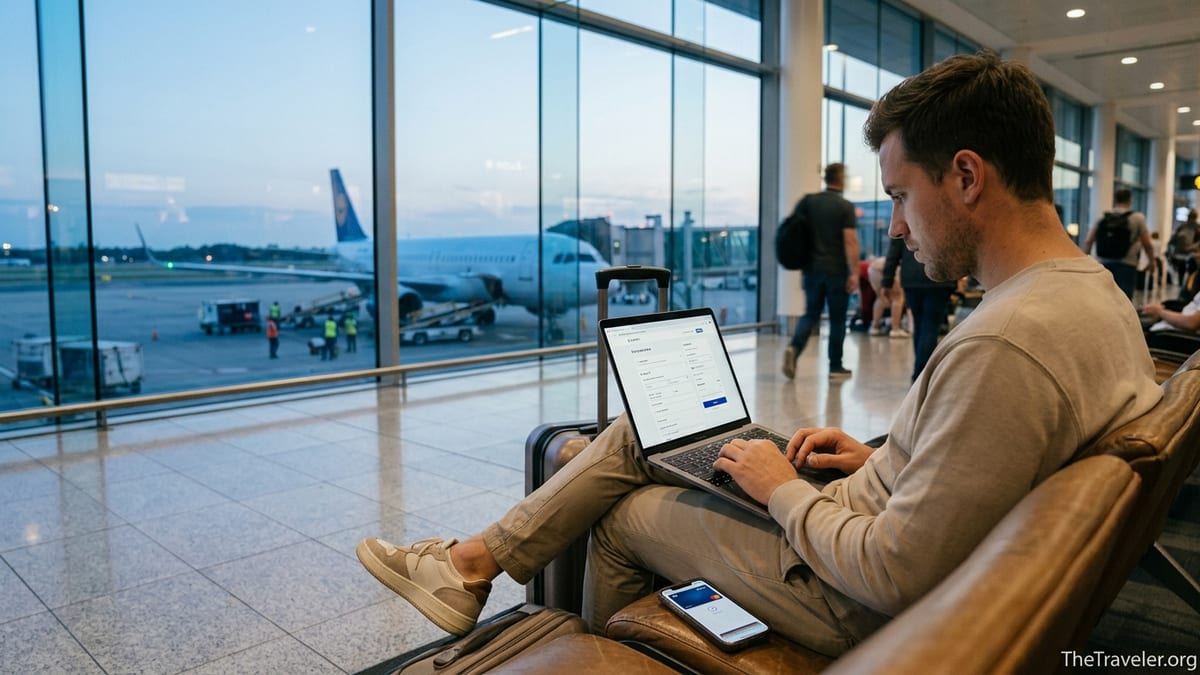
How PayPal Pay Later Works for Travel in 2026
PayPal Pay Later is PayPal’s family of buy now, pay later products that let eligible customers split purchases into installments instead of paying the full cost up front. In the United States, the two main options travelers see at checkout are PayPal Pay in 4 and PayPal Pay Monthly. Pay in 4 typically covers purchases between about 30 and 1,500 dollars, split into four interest-free payments taken every two weeks: one down payment at booking and three follow-up payments. Pay Monthly is aimed at bigger-ticket purchases, often from 49 to 10,000 dollars, repaid over 3 to 24 months with a fixed annual percentage rate that can range roughly from around 10 percent to well above 30 percent depending on your credit profile.
For travel specifically, PayPal actively markets Pay Later for flights, hotels, and vacation packages. A round-trip flight from New York to Paris priced at 900 dollars on a major online travel agency might show Pay in 4 as “4 payments of 225 dollars,” due every two weeks starting today. A 3,000 dollar all-inclusive resort package in Mexico on a site that supports PayPal Pay Monthly might show an option such as “12 monthly payments of about 290 dollars,” once interest is included. You still board the plane and check into your hotel like any other traveler. In the background, PayPal pays the travel supplier in full and then collects installments from you on a preset schedule.
Approvals are typically quick. When you choose PayPal at checkout and then select a Pay Later option, PayPal runs a soft credit check and immediately tells you if you qualify. For Pay in 4, the approval criteria often feel more flexible than a traditional credit card, which is one reason younger travelers and those with thin credit files gravitate to it. Crucially, though, approval for one purchase does not guarantee approval the next time, even with the same merchant and similar price. Many users report that Pay in 4 or Pay Monthly can appear and disappear unpredictably, or be declined after repeated use, which can derail carefully laid travel booking plans.
Outside the United States, PayPal has also expanded Pay Later for travel with slightly different formats. In France and Germany, for example, travelers can see installment options that stretch over 6, 12, or 24 months for larger purchases such as premium long-haul flights or luxury tours, with fixed interest applied. While the exact terms vary by country, the core idea is the same: PayPal fronts the money for the trip and you pay them back over time.
The Upside: When PayPal Pay Later Can Help Travelers
Used carefully, PayPal Pay Later can genuinely make travel more manageable. The headline advantage of Pay in 4 is that it is typically interest-free with no explicit late fees in many markets, including the United States. Suppose you are booking a 600 dollar domestic flight-and-hotel package for a long weekend in Miami. If you pay in full on a traditional credit card and carry the balance, a 24 percent APR card could cost you meaningful interest over a few months. Pay in 4, by contrast, would take a 150 dollar payment at booking and three more 150 dollar payments over six weeks, with no stated interest as long as your account stays in good standing.
For travelers with irregular income, such as freelancers or seasonal workers, this predictable, short-term schedule can match cash flow better. A scuba instructor who earns more in July than in April might book an October trip to Bali in spring using Pay in 4 on a 480 dollar inter-island flight. The 120 dollar biweekly payments might line up perfectly with known paycheck dates, reducing the temptation to raid savings or take on revolving credit card debt. When things go according to plan, the loan is invisible on your credit report, and you finish paying it off quickly.
Pay Monthly can also have its place for large, once-in-a-decade trips, particularly if you can secure a competitive rate and are disciplined about repayment. Imagine a Colorado family booking a 5,000 dollar multi-country tour of Europe through an online agency that takes PayPal. Pay Monthly might offer 24 months at a mid-teens APR, translating to roughly 250 dollars per month plus interest. For some, that is easier to plan around than the spike of putting 5,000 dollars on a credit card and hoping to pay it off before deferred-interest promotions end.
Another appeal is PayPal’s wide acceptance in the travel ecosystem. Major airline sites, hotel chains, vacation rental platforms, and online travel agencies increasingly support PayPal checkout, which means Pay Later options can appear for everything from a 75 dollar hostel booking in Lisbon to a 1,200 dollar safari deposit. Travelers who already feel comfortable with PayPal’s buyer protections may like having the same account handle both small day tours and once-in-a-lifetime trips, with a consolidated view of upcoming installment payments in the PayPal app.
The Risks: Where PayPal Pay Later Can Go Wrong on Vacation
Despite the marketing, PayPal Pay Later is still debt, and it introduces several risks that can be especially painful around travel. One of the biggest is overcommitting to multiple trips and travel purchases at once. Because Pay in 4 does not feel like traditional credit and often does not show up on credit reports, it is easy for a traveler to stack obligations. A frequent flyer might put a 400 dollar flight to Chicago, a 350 dollar Airbnb in Austin, and a 600 dollar ticket to a music festival in Spain on separate Pay in 4 agreements within a couple of months. On screen, each looks manageable, but in reality the traveler has committed to more than 300 dollars in biweekly payments for weeks on end.
Cash flow shocks also hit hard. If you lose freelance work, face an unexpected car repair, or are hit with medical bills, the fixed installment schedule keeps coming. A United States traveler who booked a 900 dollar Caribbean cruise with Pay in 4 could find themselves scrambling when the third payment hits their bank account just as rent is due. While PayPal in the United States currently promotes Pay in 4 as having no late fees, a failed payment can still lead to collection attempts, potential account limitations, and the risk of getting cut off from using Pay Later in the future. In some countries and through some partner arrangements, missed installments can also incur fees or contribute to negative credit reporting.
Another underappreciated risk is how Pay Later interacts with travel disruptions. Travel is notorious for changes: flights are canceled, hotels overbook, and plans shift. If your 650 dollar hotel stay in Rome booked through a global online travel agency is canceled by the property, the refund does not always instantly clear your Pay Later balance. In many real-world cases, the travel site first processes the refund to PayPal, then PayPal adjusts the loan, which can take days. During that lag, you may still see scheduled payments or a temporary negative balance, and you may need to keep enough in your bank account to cover an installment until the system catches up.
Customer experiences around disputes and refunds are mixed. Some travelers report smooth handling when a tour operator cancels and the entire Pay in 4 plan is reversed in a few days. Others describe long waits and confusion as the merchant, PayPal, and the traveler’s bank point fingers. If you are stranded overseas because a low-cost airline canceled your flight and you need to rebook quickly, having several hundred dollars tied up in a pending Pay Later refund can turn a stressful situation into a financial emergency.
Real-World Booking Scenarios: Best and Worst Uses
Looking at concrete examples helps clarify when PayPal Pay Later is relatively sensible and when it becomes risky. One of the more reasonable use cases is a short, fixed-cost domestic trip that you could afford in cash but prefer to spread out. For example, a Boston couple sees a 320 dollar off-season fare to New Orleans that is valid for only 24 hours. They have most of the money but would rather not empty their checking account the same week they are paying utility bills. Using Pay in 4, they put 80 dollars down and commit to three more 80 dollar payments over six weeks. They have stable jobs, no other Pay Later plans open, and a budget that easily absorbs 160 dollars per month. Here, Pay Later simply offers timing flexibility.
Contrast that with a more problematic scenario. A recent college graduate in Los Angeles scrolls through social media and impulsively books a 1,400 dollar week at a beachfront resort in Hawaii, using Pay Monthly over 18 months with an APR in the high twenties. The monthly payment lands around 100 dollars, but once interest is added, the total cost of the trip creeps well above 1,800 dollars. At the same time, the traveler uses Pay in 4 for a 450 dollar concert weekend in Las Vegas and a 280 dollar ski trip deposit. Within a few weeks, they are juggling a long-term high-interest loan plus multiple biweekly installments, just as student loan payments resume. The vacation glow fades quickly under the weight of constant repayments.
International trips add more wrinkles. Suppose a traveler from Chicago books a 1,100 dollar multi-city flight in Southeast Asia using PayPal Pay Later on a regional booking platform. The transaction is priced in local currency, converted to U.S. dollars by PayPal at checkout, and then placed into a Pay in 4 plan. If the airline later changes schedules and one leg must be refunded, the combination of currency conversion, partial refunds, and an active installment plan can create confusion. The traveler might see a refund for a different amount than expected due to exchange rate changes, while the Pay in 4 schedule continues unchanged until PayPal processes the adjustment.
There are also edge cases where Pay Later is not honored as expected. Travelers booking special resident-only offers, like Florida-resident discounts for Orlando theme parks, sometimes report that when PayPal pays the merchant, the system does not recognize the customer as eligible for local deals. That can trigger declines or glitches mid-checkout. In other cases, Pay Later options disappear at the final step for high-demand dates or specific fare classes, leaving travelers with less time to find alternative payment options before prices jump.
Consumer Protections, Regulation, and What Happens if Something Goes Wrong
Buy now, pay later products like PayPal Pay Later have attracted growing attention from regulators, particularly in the United States and Europe. In the United States, the Consumer Financial Protection Bureau has issued research and guidance highlighting that many BNPL users also carry high credit card balances and sometimes juggle multiple pay-in-four loans at once. While Pay in 4 is often marketed as fee-free and interest-free, regulators have warned that overuse can still lead to financial strain. They have also pushed for BNPL providers to extend some of the same dispute and refund protections that credit card users receive when things go wrong.
For travelers, this matters when a trip is canceled, a service is not delivered, or there is fraud on the account. If you dispute a 700 dollar hotel charge made with PayPal Pay Later because the property did not honor your confirmed reservation, you should generally have access to a process for challenging the transaction, and in many cases PayPal will pause or adjust payments during investigation. However, the rules are not identical to traditional credit cards, and policies can vary by country and product type. Some travelers have found that while PayPal ultimately sided with them, they had to keep making scheduled payments while the investigation dragged on, tying up cash at exactly the wrong moment.
Regulatory scrutiny is evolving rather than settled. Interpretive rules and guidance around BNPL have been issued, challenged, and in some cases withdrawn or revised, creating a patchwork of obligations for providers. For a traveler, that means protections can feel less predictable than with time-tested credit card chargeback rules. In some jurisdictions, longer-term Pay Later products such as Pay Monthly are treated more like traditional loans, with clearer disclosures and credit reporting. In others, pay-in-four style plans may sit in a gray area that is still being defined.
Chargebacks and merchant disputes also intersect with the merchant’s own policies. If a small guesthouse in Greece refuses a refund on a nonrefundable booking, PayPal’s ability to claw back funds may be limited by underlying card network rules and agreements. In real-world terms, that means a traveler may still end up paying off a Pay Later plan for a stay they did not enjoy or did not receive in full, even if the experience was disappointing. Understanding both the booking platform’s cancellation terms and PayPal’s dispute procedures before clicking “Pay in 4” is essential.
Practical Tips: How to Use PayPal Pay Later Safely for Vacations
If you decide to use PayPal Pay Later for travel, a few practical habits can reduce the risk of regret. First, treat Pay Later like any other loan instead of “extra money.” Before you commit, map out the entire payment schedule against your real calendar. For a 760 dollar European rail pass on Pay in 4, that might mean 190 dollars today, then 190 dollars in two, four, and six weeks. Check your expected income, rent, and usual bills for those weeks. If you would struggle with two of those payments landing in the same month as a car insurance premium or student loan bill, reconsider or book a cheaper option.
Second, limit how many active Pay Later plans you have at once, especially for discretionary travel. A simple rule is to have no more than one travel-related Pay in 4 at a time, plus perhaps a single non-travel purchase. If your PayPal app shows three or four active Pay in 4 loans plus a Pay Monthly balance, that is a sign you are using the product as ongoing credit rather than a one-off convenience. Consider pausing new travel bookings until existing plans are paid off, even if a tempting flash sale appears.
Third, pair Pay Later with robust emergency savings. Vacations often generate unplanned expenses: an extra night in a hotel after a missed connection, medical care abroad, or a replacement flight after an airline meltdown. If a 1,000 dollar trip would drain your savings entirely but looks affordable on Pay in 4, remember you will still need access to cash for surprises. A traveler who pays for a 700 dollar Japan Rail Pass with Pay in 4 while keeping 1,500 dollars in emergency savings is in a safer position than someone who uses Pay Later specifically because they have no cushion.
Finally, scrutinize interest and total cost for Pay Monthly offers. Before accepting a 24-month plan on a 2,400 dollar cruise, use a loan calculator or PayPal’s own disclosures to see how much interest you will pay. If the total comes to 3,200 dollars, ask whether that 800 dollar financing cost is worth it compared with postponing the cruise for a year and saving the difference. In many cases, using a low-interest travel-specific credit card or a 0 percent introductory card may be cheaper and come with stronger built-in travel protections.
The Takeaway
PayPal Pay Later can be a useful tool for travelers, but it is not a magic solution to the rising cost of vacations. At its best, Pay in 4 helps you smooth out cash flow for a trip you could already afford, spreading a few hundred dollars of expenses over several paychecks without added interest. At its worst, long-term Pay Monthly plans and stacked pay-in-four loans can quietly turn a dream getaway into a long tail of payments that linger long after the tan fades.
Whether you should trust PayPal Pay Later for vacation payments depends less on the technology and more on your financial habits. If you have steady income, a clear budget, and the discipline to keep travel debt modest and short-term, Pay Later can be one of several reasonable payment options, alongside debit, credit cards, and savings. If, on the other hand, you often carry card balances, live paycheck to paycheck, or rely on BNPL for everyday purchases, adding travel debt on top is risky.
Before you click that inviting Pay in 4 button on your next flight or resort booking, pause and run a quick test: Would you still book this trip if you had to pay in full today from your checking account? If the honest answer is no, then PayPal Pay Later is not solving a timing problem. It is masking a deeper affordability issue, and the most trustworthy move is to scale back the trip or delay it until it fits comfortably within your real-world budget.
FAQ
Q1: Is PayPal Pay in 4 really interest-free for travel bookings?
Yes, PayPal Pay in 4 is typically marketed as interest-free for eligible purchases, including many travel bookings. You pay the purchase price split into four installments without explicit interest charges, although other costs like currency conversion or bank overdraft fees can still apply if your account is short on funds.
Q2: Can using PayPal Pay Later hurt my credit score?
PayPal usually performs a soft credit check for Pay in 4, which does not affect your score. Longer-term products like Pay Monthly can involve more traditional credit underwriting and may be reported differently. Missing payments, especially on longer-term plans, can still harm your overall credit profile if debts go to collections or affect your ability to obtain other credit.
Q3: What happens if my flight or hotel is canceled after I pay with Pay Later?
If your trip is canceled and the merchant issues a refund, PayPal should apply that refund to your Pay Later plan. In practice, there can be a delay while the refund moves from the travel provider to PayPal and then into your loan. During that time, you may still see scheduled installments, so monitor your account and be ready to contact both the merchant and PayPal if adjustments are slow.
Q4: Are PayPal’s buyer protections the same as credit card chargebacks for travel?
PayPal offers its own dispute resolution and buyer protections, which can help in cases of fraud or undelivered services, but they are not identical to credit card chargeback rules. With Pay Later, you generally file disputes through PayPal rather than your bank. Outcomes vary by case, and you may be required to keep making payments while a dispute is investigated, especially on longer-term loans.
Q5: Is it safer to use PayPal Pay Later for small trips only?
In general, Pay Later is less risky when used for smaller, one-off trips you could afford in cash but prefer to pay over a few weeks. Large, complex itineraries or luxury vacations financed over many months introduce more opportunities for disruptions, interest costs, and repayment stress. Keeping Pay Later limited to modest, short-term obligations reduces the chance of long-lasting debt.
Q6: Can I use PayPal Pay Later to book travel for other people?
Yes, you can often use PayPal Pay Later to pay for flights, hotels, or tours for friends or family, as long as the booking platform allows the name on the reservation to differ from the payer’s name. However, you remain legally responsible for the installments. If the trip is canceled or your travel companions change plans, you could be left paying off the loan without reimbursement.
Q7: What if I want to pay off my PayPal Pay Later plan early?
For most Pay in 4 and Pay Monthly plans, PayPal allows early payoff without a prepayment penalty. You can log into your PayPal account, view the Pay Later plan, and choose to make additional payments or clear the balance in full. This can reduce the time you are carrying travel-related debt and, for interest-bearing plans, can cut total interest paid.
Q8: Why does PayPal Pay Later sometimes disappear at checkout for travel?
Availability of Pay Later depends on factors like your account history, the merchant, your location, and the specific purchase. Even if you used Pay in 4 on the same airline or hotel site before, PayPal’s internal risk checks can decide not to offer it on a new booking. High ticket prices, certain fare types, or prior missed payments can all affect whether Pay Later appears or is approved.
Q9: Is PayPal Pay Monthly a good idea for a big once-in-a-lifetime trip?
Pay Monthly can make a large trip feel more affordable by spreading payments over a year or two, but it often comes with significant interest, sometimes as high as rates on store credit cards. For a once-in-a-lifetime honeymoon or major family reunion, it may be worth considering only if you have stable income, a clear payoff plan, and understand the total cost including interest compared with saving up and paying in cash.
Q10: How can I tell if I am relying too much on PayPal Pay Later for vacations?
Warning signs include having several active Pay Later plans at once, using installments to cover basic travel necessities rather than extras, or feeling anxious when new payments post. If making your Pay Later installments leaves little room for savings or emergencies, it is a signal to scale back future trips, pause new BNPL use, and refocus on rebuilding a financial cushion before planning more travel.