


Tokyo Haneda Airport is no longer just a place to catch a flight. Ranked among the world’s top airports for dining, it has become a destination in its own right, with ramen counters, sushi bars, Edo-style food streets and sleek lounges that can easily turn a layover into a memorable meal. Whether you have 40 minutes before boarding or a long overnight connection, there is excellent, distinctly Japanese food to discover across the terminals.
Get the latest updates straight to your inbox!
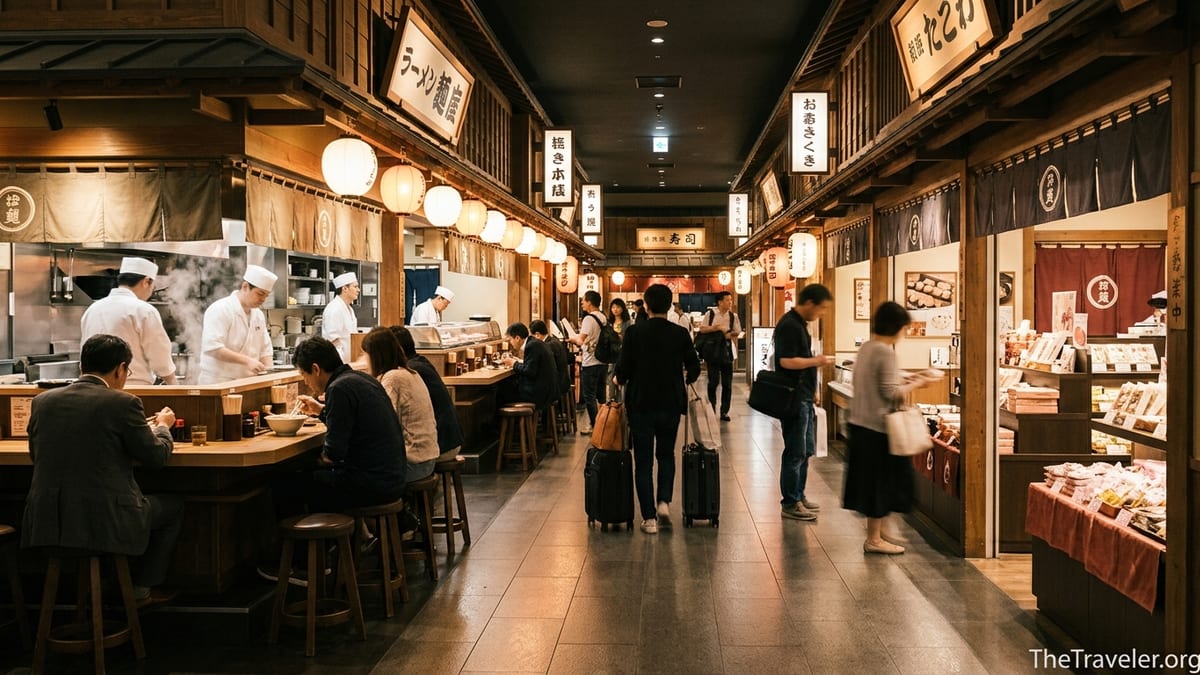
Edo Koji: Time-Travel Dining in Terminal 3
If you are flying internationally, the single best place to start eating at Haneda is Edo Koji on the fourth floor of Terminal 3. This atmospheric “Edo Market” is designed like an old Tokyo street, with wooden facades, lanterns and narrow alleyways hiding ramen shops, sushi counters and izakaya-style restaurants. It sits landside, before security, which means both arriving and departing passengers can reach it easily.
Edo Koji focuses on classic Japanese comfort dishes that are ideal either as a first taste of Japan or a last nostalgic meal before you fly out. You can expect bowls of soy-based ramen, skewers of yakitori grilled over charcoal, simmered oden hot pot and set meals built around grilled fish or tonkatsu. Prices are broadly in line with city restaurants rather than airport markups, with many main dishes coming in around 1,200 to 2,000 yen, depending on toppings and side dishes.
One of the newest arrivals in Edo Koji is Honolu Premier Air Haneda, a halal-friendly branch of a popular ramen group. Here you will find dishes like spicy karaage ramen, wagyu beef ramen and wagyu cutlet curry, alongside vegan options such as a plant-based cutlet curry and a kids’ meal made without animal products. It is a thoughtful choice if you are traveling with a mixed group that includes Muslim or vegetarian diners but everyone still wants a satisfying bowl of Japanese-style comfort food.
Beyond full-service restaurants, Edo Koji also includes smaller counters and takeout stands selling onigiri rice balls, sandwiches and baked goods that are easy to carry back to your hotel or boarding gate. If you arrive late at night and do not have the energy to go into central Tokyo, a quick meal here can give you a surprisingly rich first impression of Japanese food, complete with traditional decor and views down into the departure hall.
Ramen at Haneda: From Quick Slurps to Specialty Bowls
Ramen is one of the most reliable and rewarding things to eat at Haneda, especially if you are jet-lagged or short on time. Across the terminals you will find several ramen shops, from classic soy and miso styles to versions tailored to specific dietary needs. In Terminal 3, there are ramen counters both in Edo Koji before security and within the main departures area airside, so you can still get a proper bowl after you have cleared formalities.
A good strategy is to choose a style that matches how hungry you are and how much time you have. Thick tonkotsu or curry-based broths are rich and filling, ideal if you are facing a long-haul flight and want one substantial meal beforehand. A shoyu or shio ramen with a clear broth and fewer toppings is lighter and easier to finish quickly. Most bowls run around 900 to 1,300 yen for a basic version with chashu pork and egg, with side dishes like gyoza dumplings or fried chicken pushing a full meal closer to 1,500 to 1,800 yen.
If you are looking for more inclusive options, Haneda has gradually increased its choice of ramen for those avoiding pork or animal products. In addition to Honolu’s halal-friendly menu, travelers have reported vegetarian miso ramen options within Terminal 3, sometimes at multi-concept diners or food courts. These bowls often substitute mushrooms or tofu for chashu and use vegetable-based broths, making them suitable for many vegetarian and some vegan travelers, though ingredient lists are still worth checking if you are strictly plant-based.
Because ramen shops at Haneda are popular with both locals and visitors, peak times directly before evening international departures can see short lines. Fortunately, service is typically fast, and it is common to order via a vending machine near the entrance, which helps if you are shy about speaking Japanese. Look for large photos of signature bowls on the machine, choose your preferred size and toppings, pay in cash or with a transport card where accepted, then hand the ticket to staff and wait for your noodles to arrive.
Sushi and Seafood: One Last Taste of Tokyo
For many travelers, the final meal in Japan has to be sushi, and Haneda delivers surprisingly well on that front. Terminal 3 in particular has full-service sushi bars where chefs prepare nigiri and rolls to order rather than relying on mass-produced sets. These counters are often slightly tucked away from the main corridors, so it pays to check the terminal map or follow overhead signs for sushi and Japanese restaurants.
A typical airport sushi experience at Haneda might involve sitting at the counter and choosing either a set menu of assorted nigiri or ordering piece by piece. Sets that include tuna, salmon, white fish, shellfish and egg usually start around 2,000 to 2,500 yen for a lunch-sized portion and go up to 3,500 to 4,000 yen for more premium assortments that include fattier cuts of tuna or seasonal specialties. If you are traveling on a tighter budget or do not have time for a sit-down meal, boxed sushi and sashimi sets are widely available in convenience stores and souvenir shops throughout the terminals.
Quality is generally high by international airport standards. Even boxed sushi is stored refrigerated and turned over frequently throughout the day, especially in busy departure areas, so you are likely to get rice that still feels soft and fish with a clean aroma. For a quick yet distinctly Japanese snack, look for inari sushi, where sweet-salty tofu pouches are filled with lightly vinegared rice, or smaller maki rolls filled with cucumber or pickled vegetables, both of which travel well and are easy to eat at your gate.
If you are concerned about raw fish before a long-haul flight, many of the same sushi outlets at Haneda also serve grilled or simmered seafood that offers similar flavors with a gentler impact on the stomach. Grilled mackerel or salmon sets with rice, miso soup and pickles are common, usually in the 1,300 to 1,800 yen range. They are a smart compromise if you want Japanese seafood but prefer something cooked.
Snack Smart: Onigiri, Sweets and Convenience Stores
Not every meal at Haneda has to be a formal sit-down affair. The airport is dotted with convenience stores and snack counters that are perfect for grabbing something small between flights or assembling a picnic to take on board. In Terminal 3, there is a well-stocked convenience store airside with long refrigerated cases of onigiri rice balls, bento boxes, salads and sandwiches, along with shelves of chocolates, chips and dried snacks.
Onigiri are perhaps the most useful single item to know about. These triangular rice balls wrapped in seaweed come with fillings like tuna-mayo, grilled salmon, pickled plum and kombu kelp, typically costing around 150 to 250 yen each. Because they are individually wrapped and designed to be eaten at room temperature, they are ideal for flights, especially if you are unsure when your next proper meal will be. Two or three onigiri plus a bottle of green tea from the same fridge can make a satisfying light meal for well under 1,000 yen.
Haneda is also an excellent place to sample Japanese sweets before you leave. Throughout the terminals you will find bakeries and specialty shops selling castella sponge cakes, dorayaki pancakes filled with sweet red bean paste and seasonal limited-edition chocolates or cookies. Many of these are packaged as omiyage gifts, but nothing stops you from opening a box at the gate and sharing with your travel companions. Expect prices around 600 to 1,500 yen for smaller boxes of cookies or regional specialties, rising for premium brands or elaborate packaging.
If you prefer something cold, soft serve ice cream and parfaits are available at several cafes and dessert counters, often featuring Japanese flavors such as matcha green tea, black sesame or roasted green tea. Ordering a small matcha soft serve for roughly 400 to 600 yen while you look out over the runways from an observation deck or large terminal windows is a simple way to create a memorable last image of Tokyo.
Vegetarian, Vegan and Halal Choices
Dietary restrictions can complicate travel, but Haneda has made noticeable progress in recent years in catering to vegetarian, vegan and halal diners. The most visible example is the halal-friendly ramen restaurant Honolu Premier Air Haneda in Edo Koji, which prepares its dishes without pork and clearly labels halal offerings. Dishes like spicy karaage ramen and wagyu cutlet curry give Muslim travelers the chance to enjoy flavors that closely match mainstream Japanese menus while respecting religious requirements.
For vegetarian and vegan travelers, options require a bit more searching but are increasingly present. In addition to vegan curry and kids’ meals at Honolu, Haneda has hosted concepts like Diversity Diner, a restaurant built around plant-based takes on Japanese staples such as tempura-style vegetables, rice bowls and side dishes made without egg or dairy. Even where restaurants are not fully vegan, it is common to find at least one or two meat-free dishes on menus in Edo Koji and other dining areas, particularly vegetable tempura, udon with simple broth and rice bowls topped with tofu or seasonal vegetables.
Convenience stores can be a surprisingly useful resource if you read labels carefully. Plain onigiri such as salted rice or pickled plum varieties, salads with separate dressings, fruit cups and nuts are widely available and can be combined into a filling, plant-based snack. Be aware that in Japan many seemingly vegetarian items may include small amounts of fish-based dashi or bonito flakes for seasoning, so if strict veganism is important for you, choosing items that are clearly marked as plant-based or sticking to simpler foods like fruit, nuts and bread is the safest approach.
If you are traveling during busy holiday periods, it is wise to build in extra time to locate specific dietary-friendly outlets before your flight. While information desks and terminal maps are improving, they may not always highlight vegan or halal status clearly. Checking the directory screens near escalators or asking staff in English about vegetarian or halal options can save frustration, and most airport staff are accustomed to helping travelers with these requests.
Airport Lounges: Buffet Dining Above the Terminal
For passengers with lounge access, Haneda’s airline and credit card lounges offer another tier of dining, often focusing on comfort and speed rather than elaborate restaurant experiences. Major carriers such as ANA and Japan Airlines operate large lounges in Terminal 3, where food counters feature rotating selections of Japanese and Western dishes throughout the day.
Signature lounge items at Haneda tend to mirror what locals crave in daily life. You are likely to find Japanese curry rice with pickles, simmered dishes such as nikujaga, trays of onigiri, miso soup, salad bars and smaller bites like karaage fried chicken or grilled fish. At breakfast, menus often include rice porridge, scrambled eggs, sausages, yogurt and pastries. These buffets are included in your lounge access, so they can represent good value if you arrive early and prefer to eat in a quieter environment away from the main terminal.
Lounges also increasingly take dietary needs into account, offering at least a few vegetarian options and sometimes clearly labeling allergens. Travelers have reported plant-based sushi and other vegan-friendly dishes appearing in premium lounges, reflecting a wider shift toward inclusive menus. However, selection can vary by time of day, and menus change regularly, so if you have a strict diet, it remains sensible to supplement lounge offerings with snacks you know are safe from convenience stores or specialty restaurants elsewhere in the airport.
One advantage of eating in a lounge at Haneda is the ability to pace yourself. With showers, quiet seating areas and runway views, you can spread a light breakfast, mid-morning snack and pre-boarding bowl of curry over several hours rather than racing through a single meal. This can be especially helpful if you are recovering from jet lag or managing children who prefer several small snacks to one large plate of food.
Domestic Terminals and Haneda Airport Garden
While international travelers tend to focus on Terminal 3, Haneda’s domestic Terminals 1 and 2 also offer worthwhile food options, especially if you are connecting to another Japanese city. These terminals lean slightly more toward quick-service eateries and regional specialties, reflecting the large number of domestic commuters and short-haul passengers passing through each day.
In Terminal 1, ramen and donburi rice bowl shops are common, along with cafes and bakeries where you can pick up sandwiches and pastries. Terminal 2, which handles many flights for ANA and other carriers, has similar offerings and occasionally features pop-up stands selling regional specialties tied to destinations on the domestic network. As in Terminal 3, main dishes typically fall in the 1,000 to 2,000 yen range, making them accessible for most travelers who would otherwise eat in the city.
Just outside the traditional terminal areas, Haneda Airport Garden, connected to Terminal 3, has emerged as another dining destination. This complex includes a hotel, hot spring facilities and a cluster of restaurants that stay open later than many in the main building. Travelers with long layovers or overnight stays can check in to the hotel, enjoy the on-site onsen and then choose from a range of Japanese and international restaurants without leaving the airport grounds.
If you arrive in the evening and discover that terminal restaurants are closing, wandering into Haneda Airport Garden can be a practical solution. You may find izakaya-style places serving skewers and shared plates, casual noodle shops and more polished restaurants where you can sit down for a full dinner before returning to your room or the departure area the next morning.
The Takeaway
Haneda Airport has grown into one of the world’s more enjoyable places to eat while traveling, with a depth of Japanese options that goes well beyond what many passengers expect from an airport. From the lantern-lit alleys of Edo Koji to bustling ramen counters, sushi bars and lounges with curry buffets, it offers a concentrated taste of Tokyo that you can sample without ever leaving the terminal.
If you have only a brief connection, focusing on a single, well-chosen experience such as a ramen bowl or sushi set will already give you a sense of Japan’s food culture. With more time, you can combine that with browsing convenience store snacks, trying traditional sweets or exploring Haneda Airport Garden for a more relaxed restaurant meal. Whatever your schedule or budget, you are unlikely to go hungry here.
Most importantly, Haneda’s food scene reflects the same qualities that define eating out in Tokyo itself: attention to detail, respect for ingredients and a surprising range of inclusive options for different diets. Treat your time at the airport as an extension of your trip rather than dead time between flights, and you may find that some of your most memorable bites in Japan happen just steps away from your departure gate.
FAQ
Q1. Where is the best place to find traditional Japanese food at Haneda Airport?
The most atmospheric spot is Edo Koji on the fourth floor of Terminal 3, before security, where you will find Edo-style streets lined with ramen, sushi, oden and other classic Japanese eateries.
Q2. Can I get a good bowl of ramen at Haneda if I am short on time?
Yes. There are several ramen counters in Terminal 3, both before and after security, where you can usually order, eat and pay within 20 to 30 minutes if you visit outside the very busiest departure peaks.
Q3. Is sushi at Haneda Airport fresh enough to eat before a long flight?
Sushi bars in Terminal 3 prepare nigiri to order, and boxed sushi is turned over frequently, so quality is generally high. If you prefer cooked food, many places also offer grilled fish sets.
Q4. Are there vegetarian or vegan food options at Haneda?
Yes. You will find plant-based dishes at restaurants such as Honolu Premier Air Haneda in Edo Koji, as well as salads, fruit, onigiri and other simple items in convenience stores, though strict vegans should still read labels carefully.
Q5. Does Haneda Airport offer halal food?
Hanolu Premier Air Haneda in Edo Koji serves halal-friendly ramen and other dishes that avoid pork and alcohol, and you may find additional halal-marked items at selected restaurants and convenience stores.
Q6. How expensive is it to eat at Haneda compared with central Tokyo?
Prices for full meals at Haneda are broadly similar to mid-range city restaurants, with many main dishes between 1,000 and 2,000 yen, while convenience store snacks and onigiri remain very affordable.
Q7. What should I eat if I arrive late at night?
If you arrive late, look to Edo Koji and Haneda Airport Garden for restaurants that stay open later, or rely on convenience stores in the terminals for onigiri, sandwiches and bento boxes.
Q8. Are there good options for a quick breakfast before an early flight?
Yes. Convenience stores open early with rice balls, bread and coffee, cafes serve pastries and sandwiches, and some restaurants in Terminal 3 open in time for early-morning departures.
Q9. Can I find regional Japanese specialties at Haneda?
Haneda’s domestic terminals and souvenir shops stock snacks and sweets from around Japan, and some restaurants highlight regional dishes linked to destinations on the domestic flight network.
Q10. Is it worth leaving the airport to eat in Tokyo during a long layover?
If your layover exceeds about six to eight hours and your immigration status allows it, you could enjoy a meal in the city, but given Haneda’s strong dining options many travelers are satisfied staying in or around the terminals.