


Ask a rock climber about the world’s great destinations and Indian Creek, in southeastern Utah, almost always lands near the top of the list. But even if you have no intention of jamming your hands into sandstone cracks, the Indian Creek corridor in Bears Ears National Monument offers vast desert vistas, ancient rock art, dark skies and a feeling of remoteness that is getting harder to find in the American Southwest. The real question for many travelers is whether this stark, specialized place is worth building a trip around. The answer depends on what you love most about being outside.
Get the latest updates straight to your inbox!
Where Exactly Is Indian Creek and What Is It Known For?
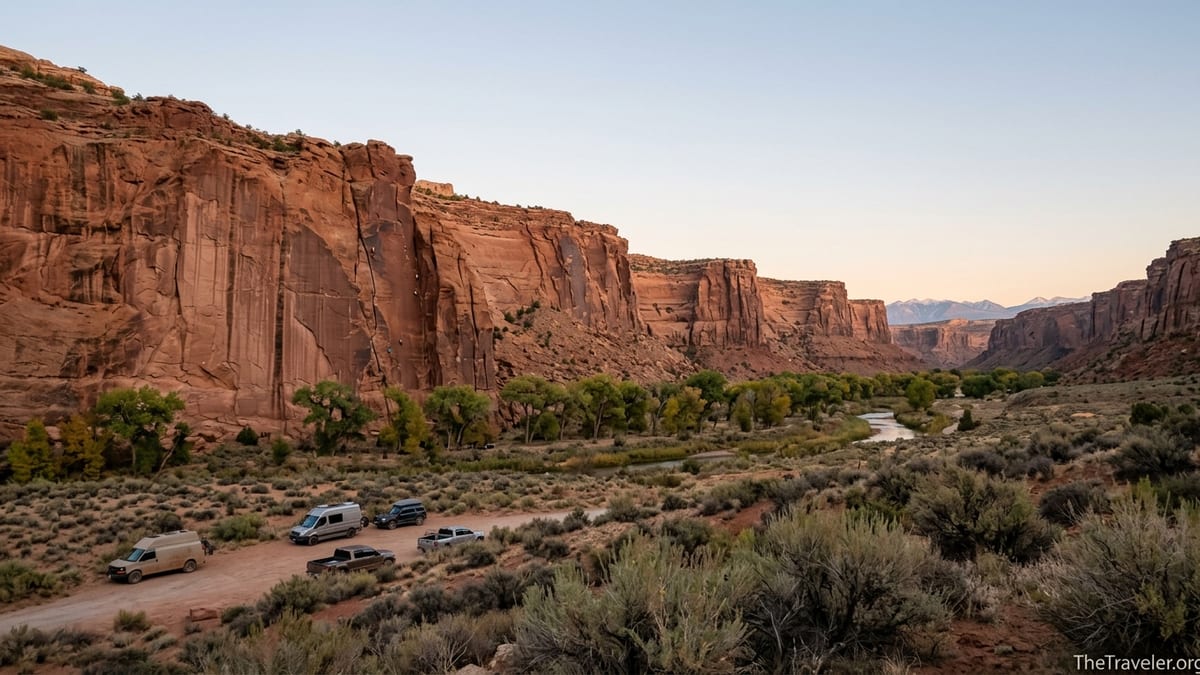
Indian Creek is a broad desert valley along Utah State Route 211 between the small town of Monticello and the Needles District of Canyonlands National Park. The entire highway is designated the Indian Creek Corridor Scenic Byway, a clue that simply driving it is part of the experience. Towering red sandstone cliffs, buttes like Bridger Jack and the Sixshooter Peaks and the ribbon of cottonwoods along the seasonal creek define the landscape. For climbers, “The Creek” has near-mythic status as one of the world’s premier crack climbing areas, with hundreds of parallel fissures splitting the Wingate sandstone walls.
The corridor sits within the Indian Creek Unit of Bears Ears National Monument and is managed primarily by the Bureau of Land Management. That means it feels very different from nearby national parks. There are no entrance booths, visitor centers or big paved campgrounds at the base of the cliffs. Instead you get sparse signage, dirt access roads and simple camp areas scattered along the valley. This low-key infrastructure is a huge part of the appeal for visitors who want wildness and open space, but it also means you must bring self-sufficiency and realistic expectations.
Most non-climbers first encounter Indian Creek when they pull into the parking area for Newspaper Rock, a famous panel of densely layered petroglyphs about 12 miles down State Route 211 from US 191. From there, the road continues deeper into the valley, with side roads leading toward the popular climbing walls, small campgrounds and the back way to Beef Basin and the Needles District. The further you drive, the more the traffic thins and the more you feel like you have stepped into a desert film set, minus the crowds.
Why Climbers Are Obsessed With Indian Creek
Indian Creek is not just another crag on the map; for dedicated trad climbers it is a rite of passage. The cliffs host hundreds of routes, often laser-straight crack lines that run for 30 to 40 meters or more. Classics like Supercrack of the Desert, Scarface, Incredible Hand Crack, Way Rambo and Annunaki are etched into climbing folklore. On a busy autumn weekend you might see license plates in the pullouts from every corner of the United States and from Europe or South America, all drawn by the same smooth sandstone and perfect splitters.
The style of climbing here is highly specialized. Most routes follow cracks that require jamming hands, fingers or entire fists into the rock rather than pulling on face holds. Protection is placed with removable cams slid into the crack, often in repeating sizes. A single route might require a half-dozen or more of the same piece; it is common to see visiting parties borrowing gear or hiring local guides because they simply do not own enough cams for the lines they want to try. Moab-based outfitters run dedicated “splitter camps” that include coaching, transportation and communal camping for climbers who want a structured introduction.
For intermediate to advanced climbers who already lead traditional routes in the 5.10 range and above, Indian Creek can be transformative. The consistency of the climbing, the ability to repeat similar moves for an entire pitch and the sheer volume of high-quality routes allow for rapid progression. Many strong climbers worldwide plan multi-week trips here in October or April, building their entire vacation around the Creek. If you are a newer trad climber still figuring out gear placements or if you mainly climb in gyms, the grades can feel brutal and humbling, but even then the setting and community can make the effort worthwhile.
Is Indian Creek Worth It If You Don’t Climb?
This is where travelers’ opinions diverge. If you have no interest in climbing and are hoping for the kind of structured sightseeing you find in Zion or Arches, Indian Creek can feel sparse. There are no ranger-led walks, gift shops or short loop trails with interpretive signs every few hundred yards. However, if you appreciate big scenery, long quiet walks on old jeep tracks and dark skies, the Creek can be an unforgettable desert base.
One obvious non-climbing highlight is Newspaper Rock near the mouth of the canyon, managed as a state historic monument. A paved parking area, toilets and a short accessible path lead to a dark varnished rock face covered in hundreds of petroglyphs created over many centuries by Indigenous peoples. Many road trippers stop here as a quick detour off US 191, but it is even more compelling if you linger, study the overlapping images and then continue deeper into the valley to place those human stories against the wider landscape.
Beyond Newspaper Rock, the byway itself is the attraction. Pullouts along the road offer broad views of the Bridger Jack mesa, North and South Six Shooter Peaks and the cliffs of Battle of the Bulge or Supercrack Buttress. Photographers come for the late afternoon light when the sandstone glows deep orange against the blue La Sal Mountains on the horizon. Night-sky enthusiasts prize the Creek for its lack of artificial light; on clear moonless nights the Milky Way arches vivid and bright. If you stay at one of the small campgrounds like Hamburger Rock or Creek Pasture, you can simply step away from your tent, let your eyes adjust and watch satellites and meteor streaks without leaving camp.
That said, travelers who prefer a wide mix of activities in a single day may find Indian Creek more rewarding as a part of a broader itinerary that includes Moab, the Needles District of Canyonlands or Bears Ears’ Cedar Mesa canyons. You might, for example, spend a morning exploring Needles trails like Cave Spring or Slickrock, then drive back toward US 191 in late light, stopping to picnic in the Indian Creek pullouts or wander the sandy washes below the towers.
Camping, Lodging and What It Really Feels Like to Stay There
Staying overnight is often what tips the balance from “interesting stop” to “absolutely worth it.” The Indian Creek corridor has three official BLM campgrounds within Bears Ears National Monument: Hamburger Rock, Superbowl and Creek Pasture. These are simple sites with dirt pads, picnic tables, fire rings and vault toilets. There is no drinking water, and most sites are first-come, first-served, paid by cash at self-registration kiosks. On a busy fall weekend, you might pull into Creek Pasture on a Thursday afternoon and see vans and trucks from a dozen states, with climbers sorting gear on tailgates and camp stoves hissing as people cook simple dinners by headlamp.
Because there is no water, you must bring everything you need. A typical climbing group fills 5- to 7-gallon jugs in Moab or Monticello before driving out, aiming for at least a couple of gallons per person per day to cover drinking, cooking and a bit of washing. There are no trash bins, either. The entire corridor operates on a strict pack-in, pack-out policy, including human waste for dispersed sites. Many regular visitors carry river-style portable toilets or WAG bags and plan their trips around minimizing impact on the fragile desert soils.
If you prefer four walls and a real bed, you will not find hotels at Indian Creek itself. The closest full-service accommodation zones are Moab, about an hour and a half north by road, and Monticello, roughly an hour east. Both towns have a range of motels, small inns and rental cabins. A few small, off-grid lodgings and retreat-style basecamps sit just outside the corridor along Highway 211 or US 191, marketed to climbers, writers and desert wanderers who want proximity to the Creek without tent life. In practice, many visitors blend options: camping for a few nights near the cliffs, then retreating to a motel in Moab for a shower, restaurant meal and laundry before returning to the desert.
The feel of the place changes dramatically with season and day of the week. On a midweek winter afternoon you might share an entire campground loop with only one or two other parties, the air clear and cold, snow dusting the La Sals in the distance. In peak October season, especially around long weekends, arriving late can mean circling for a site or continuing further down dirt roads to find legal dispersed camping on previously disturbed patches of ground. Earplugs can be handy; while many camps stay mellow and quiet, it is common to hear bursts of laughter or music drift across the valley in the evening when climber friends reunite.
Seasons, Weather and Practical Logistics
Spring and autumn are the prime seasons for Indian Creek, especially if you are climbing. From roughly late March into May and late September into early November, daytime highs are usually comfortable for physical activity while nights remain cool enough for good sleep. In April it is normal to wake to frost on your tent at Creek Pasture and still climb in a T-shirt by late morning once the sun hits the wall. Shoulder seasons draw the most visitors, so expect fuller campgrounds, more van traffic on dirt roads and a social scene at popular buttresses.
Summer is brutally hot for most activities. Daytime highs often soar well above 90 degrees Fahrenheit, and the dark desert pavement and bare rock radiate heat. A few determined climbers chase shade on early-morning or north-facing walls, but many travelers simply avoid the corridor during midsummer unless they are just driving through en route to the higher-elevation La Sals or Abajo Mountains. Winter, on the other hand, can be magical if you are prepared for cold. Clear high-pressure days in December or January bring sharp light, low crowds and a dusting of snow on towers like the Sixshooters. Temperatures can dip well below freezing at night, so well-insulated sleeping bags, four-season tents or a well-prepped van are important.
Road conditions are another practical consideration. The main byway is paved and usually passable for standard passenger cars in all seasons, barring unusual storms. Many of the climbing-access roads and dispersed camping spurs, however, are dirt or clay. When wet, especially after heavy rain or snowmelt, they can turn into slick, tire-greasing mud that traps even high-clearance trucks. Local land managers routinely ask visitors to avoid driving these roads when they are saturated, both to protect the fragile surface and to save people from expensive tow bills. Checking weather in Monticello or Moab, asking at gear shops and looking for fresh ruts before committing down a side road are all part of smart trip planning.
Given the lack of services, planning your resupplies matters. Expect to fill gas in Monticello or Moab, shop for groceries and buy last-minute gear like extra climbing tape or cams in town before driving to the Creek. A typical visiting climber might stock up at a Moab supermarket, fill jugs at a public water station, then head down US 191 to SR 211 with a full tank and coolers packed for four or five days. That self-contained feeling is part of the Creek’s charm; you are stepping into a desert pocket where daily life slows down and revolves around weather, light and rock.
Cultural Respect and Conservation: Visiting Thoughtfully
Indian Creek is more than a recreation playground; it is part of a larger cultural landscape with deep significance for several Native American nations, including the Navajo Nation, Hopi, Ute Mountain Ute, Ute Indian Tribe of the Uintah and Ouray Reservation and the Pueblo of Zuni. Rock art sites, ancestral dwellings and burial locations lie within and beyond the visible corridor. For that reason, land managers and tribal representatives emphasize respectful travel. That includes staying on existing roads and trails, not entering or touching archaeological structures, leaving artifacts where they lie and keeping pets away from cultural sites.
In the climbing world, there has been a growing push to align classic routes and new-development ethics with cultural considerations. Certain walls and specific lines have been closed to protect nesting raptors or nearby cultural resources. It is common to find signage at parking areas noting seasonal closures for golden eagles or peregrine falcons on particular cliffs. Responsible visitors check updated information with the local BLM field office, conservation groups or climbing organizations before heading out, and they choose other buttresses when sensitive zones are off-limits. This flexible mindset helps preserve both wildlife and access.
General desert ethics matter here more than ever because the landscape is so open and seemingly resilient. Camping at least 300 feet from water sources, packing out all trash and human waste and minimizing campfire impacts are baseline expectations. Some regulars simply forgo campfires, relying on headlamps and down jackets to stay warm, especially on windy nights where stray embers can travel. Others use existing metal fire rings only when local fire restrictions allow and are careful to extinguish coals completely.
For many visitors, the need to be deliberate about their impact becomes part of what they love about the Creek. It fosters conversations at picnic tables about shared responsibilities, from where to park to avoid crushing vegetation to how to talk with newer visitors about respecting petroglyphs and ruins. If your idea of a good trip includes leaving a place better than you found it, Indian Creek offers a chance to practice that ethic in a very real way.
Who Will Love Indian Creek Most, and Who Might Prefer Elsewhere?
If your top travel priorities include world-class crack climbing, quiet desert camping, star-filled skies and a sense of remoteness, Indian Creek is absolutely worth visiting, often more than once. Climbers comfortable on traditional gear have the richest experience, with enough routes to fill entire seasons and a global community to plug into around shared campfires. Photographers, writers and solitude seekers who are content with unstructured days, long walks along sandy washes and unbroken horizons also tend to fall hard for the place.
On the other hand, if you gauge a destination’s value by how many different activities you can do within a tight radius, or if you prefer short, signed nature trails and ranger talks, you might find greater satisfaction using Indian Creek as a scenic corridor rather than a multi-day base. In that case, treating it as a dramatic gateway to the Needles District or as part of a longer Bears Ears road trip can be ideal. You still get the thrill of driving beneath the cliffs and stopping at Newspaper Rock without committing to several nights of primitive camping.
Families with younger children can have a good time if they prepare carefully. Simpler base camps at established campgrounds, clear rules about staying away from cliff edges and petroglyphs and daytime excursions to better-developed sites like the Needles visitor center help balance adventure and safety. However, temperatures, lack of shade and the distance to medical services mean it is not the best first-time desert destination for every family. Those new to the region might want to start with more serviced hubs like Moab before graduating to the Creek’s wilder feel.
The bottom line: Indian Creek is niche, intense and unforgettable. It is not designed to be everything for everyone. Travelers who understand what it offers best, who come prepared for a lack of amenities and who are excited to tune into weather, light and cultural context will almost always come away saying the detour or dedicated trip was more than worth it.
The Takeaway
Is Indian Creek worth visiting? For many climbers and desert lovers, the answer is an emphatic yes. This stretch of the Bears Ears landscape delivers some of the most celebrated crack climbing on the planet, backed by huge skies, cinematic sandstone walls and nights lit by stars instead of town glow. The lack of services is a feature rather than a bug for those who want a rawer experience of the Colorado Plateau.
At the same time, the Creek asks something of you in return: self-sufficiency, cultural respect and a willingness to slow down. It rewards visitors who arrive with plenty of water, realistic expectations and a commitment to Leave No Trace practices. Non-climbers can still find deep satisfaction in the rock art at Newspaper Rock, the scenic drive along SR 211 and the simple act of watching light move across the cliffs from a quiet campsite.
If you thrive on polished viewpoints, short paved walks and a tight activity checklist, Indian Creek may be better as a stunning side trip than a primary destination. But if you are drawn to wild-feeling places where the main event is the land itself and the community that gathers to engage with it thoughtfully, then carving out a few days for Indian Creek can be one of the most rewarding decisions you make on a Southwest journey.
FAQ
Q1. Do I need a permit to visit or climb in Indian Creek?
Recreation in the Indian Creek corridor generally does not require a day-use permit for casual visiting or rock climbing, but overnight stays may involve campground fees, and some nearby backcountry areas in Bears Ears require permits. Always check the latest information from land managers before your trip, as regulations can change.
Q2. What is the best time of year to visit Indian Creek?
Most climbers and campers prefer spring and autumn, typically late March through May and late September through early November, when daytime temperatures are comfortable and nights are cool. Summer can be extremely hot, while winter can be cold but quieter and beautiful for prepared visitors.
Q3. Can beginners enjoy climbing at Indian Creek?
True beginners may find Indian Creek challenging because the routes are steep and rely heavily on crack-climbing techniques, but motivated newcomers can still have fun. Hiring a local guide, joining an instructional “splitter camp” or visiting with experienced partners can make the experience safer and more rewarding.
Q4. Are there hiking trails for non-climbers in Indian Creek?
There are no formal, heavily signed trail networks in the core climbing corridor, but visitors can explore old jeep tracks, sandy washes and short approach paths to the base of cliffs where it is safe and legal to do so. Many travelers combine a scenic drive through Indian Creek with established hikes in the nearby Needles District of Canyonlands National Park.
Q5. Is there cell service or Wi-Fi in Indian Creek?
Cell coverage in Indian Creek is spotty to nonexistent for most carriers, and there is no public Wi-Fi. You should plan to be offline while in the corridor, download maps in advance and leave an itinerary with someone you trust before heading into the area.
Q6. What should I bring for camping in Indian Creek?
You should bring all drinking and cooking water, sufficient food, a reliable shelter, warm layers for cold nights, sun protection and a way to manage human waste at dispersed sites such as WAG bags or a portable toilet. Established campgrounds provide vault toilets and fire rings but no water or trash collection, so packing out everything you bring in is essential.
Q7. How far is Indian Creek from Moab and Monticello?
Indian Creek sits off US Highway 191 on Utah State Route 211, roughly an hour to an hour and a half’s drive from Moab to the north and about an hour from Monticello to the east, depending on exactly where in the corridor you are headed. Many visitors base themselves in one of these towns for part of their trip.
Q8. Are pets allowed in Indian Creek?
Leashed dogs are generally allowed in BLM-managed parts of Indian Creek, including many camp areas, but they are not permitted on some nearby national park trails and should be kept away from cultural sites and cliff edges. Hot sand and lack of water can be hard on animals, so consider carefully whether bringing a pet is in their best interest.
Q9. How crowded does Indian Creek get?
Crowding varies by season and day of the week. During peak spring and fall weekends, popular campgrounds and classic climbing walls can feel busy, with license plates from across the country in every pullout. Midweek, in winter or during shoulder periods, visitors can find much more solitude, sometimes sharing entire camp loops with only a few other parties.
Q10. Is Indian Creek a good stop on a larger Southwest road trip?
Yes, Indian Creek fits naturally into itineraries that include Moab, Canyonlands, Arches and other parts of Bears Ears National Monument. Many travelers stop at Newspaper Rock and drive part or all of the scenic byway, while climbers and desert enthusiasts may plan several nights of camping in the corridor as a highlight of their journey.