


Indian Creek, in the northern unit of Bears Ears National Monument in southeastern Utah, has become a pilgrimage site for crack climbers and desert campers. Towering Wingate sandstone walls, a wide valley of sage and cottonwoods, and the close presence of Native American cultural sites make this one of the most intense outdoor experiences in the Southwest. With growing popularity have come new rules, crowded weekends, and a real need to plan ahead. This guide walks you through the best Indian Creek camping options, classic climbing routes, and memorable outdoor experiences, with current, real-world details to help you build a responsible and rewarding trip.
Get the latest updates straight to your inbox!
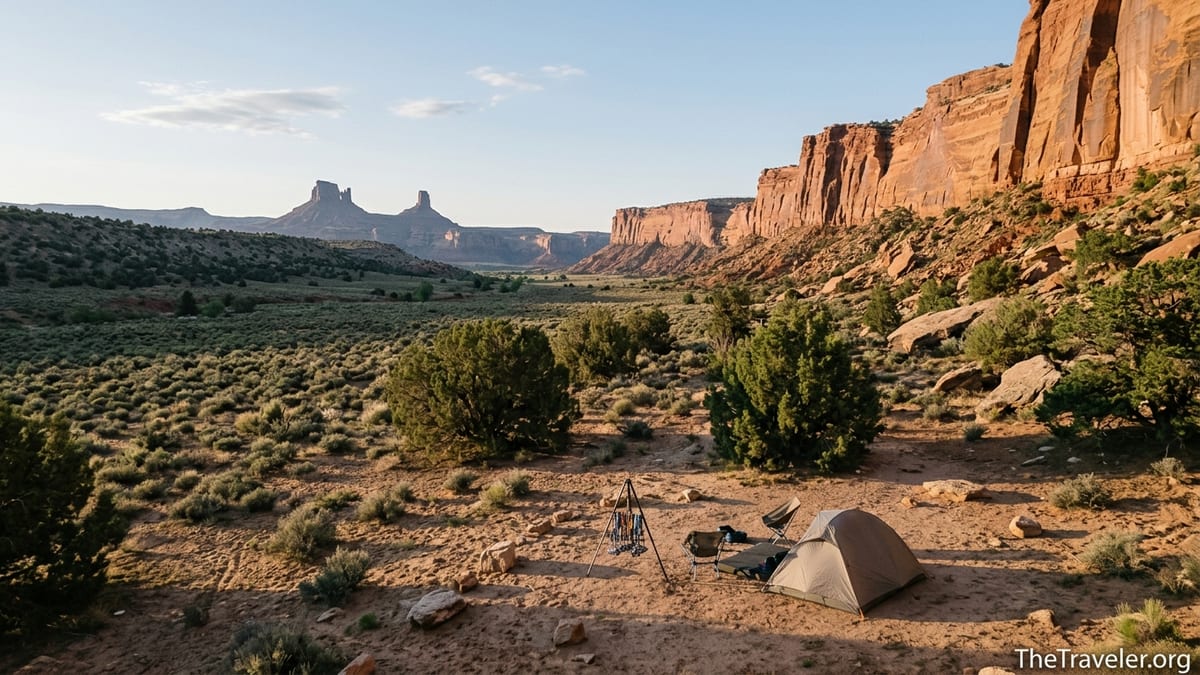
Understanding Indian Creek and the Bears Ears Setting
Indian Creek is a world-renowned crack climbing area along Utah State Route 211, about an hour south of Moab and roughly 40 minutes west of Monticello. It lies in the Indian Creek unit of Bears Ears National Monument, a landscape co-managed by the Bureau of Land Management and the U.S. Forest Service with a coalition of Native American tribes that have deep ancestral connections here. The broad valley is framed by Wingate sandstone cliffs, mesas like Bridger Jack, and iconic towers such as the North and South Six Shooter Peaks. Climbers come for the parallel-sided cracks; everyone else comes for the open desert, dark skies, and proximity to Canyonlands National Park’s Needles District.
Although guidebooks and climbing films often portray Indian Creek as a limitless free-for-all, the reality in 2026 is different. Visitation has surged over the past decade, and the federal agencies now actively manage camping, toilets, and cultural resources in the corridor. Expect designated campgrounds in the valley, restrictions on riparian camping in parts of the creek corridor, and seasonal fire bans in dry years. The experience is still wild and undeveloped by most standards, but it is no longer an unregulated backwater. Travelers who arrive understanding this context will have a far easier time finding a campsite and avoiding fines or conflicts.
For most road-tripping visitors, Indian Creek works best as a base for three to five days. That gives you time to sample different crack sizes, do at least one rest-day hike in Canyonlands or further into Bears Ears, and adjust to the dry air and strong sun. Shoulder seasons in April to early May and late September through October usually offer the best combination of climbable temperatures and open roads, though spring storms and early fall heat waves are always possible.
Best Campgrounds in the Indian Creek Corridor
In practical terms, most visitors sleep in one of three core campgrounds along the Indian Creek corridor: Superbowl, Creek Pasture, and Hamburger Rock. All are accessed from Route 211 and managed as simple desert campgrounds without hookups or drinking water. Fees are typically collected at self-registration kiosks at the entrances, so carry small bills. Prices can change, but as of the most recent seasons they tend to be in the ballpark of what you would pay at other basic BLM campgrounds in southeast Utah.
Creek Pasture Campground sits near the point where the canyon opens into a broad valley. It offers dozens of sites with picnic tables, fire rings, and vault toilets, shaded in places by cottonwood trees. Sites are first come, first served, and can fill on peak spring and fall weekends by early evening. Creek Pasture has a group site that local guide services and large climbing parties sometimes reserve well in advance, so expect a lively scene: campfire beta, impromptu gear swaps, and dawn patrol departures to Supercrack Buttress or Donnelly Canyon are all part of the atmosphere.
Superbowl Campground lies a bit farther up the valley toward the big climbing walls. It has a similar setup with individual sites and vault toilets, but fewer large cottonwoods, so shade is more limited. Climbers like Superbowl because the drive to popular walls such as Battle of the Bulge or Scarface is short, which can be crucial on busy weekends when parking lots at the buttresses fill up soon after sunrise. If you are planning to climb hard every day and want to cut down on driving, Superbowl is a strategic choice.
Hamburger Rock Campground, closer to the junction with U.S. 191, is set among rounded boulders on a low rise. It is a good option if you are rolling in late from Moab or Monticello and want a decent chance at a site without driving all the way up the valley in the dark. Its position also makes it a flexible base if you are splitting time between Indian Creek and day trips to Newspaper Rock, the Needles District of Canyonlands, or south toward Blanding and other Bears Ears trailheads.
Dispersed Camping, Closures, and Practical Logistics
Indian Creek has a long tradition of roadside and dispersed camping, but the rules have tightened as use has increased. In some stretches of the riparian corridor, particularly between Newspaper Rock and upstream sections of the creek, camping is now prohibited to protect vegetation and cultural sites and to manage sanitation. Visitors who relied on old guidebooks or blog posts describing free pullouts along the creek bed sometimes arrive surprised to find closure signs and designated sites instead. The upshot is that if you want to disperse camp, you need to drive farther from the main climbing corridor, stay on previously disturbed surfaces, and follow the latest posted regulations.
Where dispersed camping remains allowed on adjacent public lands, come fully self-contained. There is no treated water in the Indian Creek valley, and you cannot rely on the creek itself, which can be dry or silty for much of the year. Most climbers and campers haul in large jugs from Moab or Monticello, often planning on at least 4 liters per person per day to cover drinking, cooking, and a minimal amount of washing. Human waste must go into vault toilets or a personal portable toilet system; burying waste in shallow catholes has been a major problem here and is not appropriate in the busy corridor. It is increasingly common to see climbers traveling with reusable toilet systems they can empty at approved dump stations back in town.
Logistics in this remote valley reward careful planning. Cell coverage is sparse or nonexistent, card payments are not accepted at registration kiosks, and there are no fuel stations, grocery stores, or gear shops in the corridor itself. A common pattern is to stock up in Moab or Monticello with groceries, firewood where allowed, and last-minute climbing gear, then treat Indian Creek as a multi-day basecamp. If forecasts call for spring storms, remember that some side roads and dirt spurs can become impassable mud; high-clearance vehicles may handle more, but even four-wheel drive trucks get stuck in the fine desert clay after a heavy rain.
Because campground demand now regularly exceeds supply on prime weekends, some parties choose shoulder days to arrive. Rolling in on a Thursday afternoon in April, for example, can dramatically increase your odds of finding a spot at Creek Pasture compared with late Friday night. In midweek shoulder-season windows, you may still find half-empty loops and quieter nights, especially if a cold front moves through and sends less dedicated visitors elsewhere.
Classic Climbing Routes and Sectors for First-Time Visitors
Indian Creek is famous for its pure crack lines. Unlike many granite areas where cracks wander and offer rest stances, the Wingate sandstone here often forms dead-straight fissures in perfectly smooth walls. This produces splitters that look like they were drawn with a ruler, but it also means you are jamming from bottom to top with very few face holds. New visitors routinely underestimate how specific the style is. Even climbers solid on 5.11 granite cracks often find they need to drop a full grade or more while they learn how Indian Creek’s hand and finger sizes feel.
For a first visit, classic sectors like Supercrack Buttress and Donnelly Canyon offer a dense collection of routes with relatively easy approaches. Supercrack of the Desert, originally known as Luxury Liner, is perhaps the single most famous line in the valley: a long, #3 Camalot-size crack rated around 5.10 that has appeared in countless photos and films. Nearby, lines such as Incredible Hand Crack and Coyne Crack offer variations on the theme in different sizes and difficulties. In Donnelly Canyon, routes like Generic Crack give newer Creek climbers a benchmark hand crack at a moderate grade, while harder finger lines test those pushing into 5.11.
Beyond these well-known buttresses lie dozens of other walls, from Scarface and Battle of the Bulge to Broken Tooth and Way Rambo. Each hosts its own collection of splitter cracks in sizes ranging from tight fingers to offwidth and chimneys. Guidebooks and popular climbing apps list hundreds of routes, but in practice new visitors often focus on a handful of sectors that match their preferred sizes. A climber with smaller hands might build a day around perfect finger cracks, while another who thrives on fists and wide hands seeks out less photogenic but equally high-quality lines.
Gear is an important part of the Creek equation. Where you might carry one or two cams of a given size on a typical multipitch climb elsewhere, here it is common to bring sets of five, six, or more of the same piece for pure splitters. Many visiting climbers either borrow cams locally, pool gear between partners in camp, or rent extras from shops in Moab for the week. It is common to see a party preparing for Supercrack of the Desert with nearly a full dozen medium cams on each climber’s harness. For those more interested in hiking or casual scrambling, it is enough to know that the parking lots will often be lined with dusty vehicles sporting large trad racks drying on tailgates.
Beyond the Crack: Towers, Hiking, and Cultural Sites
Although the crack climbing absorbs most of the attention, Indian Creek and the broader Bears Ears region offer much more than vertical jamming. Desert towers like South Six Shooter, visible from many parts of the valley, provide a classic introduction to climbing summits in the desert. While tower routes still require traditional gear and some technical experience, they often feel more like mountaineering objectives than pure crack testpieces, with exposed but moderate pitches and airy summits. Many parties schedule a tower day as the psychological highlight of a trip, resting their hands from repetitive jamming while still enjoying the sandstone.
On rest days or for non-climbing companions, nearby Canyonlands National Park’s Needles District offers superb hiking. From Indian Creek campgrounds, it is a short drive to the park entrance, where day hikes like Chesler Park or Druid Arch wind through sandstone spires and open benches with far-reaching views. These trails require entry fees and, in the busier seasons, a willingness to start early to secure parking. The contrast between the relatively undeveloped Indian Creek corridor and the more structured national park experience can be welcome: flush toilets at trailheads and clearly signed trails are a small luxury after several days in the dust.
Perhaps the most powerful complement to climbing days is a visit to cultural sites within and just beyond the Indian Creek corridor. Newspaper Rock, along Route 211, displays one of the most accessible and densely carved panels of petroglyphs in Utah. Further afield, in other parts of Bears Ears, cliff dwellings, rock art, and ancestral sites are reminders that this was, and remains, a living cultural landscape long before it became a climbing destination. Respecting posted closures, avoiding any contact with artifacts, and staying on established paths near cultural sites are non-negotiable parts of visiting this area. For many travelers, seeing a centuries-old granary perched above the same valley where they camp and climb adds depth to the entire experience.
Even simple evenings around camp can become memorable outdoor experiences in their own right. With little artificial light in the valley, Indian Creek often delivers exceptional night skies. It is common to see climbers and campers lying on crash pads or camp chairs after dinner, watching satellites and shooting stars trace overhead. On windy spring nights, you may share a sheltered nook behind Hamburger Rock with a mix of dirtbag climbers, road-tripping families, and photographers waiting for the Milky Way to rise over the silhouette of the Six Shooters.
When to Go, Weather Patterns, and Safety Considerations
Spring and fall are the most popular seasons in Indian Creek, and for good reason. From late March into May, daytime highs often sit in the comfortable range for climbing and hiking, while nights can still be cold enough to warrant a warm sleeping bag and insulated jacket. In late September and October, cooler evenings and crisp mornings return after the intense heat of summer. However, these shoulder seasons also bring their own challenges: spring storms can dump snow on higher mesas and leave the valley roads slick, while fall cold fronts sometimes arrive with strong winds and sudden temperature drops.
Summer conditions can be harsh. Daytime temperatures in the exposed valley frequently soar, and the smooth sandstone walls bake in direct sun. A minority of dedicated climbers still visit in early or late summer to chase shaded climbs at specific times of day, but for most travelers the combination of heat, lack of water, and strong UV exposure makes this a shoulder or off-season destination instead. Winter, by contrast, can offer cold but beautiful days, with snow frosting the mesas and quiet campgrounds. High-pressure patterns can bring clear skies and crisp climbing conditions, but short days and potentially icy roads mean you need a strong tolerance for cold and good traction on your vehicle.
Whatever the season, safety in Indian Creek starts with self-reliance. There is no on-site rescue team or ranger station in the immediate valley. If a climber is injured in a fall on a buttress or a hiker twists an ankle miles from the road, companions and other visitors often provide the first response while someone drives out toward cell service to contact emergency services. Basic wilderness first-aid knowledge, a well-stocked kit in the car, and clear communication within your group about objectives and turnaround times are important parts of any trip plan.
Wildlife encounters in Indian Creek are typically low-key but worth considering. Rodents and ravens are by far the most common camp visitors, and they quickly learn to raid open food containers or poorly latched coolers. Scorpions and snakes inhabit the desert but are rarely a problem if you watch where you place hands and feet among rocks and avoid reaching blindly into cracks at ground level. As always in the desert, dehydration is a more significant risk than any animal. Carrying more water than you think you need, using sun protection, and planning shorter objectives on hotter days will go a long way toward keeping your trip enjoyable.
Etiquette, Access, and Traveling Responsibly in a Sacred Landscape
Indian Creek is not just a playground. It is part of a broader ancestral landscape for multiple Native American tribes, and it sits within a national monument that was established in part to protect cultural and spiritual values. Travelers who approach the valley with humility help ensure that these values coexist with recreation. In practical terms, that means staying on existing roads and campsites, never touching or disturbing rock art or structures, and keeping noise levels at a reasonable level, especially at night. Music drifting across the quiet valley may be less welcome than climbers assume when they gather around a campfire after a big day out.
Climbing etiquette has also evolved in response to crowding. Many Indian Creek routes are single cracks with small staging areas at the base, so large groups can easily clog a classic line all day. Sharing ropes, allowing smaller parties to take turns, and avoiding monopolizing the most famous climbs during peak hours are all part of the culture here. If you arrive at a popular buttress and find multiple parties queued for the same handful of routes, consider walking a little farther along the wall; there are often equally good, less-trafficked lines just beyond the first obvious classics.
Waste management remains a central issue in the corridor. Vault toilets at campgrounds and some high-use parking areas represent a big improvement over the situation a decade ago, but they are not everywhere, and they need to be treated with respect. Packing out all trash, including micro-trash like tape scraps, food corners, and cigarette butts, is essential. Many traveling climbers now keep a dedicated trash bag in their vehicles specifically for picking up debris from popular parking lots, a small but visible way of giving back to the place that hosts them.
Finally, be prepared for continuing change. As visitation grows and as land managers coordinate with tribal partners, rules on camping, fires, and access to specific sites may continue to evolve. Information posted on official agency sites, at trailhead kiosks, and at campground bulletin boards should be considered the current standard, even if it conflicts with older guidebooks or online trip reports. By remaining flexible and prioritizing the long-term health of the landscape over short-term convenience, visitors help keep Indian Creek open and magical for the next generation.
The Takeaway
Planning a trip to Indian Creek today means balancing ambition with respect. On one hand, the valley offers some of the most compelling crack climbing and desert camping in North America, with classic routes on Supercrack Buttress, quiet stargazing from Creek Pasture, and memorable side trips to Canyonlands. On the other, it demands careful preparation: hauling in water, dealing with self-registration campgrounds, navigating dirt roads after storms, and learning a climbing style that may feel new even to seasoned trad leaders.
For many travelers, the reward lies in how those pieces fit together. Mornings might start with a chilly walk from a tent to stretch fingers at the base of a glowing sandstone wall. Afternoons drift into shade, shared cams, and encouragement as partners take their first real crack falls. Evenings bring cooked meals in dusty camp chairs, long conversations under stars, and quiet moments looking toward distant mesas that have anchored human presence here for centuries. When you leave, you may carry sore hands and sandy gear bags, but also a sense that you have briefly stepped into one of the Southwest’s most intense outdoor classrooms.
Approach Indian Creek as a guest in a living landscape, prepare thoroughly for remote conditions, and be ready to adjust plans as conditions and regulations change. Do that, and the valley will likely give back more than you expected: breakthrough climbing days, new friendships around shared campfires, and a deeper appreciation for the desert’s fragile beauty.
FAQ
Q1. Where exactly is Indian Creek, and how do I get there?
Indian Creek lies along Utah State Route 211 between U.S. 191 and the Needles District of Canyonlands National Park in southeastern Utah. Most travelers reach it by driving south from Moab or north from Monticello to the signed junction with Route 211, then following this scenic byway west into the valley.
Q2. Do I need a reservation to camp at Indian Creek?
Most Indian Creek campgrounds, including Superbowl, Creek Pasture, and Hamburger Rock, operate on a first-come, first-served basis with self-registration kiosks. A group site at Creek Pasture typically requires advance reservation, but regular individual sites do not. Always check current agency information in case reservation systems are expanded in future seasons.
Q3. Is there drinking water available in the Indian Creek campgrounds?
No treated drinking water is provided in the main Indian Creek campgrounds. Visitors should bring all the water they need from towns like Moab or Monticello, planning on generous daily amounts for drinking, cooking, and basic washing, as the creek itself is unreliable and often unsuitable for filtration.
Q4. When is the best season to climb and camp at Indian Creek?
Spring and fall are generally considered the best times to visit, with late March through May and late September through October offering cooler temperatures and longer days. Summer can be extremely hot and exposed, while winter can be cold and snowy, though experienced parties sometimes enjoy quiet, crisp days in those off-peak months.
Q5. Are there beginner-friendly climbing routes at Indian Creek?
Indian Creek’s climbing style is demanding, but there are some more moderate crack routes such as Generic Crack in Donnelly Canyon that serve as introductions. New visitors should be comfortable placing traditional gear and jamming, and many climbers choose to start on grades below their usual level while they adjust to the specific nature of the Wingate sandstone cracks.
Q6. Can I disperse camp anywhere along the Indian Creek road?
No. Dispersed camping has been restricted in parts of the Indian Creek corridor, especially near the creek and in high-use areas. Visitors should use established campgrounds where provided and only camp in permitted dispersed areas on durable surfaces, following all posted signs and current regulations to avoid fines and protect sensitive habitats.
Q7. What permits or fees should I expect for a typical Indian Creek trip?
Expect to pay nightly fees at developed campgrounds and entrance fees if you visit nearby Canyonlands National Park. As of recent seasons, there is no separate day-use fee specifically for climbing in Indian Creek itself, but this could change, so it is important to check the latest information from land managers before your trip.
Q8. How can I visit cultural sites like rock art panels respectfully?
Stay on marked paths, observe all posted closures, and never touch or lean on rock art, structures, or artifacts. Keep noise low, do not leave offerings or objects, and treat these locations as living cultural sites rather than attractions. If you are unsure about access, ask at visitor centers in nearby towns or consult official monument information.
Q9. What type of vehicle is recommended for Indian Creek?
The main paved road into Indian Creek, Route 211, is accessible to standard passenger vehicles in normal conditions, and the primary campgrounds are usually reachable without high clearance. However, some side roads and dirt spurs can become muddy and rutted after storms, so a higher-clearance vehicle is helpful if you plan to explore beyond the main corridor.
Q10. Is Indian Creek suitable for families and non-climbers?
Yes, with preparation. Families and non-climbers can enjoy camping, stargazing, short walks near the valley, and day trips to Newspaper Rock or Canyonlands hikes. However, the lack of services, intense sun, and remoteness mean that adults should be comfortable with self-sufficient desert camping and bring adequate shade, water, and supplies for children and less-experienced travelers.