


More news on this day
A British Airways passenger diverted to Cincinnati after storms near Chicago says they were left to arrange their own onward travel, ultimately buying a ticket on a United Airlines service to Chicago that operated with only one passenger on board.
Get the latest news straight to your inbox!
From London Diversion to Cincinnati Dead End
According to recent online accounts, the journey began on a British Airways flight from London Heathrow to Chicago O’Hare that was forced to divert to Cincinnati/Northern Kentucky International Airport because of severe weather affecting the Chicago area. Weather related diversions are relatively common on transatlantic routes into major hubs, where congestion and storms can quickly disrupt tightly planned schedules.
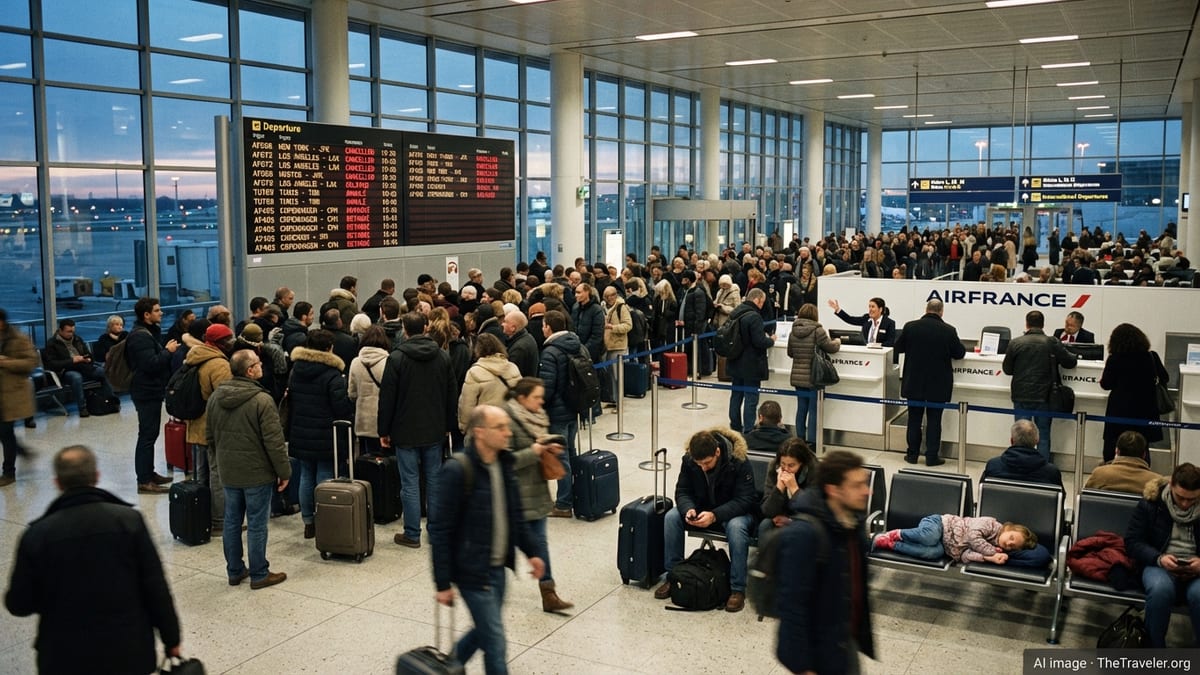
Once on the ground in Cincinnati, the traveler reported that the British Airways service terminated there rather than continuing to Chicago when conditions improved. The account describes a situation in which passengers were left to sort out alternative travel on their own, with repeated attempts to obtain rebooking assistance reportedly proving unsuccessful.
The traveler states that phone calls to customer service produced little progress, and that options such as rerouting via other carriers were not provided. With Chicago still the final destination printed on the original ticket, the lack of onward arrangements became the central frustration of the episode.
Unable to secure help through the original airline, the passenger began exploring other ways to reach Chicago the same day. With ground transport between Cincinnati and Chicago involving several hours by road, an evening United Airlines departure to Chicago appeared to be the fastest remaining option.
A Regularly Scheduled Flight With One Passenger
Public posts about the incident indicate that United flight UA1813, a regularly scheduled service from Cincinnati to Chicago, became the traveler’s escape route. After purchasing a new ticket, the passenger proceeded through the usual airport formalities, expecting a routine regional hop to O’Hare.
Only at the gate did it become clear how unusual the situation had become. The traveler recounts discovering that no other customers had remained booked on the flight, likely a result of weather related disruption earlier in the day that led many passengers to drive or rebook. With the aircraft still needed in Chicago for operational reasons the next morning, United operated the service as planned.
The result was a nearly empty cabin. The passenger describes being the only traveler on board a Boeing narrowbody jet that would normally carry well over one hundred people on the short sector between Cincinnati and Chicago. Cabin crew proceeded with standard safety demonstrations and inflight procedures, even though they were addressing just a single customer.
While rare, lightly loaded repositioning flights are a feature of airline operations, particularly after disruptions. In this case, an aircraft already scheduled to fly to Chicago still needed to move, and the lone traveler with a paid ticket effectively experienced a private commercial flight.
British Airways Response and Passenger Rights Context
The episode has renewed discussion among travelers about what assistance airlines should provide when disruptions occur away from an airline’s home base. The passenger’s description of being told to find their own way onward from Cincinnati has drawn particular criticism from frequent flyers and consumer commentators in online forums.
Publicly available information on British Airways policies indicates that the carrier, like many airlines, evaluates rebooking obligations based on the cause of the disruption and the location where a journey is interrupted. Weather is typically categorized as an extraordinary circumstance, which can limit compensation under European style consumer rules, but passengers often still expect practical help securing a route to their ticketed destination.
In similar past cases involving British Airways, consumer advocates have argued that while cash compensation may not always apply in severe weather situations, reasonable rerouting or care such as meals and accommodation can still be owed. The traveler’s account from Cincinnati suggests a perceived gap between those expectations and the assistance actually received.
The contrast between the two carriers’ roles in this story has been widely noted in online discussion. British Airways is portrayed by commenters as having left passengers at an unscheduled diversion point without clear onward options, while United is framed as the carrier that ultimately completed at least one traveler’s journey on a flight that was operating anyway.
Operational Realities Behind an Almost Empty Jet
Industry analysts observing the story have highlighted that the nearly empty United service illustrates how airline networks must keep aircraft and crews positioned, even when demand temporarily disappears. Short haul flights feeding major hubs like Chicago are often essential to have planes and staff in place for early morning departures.
From an operational perspective, canceling the Cincinnati to Chicago leg could have caused knock on effects for United’s schedule the following day. Running the flight with only one passenger, while unusual, may therefore have been the most efficient option once the aircraft and crew were already assigned and within their duty time limits.
The traveler’s experience also underscores how quickly passenger numbers can collapse on a route when a day of delays encourages customers to seek other solutions. Reports suggest that other booked passengers likely chose to drive from Cincinnati to Chicago, a journey of several hours that, on the day in question, turned out to be faster than waiting out repeated air traffic delays.
For many readers following the account, the image of a large jet pushing back with just one person seated among rows of empty seats has become a striking symbol of the imbalance that weather and scheduling pressures can create between airline operations and individual passenger needs.
Social Media Reaction and Airline Reputation
As details spread across aviation and travel forums, the story has generated sharp criticism of British Airways’ handling of the diversion, alongside more positive commentary about the final leg with United. Posters have contrasted this experience with other high profile customer service incidents, noting how a single journey can significantly influence perceptions of an airline.
Observers also point out that such anecdotes increasingly shape airline reputations in an era when travelers share detailed trip reports in real time. While formal statistics still track metrics such as on time performance and complaint rates, highly shareable stories of being abandoned mid journey or, conversely, being treated well on an unusual flight tend to resonate far beyond the individuals directly involved.
The Cincinnati to Chicago solo flight adds a new chapter to that informal record. For one passenger stranded far from their destination after a transatlantic diversion, a nearly empty United jet became both an improbable rescue and a vivid illustration of how different carriers respond when plans fall apart.