


La Pedrera, also known as Casa Milà, is one of Antoni Gaudí’s most recognizable works on Barcelona’s Passeig de Gràcia. In 2026, when ticket prices for major Gaudí sites are higher than ever and time slots sell out quickly, many travelers wonder if La Pedrera deserves a spot on a tightly packed Barcelona itinerary or if that budget and time are better spent on landmarks like the Sagrada Família, Park Güell or Casa Batlló. This guide breaks down the experience, cost, and tradeoffs so you can decide with confidence.
Get the latest updates straight to your inbox!
What La Pedrera Actually Is: Context Before You Book
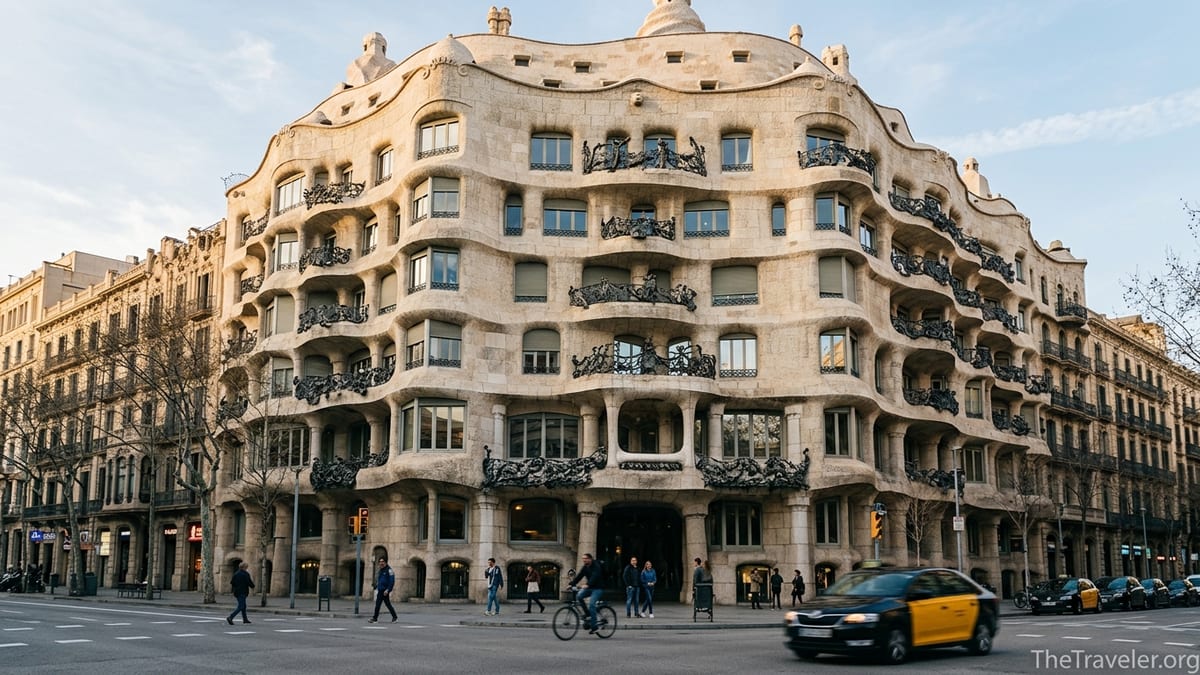
La Pedrera is a residential building designed by Antoni Gaudí between 1906 and 1912, commissioned by the Milà family and nicknamed “the stone quarry” for its undulating stone facade. Today it is a UNESCO World Heritage site and the headquarters of the Catalunya La Pedrera Foundation, which manages visits, exhibitions and cultural events inside the building. For visitors, it functions as a hybrid between a museum, an architectural icon and an immersive design experience in the heart of the Eixample district.
Unlike the Sagrada Família, which is a basilica, or Park Güell, which is a landscaped park, La Pedrera is fundamentally a city apartment block. You tour selected sections: a typical early 20th‑century furnished apartment, the famous rooftop with its sculptural chimneys, an attic exhibition about Gaudí’s techniques, and interior courtyards that reveal the building’s organic structure. Expect to spend about 60 to 90 minutes on a standard visit if you move at a normal pace and listen to most of the audioguide content.
Because the building is right on Passeig de Gràcia, La Pedrera is extremely convenient to slot between shopping, a coffee on Rambla de Catalunya, or another Gaudí house like Casa Batlló a short walk away. For travelers staying near Plaça de Catalunya or in l’Eixample, it is essentially on the doorstep, which makes it easy to visit in the late afternoon or early evening without a long transport detour.
Understanding what La Pedrera is and is not is crucial before comparing it with other landmarks. It is not a vast monument with endless halls, nor a viewpoint with a sweeping panorama over all of Barcelona. It is a highly curated architectural visit that appeals most to design‑lovers, architecture enthusiasts and travelers who enjoy slower, detail‑oriented experiences.
Tickets, Prices and Time Commitment in 2026
On the official La Pedrera site in mid‑2026, the core “La Pedrera Essential” daytime ticket, which includes rooftop access and an audioguide, is typically priced in the high 20s to low 30s euros for adults, with reduced prices for children, seniors and certain concessions. There are also more premium options, such as night visits with projections on the rooftop or small‑group guided tours, which can push the price closer to or above 40 euros per person depending on date and availability.
To put this in context, a basic Sagrada Família ticket in 2026 usually starts around the mid‑30 euro range for a timed skip‑the‑line entry, with tower access and guided tours costing more. Park Güell’s Monumental Zone ticket is significantly cheaper, often around the low to mid‑teens for adults. Casa Batlló, by contrast, is usually one of the most expensive individual house visits in Barcelona, with standard tickets that often hover near or above 35 to 40 euros and premium “Gold” or “Platinum” experiences costing more.
If you are traveling as a family of four and buy standard daytime tickets for both La Pedrera and Casa Batlló, it is realistic for the total to climb over 200 euros just for those two visits. Many travelers manage costs by choosing just one interior Gaudí house to go inside, then admiring the others from the outside. In that sense, La Pedrera competes most directly with Casa Batlló as “the Gaudí apartment building experience” alongside the must‑visit Sagrada Família and, budget permitting, Park Güell.
In terms of time, La Pedrera is relatively compact. A focused traveler can see the main highlights in about an hour, while those who enjoy the exhibits and photograph the rooftop may stretch to 90 minutes. Compared with a full Sagrada Família visit with towers, which can easily take two hours including security and lingering, La Pedrera is easier to fit into a half‑day that already includes shopping and tapas nearby.
What the La Pedrera Experience Feels Like
A typical La Pedrera visit in 2026 starts at the modern ticket control and entrance hall on Passeig de Gràcia. After security, you step into the main courtyard, where the organic curves of the balconies and the light‑filled atrium immediately contrast with the rigid geometric grid of the surrounding Eixample streets. For many visitors, the first “wow” moment is looking up from this courtyard and realizing how radically different Gaudí’s approach was compared with his contemporaries.
From there, you move through a recreated early 20th‑century apartment, complete with period furniture, children’s bedrooms, and a kitchen that shows how upper‑middle‑class families lived in Barcelona in the early 1900s. Travelers who enjoy history and daily‑life details often linger here. Others, especially repeat visitors to European house museums, might find it more educational than emotionally impactful, describing it afterward as “nice but not spectacular.”
The attic, with its forest of catenary arches, houses a permanent exhibition about Gaudí’s work and methods, including models of Sagrada Família and Park Güell. Visitors who are interested in engineering, structural innovation or architectural models often consider this section a highlight. It helps explain how ideas tested in a residential building like La Pedrera contributed to the more ambitious Sagrada Família.
The rooftop is usually the main visual draw. Undulating surfaces, chimneys shaped like helmeted warriors, and glimpses of the Eixample grid below make it a distinctive photography spot. Couples often schedule their visit for golden hour to capture warm light on the stone, and many travelers mention this part as the moment when La Pedrera feels truly unique. That said, some reviews point out that the actual city view, while pleasant, is not as panoramic or dramatic as viewpoints on Montjuïc or the bunkers at Turó de la Rovira. The rooftop is more about sculptural forms than sweeping skyline vistas.
How La Pedrera Compares With Other Top Gaudí Sites
Most visitors come to Barcelona with only one or two full sightseeing days, so the real question is not “Is La Pedrera interesting?” but “Is it more essential than the other Gaudí options?” For first‑timers, the honest hierarchy in 2026 is that Sagrada Família remains non‑negotiable if you have any interest in architecture or culture, followed by Park Güell and then a Gaudí house such as Casa Batlló or La Pedrera depending on your taste and budget.
Sagrada Família offers unmatched symbolic weight: it is Gaudí’s unfinished basilica, soon approaching its projected 2026 completion goals for major structural elements, and it is unlike any other church in the world. The experience inside, with colored light pouring through stained glass, tends to be emotionally powerful even for non‑religious visitors. In traveler discussions, Sagrada Família is almost universally ranked as worth both the price and the time.
Park Güell occupies a middle ground: it combines fresh air, city views, and iconic Gaudí elements like the mosaic lizard and wave‑shaped benches at a lower price point than most indoor attractions. For travelers who prefer outdoor spaces and more flexible timing, Park Güell is often prioritized over La Pedrera, especially in pleasant weather. However, it requires more transport time and uphill walking, which can matter if you are traveling with young children or older relatives.
Casa Batlló is often described as the more theatrical and immersive of the two main Gaudí houses. Its interior rooms are intensely colorful, the staircases sculptural, and its audiovisual elements more elaborate. Many travelers who choose only one house pick Casa Batlló as their “wow” experience, accepting the higher ticket price. La Pedrera, by contrast, is more restrained and educational. Visitors who value architectural structure, subtle curves and rooftop sculpture often prefer La Pedrera, while those seeking richer interiors and dramatic visuals lean toward Casa Batlló.
Who Should Definitely Prioritize La Pedrera
La Pedrera is particularly rewarding if you are deeply interested in architecture, design or urban history. Architecture students often spend long stretches in the attic exhibition, studying structural models and Gaudí’s use of lightwells and curved forms to improve ventilation and natural illumination. For them, the ability to move from the street facade to the interior courtyard, upstairs apartment, and finally the rooftop creates a comprehensive case study in modernist urban housing.
Travelers staying in or near Passeig de Gràcia who have already budgeted for Sagrada Família and Park Güell may find La Pedrera to be the most convenient third Gaudí experience. For example, a couple on a three‑day city break might schedule Sagrada Família on the morning of Day 2, Park Güell early the next morning, and then spend a relaxed late afternoon at La Pedrera before a dinner reservation nearby, without crossing the city again.
Families with older children who enjoy imaginative spaces often respond well to the rooftop. Teens interested in photography or social media content frequently rank La Pedrera high because the chimneys and curved lines are so photogenic. Compared with more solemn or crowded monuments, the rooftop allows for more playful exploration, which can keep younger travelers engaged.
Finally, if you have already seen Sagrada Família and Park Güell on a previous trip, La Pedrera becomes a strong candidate to deepen your understanding of Gaudí without repeating the same sites. Returning visitors often pair it with a lesser‑known Gaudí work such as Palau Güell or the Colònia Güell crypt, creating an itinerary focused on the evolution of his style rather than simply ticking off the greatest hits again.
When Your Time or Budget Is Tight: Situations to Skip or Downgrade
If you are on a very short visit, such as a one‑day cruise stop or a quick overnight, La Pedrera is rarely the best primary choice. In those situations, your limited time is almost always better spent on Sagrada Família and either a stroll through the Gothic Quarter or a quick trip to Park Güell for city views. You can still appreciate La Pedrera’s facade from the sidewalk as you walk along Passeig de Gràcia without committing money or time to the interior.
Travelers on a strict budget often make a similar calculation. For example, a solo backpacker planning to spend under 60 euros on paid attractions might book Sagrada Família and Park Güell, then opt to enjoy La Pedrera and Casa Batlló from the outside only. Between the two, La Pedrera’s rooftop and exhibition are easier to sacrifice if you are not strongly interested in architectural details, especially given the higher emotional impact many people report at Sagrada Família.
Some visitors are also underwhelmed by La Pedrera if they go at the wrong time or with the wrong expectations. During peak afternoon hours in high season, rooftop pathways can feel crowded, and it may be difficult to take photographs without other visitors in frame. Travelers expecting a grand museum with extensive galleries or a dramatic 360‑degree city panorama sometimes leave feeling the experience did not justify the cost. Reading recent reviews before booking can help you avoid disappointment and decide if the style aligns with your preferences.
If you are traveling with very young children, strollers and those sensitive to stairs, bear in mind that while there are elevators, the rooftop involves uneven surfaces and some stair climbing. In these cases, you might prioritize more accessible attractions or enjoy La Pedrera’s exterior and nearby parks instead of a full paid visit.
Practical Tips if You Decide La Pedrera Is Worth It
If you choose to include La Pedrera, book your ticket in advance on the official site, especially in spring, summer and during holiday periods when time slots can sell out or become limited. Booking at least a few days ahead usually provides more flexibility in selecting your preferred hour and can prevent you from queuing at the ticket office only to find your ideal time fully booked.
Timing matters. Many travelers enjoy late afternoon or early evening entries, when the light on the rooftop is softer and temperatures are more comfortable. Morning visits can be quieter on some weekdays, but the rooftop light is generally harsher for photography. Night experiences with projections can feel magical for some visitors, but if your main goal is to understand the architecture and take clear photos, a daylight visit is usually more informative.
Combine your visit smartly with the rest of your day. A common, efficient plan is to start with a leisurely brunch or coffee along Rambla de Catalunya, visit La Pedrera for 60 to 90 minutes, then continue walking down Passeig de Gràcia to see Casa Batlló’s facade and the modernist buildings of the so‑called “apple of discord.” This keeps your transport spending low and your walking route straightforward while still packing in several major sights.
If you are considering a multi‑site ticket or city pass, compare the combined cost carefully with buying individual tickets. Sometimes Gaudí combination passes that include La Pedrera, Casa Batlló and another attraction can save money if you are committed to seeing them all, but in other cases you may end up paying for an included site you would not have visited otherwise. Run the numbers for your specific group and travel dates before committing.
The Takeaway
La Pedrera is worth visiting for many travelers, but not for everyone, and not in every circumstance. As a piece of early 20th‑century residential architecture and a window into Gaudí’s evolving ideas, it is rich, subtle and thoughtfully presented. The rooftop and attic in particular can be unforgettable for design‑minded visitors and photographers, while the apartment and courtyard offer a tangible glimpse of bourgeois life in historic Barcelona.
However, when time and money are limited, Sagrada Família and, in most cases, Park Güell almost always deserve priority. Casa Batlló often edges out La Pedrera for travelers who want one highly theatrical Gaudí house experience and are willing to pay a premium for vivid, immersive interiors. If you are primarily chasing big emotional moments, iconic skyline views or the single “must see” Gaudí site, La Pedrera might feel like a secondary choice.
The most balanced approach for many first‑time visitors is to guarantee Sagrada Família, strongly consider Park Güell, and then decide between La Pedrera and Casa Batlló based on your budget and personal taste. If you love architecture, enjoy slower, detail‑focused visits and are staying near Passeig de Gràcia, La Pedrera is likely to be a rewarding addition. If you are counting every euro and racing the clock, admiring its facade from the street and channeling your resources into other landmarks is a perfectly sensible decision.
FAQ
Q1. Is La Pedrera worth visiting if I only have one full day in Barcelona?
If you have just one full day, prioritize Sagrada Família and a walk through central neighborhoods. La Pedrera is interesting, but usually comes after those essentials unless you are especially passionate about Gaudí’s residential architecture.
Q2. Should I choose La Pedrera or Casa Batlló if I only want to pay for one Gaudí house?
If you prefer bold colors, theatrical interiors and a more immersive audiovisual experience, most visitors lean toward Casa Batlló. If you are more interested in structure, rooftop sculpture and the evolution of Gaudí’s design ideas, La Pedrera can be the better fit.
Q3. How long does a visit to La Pedrera typically take?
Most travelers spend between 60 and 90 minutes inside. That allows time for the furnished apartment, attic exhibition and rooftop without rushing, but you can move faster if you only want highlights.
Q4. Is the rooftop at La Pedrera good for city views?
The rooftop offers pleasant views over the Eixample district and interesting angles on nearby buildings, but it is more about sculptural chimneys and curves than dramatic panoramas. For sweeping city views, look instead to Park Güell, Montjuïc or the bunkers at Turó de la Rovira.
Q5. Do I need to book La Pedrera tickets in advance?
Booking ahead is strongly recommended in busy months, especially for late afternoon or evening slots. Same‑day tickets may still be available at less popular times, but there is no guarantee and you could end up with a time that does not fit your plans.
Q6. Is La Pedrera suitable for children?
Many children enjoy the imaginative rooftop shapes and exploring the apartment, especially if you keep the visit to around an hour. Very young children may tire of the audioguide, so focusing on visual elements and taking breaks in the courtyard usually works best.
Q7. Can I just see La Pedrera from the outside and skip the interior?
Yes. The facade on Passeig de Gràcia is free to admire and is impressive in its own right. Travelers on tight budgets often choose to photograph the exterior and invest their paid tickets in Sagrada Família and Park Güell instead.
Q8. How does La Pedrera compare in price to other Gaudí attractions?
La Pedrera’s standard daytime ticket usually costs a bit less than or similar to Casa Batlló, more than Park Güell and slightly less than some Sagrada Família ticket options. For many visitors, it sits in the mid to upper price tier among Barcelona attractions.
Q9. Is the night visit to La Pedrera worth it?
The night experience, with projections on the rooftop and a different atmosphere, appeals to travelers who enjoy special effects and a more intimate mood. If your main goal is to understand architectural details and take clear photos, a daytime visit is generally more informative and flexible.
Q10. If I have already visited Sagrada Família and Park Güell on a previous trip, should I add La Pedrera next time?
Yes, La Pedrera is an excellent choice for a second or third trip when you are looking to deepen your understanding of Gaudí beyond the most famous sites. Combined with a visit to Palau Güell or the Colònia Güell crypt, it helps round out a more complete picture of his work.