


La Pedrera, also known as Casa Milà, is one of Barcelona’s most photographed buildings, yet many visitors leave with flat, overexposed rooftop shots and selfie-stick crowds in every frame. With a little timing strategy, you can experience Gaudí’s stone waves and helmeted chimneys in soft light, with space to compose your photos instead of fighting for a gap in the railing.
Get the latest updates straight to your inbox!
How La Pedrera’s Hours and Light Work Together
La Pedrera sits on Passeig de Gràcia, an avenue that fills quickly with tour buses and group visits after mid-morning. The building runs a full daytime schedule, typically from around 9 am until early evening for standard visits, plus separate late sessions for the La Pedrera Night Experience. In practice this means you can choose between three very different atmospheres: quiet early mornings, busy but bright daytime, and a more theatrical, lit-up rooftop after dark.
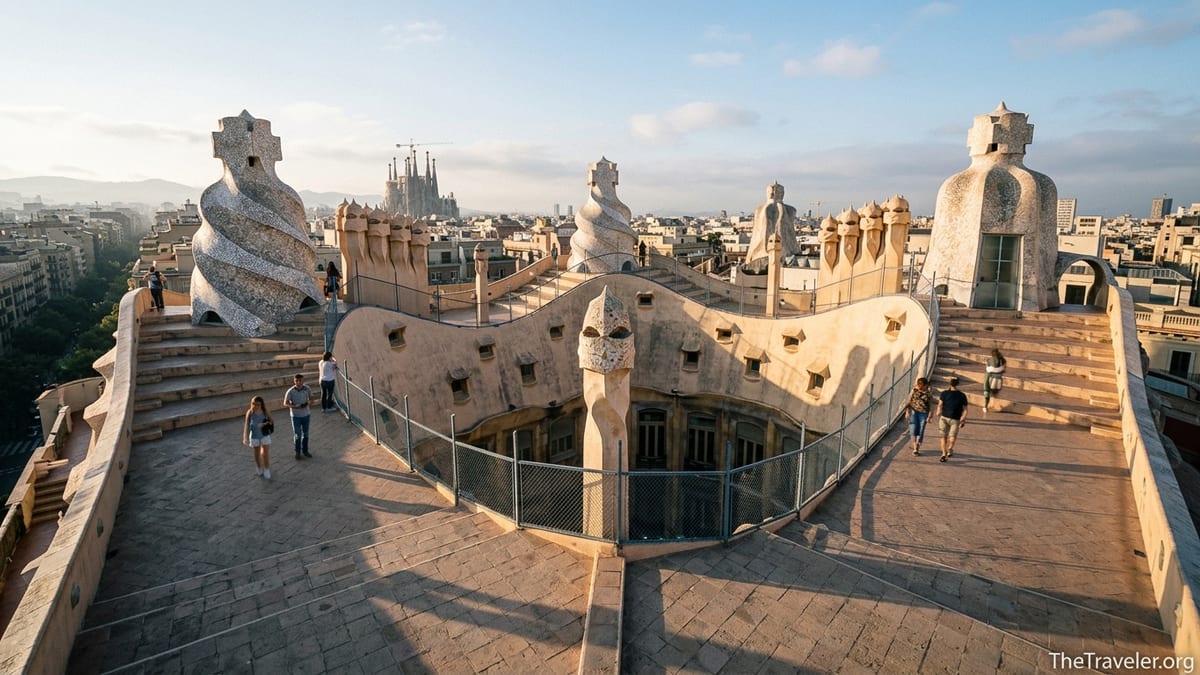
The rooftop is where timing matters most. This is where you will photograph Gaudí’s famous “warrior” chimneys, the tiled ventilation towers and undulating stone ridges with views toward the Sagrada Família and across the Eixample grid. The best light for photography tends to be shortly after opening, while the sun is still low and the sky is a gentle blue, or in the last two hours before sunset, when façades glow warm and shadows carve depth into the stone.
According to current visitor guides for 2026, standard daytime tickets give you 75 to 90 minutes inside, including time in the courtyards, the Pedrera Apartment, the Espai Gaudí attic and the rooftop. If you book a 9 am slot and head straight up, you can often have wide angles of the rooftop with only a handful of other visitors in frame. In contrast, mid-morning slots, especially between 10:30 am and 1 pm in high season, see the highest density of tour groups, which makes uncluttered compositions much harder.
The Night Experience runs as a separate evening program with a guided route and a rooftop audiovisual show. Start times shift seasonally, usually from around 8:30 pm to 10 pm, timed for nightfall. This experience is less about classic architectural documentation and more about mood: illuminated chimneys, deep blue sky and spotlighted details. It offers a different, more dramatic kind of photo opportunity and generally smaller groups than the midday rush.
Best Months and Seasons for Better Photos
Barcelona’s climate is mild year-round, so La Pedrera is open in every season. For photographers, the key seasonal differences are crowd levels, daylight hours and how high the sun sits in the sky. In July and August, cruise traffic and school holidays push visitor numbers up across the city. Midday on the rooftop can feel crowded and harshly lit, with strong contrast between chalk-bright limestone and deep shadows. If you must visit in summer, early morning and late evening become even more important for both comfort and images.
Spring and autumn generally offer the most balanced conditions. From late March to early June and again from late September through October, you get reasonably long days, softer midday sun and fewer peak-season groups. For example, on a typical April day, sunrise is around 7:15 am and sunset around 8:30 pm, which means the rooftop is bathed in flattering low-angle light for both the first and last entry windows. You are also less likely to face intense heat radiating off the stone, which helps if you plan to linger for careful compositions.
Winter, particularly November through February, can be an advantage if smaller crowds matter more to you than expansive blue skies. Some guides note shorter opening hours in the coldest months, so you will want to check the current closing time before booking, but the lower sun angle all day long creates textured façades and long shadows that suit black-and-white or high-contrast color photography. The risk is occasional rain or rooftop closures for safety during bad weather. Booking a morning slot in winter slightly improves your chances of catching the rooftop before any afternoon showers roll in.
If your dates are flexible and you want to prioritize photography, many independent travelers report that late April, May, late September and October hit the sweet spot: long enough days for varied light, comfortable temperatures on the rooftop, and smaller tour groups than the July and August peak. These shoulder months also pair well with a broader Gaudí itinerary, letting you fit La Pedrera in early and still catch golden hour at Park Güell or a late visit to Casa Batlló.
Best Time of Day: Morning, Golden Hour or Night Experience?
For clean, detailed images of the architecture, the earliest daytime entry is the strongest choice. Travel writers and ticket specialists frequently point to the 9 am slot as the best option for crowd avoidance. At that hour, tour buses are just starting to unload along Passeig de Gràcia, and many visitors are still at hotel breakfast. If you go straight up to the roof as soon as you enter, you can often shoot wide frames of the warrior chimneys against a clear sky with only a few scattered figures in the distance.
Late afternoon and the last daytime entries are a close second, especially from October to April when sunset falls earlier. Booking a 4:30 or 5 pm ticket in spring, for example, will usually put you on the rooftop during the final warm light of the day. This is when the stone ripples pick up a golden tone and the city beyond softens into pastel. You may still encounter groups, but many families with younger children have already finished their sightseeing, and the rooftop never feels quite as packed as it does in the heart of the late morning rush.
The La Pedrera Night Experience offers an entirely different rhythm. The building closes to standard visitors and then reopens for small, timed groups. After a short guided route through selected interiors, you emerge onto a rooftop lit by video mapping projected onto the chimneys, with colored lights and music. The long exposures you can pull off on a tripod-sized gorillapod pressed to a ledge, or carefully braced handheld shots, will give you dreamy light trails and sculptural highlights that are impossible during the day. The trade-off is that you lose the deep architectural context of the attic and full apartment route.
If your priority is a comprehensive understanding of the building plus strong photos, one effective strategy is to book a 9 am daytime visit for classic shots and then, if budget allows, a Night Experience on another evening for moodier, atmospheric images. This two-visit approach is popular with serious hobbyists who want both neutral daylight documentation and creative night work without sacrificing any key interior spaces.
Ticket Types and Timed Entry Tricks
La Pedrera currently sells a variety of tickets through its official channels and vetted resellers, including the standard “La Pedrera Essential” daytime ticket, early-morning guided tours, and the premium Night Experience with rooftop show and a drink. Adult daytime tickets typically start in the high twenties in euros, while the Night Experience costs more, reflecting the smaller groups and added performance. Third-party platforms may bundle La Pedrera with Casa Batlló or Sagrada Família, but for precise timing control it is often better to buy direct.
To beat the busiest periods, the key is to treat your ticket like a train reservation rather than a museum pass. Standard advice from frequent travelers across Europe applies here: the first and last entry slots of the day are generally the calmest, and a timed ticket lets you bypass the line for on-the-spot purchases and move into a shorter queue for security and scanning. At La Pedrera, that often means walking past a long column of visitors waiting to buy tickets at the door and joining a much smaller group for your chosen time.
When booking, look specifically for the earliest entry available on your chosen date or, failing that, the final entry that still leaves you at least an hour before closing. For example, if the building closes to daytime visitors at 8 pm and the last bookable slot is 6:30 pm, a 6:30 pm ticket will still give you meaningful rooftop time in late light. In high season, these edge-of-day slots often sell out first, so checking a few weeks ahead is sensible if you are traveling in July or August.
Some agencies market “skip the line” tickets to La Pedrera at a premium. In practice, this usually means the same timed-entry system you can access through the official sales page, plus an added service fee. Unless you specifically want a guide bundled in or a flexible cancellation policy that a reseller offers, you can normally secure similar crowd advantages by booking timed entry directly and arriving 10 to 15 minutes before your slot.
Practical Photography Tips on the Rooftop and Indoors
The rooftop of La Pedrera can be visually overwhelming: spiraling staircases, helmeted chimneys, tiled vents and constantly shifting city backdrops. To make the most of good timing, it helps to think through a few concrete shot ideas before you go. One classic angle places a foreground chimney on the left third of the frame with Sagrada Família rising in the distance on the right. Another uses the sinuous balustrades as leading lines from the bottom corner up to a silhouetted visitor or a lit tower during the Night Experience.
Early in the day, when the light is softer, a mid-range zoom in the 24–70 mm equivalent range works well, letting you capture both sweeping vistas and tighter architectural details without constantly swapping lenses. In high summer, a polarizing filter can tame reflections in the stone and deepen a washed-out blue sky, but use it sparingly to avoid uneven tones across wide angles. Because the rooftop is exposed, wind gusts are common, so set a slightly faster shutter speed than you normally would for handheld shots, particularly if you are leaning over railings or shooting down staircases.
Indoors, the Espai Gaudí attic and the Pedrera Apartment reward slower, more considered work. The attic’s brick arches form repeated curves that look striking at around 28–35 mm, especially if you wait for a brief break in foot traffic to center a single passer-by in the frame. In the apartment, details like polished parquet floors, period lamps and wrought-iron window handles capture the lived-in side of the building. Here, raising your ISO to cope with lower light is better than risking motion blur as groups walk through; modern cameras handle moderate noise very well, and the building’s warm tones hide grain nicely.
Tripods are generally not permitted during standard visits, so plan on handheld techniques. Use walls, railings and columns as improvised supports, especially at dusk on the rooftop. If your camera has in-body stabilization, leave it on and lean gently into a solid surface while you shoot. For smartphones, tapping to expose for the highlights on the stone will prevent blown-out chimneys against bright skies; you can recover some shadow detail later in editing apps. A small microfiber cloth is useful for wiping sea air and city grime from your lens or phone screen between shots, particularly on humid summer evenings.
Managing Crowds: Realistic Expectations
No timing trick will give you a completely empty La Pedrera in high season, but you can dramatically improve your experience with a few realistic expectations. First, accept that some areas, such as narrow rooftop paths and specific chimney viewpoints, will always attract mini-queues of people waiting to take the same photo. Rather than standing in line for a single over-used composition, look for alternate perspectives: lower angles that place chimneys against sky instead of people, or side-on shots that show visitors walking through the space as part of the story.
Second, use the natural pulse of group tours to your advantage. Many organized visits move through on a fixed schedule, clustering briefly on the rooftop before moving back indoors. If you arrive on the roof just as a large group begins to leave, you may enjoy a five or ten minute window where density drops significantly. Watching the flow from a higher corner of the terrace for a minute or two before committing to a position can reveal these micro-gaps in the crowd.
Third, remember that the courtyards and attic are often quieter than the roof at any given moment. If you reach the rooftop and it feels jammed at 11 am, consider reversing your route: step back into the attic exhibition, photograph the model of Sagrada Família and structural displays for twenty minutes, then return outside once the latest wave of groups has cycled through. Your ticket typically allows you to move along the prescribed route at your own pace, so a bit of flexibility can turn a frustrating crush into a sequence of calmer shooting pockets.
Finally, if you are very crowd-averse, consider less conventional timing. On days when the Night Experience runs late and the city’s attention shifts to beach bars and dinner, the last evening groups on the rooftop can feel surprisingly intimate compared with mid-morning. Booking those late-night sessions on a Sunday or midweek day, rather than a Friday or Saturday, may further tilt the odds in your favor, since many visitors schedule evening shows at the weekend.
The Takeaway
Getting memorable photos at La Pedrera is less about having the most expensive camera and more about making a few smart timing choices. Booking the earliest or latest daytime slot and traveling in shoulder season can transform the rooftop from a congested walkway into a sculptural playground where you actually have time to explore angles. Pair that with practical techniques like using architectural lines as compositional guides and bracing your camera against railings, and you will come away with images that feel spacious and considered rather than rushed.
If your budget and schedule allow, combining an early-morning daytime visit with a La Pedrera Night Experience on another evening gives you two distinct visual stories: one clean and documentary, the other luminous and theatrical. Whichever option you choose, planning ahead, checking current opening hours and giving yourself room in the day to linger within the building’s curves will pay off in photographs that do justice to one of Gaudí’s most complex creations.
FAQ
Q1. What is the single best time of day to visit La Pedrera for fewer crowds?
The first daytime entry around opening time is usually the quietest, especially outside July and August, giving you more space on the rooftop and in the attic.
Q2. Which months are best for photography at La Pedrera?
Late April, May, late September and October offer a good balance of soft light, pleasant temperatures and smaller crowds than peak summer.
Q3. Is the La Pedrera Night Experience worth it for photographers?
Yes, if you enjoy atmospheric images. The illuminated chimneys and rooftop light show create unique shots you cannot get during the day, though you see fewer interior spaces.
Q4. How long should I plan for a visit if I care about taking photos?
Allow at least 90 minutes for a daytime visit to move slowly through the courtyards, attic, apartment and rooftop, plus extra time if you like to wait for quiet moments.
Q5. Are tripods allowed inside La Pedrera?
Standard visits generally prohibit full-size tripods, so plan on handheld shooting and using railings or walls as supports, especially on the rooftop at dusk.
Q6. Does weather affect rooftop access and photos?
Yes. Heavy rain or strong wind can temporarily close the rooftop for safety, and overcast skies flatten contrast. Clear or lightly cloudy days are best for textured shots.
Q7. Is it better to buy La Pedrera tickets from the official site or a reseller?
For precise timing and usually lower fees, the official sales channels are preferable. Resellers can be useful if you want bundled tours or extra flexibility.
Q8. Can I visit La Pedrera and other Gaudí sites on the same day without rushing photos?
Yes. Many visitors book La Pedrera for early morning, then schedule Park Güell or Sagrada Família for late afternoon, leaving a mid-day break for rest and editing.
Q9. Is early morning or late afternoon better for rooftop photos?
Both work well. Early morning tends to have fewer people and cooler air, while late afternoon often brings warmer tones and dramatic side light on the chimneys.
Q10. Do I need a professional camera to get good photos at La Pedrera?
No. Recent smartphones perform very well in daylight. A dedicated camera helps in low light, but thoughtful timing and composition matter more than gear level.