


Few travel dilemmas in Barcelona spark as much debate as the choice between La Pedrera and Casa Batlló. Both are UNESCO listed Gaudí masterpieces on Passeig de Gràcia, both draw over a million visitors a year, and both promise sculptural rooftops and surreal interiors. Yet the impressions they leave could not be more different. One feels like stepping into a lived-in avant garde apartment building, the other like entering a shimmering sea creature that swallowed a family home. If you only have time or budget for one, the decision matters. Here is a clear, on the-ground comparison to help you choose the Gaudí experience that will leave the bigger mark on your memory.
Get the latest updates straight to your inbox!
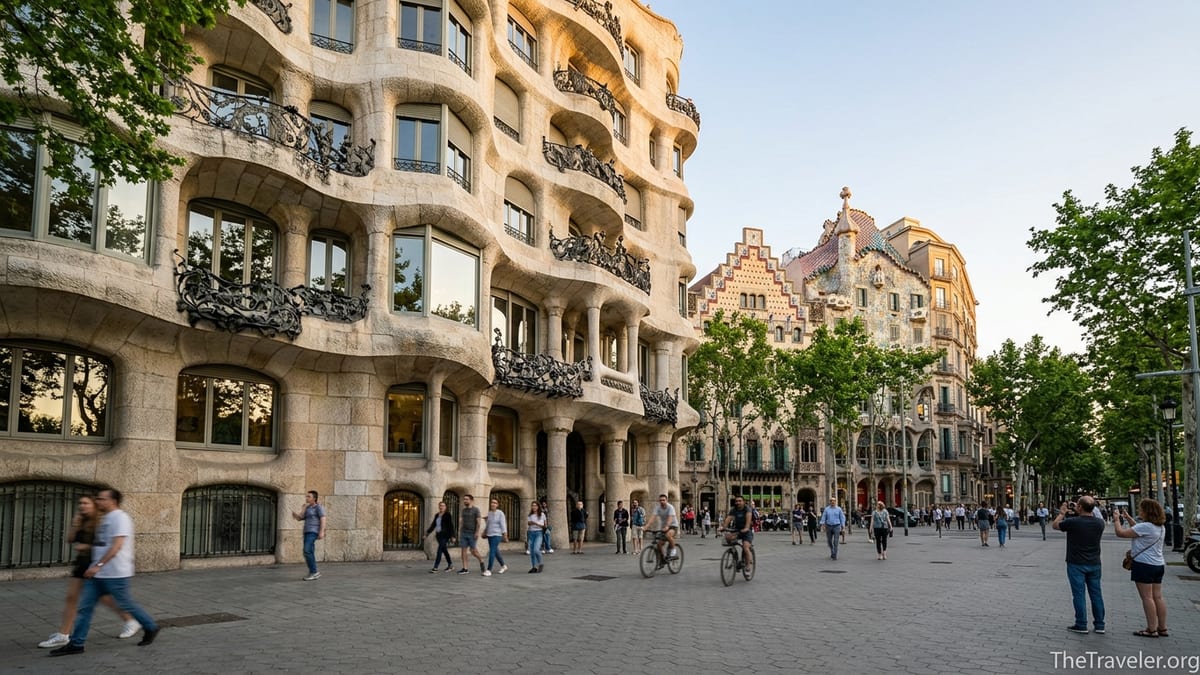
The Big Picture: Two Icons, Two Very Different Moods
La Pedrera, officially Casa Milà, rises at number 92 on Passeig de Gràcia, a wave of pale stone and wrought iron that locals long ago nicknamed the quarry for its rugged facade. Step inside and you feel you are in a pioneering early 20th century apartment block, with a central courtyard open to the sky, original lifts and a rooftop that looks like a gathering of stone warriors. It is grand but understated, more about structure, light and space than color and decoration.
Casa Batlló, at number 43 on the same avenue, is its extroverted cousin. The facade is a rippling skin of colored glass and ceramic, with balconies that resemble skulls and a roof that many interpret as the back of a dragon. This is the house that regularly stops traffic as visitors crowd the opposite pavement for photos. Inside, color and light dominate, stained glass floods the stairwells, and nearly every surface is curved or patterned. It feels immersive from the moment you pick up the audio guide.
In recent years Casa Batlló has leaned into this immersive, almost theatrical identity with features like its multi sensory Gaudí Dome and The Cube, an audiovisual room that surrounds you with digital projections synchronized to music. La Pedrera has gone in a more classic interpretive direction, focusing on Gaudí’s construction techniques, an attic museum and carefully restored apartments that reconstruct upper middle class life in Barcelona a century ago.
Most travelers walking away describe Casa Batlló as wow and La Pedrera as fascinating. Which leaves the stronger impression depends on whether you respond more to spectacle and color or to architectural ideas and city views.
Architecture & Atmosphere: Organic Fantasy vs Urban Quarry
Casa Batlló is where Gaudí’s organic imagination runs wild within the shell of an older building. The famous noble floor living room curves like the hull of a ship, with a ceiling that swirls around a central light fitting and windows that open onto Passeig de Gràcia with movable stained glass panels. A typical reaction here is to pause, look up at the ceiling and quietly whisper a profanity of admiration. The stair rail feels like polished bone under your hand, and even the doors on the landings have sinuous, custom made handles.
As you climb, the interior light well becomes a gradient of blue tiles, from pale near the bottom to deep cobalt at the top so that light feels even across all floors. This is not something you notice in photos, but in person it makes the building strangely calm despite the crowds. On the roof, the dragon back ridge, tiled in metallic greens and purples, is flanked by chimneys that look like groups of masked figures. It is dramatic in late afternoon when the tiles catch warm light and the crowds thin slightly.
La Pedrera in contrast impresses more from the outside and from its rooftop profile on the skyline of the Eixample. The interior courtyards, painted in soft greens and blues, are beautiful but more restrained. There is elegance in the way Gaudí bends the facade around the corners and uses structural stone to eliminate load bearing walls inside, but this subtlety lands most strongly with visitors who already appreciate architecture. The rooftop, however, is universally striking. Its sculptural chimneys and ventilation towers, clad in broken stone and ceramic, are taller and more imposing than those at Casa Batlló, and the flowing levels of the roof give wide views towards Sagrada Família and the sea.
If your mental image of Gaudí is strange silhouettes against the Barcelona sky, La Pedrera’s rooftop will likely stay with you longer. If you dream of walking inside a piece of Art Nouveau jewelry, Casa Batlló is the one that will haunt your photos and memory.
Visitor Experience, Crowds and Practical Details
Both houses are firmly on Barcelona’s must see circuit and are busy almost every day of the year. Casa Batlló currently operates with timed tickets from morning to evening, and on peak summer afternoons queues outside can form even for people with reservations. Families often choose earlier time slots around 9 to 10 am to avoid the thickest crowds, while couples who want softer photographs aim for the last entries of the day. The standard visits last about an hour, slightly more if you linger in the immersive rooms.
At La Pedrera, daytime visits also run on time slots, generally starting mid morning and ending in the early evening, with special late night rooftop sessions in high season. The flow inside tends to feel calmer because the route is more spread out: courtyard, attic exhibition, rooftop, then the recreated apartment. Even at busy times you often find brief pockets of quiet along the attic’s catenary arches or on parts of the rooftop where groups have just moved on.
In real terms, travelers often report Casa Batlló feeling more crowded despite being similar in visitor numbers because more of the route is enclosed and the visuals encourage people to stop and take photos at the same points. Expect to wait your turn near the noble floor windows and again along the dragon roof ridge. At La Pedrera the bottlenecks are mostly at the lift, certain viewpoints on the rooftop and inside the period apartment. If you are traveling with someone who gets easily overwhelmed in dense indoor crowds, La Pedrera will generally be the more comfortable choice.
Accessibility is decent at both sites, though not identical. Casa Batlló offers an accessible route with lift access and options that avoid some of the tight staircases, but the very top of the rooftop may still involve short flights. La Pedrera also has lifts and accessible routes, and because it was originally designed as an apartment building, the basic circulation is somewhat more forgiving. If you or your travel companion uses a wheelchair or has limited mobility, check the latest accessibility notes while booking and, in case of doubt, prioritize La Pedrera for a smoother overall experience.
Tickets, Prices and Value for Money
By mid 2026, standard timed entry to Casa Batlló typically costs more than a basic daytime ticket to La Pedrera. As an approximate reference, travelers frequently report general visit tickets for Casa Batlló in the range that many would consider a premium attraction in Europe, with prices varying slightly by season and options. Packages that combine the standard route with fast track entry or extras such as early access or special experiences can raise that price further.
La Pedrera’s daytime tickets usually sit a little lower for the basic visit, with separate pricing for premium options such as the night experience with a rooftop light show and a glass of cava. For many visitors, this means you can combine a daytime visit to La Pedrera with another paid attraction during the same day without feeling you have overspent, while a full Casa Batlló package might represent your main paid cultural experience for the day.
In terms of value, independent travelers often describe Casa Batlló as worth it for those who love immersive experiences, design and photography, especially once they discover the Dome and Cube installations in the basement that are included in most main tickets. The price can feel steep if you rush through in under an hour or if you are mainly interested in structural aspects of architecture rather than atmosphere. La Pedrera tends to be praised for offering a more complete, didactic visit at a slightly lower cost: it includes a substantial attic museum on Gaudí’s methods, a large rooftop and a recreated apartment, so you come away feeling you have seen several layers of the building.
If your budget only stretches to one premium Gaudí house and you are already investing in a Sagrada Família visit, the decision can come down to what you want that one house to deliver. For a single, intense hit of color and fantasy, accept the higher ticket price and choose Casa Batlló. If you want the most learning per euro, plus one of the best rooftops in the city, La Pedrera often wins the value contest.
Rooftops, Night Visits and Special Experiences
For many travelers the rooftop is the decisive factor, and both houses deliver very different high level experiences. Casa Batlló’s roof is compact, with the dragon back ridge on one side and groupings of chimneys on the other. From here you look down onto Passeig de Gràcia and across to neighboring buildings in the block of discord. The focus is close range detail rather than sweeping panoramas: the shimmer of the tiles, the sculptural forms and the play of light across the surfaces. Evening slots can feel especially magical as the city lights come on and the facade below is illuminated.
La Pedrera’s roof feels more like a landscape than a single terrace. You move up and down ramps between clusters of helmet like chimneys and stair towers, many clad in rough stone or ceramic fragments. The experience is more spatial and kinesthetic: children love running ahead over the undulating levels, while photographers appreciate the way silhouettes of the chimneys frame the distant Sagrada Família. The height and openness give a stronger sense of being on top of the city rather than simply looking at a decorative roof.
When it comes to night visits, La Pedrera’s dedicated evening experience on the rooftop is one of Barcelona’s more atmospheric cultural outings. Visitor numbers are capped, the building is subtly lit, and a sequence of projections and music plays across the rooftop forms, ending with a glass of cava. It works particularly well for couples, small groups of friends and solo travelers looking for something memorable without the intensity of a club or concert. Casa Batlló has offered occasional evening openings and events, sometimes linking music with the building’s spaces, but its most consistent special feature remains the immersive digital installations inside rather than rooftop theatrics.
If your travel memories are strongly tied to city views and night time atmospheres, spending on La Pedrera’s rooftop night experience can leave a deeper impression than a standard daytime ticket alone. If you are more drawn to experimental art and sensory storytelling, the multi media Cube at Casa Batlló may become the standout moment of your Gaudí days.
Who Should Choose Which: Matching Gaudí to Your Travel Style
Not all travelers want the same things from a landmark. Some crave vivid, Instagram friendly visuals; others prefer space to breathe and think. Casa Batlló is the better fit for visitors who love visual drama, design details and immersive storytelling. Design students, photographers, content creators and anyone who collects strong color images will likely come away more excited by the blues of the light well, the sinuous wooden staircase and the dreamlike roofline.
Families with children often find Casa Batlló engaging because the audio guides and projections feel like a narrative rather than a lecture. Kids tend to latch onto ideas like the dragon, the masks on the balconies and the underwater theme of certain rooms. The route also feels relatively short and varied, which helps hold attention. The trade off is that you need to prepare them for queues and close contact with other visitors, especially during peak months.
La Pedrera suits travelers who are curious about how people really lived in Gaudí’s time, who enjoy museums and are happy to spend time with models and displays explaining architectural concepts. It is also an excellent choice for those who dislike feeling rushed or squeezed in crowds. The recreated apartment, set with period furniture and everyday objects, tends to resonate with older visitors and those who enjoy social history. Travelers who like to sit on a bench in the attic exhibition and slowly read panels about Gaudí’s work in Barcelona will feel at home here.
For a couple on a short break, a typical pattern might be to visit Casa Batlló on the first afternoon, letting its visual impact set the tone for Gaudí’s world, and La Pedrera on a later morning or evening for a more reflective, panoramic experience. If you must choose only one, think honestly about whether you are more likely to remember a perfectly composed photo of a dragon roof glowing at golden hour or the slow climb through an attic of brick arches opening onto a rooftop cityscape.
The Takeaway
Put bluntly, Casa Batlló is Gaudí as spectacle and La Pedrera is Gaudí as architect. Casa Batlló’s color, curves and immersive installations hit you immediately; La Pedrera’s power builds gradually as you move from courtyard to attic to rooftop, seeing how structure, light and airflow were woven together in a pioneering residential building.
If your time and budget allow, seeing both offers the most rounded understanding of Gaudí and of Barcelona itself: one house anchored in bourgeois domestic life, the other transformed into a kind of habitable sculpture. For many first time visitors, though, reality intervenes and a choice must be made. In that case, travelers who prize emotion, color and spectacle should lean towards Casa Batlló, while those who value space, views and a deeper sense of how the architecture works will usually be more moved by La Pedrera.
Whichever you pick, pre book, go early or late to soften the crowds, and leave enough time to simply stand in one spot and look. Gaudí’s buildings reward stillness as much as they do snapshots, and the impression you carry home will depend as much on how you inhabit these spaces as on which famous name is printed on your ticket.
FAQ
Q1. If I only have time for one, should I choose La Pedrera or Casa Batlló?
For a single visit, choose Casa Batlló if you want maximum visual impact and immersive effects, or La Pedrera if you prefer calmer crowds, sweeping rooftops and more architectural context.
Q2. Which is better with kids, La Pedrera or Casa Batlló?
Most families find Casa Batlló more immediately engaging for children thanks to its colorful rooms, dragon and underwater themes and interactive audio guide, though La Pedrera’s rooftop and apartment also work well for curious older kids.
Q3. Which house has the more impressive rooftop?
Casa Batlló’s roof is smaller but very sculptural, while La Pedrera’s rooftop is larger, more varied in levels and offers broader views across Barcelona, which many visitors find more memorable overall.
Q4. Is Casa Batlló worth the higher ticket price?
It can be, especially if you value immersive multimedia, design and photography and plan to spend at least an hour exploring; if ticket cost is a concern and you prefer depth of information, La Pedrera usually feels like better value.
Q5. How can I avoid the worst crowds at both sites?
Book timed tickets in advance and aim for the first slots of the morning or the last entries in the evening, avoiding mid day and mid afternoon, particularly in summer and on weekends.
Q6. Which is more accessible for visitors with limited mobility?
Both offer lifts and adapted routes, but La Pedrera’s original apartment building layout and more spacious circulation generally make it a slightly easier experience for many visitors with mobility challenges.
Q7. Are the night visits at La Pedrera worth it compared to a daytime ticket?
For many travelers, yes: the combination of fewer people, atmospheric lighting, rooftop projections and a drink creates a distinct experience that complements or even surpasses a standard daytime visit.
Q8. Can I take good photos inside or are there restrictions?
You can usually take non flash photos for personal use in both houses; tripods, flashes and professional equipment are typically restricted, so expect to rely on handheld shots with natural or existing artificial light.
Q9. Is it realistic to visit both La Pedrera and Casa Batlló on the same day?
Yes, many travelers do both in one day by booking one in the morning and the other in the late afternoon or evening, with a break in between to avoid Gaudí fatigue.
Q10. How do these visits compare with seeing the Sagrada Família?
Sagrada Família is on a different scale altogether, more like a full cathedral experience, while La Pedrera and Casa Batlló feel like intimate deep dives into Gaudí’s domestic architecture and are best seen as complementary rather than alternatives.