


Airport lounge access has quietly shifted from a rare luxury to something many travelers now expect, especially on long or stressful travel days. One of the programs driving that change is LoungeKey, a network that lets you enter participating airport lounges simply by holding an eligible bank or credit card. But with alternatives like Priority Pass, airline-branded lounges, and pay-per-use options, is LoungeKey really worth using in 2026, or is it just another glossy perk that sounds better than it feels in practice?
Get the latest updates straight to your inbox!
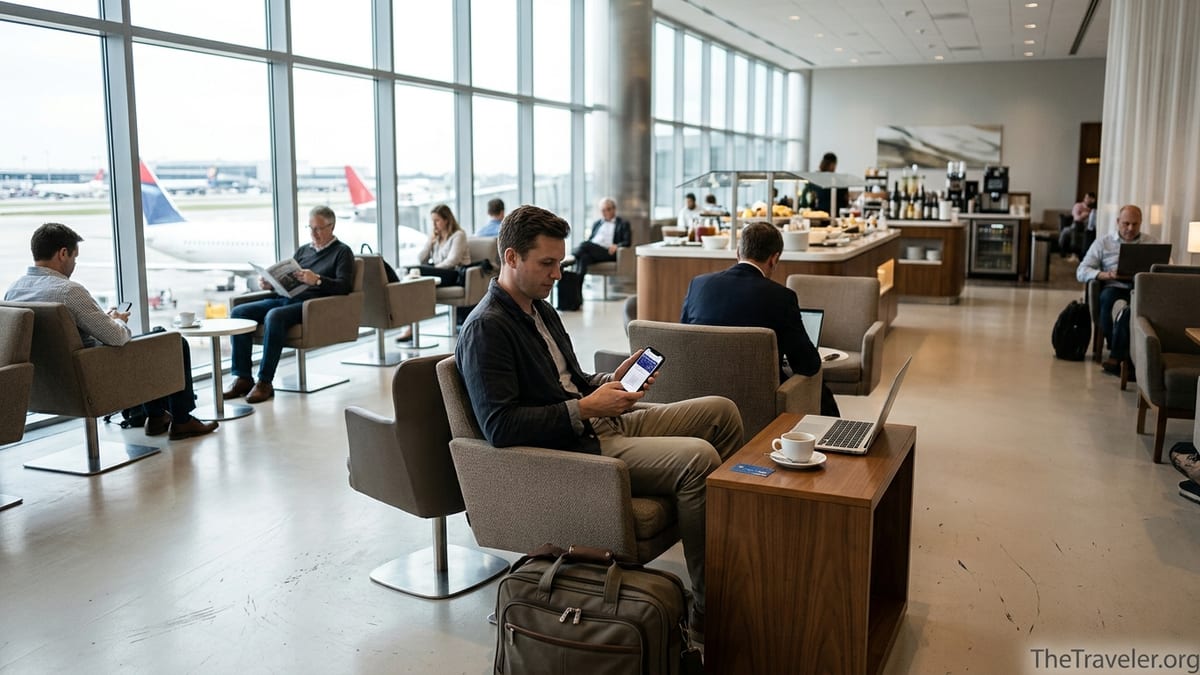
What LoungeKey Is and How It Actually Works
LoungeKey is an airport lounge access program operated by Collinson, the same company behind Priority Pass. Instead of selling memberships directly to travelers, LoungeKey is bundled into certain Visa, Mastercard, and bank-issued credit cards. If your card is eligible, you use that card itself (or a digital pass in the LoungeKey or bank app) as your lounge entry. There is no extra physical membership card and usually no need to sign a separate contract with LoungeKey.
In practice, this means that if you hold a qualifying card from a bank like HSBC, Revolut, or certain premium cards in the UAE, Europe, Asia, and Latin America, your card is effectively your lounge pass. At the door, you present your boarding pass plus the eligible card or scan a QR code from the associated app, and LoungeKey verifies that your card has active lounge privileges. Many banks require a quick one-time registration in the LoungeKey portal or app, but after that, the process is largely seamless.
Unlike airline lounges that tie access to cabin class or elite status, LoungeKey is airline-agnostic. You might be flying economy on a low-cost carrier from Vienna, Dubai, or Sao Paulo and still step into a contract lounge listed in the LoungeKey network. This flexibility is one of its strongest selling points, especially for travelers who often fly the cheapest available ticket rather than sticking to a single airline alliance.
It is important to understand that LoungeKey itself is primarily the access platform. The underlying lounges are typically independent or airline-run spaces that also partner with other networks like Priority Pass or DragonPass. So the experience you get depends on the specific lounge at that airport, not on LoungeKey alone.
Where You Can Use LoungeKey: Real Lounge Examples
LoungeKey’s footprint is smaller than Priority Pass but still broad, with well over 180 to 200 participating lounges and partner venues worldwide and new locations added or removed from time to time. A recent public lounge directory showed around 183 lounges accessible with LoungeKey across dozens of countries, from Afghanistan’s Pearl Lounge in Kabul to multiple options in Australia, Brazil, and key European hubs.
In Europe, for example, travelers departing Vienna International Airport can use LoungeKey to access the SKY Lounge in Terminal 3’s Schengen area, which offers snacks, drinks, Wi-Fi, and workspaces. At Brussels Airport, eligible LoungeKey users can access the Diamond Lounges in both the Schengen Pier A and non-Schengen Pier B, which typically provide buffet-style food, a selection of alcoholic beverages, and showers in some cases. These are the same lounges that many business-class passengers and airline elites use, but with LoungeKey you can access them even on a low-cost or economy ticket.
In Australia, LoungeKey partners with several Plaza Premium and independent lounges and even some “lounge-style” cafes. At Adelaide, the Plaza Premium Lounge in Terminal 1 is part of the network and offers hot food, drinks, and showers. In Brisbane, certain terminal cafes like Corretto Cafe & Bar and Graze Grill & Bar appear in LoungeKey’s listing, where eligible cardholders receive lounge-style access conditions in a restaurant setting. This model, which allows cardholders to use their benefit at sit-down eateries instead of traditional lounges, has become more common as airports rethink how they handle paid lounge guests.
In Latin America, LoungeKey holders may find multiple options in Brazil’s major airports. At Sao Paulo–Guarulhos, for instance, Bleriot Bar & Lounge in Terminals 2 and 3 has historically been available through LoungeKey, offering premium food, wine, and spirits in a quieter setting than the main terminal. The quality varies by lounge, but seasoned travelers often report that the best experiences are at well-known brands like Plaza Premium, Aspire, and some airline-branded partner lounges rather than the smallest contract spaces.
Costs, Guest Fees, and How Banks Structure LoungeKey Access
The biggest source of confusion with LoungeKey is cost, because LoungeKey itself does not sell you anything directly. The price you pay, if any, depends on how your bank or card issuer has structured the benefit. Some cards offer unlimited complimentary visits for the primary cardholder; others limit you to, say, 4 to 8 free visits per year, then charge a per-visit fee. Guest visits are almost always chargeable, typically around 25 to 35 US dollars per person per visit, billed to your card by LoungeKey or your bank.
For example, several banks in the Middle East and India that use LoungeKey state in their customer material that a pre-authorization hold of around 32 to 35 US dollars per person is placed at the lounge each time your card is swiped. If the visit qualifies as complimentary under your card’s rules, that amount is released automatically. If you have run out of free visits, the transaction posts as a lounge charge on your card statement at approximately that amount per visit. Travelers sometimes see this hold and panic, not realizing it may reverse within a couple of weeks if the visit is free.
In Europe, some premium Visa or Mastercard products effectively bundle LoungeKey as a hidden membership where the bank pays on your behalf up to a certain number of visits per year. A mid-tier card might include four complimentary LoungeKey entries annually, enough for two round-trips with one lounge visit per flight leg. Once those four visits are used, subsequent entries are often billed at a flat rate in the 25 to 32 US dollar range. If you travel once or twice a year, these free visits can comfortably cover your airport lounge needs without any extra spending.
It is rare in 2026 to find a card that offers completely unlimited free LoungeKey visits with unlimited free guests, especially outside top-end private banking products. Most issuers have tightened benefits or capped guest access due to rising lounge crowding and costs. As a result, LoungeKey works best when you clearly know your card’s visit allowance and expected per-visit fee, and you can compare that to what you would otherwise pay for food, drinks, and quiet space in the terminal.
LoungeKey vs Priority Pass and Airline Lounges
LoungeKey is frequently compared with Priority Pass, because both are run by Collinson and share a large proportion of the same underlying lounges. Independent comparisons published in 2025 and 2026 generally put Priority Pass ahead on raw coverage, with network figures often quoted at over 1,300 to 1,800 lounges for Priority Pass versus around 1,200 or fewer for LoungeKey. In practice, that means Priority Pass usually has more options in secondary or regional airports, while LoungeKey covers many of the main hubs but may miss some smaller locations.
The more meaningful distinction is how you join. Priority Pass can be bought directly by anyone or obtained as a benefit of cards like the Chase Sapphire Reserve, Capital One Venture X, or Amex Platinum (in its Priority Pass Select form). LoungeKey, by contrast, is not sold directly to individuals; you only get it through a participating bank or card. If you already hold a strong Priority Pass via a premium U.S. card, LoungeKey will rarely add significant extra coverage, since many of the same lounges accept both networks.
Compared with airline-branded lounges such as United Club, Delta Sky Club, or American’s Admirals Club in the United States, LoungeKey is more flexible but less predictable. Airline lounges are tied to a specific carrier or alliance and can feel more consistent: a United Club in Newark and one in Denver will share a similar basic standard. LoungeKey lounges, however, range from excellent independent spaces to basic contract lounges with limited hot food and minimal seating. On the other hand, you can often use LoungeKey even when flying an ultra-low-cost airline that offers no lounge access at all.
Another practical comparison is crowding. As more banks worldwide have bundled lounge access benefits into mass-market credit cards, both Priority Pass and LoungeKey have seen busier lounges and, at times, turned-away guests during peak hours. Some airports have responded by limiting access windows for these third-party networks, for instance only accepting LoungeKey guests during off-peak times. When this happens, having airline status or a premium cabin ticket for that carrier’s own lounge can still be more reliable.
Real-World Use Cases: When LoungeKey Shines and When It Disappoints
Imagine a traveler based in Oslo who holds a premium Norwegian credit card that includes four LoungeKey visits per year. She flies on a low-cost carrier to Brussels for a weekend city break, leaving on a Friday evening. The Schengen Diamond Lounge at Brussels Airport accepts LoungeKey, so she ducks in before her return flight, grabs a hot meal and a glass of wine, and catches up on emails. Without LoungeKey, dinner and drinks in the main terminal might easily run 25 to 30 euros, roughly the informal value of a lounge visit. For a traveler like this who flies three or four times a year, those bundled LoungeKey entries are a tangible, money-saving perk.
Now consider a frequent business traveler from Dubai flying long-haul to Europe and Asia every month. His corporate card includes LoungeKey but charges around 32 US dollars per visit after a handful of complimentary entries. Because he often departs from hubs like Dubai, Frankfurt, and Heathrow, he has access to a mix of high-quality airline lounges through his ticket or elite status. For him, paying out of pocket for extra LoungeKey visits is less compelling unless his main airline lounge is full or not accessible on a particular itinerary.
Another common scenario is the family holiday trip. A parent with a LoungeKey-enabled card arrives at Sao Paulo–Guarulhos with a spouse and two children. The card includes two free visits per year and charges for guests. If each extra guest visit is billed at roughly 30 US dollars, the family could easily see nearly 90 to 100 dollars of lounge charges added to their trip. In this case, it might be more economical to skip the lounge and have a relaxed meal at an airport restaurant, unless the family strongly values showers, quiet space for the kids, and a calmer environment before a long overnight flight.
Where LoungeKey often disappoints is in airports where the only participating lounge is very small or heavily used by multiple programs. Travelers report experiences of being turned away at certain times, especially in busy European and Asian hubs, or finding that food offerings are minimal. Because LoungeKey usually piggybacks on shared contract lounges, it is more exposed to this problem than closed-door airline clubs.
How to Check Your Coverage and Avoid Surprises
Given the variability, the key to making LoungeKey “worth it” is preparation. Before you travel, use the LoungeKey app or your bank’s lounge locator tool to check which lounges or partner restaurants exist at your departure and transit airports. Pay close attention to terminal and gate area; for instance, Vienna’s SKY Lounge is in Terminal 3’s Schengen zone, so it will not help you if you are departing on a non-Schengen flight from a different terminal.
You should also confirm your card’s specific rules. Some banks require you to register your card with LoungeKey in advance. Others automatically activate the benefit but track your free-visit quota in the background. If your card offers, say, six complimentary visits per calendar year, make a simple note in your phone after each use so you do not accidentally burn through your allowance and start incurring per-person fees unexpectedly.
Watch out for pre-authorization holds. It is common for lounges using LoungeKey to swipe your card and place a temporary hold of around 30 to 35 US dollars per person, even for cards that offer complimentary entry. This does not necessarily mean you are being charged. The hold usually drops off after a few days or up to two weeks if the visit is covered. However, if your free quota is used up, that hold may convert into a real charge, so checking your visit count before each trip is sensible.
Lastly, have a backup plan. If the LoungeKey lounge at your airport is full, closed for renovation, or has limited hours, you may want a secondary option such as paying directly for an alternative lounge, using an airline credit from your card at a restaurant, or simply budgeting for an upgraded meal in the terminal. Treat LoungeKey as one access channel, not your only lifeline.
Is LoungeKey Worth It for Different Types of Travelers?
Whether LoungeKey is “worth it” depends less on the sticker value of a lounge visit and more on your travel pattern and which card you already hold. If LoungeKey comes included with a card you would carry anyway for its core rewards or banking relationship, it is almost pure upside. In that case, even two or three enjoyable lounge visits per year could more than justify any modest annual fee difference between that card and a cheaper alternative.
For light leisure travelers taking one or two trips annually, a card that includes a small number of complimentary LoungeKey visits can be ideal. You get a peaceful space with snacks, drinks, and Wi-Fi before your big holiday flights without having to pay separately for a lounge membership. In many airports, a single lounge visit can easily offset what you would spend on airport food and drinks for a couple of hours, especially if you are traveling at mealtimes.
For frequent flyers without airline status who routinely pass through airports with solid LoungeKey options, the program can also deliver real value, especially when bundled with a card that offers multiple free visits. However, these travelers should compare LoungeKey-inclusive cards with alternatives that offer Priority Pass, airline club access, or even airline-specific credit cards that include entry to that carrier’s own lounge network. The best choice will hinge on which airports and airlines you actually use most.
On the other hand, if your card charges a per-visit fee for every LoungeKey entry, and you already have decent food vouchers, airline restaurant credits, or access via another lounge program, paying extra for LoungeKey visits may be unnecessary. In crowded hubs where the only available LoungeKey lounges are marginal in quality, the money might be better spent on a quiet restaurant meal near your gate.
The Takeaway
LoungeKey is neither a magic key to guaranteed luxury nor a useless gimmick. It sits in the middle: a broad, flexible access platform that can add meaningful comfort to your trips when used thoughtfully. Its core advantages are simplicity of access with eligible bank cards, airline-agnostic coverage across hundreds of lounges worldwide, and the fact that it is often baked into products you might hold anyway.
The downsides are real, though. Coverage is smaller than that of Priority Pass, lounge quality and crowding vary widely, and guest visits can quickly become expensive if your card does not include them. Pre-authorization holds and differing bank policies can also surprise travelers who do not read the fine print. All of this means LoungeKey rewards the traveler who does a little homework before each trip.
If you already have a LoungeKey-enabled card, the sensible approach is to treat it as a valuable but finite resource. Check coverage and opening hours in advance, keep track of your free visit allowance, and weigh the real cash value of each lounge visit against what you would otherwise spend in the terminal. Used this way, LoungeKey can absolutely be worth having, especially for occasional travelers and those flying economy on airlines that offer no lounge access of their own.
If you are choosing a new card primarily for lounge benefits, compare LoungeKey head-to-head with Priority Pass and with airline-specific options based on the airports you actually use. No single lounge program is best for everyone. For some travelers, LoungeKey will be the most convenient path to a quieter, more comfortable airport experience; for others, it will be a nice extra but not the deciding factor.
FAQ
Q1. What is LoungeKey and how is it different from Priority Pass?
LoungeKey is an airport lounge access program bundled with certain bank and credit cards, while Priority Pass can be purchased directly or via cards. Both use many of the same lounges, but Priority Pass generally has a larger network and is easier to get as a standalone membership.
Q2. How do I know if my credit card includes LoungeKey access?
Check your card’s benefits guide or your bank’s website and search for “airport lounge access” or “LoungeKey.” Many banks also show an airport lounge section in their mobile app that confirms whether your specific card is eligible.
Q3. Do I have to pay every time I use a LoungeKey lounge?
It depends on your card. Some cards include a fixed number of free LoungeKey visits per year, others charge a fee for each visit, and a few high-end products include unlimited complimentary visits. Guest visits are usually chargeable.
Q4. Can I bring guests into a LoungeKey lounge?
In most cases you can bring guests, but they count either against your free-visit allowance or incur a per-guest fee, typically around the cost of a standard lounge visit. The exact rule depends on your card issuer’s policy.
Q5. Are LoungeKey lounges as good as airline lounges?
Quality varies. Some LoungeKey partner lounges, such as major independent lounges in big hubs, can match or exceed standard airline club quality. Others are basic contract lounges with limited food and seating. It is best to read recent reviews of specific lounges you plan to use.
Q6. Does LoungeKey work in the United States?
LoungeKey has more limited coverage in the United States than in Europe or Asia, but you will find participating lounges in several major U.S. airports. Availability changes over time, so always check the LoungeKey app or your bank’s lounge locator before traveling.
Q7. What happens if a LoungeKey lounge is full when I arrive?
If a lounge is at capacity, staff may temporarily turn away LoungeKey and other third-party guests. In that case you can wait and try again later, or use other airport options such as pay-per-use lounges or restaurants.
Q8. Do I need to register for LoungeKey before using it?
Some banks require a one-time registration in the LoungeKey or bank app to generate a digital membership or confirm eligibility. Others allow you to simply present your card at the lounge. To avoid issues, register in advance if your bank recommends it.
Q9. Why do I see a temporary charge on my card after a lounge visit?
Many lounges place a pre-authorization hold of roughly the cost of a visit when you enter. If your visit is complimentary, that hold usually disappears after a few days or weeks. If your free quota is used up, it may be processed as an actual charge.
Q10. Is LoungeKey worth it if I already have Priority Pass?
If you have a strong Priority Pass membership, LoungeKey may not add much, since many lounges accept both programs. LoungeKey is most valuable when it comes bundled with a card you already use, or when it covers specific airports where your other programs are weak.