


Monaco is famous for roulette wheels, luxury yachts and roaring Formula 1 engines, but on the ground it feels much richer and more varied than that glossy postcard. Step a little away from the casino square and you find cliffside gardens, quiet neighborhood squares, surprising stretches of sand, intimate museums and coastal paths where the loudest sound is the sea. This guide focuses on what to do in Monaco when you are ready to look past the famous casino and supercars.
Get the latest updates straight to your inbox!
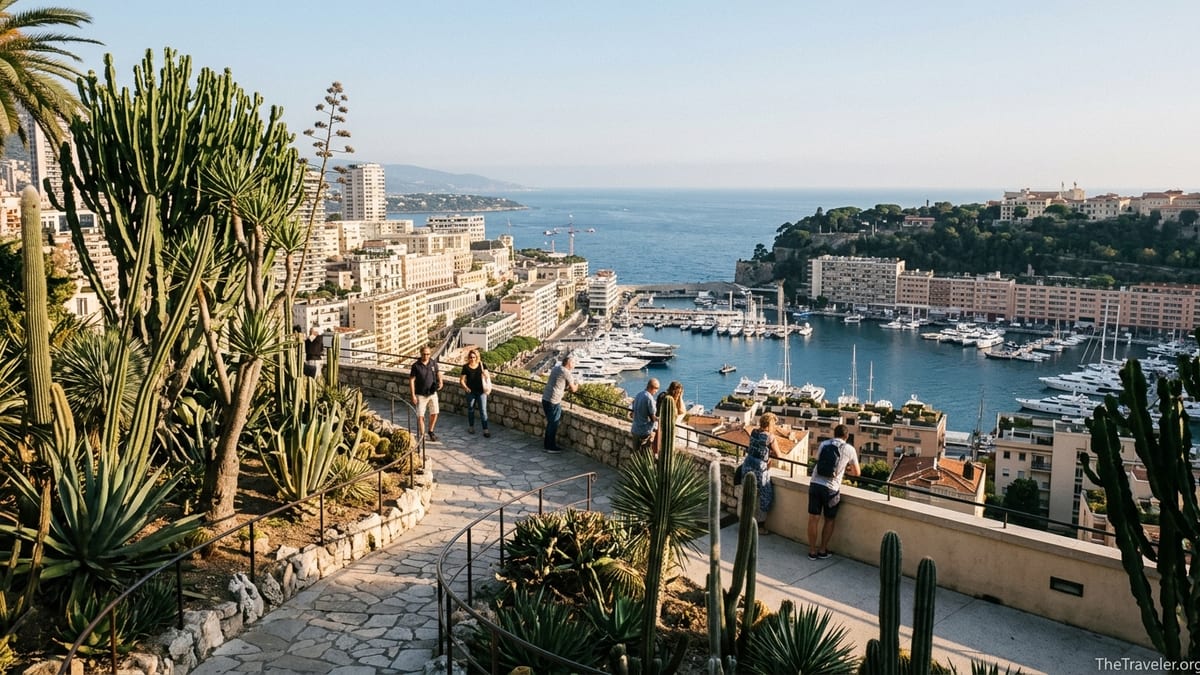
Explore Monaco’s Reopened Cliffside Jardin Exotique
High above the port, the Jardin Exotique is one of the most rewarding places in Monaco for travelers who want scenery and serenity instead of slot machines. After several years of renovation and safety work, the garden is reopening in 2026 with refreshed paths, reinforced cliffside walkways and reworked planting areas. Perched on a limestone cliff at the western edge of the principality, it offers some of the best panoramic views of Monaco’s dense skyline dropping dramatically to the Mediterranean.
The garden specializes in succulents and cacti from semi arid regions, so expect towering euphorbias, agaves and unusual aloes rather than manicured rose beds. The plantings cascade down the slope in terraces, with benches tucked into corners and viewpoints that frame the Palace Rock, Port Hercule and the skyscrapers of Larvotto. Because the microclimate is so mild, many species that you usually see indoors in Europe thrive outdoors here and can be photographed against a backdrop of sea and sky.
Allow at least one to two hours to wander the paths slowly. There are usually information panels in French and English explaining where each group of plants comes from, which turns a simple stroll into a mini world tour. Early morning or late afternoon light is particularly beautiful, and it is often a few degrees cooler here than down by the port, which makes it a smart escape on hot summer days. Check local listings or your hotel concierge for current opening hours and ticket prices, which are typically in the low to mid teens in euros for adults, with concessions for children and students.
If you are fit and not afraid of heights, look for the entrance to the Observatory Cave, accessible by a series of stairs from within the garden. Guided access may be offered again after the renovation period, taking visitors down into a cool limestone cavern filled with stalactites and stalagmites. It is an unexpected underground counterpoint to the blazing sun above and gives a sense of the geology that shaped Monaco’s cliffs.
Swim, Stroll and People Watch at Larvotto Beach
Monaco’s main public beach, Larvotto, is where locals and visitors alike come to remember that this is a seaside country, not just a skyline of towers. Set at the eastern end of the principality, the 400 meter long stretch of pebbly sand reopened fully in 2021 after a major redevelopment. The new design added a broad seafront promenade, shaded pergolas, children’s play areas and a series of bars and restaurants built into low buildings that keep the beach feeling human scale rather than resort dominated.
In summer, you can roll out a towel on the free public areas or reserve a lounger at one of the private sections that line the water. Renting a sunbed with umbrella for the day typically runs from around 30 to 60 euros depending on the venue, season and how close you are to the water. There are public showers and toilets, and lifeguards are usually on duty during the main season. The beach shelves gently, so it is suitable for families, and the seawater is generally clear, though it can get very busy on weekends in July and August.
Even if you are not a swimmer, Larvotto is ideal for a seafront stroll. The promenade links the Grimaldi Forum convention center with a string of cafes offering breakfast, ice cream or a glass of rosé while you watch joggers and families drift by. In the evening, the beach becomes more social, with locals meeting after work for an aperitif, and the last light of the day catching the glass towers along Avenue Princesse Grace behind you.
Outside peak season, from late September through May, Larvotto has a quieter, more local feel. You might see paddleboarders heading out on calm mornings or schoolchildren walking in groups along the waterfront. If you are looking for something wilder, a short walk toward neighboring Cap d’Ail or Cap Martin brings you to smaller coves just beyond Monaco’s borders, but for an easy and genuinely pleasant seaside experience without leaving the country, Larvotto is the obvious choice.
Dive into the Sea at the Oceanographic Museum
Occupying an ornate cliff hugging building that looks as if it grew from the rock itself, Monaco’s Oceanographic Museum is one of the principality’s signature attractions that has nothing to do with gambling. Founded in the early 20th century and long associated with Prince Albert I and Jacques Cousteau, it combines classic natural history displays with modern aquariums and immersive exhibits about marine conservation.
Ticket prices for adults are typically in the high teens in euros, with reduced admission for children and family passes that can bring costs down for a group. Combination tickets are often available that pair the museum with other sights such as the prince’s car collection, and travelers report that when online systems are down it is straightforward to buy tickets at the door. Allow at least two hours, more if you are traveling with children who will want to linger at the touch pools and interactive displays.
Highlights include the Mediterranean and tropical aquariums on the lower levels, where you can see everything from local sea bream and octopus to reef sharks and colorful clownfish. Upstairs, traditional galleries display coral specimens, model ships and oceanographic instruments, with explanatory panels that help you understand Monaco’s historic role in marine exploration. The museum also runs temporary exhibitions that might focus on topics such as plastic pollution, deep sea ecosystems or the work of contemporary photographers documenting the oceans.
Do not miss the rooftop terrace, which offers wide angle views over the water and the terracotta roofs of Monaco Ville. There is usually a café where you can have a simple lunch or coffee, and in warm weather the roof often hosts family activities and small play installations. Because the museum sits atop the Rock of Monaco, combine your visit with a wander around the Old Town streets just behind it.
Wander Monaco’s Old Town and Palace District
While the casino square in Monte Carlo feels polished and performative, Monaco’s historic heart sits a little apart on the rocky promontory of Monaco Ville. The narrow lanes here, often just wide enough for two people to pass, are lined with pastel houses, small souvenir shops and cafes serving reasonably priced fixed price lunches compared with the luxury addresses downhill. It is an easy area to navigate on foot, and most of it is pedestrianized, which makes it feel calmer than the traffic choked boulevards below.
The Prince’s Palace dominates the Rock, with a wide forecourt where you can watch the daily changing of the guard at about 11:55 each morning. Even if you skip the interior tour, which usually costs under 15 euros and includes state rooms and historic frescoes when open, the views from the ramparts across Port Hercule and the yacht filled harbor are worth the climb alone. In the summer season there are often evening concerts or open air events in this area, so check local listings if you are in town.
Behind the palace, follow the lanes to the Cathedral of Monaco, a Romanesque white stone church where members of the Grimaldi family, including Princess Grace, are buried. Inside, the atmosphere is quietly reflective, and there is no entrance fee, although modest dress and respectful behavior are expected. The surrounding streets offer small gelato stands, creperies and bakeries where you can grab a snack for just a few euros, proving that not everything in Monaco must break the bank.
On the southwestern side of the Rock, a series of viewpoints and small gardens look out over the district of Fontvieille and the open sea. This is a good place to understand how much land Monaco has reclaimed from the water over the decades. Benches and low walls invite you to sit for a while, and in the late afternoon the light over the sea can be beautiful. If you time it right, you can start your day at the Oceanographic Museum, explore the Old Town streets, watch the changing of the guard and then meander down toward the port in one unhurried circuit.
Walk the Coastal Paths and Discover Everyday Monaco
For travelers who enjoy walking, Monaco is far more rewarding than its compact size suggests. A network of elevators, escalators and staircases connects the different levels of the city, and several coastal paths allow you to step away from traffic entirely. One of the most appealing routes follows the seafront from near the Grimaldi Forum toward the border with Roquebrune Cap Martin, giving you alternating views of Larvotto’s small coves, rocky outcrops and the open Mediterranean.
Another good area for exploring on foot is Fontvieille, the relatively modern district built on reclaimed land to the west. Here, a harbor lined with apartment buildings and restaurants feels more like a neighborhood marina than a billionaire’s playground. There are casual Italian and Provençal style eateries where a main course can cost under 30 euros, and you will see office workers taking lunch on terraces rather than tourists posing with supercars. The waterside promenade loops past a small heliport, a playground and several modest green spaces.
Along the way, look for small public art installations and sculptures, some of which are marked on tourist office maps. These pieces range from abstract metal works to more figurative statues and reflect Monaco’s effort to present itself as a cultural destination as well as a financial one. Because distances are short, you can easily walk from Fontvieille to the Old Town and down again to Port Hercule in a single morning, using public lifts to save your knees on the steeper sections.
If you are staying in nearby Nice, Menton or Beaulieu sur Mer, commuting into Monaco by regional train is straightforward and often faster than driving. Services run frequently along the coastal line, and the arrival into Monaco’s underground station puts you a short walk from the harbor. Many visitors choose to spend the day exploring on foot, then catch an evening train back to their base town, which is an efficient way to enjoy Monaco’s atmosphere without paying its hotel prices.
Visit Under the Radar Museums and Cultural Spaces
Beyond the Oceanographic Museum, Monaco has several smaller cultural sites that are often overshadowed by the casino and the annual Grand Prix, yet can easily fill a relaxed day. One highlight for automotive fans, ironically, is not the casino’s car park but the Collection of Cars of H.S.H. the Prince of Monaco. This museum style exhibition brings together around a hundred vehicles from vintage racing cars and classic Rolls Royces to rally machines and quirky oddities, all displayed in a purpose built space near the Fontvieille district.
Entry prices for the car collection are typically in the single digit to low teens in euros, and combination tickets that include other attractions can offer good value if you plan your day ahead. Inside, clear information panels note each car’s history and any connection to famous races or personalities. Even travelers who are not devoted petrolheads often enjoy the sense of stepping through decades of motoring history, from early horseless carriages to modern Formula 1 machinery.
Art lovers can seek out the Nouveau Musée National de Monaco, which operates across different venues and hosts temporary exhibitions ranging from contemporary installations to fashion focused shows. Because the program changes regularly, it is worth checking the current exhibition before you visit to see if it matches your interests. Ticket prices are usually reasonable by Monaco standards, and visiting one of these spaces is a way to experience the principality’s cultural life without the crowds of the casino quarter.
Throughout the year, Monaco also hosts events such as the Monte Carlo Spring Arts Festival, summer concerts in the courtyard of the Prince’s Palace, and temporary outdoor exhibitions that place sculptures or installations along promenades and in gardens. You may find a classical concert announced on posters near the tourist office or stumble upon a small photography exhibit in a civic building. Dropping into these events gives you a more rounded sense of the country than simply ticking off the high profile sights.
Eat and Drink Like a Local, Not a High Roller
Dining in Monaco has a reputation for being eye wateringly expensive, and if you gravitate only to Michelin starred rooms in Monte Carlo hotels that reputation will hold true. But step a little off the main squares and you can find bistros, cafes and takeaways where prices are closer to what you might pay in Nice or Menton. In the Old Town around Rue Comte Félix Gastaldi and the lanes near the cathedral, fixed price lunch menus commonly offer a starter and main or main and dessert for roughly 20 to 30 euros, featuring dishes like grilled fish, pasta with local seafood or Niçoise style salads.
Another strategy is to use Monaco’s abundance of bakeries and small supermarkets to assemble simple meals. A filled baguette, piece of fruit and a drink can easily come in under 10 euros, and you can eat on a bench overlooking the harbor or in one of the small parks. Coffee at a bar counter is also far cheaper than sitting at a prime terrace table on Casino Square, where you may pay a premium simply for the view of supercars idling past.
In the Larvotto and Fontvieille districts, seafront restaurants often have both a fine dining menu and a simpler daytime offering of salads, burgers and pasta aimed at office workers and beachgoers. Look for daily specials written on boards in French and Italian; they are often the best value options, priced a little below the main menu items but made with fresh seasonal ingredients. House wine by the glass usually provides a more economical way to enjoy a drink with your meal than ordering by the bottle.
If you are visiting during one of Monaco’s busy event weeks, such as the Grand Prix or the Monaco Yacht Show, booking ahead becomes important even for casual meals. Outside those peak periods, you can often walk into neighborhood spots at lunch and early evening without a reservation. In any case, do not be shy about asking to see a menu with prices before you sit down. Staff are used to visitors on a range of budgets and would rather you choose happily than feel surprised when the bill arrives.
The Takeaway
Monaco’s image is so dominated by its casino and luxury scene that it is easy to forget how much else there is to experience in this tiny country. Cliffside gardens, a world class oceanographic museum, neighborhood harbors and a gently revamped public beach all show a different side to the principality, one focused on sea, sky and daily life rather than sequins and horsepower.
By structuring your visit around walking routes, gardens, museums and simple meals in local eateries, you can have a satisfying Monaco day trip or short stay without ever setting foot in a gaming room. You may still see the famous cars sweep by from time to time, but they become background details rather than the main event. With a bit of planning and a willingness to explore, Monaco reveals itself as more than a postcard backdrop for the rich. It becomes a compact, layered place where history, nature and modern life all jostle together on a few spectacular slopes beside the sea.
FAQ
Q1. Can I enjoy Monaco without visiting the casino at all?
Yes. You can easily fill one or two days with the Oceanographic Museum, Jardin Exotique, Old Town, Larvotto Beach, coastal walks and smaller museums without going near a gaming table.
Q2. Is Monaco affordable for budget conscious travelers?
Monaco is never truly cheap, but it is manageable with planning. Use regional trains from nearby towns, eat set menus and bakery lunches, and focus on walks, gardens and free viewpoints.
Q3. How much time do I need to see Monaco beyond the casino area?
A full day lets you sample the Old Town, Oceanographic Museum and the harbor. Two days give you time for Jardin Exotique, Larvotto Beach and some evening atmosphere.
Q4. What is the best way to get around Monaco without a car?
Walking combined with public elevators and escalators is usually fastest. Local buses link Larvotto, Monte Carlo, the Old Town and Fontvieille if you want to save your legs on hills.
Q5. When is the best time of year to enjoy Monaco’s outdoor attractions?
Late spring and early autumn are ideal, with warm temperatures and fewer crowds. July and August are hottest and busiest, while winter can be mild but quieter.
Q6. Are Monaco’s beaches really public or only for hotel guests?
Larvotto Beach has substantial free public areas alongside paid loungers. Anyone can access the sand and sea, although private sections charge for sunbeds and extra services.
Q7. Do I need to dress formally if I am not going to the casino?
No. Casual but neat clothing is fine for museums, gardens and most restaurants. Only a few high end venues expect more formal dress in the evening.
Q8. Is Monaco suitable for families with children?
Yes. The Oceanographic Museum, Larvotto Beach, playgrounds in Fontvieille and the palace guard ceremony all appeal to children, and distances are short for little legs.
Q9. Can I visit Monaco as a day trip from Nice or Menton?
Absolutely. Frequent regional trains make it easy to arrive in the morning, spend the day exploring on foot and return to your base town in the evening.
Q10. Do I need to book tickets in advance for attractions like the Oceanographic Museum?
Advance booking can be useful in peak season or on event weekends, but outside those times it is usually possible to buy tickets on the day at the entrance.