


Few places in Greece spark as much debate as Mykonos Town in peak season. On one side are the postcard images of whitewashed lanes, bougainvillea and golden sunsets over the Aegean. On the other are stories of cruise crowds, long taxi queues and 20 euro cocktails. If you are planning a summer trip and wondering whether Mykonos Town is worth it in the height of the season, the answer depends very much on what you are looking for, how you like to travel, and how carefully you plan your time on the island.
Get the latest updates straight to your inbox!
Understanding Peak Season Crowds in Mykonos Town
Peak season in Mykonos Town runs broadly from late June through early September, with the most intense period typically in July and August. Recent tourism studies using data from Mykonos Airport and the island’s port show that arrivals in July and August dwarf shoulder-season numbers, with hundreds of thousands of visitors packed into just a few weeks. In practical terms, that means the daily population can swell to many times the number of permanent residents, especially when you factor in seasonal workers and cruise passengers coming ashore for the day.
For a visitor on the ground, those numbers translate into very specific experiences. On a July afternoon, the narrow alleyways around Matogianni Street can feel like a one-way human river, with shoppers, Instagram photographers and tour groups competing for space. When two or three large cruise ships tender passengers into the old port at once, lines for popular viewpoints near the windmills and Little Venice can stretch several people deep. Travelers report situations where they have to queue just to reach an ice cream counter or to step onto the small waterfront platforms for a photo.
Evening crowds are often denser than daytime, as day-trippers waiting for their ferries are joined by overnight visitors streaming in for dinner and drinks. Peak dinner time between roughly 8:30 pm and 10:30 pm is when you are most likely to encounter waiting lists at central tavernas and cocktail bars, especially along the Little Venice waterfront and the lanes feeding into it. This pattern has become more pronounced in the last few years as Mykonos’ international profile has grown and social media exposure has increased.
Despite this, the experience is not uniformly overwhelming. The congestion is highly concentrated by time and location. Step a few streets back from the main shopping spine or explore the residential pockets above the harbor and you can still find stretches of quiet, even in high season. Understanding when and where the crowds peak is the key to deciding if Mykonos Town will feel thrillingly lively or simply too much.
The Timeless Appeal: What Makes Mykonos Town Special
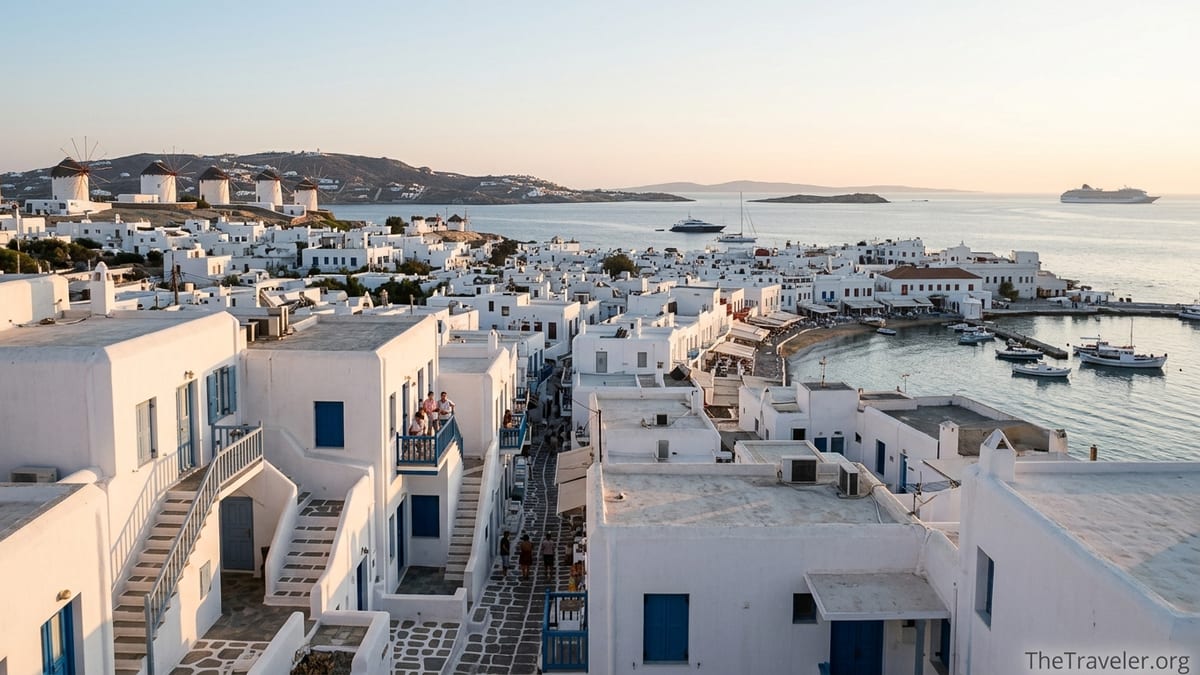
Mykonos Town, known locally as Chora, remains one of the most atmospheric Cycladic towns in Greece. Cars are largely kept out of the historic center, so you move on foot through a maze of whitewashed alleys framed by blue shutters, tiny chapels, and potted geraniums. The iconic row of windmills above town, built by Venetian merchants centuries ago, still watches over the harbor and has become a classic sunset viewpoint. Even in 2026, when the island’s reputation for luxury and nightlife is well established, the basic fabric of the town retains an older, seafaring character.
The Little Venice quarter, where old sea captains’ houses balance right at the water’s edge, faces west toward the sacred island of Delos. In the late afternoon, sun slants in over the balconies and surf splashes the walls below. Bars and small restaurants open their shutters to the breeze, serving everything from simple ouzo and meze to high-priced tasting menus. On a calm evening outside peak times, this stretch can still feel magical, with the pastel sky mirrored in the water and music spilling softly from upstairs terraces.
Beyond the postcard scenes, part of the town’s appeal lies in how compact and layered it is. You might pass a high-end jeweler or international fashion boutique on one corner, then turn into a lane where a local bakery sells sesame koulouri and strong Greek coffee to workers heading home. Small Orthodox chapels with red or blue domes stand wedged between houses, sometimes open for a few hours so you can step inside to see icons and flickering candles. Late at night, clubs near the old harbor and in hidden courtyards come alive, drawing a mix of international DJs, seasonal workers and visitors out until dawn.
For travelers who enjoy people-watching, Mykonos Town in season is rarely dull. Yacht tenders buzz in and out of the marina, local fishermen still land small catches at the old harbor, and you will hear snippets of conversation in Italian, French, English, Hebrew and many other languages. That sense of cosmopolitan buzz, layered onto a traditional Cycladic backdrop, is what keeps many visitors returning even as prices rise and crowds grow.
How Crowded Is Too Crowded? Realistic Peak Season Scenarios
Whether Mykonos Town feels “too crowded” in peak season is subjective, but some concrete scenarios help set expectations. Arriving by ferry on a Saturday in late July, you might find the new port area lined with tour coaches, private transfer vans and a queue for the shuttle bus to town. Once in Chora, the main public parking lot above town can be full by early evening, leading some drivers to circle tight one-way streets or give up and park farther out. Travelers have described turning back rather than attempting to wedge their rental cars into the congestion near the lot entrance.
At popular sunset spots, crowding can affect more than just ambience. Around 7:30 to 8:30 pm in August, the narrow strip of bars and terraces in Little Venice often fills completely. Staff may quote minimum spends for front-row tables, and it is not unusual to see people standing behind seated guests trying to snap photos over their shoulders. Up at the windmills, tour groups sometimes gather with guides holding aloft signs, and it can take patience to find a gap along the low wall for a clear, unhurried shot of the bay.
Dining can also require more strategy than on less visited islands. Walk-in diners at 9 pm in high season often face waits of 30 to 60 minutes at central tavernas, especially those with sea views. Some visitors report having to roam several streets before finding an available table or resorting to takeaway gyros from a fast-food counter because every sit-down spot in their price range is full. On the flip side, purely local-oriented places a few lanes away from the waterfront sometimes remain half-empty, but finding them takes a bit of research and willingness to skip the marquee addresses.
One of the less visible effects of crowding is infrastructure strain. On certain days in August, island authorities have had to manage water supply carefully and there can be periods of low water pressure or increased tanker truck activity. While most short-stay visitors do not notice more than occasional weak shower pressure or slightly longer waits for public buses, the underlying reality is that Mykonos in peak season is operating at or beyond its comfortable capacity. If you are sensitive to queues, noise and a constant buzz of activity, that is important to keep in mind.
Costs, Logistics and Daily Practicalities in Summer
Part of assessing whether Mykonos Town is worth a visit in peak season is understanding the cost level and practical logistics. Mykonos consistently ranks among the most expensive Greek islands. For 2024–2025, local guides and hotel associations report that a mid-range double room within walking distance of Chora in July or August often runs from about 250 to 400 euros per night, with sea-view boutique hotels and recognized luxury brands charging substantially more. Breakfast is not always included, and when it is not, hotel buffets may cost roughly 15 to 25 euros per person.
Eating and drinking in the heart of town also carries a clear premium. A coffee on a central square or in Little Venice might cost around 5 to 7 euros, compared with 3 to 4 euros at a café a few streets back or in a less flashy part of the island. Casual dinners at simple tavernas can land in the 25 to 35 euro per person range without drinks, while seafood dinners at fashionable spots on the waterfront or at beach clubs can easily exceed 60 euros per person with wine. There are budget options like bakery pies, souvlaki and takeaway gyros for under 10 euros, but you need to seek them out away from the most photographed corners.
Transport adds another layer. Mykonos Airport lies about 4 kilometers from town, and recent information from transfer providers indicates that taxi rides to Chora typically run around 15 to 25 euros, depending on time of day and demand. The public bus from the airport to the Fabrika bus station in town costs roughly 2 euros per person, with a journey time of about 15 to 20 minutes. Buses from Fabrika to major southern beaches such as Platis Gialos, Ornos and Paradise usually cost 2 to 2.50 euros each way, so a round-trip beach day can be relatively affordable if you are comfortable with sometimes crowded buses.
What catches many visitors out is the limited taxi fleet and late-night congestion. Estimates suggest there are only a few dozen official taxis serving the whole island, so queues in town after midnight in high season can stretch 30 to 45 minutes. Some visitors choose to rent cars, scooters or quad bikes, but parking in or near Chora is tight and the streets above town are narrow. Others opt for pre-booked private transfers, which often cost 5 to 15 euros more than a standard taxi for the same route but guarantee a vehicle at an agreed time. Factoring in those logistics helps you decide whether the energy of peak season feels worth the trade-offs.
Strategies to Enjoy Mykonos Town Without Being Overwhelmed
If you decide Mykonos Town is worth experiencing in peak season, smart timing and route choices make a significant difference. One of the best tactics is to explore early in the morning. Between roughly 7 am and 9:30 am, cruise ship tenders have often not yet started disembarking, nightlife revelers are still asleep, and shop shutters may still be half-closed. At this hour you can wander the alleys around the Panagia Paraportiani church, the old harbor and the backstreets behind Matogianni in relative quiet, with soft light for photos and room to breathe.
Similarly, late afternoon can be far more pleasant if you avoid the most obvious vantage points right at peak sunset. Instead of competing for a waterfront bar chair in Little Venice, you might buy a bottled drink from a kiosk and sit on a low wall near the small chapels up the hill, or head to a quieter viewing spot above the old harbor. Dinner at 7 pm or after 10:30 pm often involves far shorter waits than the 9 pm rush. Many seasoned visitors book one or two key dinners in advance for their chosen nights, then leave the rest of their meals flexible so they can duck into promising side-street tavernas instead of queuing.
Another helpful strategy is to base yourself slightly outside the densest part of town and walk in. Simple guesthouses on the hillside above the new port, or small hotels on the road toward Ornos, often give you a calmer place to retreat while still being 15 to 20 minutes on foot from the old harbor. From there you can dip into Chora when you want the buzz and step back out again when it starts to feel claustrophobic. Combining this with one or two day trips to calmer beaches such as Agios Sostis or Fokos, which lack big clubs and infrastructure, can balance the sensory intensity of the center.
Lastly, approach Mykonos Town with the right mindset. You are unlikely to have it to yourself in July or August, and prices will not suddenly drop into backpacker territory. Accepting that you are buying into a lively, high-demand destination helps manage expectations. If you treat the crowds as part of the spectacle, focus on a few core experiences such as a morning wander through quiet alleys, a single splurge sunset drink, and a late-night stroll by the harbor, you can leave with vivid memories rather than just frustration.
Who Will Love Peak Season Mykonos Town, and Who Should Skip It?
Peak season Mykonos Town is particularly well suited to travelers who thrive on energy and nightlife. Groups of friends in their twenties and thirties often appreciate the easy mix of beach days, late dinners and clubbing until dawn. For them, the packed streets and queues are part of the festival atmosphere, and the concentration of bars, restaurants and international visitors in a small area makes it easy to meet people. If you are the type who enjoys cities like Ibiza Town or central Barcelona in August, Mykonos Town in peak season is likely to feel exhilarating rather than oppressive.
It also appeals to travelers who prioritize aesthetics and are prepared to pay for the setting. Photographers, design lovers and fashion-focused visitors may accept a 20 euro cocktail in Little Venice because the sunset view and people-watching justify the splurge. Luxury travelers who value high-end beach clubs, boutique hotels with private plunge pools, and name-brand shopping in a compact area consistently list Mykonos as a favorite, especially if their budgets allow them to pre-book transfers, front-row sunbeds and premium dining slots.
On the other hand, certain travelers are unlikely to find peak season Mykonos Town worth the time and expense. Families with very young children, anyone who dislikes noise late into the night, and visitors who prefer slow, low-key village life are often better served in June, September or on other Cycladic islands such as Naxos or Paros. Budget-conscious travelers may find that the combination of high accommodation prices, premium drink costs and club entrance fees stretches their resources too far for the value they receive.
Those seeking what they imagine as “traditional Greece” can feel disappointed if they spend all their time in the most commercial parts of Chora and at the big party beaches. While local culture does exist, it is layered under an international party and luxury scene. If your dream is to sit in a quiet village square where most of the conversation happens in Greek and prices are noted on a handwritten chalkboard, a multi-night stay in Mykonos Town at the height of summer is unlikely to match your expectations.
The Takeaway
So, is Mykonos Town worth visiting in peak season, or is it simply too crowded? The honest answer is that it can be both at once, depending on who you are and how you travel. At its best, Chora offers an unmatched combination of Cycladic architecture, golden sunsets, upscale dining and lively nightlife, all packed into a pedestrian-friendly maze beside a sparkling harbor. At its worst, it can feel like an overexposed stage set, with cruise ship waves, long queues and inflated prices eroding the charm.
If you value atmosphere and energy above solitude and are prepared for higher costs and some logistical friction, Mykonos Town in July or August can still be a memorable highlight of a Greek island itinerary. With early-morning walks, strategic dining times and realistic planning around transport, you can experience the magic without being entirely overwhelmed. If, however, your priority is quiet lanes, low-key evenings and a more local-feeling environment, you may prefer to visit Mykonos in June or September or to focus on less saturated islands instead.
Ultimately, the key is to align the destination with your expectations. Mykonos Town in peak season is not a hidden gem, and it does not pretend to be. It is glamorous, busy, sometimes chaotic and often beautiful. Go for the right reasons, with your eyes open, and you are more likely to find it worth the hype rather than just another crowded stop on a very famous island.
FAQ
Q1. When is peak season in Mykonos Town and how busy does it really get?
Peak season typically runs from late June to early September, with July and August the busiest. During these months, streets, buses, restaurants and sunset spots in Mykonos Town can feel extremely crowded, especially when multiple cruise ships are in port.
Q2. Is Mykonos Town still worth visiting if I dislike crowds?
It can be, but you will need to plan carefully. Early mornings and late evenings are much quieter, and staying just outside the center helps. If you are highly crowd-averse, consider visiting in June or September instead of the very peak weeks.
Q3. How expensive is Mykonos Town compared to other Greek islands?
Mykonos is among the most expensive Greek islands. In high season, mid-range hotels near town often cost several hundred euros per night, and drinks or meals in prime locations are noticeably pricier than on islands like Naxos or Paros.
Q4. Can I explore Mykonos Town without a car in summer?
Yes. The historic center is pedestrian, and you can walk everywhere within Chora. Public buses link town with major beaches and the airport, taxis and private transfers cover late-night or longer trips, and many visitors manage fine without renting a vehicle.
Q5. Are there quieter areas of Mykonos Town even in peak season?
There are. Residential backstreets above the harbor, alleys behind the main shopping lanes and small squares away from the waterfront can be surprisingly calm, especially early in the day or after the main dinner rush.
Q6. Do I need dinner reservations in Mykonos Town in July and August?
For popular or view-focused restaurants, yes, reservations are strongly recommended in peak season. You can sometimes walk into smaller, less central tavernas without a booking, but for Little Venice or well-known spots you should reserve ahead.
Q7. How much should I budget for a day and evening in Mykonos Town?
Budgets vary, but for a mid-range traveler in peak season, it is reasonable to allow for around 50 to 100 euros per person per day for meals, drinks and small purchases in town, not including accommodation or major beach club spending.
Q8. Is Mykonos Town suitable for families in peak season?
Families can visit, but peak season crowds, late-night noise and high prices mean it may not be ideal for those with very young children or anyone needing early quiet nights. Many families prefer shoulder months for a more relaxed experience.
Q9. How do cruise ships affect the experience in town?
On days when large cruise ships call, thousands of day visitors may be tendered into the old port. This can significantly increase congestion in the lanes around the harbor, the windmills and Little Venice for several hours in the middle of the day.
Q10. If I only have one day, is it better to stay in Mykonos Town or visit the beaches?
With a single peak-season day, many travelers spend the morning and late evening exploring Mykonos Town and escape to a nearby beach such as Platis Gialos or Ornos in the crowded midday hours, combining both sides of the island in a balanced way.