


Mykonos Town, or Chora, is famous for designer boutiques and late-night clubs, but there is a very different side to this Cycladic capital. Between its whitewashed lanes and along the old harbor you will find small museums, working chapels, family-run tavernas, and sea views that have nothing to do with VIP tables or champagne parades. Whether you are visiting for a day from a cruise ship or staying a week, it is entirely possible to enjoy Mykonos Town without going near a dance floor or credit card-melting shopping street.
Get the latest updates straight to your inbox!
Slow Walks Through the Old Town Lanes
The easiest way to experience Mykonos Town beyond its nightlife is to simply walk, slowly, and ignore the shop windows. Start early in the morning, when cruise passengers and nightlife crowds are still sleeping. Streets around Matogianni can be empty at 8 a.m., so you can focus on the architectural details: the stone-paved alleys, the blue and red balconies, and the tiny chapels that locals still use daily. Many visitors say this is when Chora feels like an authentic Cycladic village instead of a resort backdrop.
Instead of following the main commercial drag, turn into the residential backstreets that run behind the waterfront. Here, the white houses are more lived-in than polished. You will see laundry hanging over lanes, local children cycling to school in shoulder seasons, and older residents sitting on low stools outside their doors. These quieter alleys are only a few minutes from the bustle, but the atmosphere is completely different.
Walking without a fixed route also helps you find useful everyday places: small bakeries selling spanakopita and tyropita for a few euros, or family supermarkets where you can stock up on water, fruit, and snacks rather than relying on pricey beach bars. Pause at simple neighborhood cafés where older men drink Greek coffee and play backgammon, and you will quickly see that Mykonos is still a real community underneath the tourism.
If you prefer a bit of structure, consider booking a Mykonos Town walking tour that focuses on history and architecture instead of bar-hopping. Many local guides now market morning or late-afternoon tours that visit churches, windmills, and viewpoints, and they usually cap the group size at around 10 to 15 people so that it still feels like a relaxed stroll through a village rather than a large excursion.
Explore Mykonos’ Small but Characterful Museums
For such a compact town, Mykonos offers an interesting cluster of small museums that tell the island’s story beyond beach clubs. Near the old port you will find the Archaeological Museum of Mykonos, established in the early 20th century, which focuses on finds from nearby islands and shipwrecks. Inside are ancient vases, funerary urns, and sculptures from the Cycladic and Classical periods, displayed in just a few rooms, so you can absorb everything in under an hour without museum fatigue.
In the heart of town, in the Tria Pigadia area, the Aegean Maritime Museum is housed in a 19th century Mykonian residence. Here you can see detailed ship models, navigational instruments, and historical charts that explain how Mykonos became a node on Aegean trade routes long before it turned into a party hotspot. The small courtyard, with stone paving and potted plants, offers a rare bit of shade and quiet just steps from the main lanes.
For a glimpse of everyday island life in the 19th and early 20th centuries, seek out the Folklore Museum and its associated Lena’s House, both located in restored traditional buildings. Inside you will find period furniture, embroidery, religious icons, and domestic objects that feel like someone just stepped out of the room. These museums are often run by local cultural associations, and staff are usually happy to explain how their grandparents lived before tourism transformed the island.
Up on the hill above town, one of Mykonos’ old windmills has been converted into the Agricultural Museum. This small open-air site at Boni’s Mill holds traditional tools and equipment used for grinding grain and pressing grapes, but the real reward is the sweeping view over Mykonos Town and the Aegean. Arrive in late afternoon and you can watch ferries gliding into the harbor with the town glowing in golden light, without the crowds that gather below.
Iconic Landmarks at a Quieter Pace
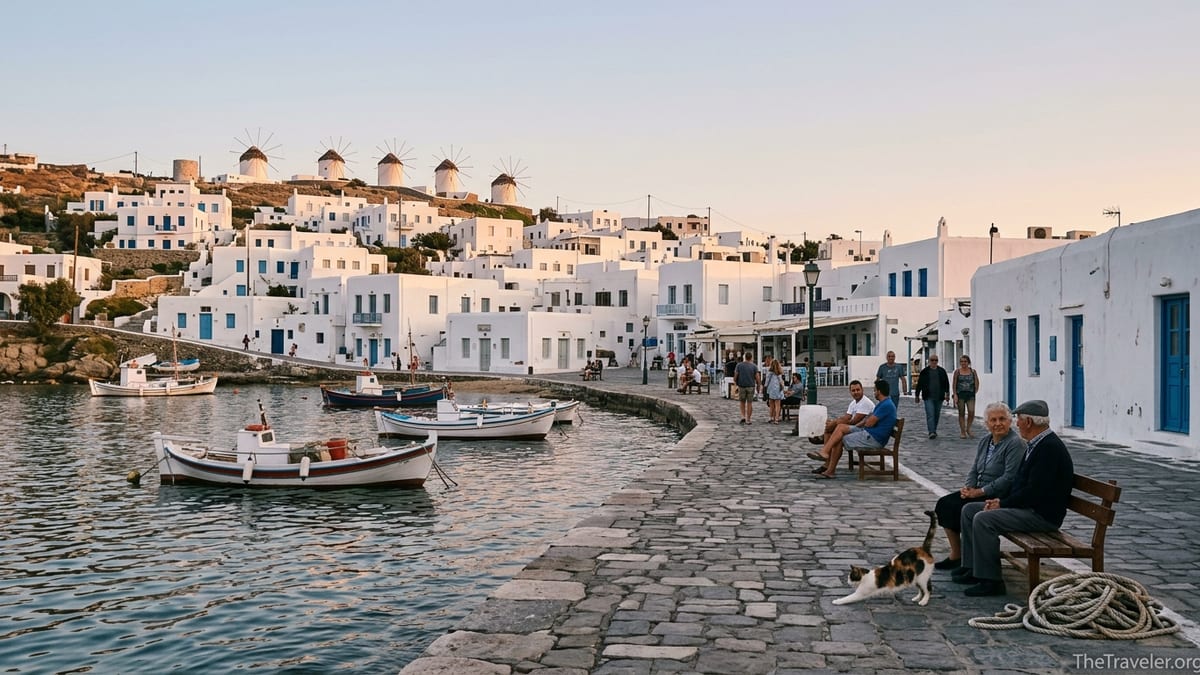
Some of Mykonos’ most photographed sights are heavily associated with postcards and social media, yet they can be enjoyed in a calm way with good timing. The row of windmills on the hill at the edge of town is usually packed at sunset, but if you walk up just after sunrise you may share the site with only a few locals walking dogs. The white cylindrical towers, set against a pale blue morning sky, feel more like historic infrastructure than props for photos.
Below the windmills lies the Alefkandra quarter, also known as Little Venice, where balconies hang directly over the sea. In the middle of the day this strip can be crowded with drinks and cameras, but if you arrive mid-morning or on a breezy day you can still find a café table for a simple coffee. Watching waves slap against the foundations explains why fishermen originally built their houses here, long before the neighborhood became a nightlife focus.
One landmark worth visiting regardless of crowds is the church complex of Panagia Paraportiani in the Kastro area, a short walk from the old harbor. This whitewashed structure is actually a cluster of chapels built over several centuries, with curved forms and irregular lines that change character throughout the day as the light shifts. Out of respect for locals who still use the church, dress modestly and avoid blocking entrances for photos when services are in progress.
While exploring these sites, pay attention to small churches and chapels scattered through the town. Many are dedicated to specific saints and are cared for by local families. When the doors are open, you can briefly step inside to see candlelit icons and painted ceilings, but keep visits quiet and quick. These tiny sanctuaries give a strong sense that Mykonos is not just a resort stage set, but a place where religious and community life continues behind the tourist façade.
Harbor Life, Coastal Walks and Lighthouse Views
The old harbor is more than a pier for excursion boats. In the early morning, you may see fishermen unloading their catch directly onto the quay, while delivery trucks supply bakeries and grocers in the old town. Sitting on a bench with a takeaway coffee from a nearby bakery, watching cats weave between mooring ropes and fishing nets, can be as memorable as any nightclub. Prices around the harbor can vary, but choosing places that are full of Greek speakers early in the day is a good sign you are paying local rather than purely tourist rates.
From the harbor, it is easy to create your own coastal walk. Head north along the waterfront path toward the new port at Tourlos, and you will pass small churches, rocky coves, and occasional swimming spots used by residents. The path is exposed to sun and wind, so bring water and a hat, but in exchange you get changing angles on Mykonos Town and the cruise ships anchored offshore. This walk can be done in sandals, though trainers make it more comfortable.
If you have half a day and access to a car or scooter, consider a trip to the Armenistis Lighthouse on the northwestern tip of the island. The lighthouse, dating from the 19th century, sits on a bluff overlooking the sea lanes between Mykonos and Tinos. Arrive in the hour before sunset and you will share the view mostly with photographers and couples rather than party groups. The road there is narrow with some rough patches, so drive slowly, and bring a light jacket as the wind can be strong even in high summer.
Closer to town, you can also take gentle strolls along the small town beach near the harbor and the more exposed stretch below the windmills. While these are not the most impressive beaches on Mykonos compared with those on the south coast, they provide easy saltwater access without needing a taxi or beach club reservation. Locals sometimes swim here in the morning before work, which can be reassuring if you are wondering about currents and water quality.
Food, Coffee and Local Flavors Without the Party Scene
Eating well in Mykonos Town does not have to revolve around glamorous dinner reservations or bar snacks. Start with breakfast in a traditional bakery or patisserie just off the main lanes. Many serve fresh bougatsa, baklava, and sesame bread rings at prices that are still close to mainland levels, especially if you stand at the counter rather than sit at a waterfront table. Ordering Greek coffee or a simple freddo espresso instead of signature cocktails will also keep your budget in check.
For lunch, look for tavernas a street or two back from the harbor, where menus list grilled sardines, moussaka, and stuffed vegetables alongside the inevitable salads and souvlaki. While prices across Mykonos have risen in recent years, you can still find set menus or generous plates for moderate prices if you avoid venues that focus on elaborate plating and DJ sets. Ask for the local kopanisti, a spicy Mykonian cheese spread, and pair it with tomatoes and rusks for a light but filling meal.
In the evening, you do not need to join the club circuit to enjoy the atmosphere of Mykonos Town. Choose a small ouzeri or wine bar that attracts a mix of locals and visitors, ideally somewhere with a couple of outdoor tables on a quiet lane rather than on the loudest squares. Ordering a carafe of house wine or a couple of glasses of ouzo with meze is a much smaller commitment than buying individual cocktails in high-profile bars, and comes with the added bonus of unhurried conversation rather than blasting music.
If you prefer a completely alcohol-free stay, focus on dessert cafés and gelato shops after dark. Many stay open late, catering to families and couples who stroll through town for an ice cream or loukoumades rather than a night out. This can be an especially good option if you are traveling with children or just want to soak up the evening atmosphere without dealing with crowds inside bars.
Easy Day Escapes: Delos and Quiet Beaches
One of the most rewarding ways to use Mykonos Town as a base is to leave it for a few hours. Regular excursion boats and organized tours depart the old port for Delos, the uninhabited island that is one of Greece’s most important archaeological sites. A typical visit includes a short ferry ride, a guided walk through the remains of ancient temples and houses, and free time to climb the hill for panoramic views of the Cyclades. Expect the site to be hot and exposed, so pack water, a hat, and sunscreen. Even if you usually avoid ruins, Delos can bring context to your holiday by showing how central this part of the Aegean was in antiquity.
If you would rather focus on the sea, use local buses or a taxi boat from nearby beaches to reach quieter stretches of sand. Beaches like Agios Stefanos, just north of the new port, or more remote coves on the north coast typically have a slower pace than the famous party beaches. Many offer a mix of paid sunbeds and free sand where you can lay your own towel, as well as a couple of simple tavernas where you can eat grilled fish or a Greek salad with a sea view.
For travelers on a budget or those who dislike loud music, this combination of low-key beach time and a culturally focused base in Mykonos Town can make the island feel surprisingly relaxed. You can spend morning hours exploring churches and museums, take an afternoon bus to a calmer beach, and be back in town in time for a quiet dinner. Booking accommodation within walking distance of the old town will reduce your reliance on taxis, which are limited and can be expensive in peak season.
Boat companies and tour operators often adjust schedules slightly each year, so when you arrive in Mykonos Town check information boards along the harbor or ask at your hotel reception for the current departure times and approximate prices. Booking one of your first mornings for Delos and leaving another day free for a flexible beach excursion is a good compromise between planning and spontaneity.
The Takeaway
Mykonos Town’s reputation for luxury shopping and a high-energy nightlife scene is deserved, but it only tells part of the story. If you slow down your walking pace, shift your focus from shop windows to chapel doors, and trade cocktail lists for museum opening hours and ferry timetables, Chora quickly reveals a gentler character. This is a place of fishermen and lighthouse keepers, of families tending small churches, and of narrow lanes that are at their best in the quiet light of early morning.
By structuring your stay around simple pleasures like harbor walks, local bakeries, small museums, and half-day escapes to Delos or a calm beach, you can enjoy Mykonos Town without feeling pressured to shop or stay out late. You will still see the iconic windmills and whitewashed houses that fill travel brochures, but you will also collect quieter memories that feel more personal: a conversation with a museum guide, a view from a hillside mill at sunset, or a peaceful swim before the town wakes up.
In the end, the best things to do in Mykonos Town beyond shopping and nightlife are not secret or exclusive. They are often the most traditional and accessible experiences, hiding in plain sight behind the neon. With a bit of planning and a willingness to explore a block or two away from the busiest streets, you can discover a version of Mykonos that feels timeless, even in the height of summer.
FAQ
Q1. Is Mykonos Town worth visiting if I am not interested in nightlife?
Yes. Mykonos Town offers historic churches, small museums, scenic harbor walks, and easy access to Delos and quieter beaches, so you can comfortably avoid bars and clubs.
Q2. When is the best time of day to explore Mykonos Town without crowds?
Early morning, roughly between 7 a.m. and 10 a.m., is usually the calmest time, before cruise visitors arrive and before most shops and nightlife venues become busy.
Q3. Can I enjoy Mykonos Town on a budget without shopping or clubbing?
Yes. Focus on bakeries, simple tavernas, and self-guided walks, use local buses for beach trips, and choose guesthouses within walking distance of town to avoid high taxi costs.
Q4. Are the museums in Mykonos Town suitable for children?
Most are small and manageable for families. The Maritime Museum, Agricultural Museum, and Folklore Museum are compact, with short visits that work well for school-age children.
Q5. Do I need a car to explore beyond Mykonos Town?
No. While a car gives flexibility, local buses, organized tours, and taxi boats to beaches cover many routes. For most visitors staying in or near town, a car is optional rather than essential.
Q6. How much time should I plan for a visit to Delos from Mykonos Town?
Allow at least half a day. The round-trip boat ride plus two to three hours on the island is typical, including time to walk through the ruins and climb to the main viewpoint.
Q7. Are there quiet places to swim near Mykonos Town?
There are small swimming spots near the harbor and below the windmills, and nearby beaches such as Agios Stefanos are reachable in minutes by bus or taxi for a calmer swim.
Q8. What should I wear when visiting churches in Mykonos Town?
Dress modestly, with shoulders and knees covered where possible, especially if services are taking place. Avoid loud behavior and keep visits brief and respectful.
Q9. Is Mykonos Town walkable for travelers with limited mobility?
Many central streets are pedestrian but can be uneven, with steps and slopes. The harbor promenade is flatter, so travelers with limited mobility may prefer to focus activities there.
Q10. How many days do I need in Mykonos Town if I am not partying?
Two to three full days is usually enough to explore the old town, visit museums, take a Delos excursion, and enjoy at least one relaxed beach day without rushing.