


I went to Saigon, still officially called Ho Chi Minh City, with that vague, backpacker-era expectation that it would be frenetic, cheap, a bit chaotic and somehow “authentic Asia.”
What I actually found was a city in transition: dense traffic, rising prices, serious humidity, a nightlife scene that rarely sleeps, and a complicated relationship with its own history.
Parts of the trip were memorable in the best way. Other parts left me wondering if I would choose Saigon again over other Southeast Asian cities. If you are asking whether Saigon is worth visiting, my answer is yes, but only if you go in with the right expectations and a clear idea of what you want from the experience.
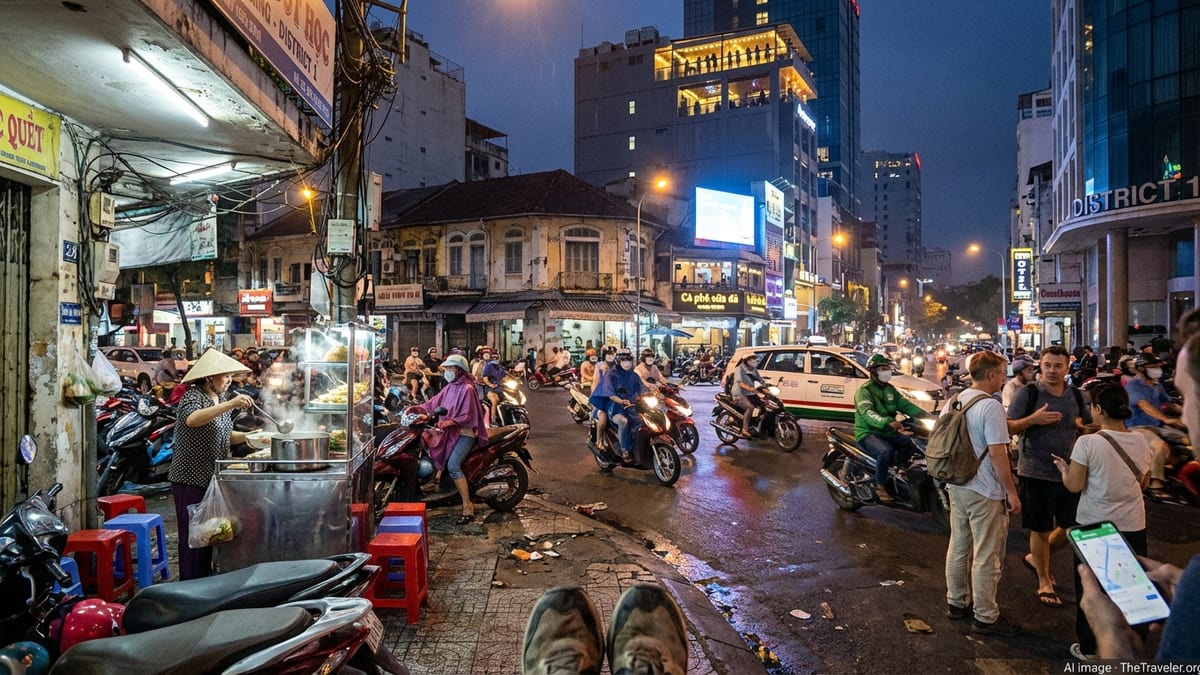
First Impressions: Heat, Noise, and a City That Hits You Fast
My introduction to Saigon was Tan Son Nhat International Airport, which is relatively small for the number of people passing through it. Immigration was straightforward, but baggage reclaim felt understaffed and slightly disorganized, with luggage from multiple flights piling up on the same carousel. After clearing customs, I walked into a wall of heat and humidity that felt like opening an oven door. If you come from a milder climate, that first breath outside is a shock.
Getting from the airport to District 1, where many visitors stay, is straightforward on paper but more stressful in reality. There are official taxi stands, ride-hailing pickup zones, and airport buses like the 109 that run into the center until around 1:30 in the morning. Taxis and Grab rides are available 24 hours a day, but I quickly learned that drivers are not shy about claiming “no change” for larger bills and nudging tourists into overpaying. I was glad I had broken my larger notes at an airport kiosk before stepping outside.
Driving into the city at night, the first thing that hit me was the traffic. Motorbikes stream in every direction, often ignoring lane markings and squeezing into any available gap. It looks lawless at first, but there is a rhythm to it. Horns are used more as a language than a sign of anger. From the back seat of the taxi, the city seemed to flicker past in neon and LED screens, with street-level food stalls underneath glowing glass towers and rooftop bars. Saigon announced itself as a place that never really quiets down.
By the time I reached my hotel in District 1, my shirt clung to my back and my senses were buzzing. If you like a gentle ease into a destination, Saigon does not offer that. It throws you straight into the deep end, for better or worse.
Getting Around: Crossing the Street is a Skill, Not a Joke
Within a day, I realized that the defining experience of Saigon is not a particular landmark but the simple act of getting around. The city’s center is mostly flat and, in theory, walkable, but the reality is that pavement is often blocked by parked motorbikes, street food stalls, and construction. I found myself stepping off sidewalks into the road constantly, sharing space with a stream of scooters that treated lanes as suggestions.
Crossing the street requires a specific technique that sounds reckless until you understand the local logic. I was told to pick a gap, step out confidently, walk slowly and predictably, and avoid sudden stops. The motorbikes flow around you like a river around a rock. It is unnerving the first few times. My instinct to dart or run was the opposite of what I needed to do. After a couple of days, I did get used to it, but I never felt totally relaxed as a pedestrian. This is not a city designed for leisurely strolls in the way of Bangkok’s better sidewalks or Singapore’s organized crossings.
For longer distances I relied heavily on Grab, the regional ride-hailing app. It is cheaper than most Western cities, but it is no longer the almost-free bargain that older travel blogs still describe. Short rides around the central districts were inexpensive, but traffic congestion could turn a 10 minute hop into a 30 minute crawl during rush hours. Air conditioning in cars was not optional, it was survival. I skipped motorbike taxis because the idea of weaving through Saigon’s traffic without a full sense of control did not appeal to me, though many travelers swear by them for speed and price.
Public buses do exist, and the airport lines are reasonably clear, but I found the broader bus network confusing without local language skills or patience for trial and error. There is a growing urban rail project under construction, with overhead tracks and stations visible in some areas, but it is not yet functional in a way that would transform the visitor experience. For now, getting around Saigon still means negotiating with the traffic, either from the back seat of a car or on your own feet.
History and Sights: Important, Heavy, and Sometimes Underwhelming
Saigon’s most visited attractions are not amusement parks or shopping malls, but sites tied to its war-torn past. I spent several hours at the War Remnants Museum in District 3, and it was one of the most emotionally heavy travel experiences I have had. The museum is open daily, generally from 7:30 in the morning to around 5:30 in the afternoon, with a midday break. Inside, the exhibits are blunt and graphic. Photographs of civilian casualties, Agent Orange victims, and battlefield scenes confront you in a way that leaves no emotional distance.
I found the museum both necessary and problematic. Necessary, because it forces visitors to witness the human cost of conflict. Problematic, because the narrative is very one-sided, with little nuance about the broader context or the suffering on all sides. I left feeling weighed down and slightly manipulated, but I do not regret going. It is not a museum for children or for anyone expecting a neutral, clinical presentation. If you visit, go at opening time or later in the afternoon to avoid the tour bus crush in late morning, and give yourself space afterward to decompress.
Another essential stop is the Independence Palace, also known as Reunification Palace. The building itself feels like a time capsule of 1960s architecture and interior design, preserved almost as it was on the day tank tracks rolled through its gates. The control rooms, underground bunkers, and communications equipment are fascinating, but the signage can be sparse or repetitive. I walked through on a sweltering afternoon and found that the lack of air conditioning in parts of the building made it hard to linger and read everything in detail. Again, the story is presented in a specific national narrative. It is important, but it is not neutral.
What surprised me most was how underwhelming some of the city’s iconic symbols felt in person. The Notre Dame Cathedral of Saigon, a red-brick landmark built in the late 19th century, was wrapped in scaffolding and fencing due to an extended restoration project that is now scheduled through around 2027. I had imagined walking inside and admiring stained glass and cool stone interiors. Instead I found myself peering through barriers and trying to take photos that did not include construction materials. The adjacent Central Post Office, with its high ceilings and old-world charm, was open but busy and partly overrun by souvenir stands.
Day Trips and War Tourism: Cu Chi Tunnels and the Mekong Delta
One of the big draws around Saigon is the chance to visit the Cu Chi Tunnels, a complex of underground passages used by guerrilla fighters during the war. The tunnels are located well outside the city, and getting there meant a long bus ride on choked roads. I joined a standard group tour that included transport, entrance, and a guide. On paper it sounded efficient. In practice it was a day of being shuttled between photo stops, souvenir opportunities, and the actual historic site.
The tunnels themselves are undeniably impressive as feats of human endurance and ingenuity. I crawled through one section that had been widened for tourists and still found it claustrophobic and physically demanding, even for a short stretch. It gave me a visceral glimpse into what life underground might have felt like. However, the experience was also heavily commercialized. There is a shooting range where visitors can pay to fire weapons like AK-47s, which I personally found jarringly insensitive given the context. The mix of solemn history with a theme-park atmosphere did not sit well with me.
I also took a day trip to the Mekong Delta, another classic Saigon excursion. The promise of lush waterways, coconut candy workshops, and “authentic rural life” sounded tempting. The reality on my tour was that every stop was closely choreographed: a quick boat ride, a short walk to a family business, a demonstration, and then an opportunity to buy something. I understand that tourism is a key income source for these communities, and I do not begrudge anyone for trying to earn a living. But the scripted nature of the experience made it hard to shake the feeling that I was moving through a performance rather than witnessing daily life.
If I did it again, I would research more carefully and pay extra for a smaller-group or private tour that focuses less on shopping and more on conversations with locals and quieter waterways. The mass-market day trips from Saigon are efficient and affordable, but they come with a kind of factory-tour feeling that may disappoint anyone looking for something more organic.
Food and Coffee: High Points with a Few Caveats
Food was where Saigon largely redeemed itself for me. Street-level meals are still inexpensive compared to Western cities, even though prices have risen in recent years. I had bowls of phở that cost a fraction of what I would pay at home and tasted far better, with rich broth and fresh herbs. Small, plastic-stool eateries on the sidewalk served up cơm tấm, broken rice with grilled pork and pickled vegetables, that I still think about months later.
That said, not every meal was a revelation. In the most touristy clusters of District 1, I noticed a clear two-tier system: stalls and restaurants that targeted locals with mostly Vietnamese-language signage and modest prices, and places that had English menus, higher prices, and blander food. It is possible to eat very well in Saigon, but it does require a bit of effort to step away from the obvious strips and explore side streets or neighborhoods slightly away from the backpacker density.
Cafes were a standout. Saigon has fully embraced café culture, from tiny street stands serving thick, drip-filtered cà phê sữa đá to sleek, air-conditioned third-wave coffee shops that would not look out of place in Melbourne or Berlin. On more than one afternoon, the combination of intense heat and sightseeing fatigue pushed me into a café where I could cool down, recharge my phone, and enjoy a strong coffee. The prices in trendy places approached Western levels, but the quality was correspondingly high. If you value good coffee and a place to sit quietly with your thoughts, Saigon delivers.
One frustration was hygiene inconsistency. I did not have any serious stomach issues, but I met fellow travelers who did. Tap water is not safe to drink, and ice can be dubious outside more established venues. I found myself constantly buying bottled water and being selective about where I ate fresh herbs and salads. The local food is worth the minor anxiety, but Saigon is not the kind of city where you can casually drink from the tap and forget about it.
Costs, Comfort, and the Reality of Staying in Saigon
Before going, I had read countless older blog posts that described Saigon as an ultra-cheap haven where you could live like royalty on a shoestring. That is no longer accurate. While still relatively affordable compared to many Western cities, Saigon has clearly moved into a more expensive phase, particularly in central districts and for anything aimed at international visitors.
Accommodation was a good example. Basic guesthouses and budget hotels exist, but I found that truly cheap options often came with trade-offs in cleanliness, noise, or security that I was not willing to make. Mid-range hotels, particularly in District 1, were priced closer to what I might pay in parts of Eastern Europe. Rooftop pools and skyline views were marketed heavily, sometimes more than the basics of comfortable beds and reliable hot water. On the positive side, air conditioning was standard, and I never had trouble finding a place with stable Wi-Fi.
Daily expenses add up. Coffee in a modern café, a cocktail on a rooftop, entrance fees to attractions, Grab rides, and tips for guides all chipped away at the budget. None of it was outrageously expensive, but it was far from the “everything costs a dollar” myth that still floats around. If someone is coming to Saigon purely to save money, they may be disappointed unless they are disciplined about avoiding tourist-marketed extras.
Comfort levels also depend heavily on your tolerance for heat, noise, and urban intensity. Air pollution is noticeable, especially near main roads. Construction is ongoing in many parts of the city, adding dust and noise to the background soundtrack of engines and horns. If your idea of a holiday is leafy streets, clean air, and quiet nights, Saigon will be a challenge. I had to accept that I would sweat through my clothes by midday and that a good night’s sleep might require earplugs and a room away from the main road.
Culture, Nightlife, and the Feel of the City
Underneath the traffic and construction, Saigon has a young and surprisingly creative energy. I found independent boutiques, art spaces, and converted old buildings now housing small galleries and co-working-friendly cafés. This side of the city takes effort to find, as it is not concentrated in one obvious cultural district. Instead it is scattered in pockets, sometimes several floors up in aging apartment blocks that have been repurposed into mini lifestyle complexes.
Nightlife is one of Saigon’s major draws. Rooftop bars with skyline views compete for sunset crowds, and many of them deliver a genuinely spectacular panorama of the city’s luminous sprawl. The drinks, however, are priced at near-Western levels, and I sometimes felt I was paying more for the view and Instagram value than the actual cocktail. Down at street level, Bui Vien and the surrounding backpacker streets are a blur of neon, loud music, cheap beer, and touts. I walked through once, soaked in the atmosphere, and decided that was enough. If your idea of a good night is buckets of alcohol and blaring EDM, you will be at home there. I preferred quieter bars and local joints away from the main strip.
Language barriers were noticeable but not insurmountable. In hotels, major attractions, and many restaurants, staff spoke enough English to handle basic interactions. In smaller eateries and local markets, communication was a patchwork of gestures, translation apps, and pointing. I did not find this frustrating so much as a reminder that I was in someone else’s home, not a theme park built for my convenience. Still, it is something to be aware of if you are used to more English-heavy destinations.
What I missed in Saigon was a sense of cohesive old-town charm. Unlike Hanoi’s Old Quarter or the preserved core of Hoi An, Saigon’s historical buildings are more scattered, and many have been overshadowed by concrete and glass. The result is a city that feels more like a work-in-progress metropolis than a postcard. Some people find that exciting. Others, especially those chasing a more romanticized vision of Vietnam, may feel let down.
The Takeaway: Is Saigon Worth Visiting and For Whom
By the time I left Saigon, my feelings were mixed but ultimately positive. It is not a city that tries to seduce you with obvious beauty. It is noisy, busy, hot, and sometimes frustrating. Landmarks can feel underwhelming or marred by construction. Tours can lean too heavily into shopping. The traffic makes simple walks a small adventure in risk management. If you arrive expecting a cheap, charming, stress-free Southeast Asian capital, you will probably be disappointed.
But if you are interested in modern Vietnam as it actually is, not as a frozen fantasy, Saigon has a lot to offer. The food is excellent if you are willing to look beyond the most touristy streets. The coffee scene is world-class. The city’s role in 20th century history is unavoidable and important, and sites like the War Remnants Museum and Independence Palace make that history visceral. There is a restless creative undercurrent in its cafés, galleries, and small businesses that hints at where the city is heading.
Would I return? Yes, but I would do it differently. I would plan fewer mass-market tours and invest in more thoughtful, small-group or independent experiences, even if they cost more. I would choose accommodation on a quieter street, slightly away from the party zones, while still within a short ride of major sights. I would adjust my expectations from “cheap escape” to “complex metropolis” and schedule more downtime in cool, shaded spaces to avoid burnout from the heat and noise.
In the end, Saigon is worth visiting if you approach it as a living, evolving city rather than a checklist of attractions. It is for travelers who can handle a bit of chaos, who are curious about history even when it is uncomfortable, and who do not mind trading some comfort for the energy of a place that is clearly on the move. If that sounds like you, Saigon will challenge you, feed you well, and stay with you long after you have left.
FAQ
Q1. How many days should I spend in Saigon for a first visit?
For a first visit, I found that three full days was a good minimum: one day for the main city sights, one for a day trip such as the Cu Chi Tunnels, and one more either for the Mekong Delta or simply wandering neighborhoods and cafés. If you are particularly interested in history or food, four to five days will feel more relaxed.
Q2. Is Saigon safe for solo travelers, including at night?
I felt generally safe walking around central areas, even at night, but I stayed aware of my surroundings and kept valuables out of sight. The main issue is petty theft, especially phone and bag snatching from passing motorbikes. I avoided walking with my phone in my hand near busy roads and chose well-lit streets for nighttime walks.
Q3. What is the best area to stay in Saigon as a visitor?
District 1 is the most convenient for first-time visitors, with many hotels, restaurants, and attractions within a short ride or even walking distance. Within District 1, I preferred streets slightly away from the loudest nightlife around Bui Vien, as they offered a better balance between accessibility and sleep quality.
Q4. How bad is the traffic really, and can I walk most places?
The traffic is intense and constant, and crossing the street takes some getting used to. I did walk between many central sights, but sidewalks were often blocked or uneven, and I had to step into the road frequently. For anything beyond a 15 to 20 minute walk, I usually called a Grab car to avoid the stress of navigating busy intersections on foot.
Q5. Are the Cu Chi Tunnels and Mekong Delta day trips really worth it?
They are worth it if you understand what you are signing up for. Both sites are heavily touristic and can feel formulaic, but they also offer valuable context about the region’s history and way of life. I would recommend choosing smaller-group tours or more specialized operators if you want a deeper experience and can afford to pay a bit more.
Q6. How affordable is Saigon compared to other Southeast Asian cities?
Saigon is still cheaper than many Western cities, especially for local food and simple services, but it is not the ultra-cheap destination that older guidebooks describe. Central accommodation, rooftop bars, and tourist-oriented tours are priced closer to other major Southeast Asian cities like Bangkok. You can travel on a budget, but it requires more effort and compromise than it used to.
Q7. What should I wear, given the heat and humidity?
I was most comfortable in light, breathable clothing such as cotton or linen, along with a hat and sunglasses. The humidity is high, and I often needed to change shirts midday. For visiting religious sites, I made sure to carry something that covered my shoulders and knees. Comfortable sandals or breathable walking shoes were essential for dealing with uneven pavements.
Q8. Is it easy to eat vegetarian or vegan in Saigon?
It is possible, but it takes a bit of research and communication. There are dedicated vegetarian and vegan restaurants, especially in central districts, and many Buddhist-influenced dishes are plant-based. At typical street stalls, meat and fish sauce are common, so I relied on translation apps and specific phrases to explain my dietary needs. With some planning, it worked, but it was not effortless.
Q9. Do I need to book tours and attractions in advance?
For most city sights like the War Remnants Museum or Independence Palace, I simply turned up and bought a ticket at the door. For day trips to places like the Cu Chi Tunnels and Mekong Delta, I preferred to book at least a day ahead, either online or through my hotel, to secure a spot on a reputable tour and avoid last-minute stress.
Q10. When is the best time of year to visit Saigon?
Saigon is hot year-round, but the dry season, typically from around December to April, offers more predictable weather with less rain. I visited during a drier period and still found the heat intense, especially midday. The rainy season brings short, heavy downpours that can disrupt plans but also cool the air slightly. I would avoid national holidays and major festivals if you dislike crowds and higher prices.