


For many travelers, mobile data has become as essential as a passport. You need to pull up boarding passes, order rideshares, translate menus and stay in touch with home, often in multiple countries on a single trip. Saily, a relatively new eSIM provider backed by Nord Security, aims to make that easier with app-based data plans that work in more than 200 destinations. But is Saily actually worth using for mobile data while traveling abroad, or are you better off with your carrier’s roaming, a local SIM or competitors like Airalo and Holafly?
Get the latest updates straight to your inbox!
What Saily Is and How It Works in Practice
Saily is a travel-focused eSIM app. Instead of buying a physical SIM card at an airport kiosk, you install a digital SIM profile on your phone and buy data plans in the app. According to Saily’s own description and independent reviews, the service offers data-only plans in over 200 destinations with pricing that usually starts around 3 to 4 US dollars for 1 GB valid for about a week in popular countries like the United States, Italy or Japan. You keep your regular SIM card in the phone, but your data connection runs through Saily’s eSIM.
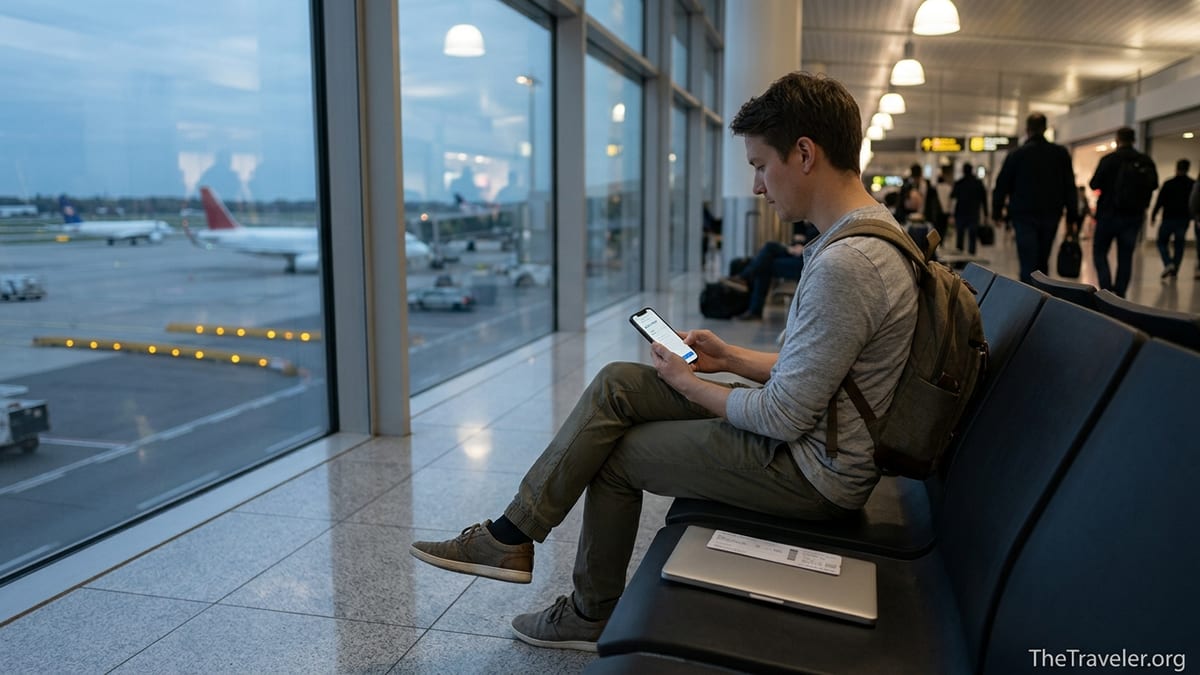
In real-world terms, a traveler from Chicago flying to Rome could download the Saily app at home, choose an Italy plan, and install the eSIM before departure. Once the plane lands at Fiumicino, they turn on data roaming for the Saily line and their phone connects to a local carrier such as TIM or Vodafone. They can order a taxi, check hotel directions and message friends without hunting for a SIM shop or relying on airport Wi-Fi.
Saily launched in 2024 under Nord Security, the company behind NordVPN, and that heritage shows up in features like built-in web protection, ad blocking and virtual location tools inside the app at no extra cost. Independent testing by outlets such as TechRadar in 2026 notes that this security bundle is one of Saily’s main differentiators versus eSIMs that only sell connectivity. For travelers who work on public Wi-Fi at airports and hotels, this combination of data and security in one app is a practical draw.
However, Saily is strictly data-only. You do not get a local phone number for calls or SMS. Voice and texts go through apps like WhatsApp, FaceTime, Signal or Skype. If you need an actual local number for banking codes, job interviews or apartment viewings, you would need a different provider that offers voice add-ons or a traditional local SIM.
Coverage, Destinations and Where Saily Works Best
Saily markets “global” coverage, but like all global eSIMs it is not literally everywhere. Its own plan listings and third-party comparison charts show coverage in more than 150 countries via local, regional and global plans, with over 200 destinations mentioned in some marketing and app store descriptions. The strongest coverage tends to be in major travel corridors across Europe, North America and parts of Asia-Pacific.
Looking at recent price comparison tables for November 2025, Saily offers 1 GB country plans around 3.99 dollars in destinations such as the United States, Italy, Japan and New Zealand, and slightly higher in places like Mexico or the United Arab Emirates. That structure suits short trips or light data users. A traveler spending a long weekend in London to see a concert, for example, could buy 3 to 5 GB for a week rather than an expensive unlimited plan they will never fully use.
Regional and global packages are where Saily can become more appealing for multi-country itineraries. Imagine a three-week backpacking loop from Paris to Barcelona to Rome. Instead of buying three separate local SIMs, a Saily regional plan that covers multiple European countries lets you cross borders on high-speed trains and keep the same data connection active. For business travelers flying between New York, Toronto and Mexico City, a North America plan removes the need to juggle separate cards or contracts.
The main weakness is coverage in remoter areas or less touristy countries. Tech-focused reviewers who compared Saily with giants like Airalo and Airhub note that those older platforms sometimes have more network partners in off-the-beaten-path regions. If your plans include driving deep into rural Turkey, spending weeks in Central Asia or exploring remote islands in the South Pacific, Saily may work in major cities but not offer the same redundancy or depth of coverage once you leave population centers.
Pricing Compared With Roaming, Local SIMs and Rivals
Whether Saily is “worth it” depends heavily on what you are comparing it against. Most US travelers first consider their home carrier’s international roaming. Many large carriers still charge around 10 dollars per day per line for a flat-roaming package in popular destinations, which can easily add up to 140 dollars for a two-week trip for one person. In contrast, recent independent comparisons show Saily 10 GB plans in places like Japan or the United Kingdom priced around 18 to 20 dollars, often valid for 15 to 30 days. For a moderate data user who streams occasionally and navigates daily, that can be dramatically cheaper than daily roaming passes.
Compared with local prepaid SIMs, the value calculation is more nuanced. In Thailand, for example, airport kiosks regularly promote physical SIMs with bundles like 50 GB for around 9 or 10 dollars for a week. Saily’s Thailand plans, according to a late 2025 comparison chart, list 1 GB at 2.99 dollars and 10 GB at around 10.99 dollars. For a traveler arriving at Bangkok’s Suvarnabhumi Airport who is comfortable queuing and showing a passport for registration, a local SIM could still be the best price per gigabyte. But if you land at midnight, are jet-lagged and just need reliable data without paperwork, paying a few dollars more for Saily can be worth it for pure convenience.
Against eSIM rivals, Saily often undercuts or matches key competitors on per-gigabyte pricing, especially on smaller bundles. Comparative reviews in 2026 that put Saily head-to-head with Airalo and Holafly show Saily regularly offering lower prices for 1 to 5 GB packages in destinations like the US, Italy and Turkey, although the absolute lowest price can shift based on each company’s sales. One independent chart from November 2025, for example, lists Saily’s 1 GB Turkey plan at 3.99 dollars versus Airalo at about 4 dollars and some unlimited-focused brands significantly higher for small bundles.
However, Airalo and Holafly sometimes run deep promotions, and Airalo’s more premium Discover-style global plans include voice minutes and SMS, which Saily does not provide. If you value an integrated local number and are willing to pay extra, those bundled products can be more suitable even when the data-only price per gigabyte looks higher than Saily’s.
Security, App Experience and Real Traveler Feedback
One of Saily’s most distinctive angles is its emphasis on security. Reviews from 2026 point out that Saily includes features like web protection and ad blocking rather than selling them as separate subscriptions. For a digital nomad working from co-working spaces in Lisbon or cafes in Mexico City, that means one less subscription to manage and an extra layer of protection when dealing with passwords, remote logins and financial data over untrusted networks.
In practical use, many travelers appreciate that Saily’s app-centered approach lets them see remaining data, validity dates and supported networks in one place. A solo traveler in Turkey can watch how quickly navigation, Instagram and video calls eat into a 5 GB plan, then top up before boarding an overnight bus from Istanbul to Cappadocia. For people who hop countries regularly, being able to buy a new plan on a train or bus without hunting for a shop is genuinely valuable.
At the same time, user reports across forums and review platforms paint a mixed but instructive picture. Numerous travelers describe smooth experiences in the United States, Western Europe and tourist-heavy parts of Asia, with stable speeds and quick in-app support when problems arise. Others flag issues like slower-than-expected speeds in parts of Southeast Asia, higher battery drain compared with some other eSIMs, or difficulty connecting in certain Japanese cities.
These mixed reviews are not unique to Saily. Any provider that relies on local partner networks will inherit their congestion and coverage issues. The key takeaway for a cautious traveler is to treat Saily like a convenient but not infallible tool: very good in mainstream destinations, potentially uneven where local infrastructure is weaker, and best used with realistic expectations about peak-hour speeds and occasional network handoffs.
When Saily Is a Good Choice (and When It Is Not)
Saily shines in a few specific real-world scenarios. One is the short city break from countries with expensive roaming. A US couple flying to London and Paris for eight days could each buy a 5 to 10 GB Saily plan for under 25 dollars per person for the entire trip, rather than paying around 10 dollars per day per line to their home carrier. They keep their usual phone numbers active for incoming SMS codes, while shifting all data usage to Saily. Another strong case is the multi-country backpacking route through Europe or Southeast Asia, where border crossings are frequent and the hassle of buying, registering and swapping SIMs in every country quickly outweighs the modest price advantage of local cards.
It also works well for infrequent travelers who value simplicity over micro-optimizing every dollar. Someone who takes one big trip per year to visit family in Mexico and spends much of the time on familiar Wi-Fi can comfortably buy a small Saily plan just to cover airport runs, errands around town and emergency navigation. Even if a local SIM could shave a few dollars off that cost, the ability to set everything up from home and land with data already working is often worth it.
Saily is not the best fit if you absolutely need a local voice number, want true unlimited data regardless of usage, or are traveling for months in a single country with cheap prepaid options. For example, a long-term language student living in Tokyo for six months will likely get more value from a Japanese carrier’s physical SIM or a competitor that offers long-duration plans with local calling. Similarly, if your job requires you to receive local calls from clients or landlords, the absence of bundled voice minutes in Saily’s plans is a serious limitation.
Finally, budget travelers who are comfortable navigating local telecom shops can often do better on price, particularly in markets like Turkey, Thailand or Vietnam where airport and city-center SIMs are aggressively priced. For them, Saily may be better kept as a backup solution rather than the main connection.
Practical Setup Tips and Common Pitfalls
Getting Saily to work reliably is mostly about following a few practical steps. First, you need an unlocked phone that supports eSIM technology. Most recent iPhones and many newer Android models qualify, but older mid-range devices may not. Checking your phone settings for an “Add eSIM” or “Add mobile plan” option before purchase is an easy way to confirm compatibility. If that option is missing, Saily will not work on that device.
Second, timing the installation is important. You can usually buy a plan days or weeks before the trip and then activate it just before departure or upon arrival, depending on how Saily structures validity for that specific country. Some travelers choose to install the eSIM at home over reliable Wi-Fi, then wait to turn on data roaming for the Saily line until the plane lands. Others prefer to complete everything on arrival to avoid any confusion. In either case, the crucial detail for Saily is that data roaming must be enabled for the Saily eSIM profile, while roaming on the primary home SIM is turned off to avoid surprise charges.
Third, be prepared to adjust a few settings if data does not work immediately. Saily’s own help documentation and user discussions emphasize checking that the Saily eSIM is selected as the device’s default for mobile data, that the correct APN has been applied, and that background data restrictions are not blocking the connection. For example, a traveler arriving in Istanbul who sees bars of signal but no internet may simply need to toggle airplane mode on and off, confirm that the Saily line is marked as active for data, and wait a few minutes for the device to register on a supported Turkish network.
Finally, monitor your usage carefully, particularly on smaller data bundles. Modern apps can consume surprising amounts of data with automatic photo backups, high-resolution video and background updates. Before a trip, it is wise to disable automatic cloud backups over mobile data and limit high-definition streaming. A traveler in New Zealand with a 5 GB plan who uploads every scenic video clip to social media on mobile data may find the allowance gone in days. With small tweaks to app settings and a habit of using hotel Wi-Fi for heavy uploads, Saily’s modest bundles can stretch much further.
The Takeaway
So is Saily worth using for mobile data while traveling abroad? For many mainstream travelers, the answer is yes, with caveats. Saily delivers competitively priced, app-based data plans across a wide range of destinations, often beating traditional roaming by a large margin and offering real convenience compared with hunting for local SIMs in every country. Its backing by a well-known security company and the inclusion of protection features give it an extra edge for privacy-conscious travelers who work on the road.
At the same time, Saily is not a universal solution. It remains data-only, with no built-in local voice number, and its coverage and performance may lag behind some rivals in very remote regions or in specific markets where other eSIM brands have stronger partnerships. Local physical SIMs can still be cheaper for heavy users willing to navigate the bureaucracy and language barrier at kiosks or carrier stores.
If you are planning short or medium-length trips through well-trodden routes in Europe, North America or parts of Asia, and you primarily care about reliable mobile data for maps, messaging and light work, Saily is very likely worth it. For long stays in a single country, trips focused on remote or rural exploration, or situations where you must have an in-country phone number, you should weigh alternatives carefully. Used with clear expectations and a bit of setup care, Saily can be a powerful tool in the modern traveler’s connectivity toolkit.
FAQ
Q1. Does Saily give me a local phone number for calls and SMS?
Saily provides data-only eSIM plans, so you do not receive a local phone number. Calls and texts work through internet-based apps like WhatsApp, FaceTime, Signal or Skype rather than through traditional voice and SMS services.
Q2. How much does Saily typically cost compared with my carrier’s roaming?
Pricing varies by country and data amount, but small Saily plans in popular destinations often start around 3 to 4 US dollars for 1 GB. For many US travelers, that can be significantly cheaper than paying around 10 dollars per day for their home carrier’s international roaming passes, especially on trips longer than a few days.
Q3. Is Saily cheaper than buying a local SIM card abroad?
Not always. In some countries, airport or city-center SIM cards under local brands still offer more data for a lower price, particularly for heavy users. Saily’s value lies more in convenience and the ability to set everything up before arrival, which can justify paying a bit more per gigabyte for many travelers.
Q4. Will Saily work on my phone?
Saily requires an unlocked device that supports eSIM technology. Most recent iPhones and many newer Android phones are compatible, but some older or budget models are not. You can check your phone’s settings for an option to add an eSIM or mobile plan, and consult Saily’s compatibility information, before purchasing a plan.
Q5. Can I use Saily across multiple countries on one trip?
Yes, Saily offers regional and global plans that can cover multiple countries under a single data allowance. This is particularly useful for itineraries like Europe rail trips or multi-city business travel in North America, where you cross borders frequently and do not want to manage several different local SIMs.
Q6. How do I avoid roaming charges from my regular mobile carrier when using Saily?
To avoid unexpected roaming fees from your home carrier, you should usually turn off data roaming on your primary SIM and ensure that mobile data is set to use the Saily eSIM instead. At the same time, data roaming must be enabled for the Saily line so it can connect to partner networks abroad. Checking these settings carefully before using data can help prevent surprise charges.
Q7. Is Saily reliable for working remotely while traveling?
In major cities and popular tourist regions, many travelers report that Saily offers plenty of speed for email, video calls and cloud-based work. However, performance can vary depending on local network congestion and infrastructure. For critical work, it can be wise to combine Saily with backup options such as hotel Wi-Fi or a secondary eSIM to ensure redundancy.
Q8. What happens if I run out of data on my Saily plan during a trip?
If you use up your data allowance, your connection will typically slow down or stop until you purchase a top-up through the Saily app. You can open the app, view remaining data and validity, and buy additional data in just a few taps, as long as you still have some connection or access to Wi-Fi to complete the purchase.
Q9. Is Saily a good choice for long-term stays in one country?
For stays of several months in a single country, a local carrier’s physical SIM or a long-duration eSIM plan that includes local calling often offers better overall value. Saily is generally better suited to short and medium-length trips, multi-country itineraries and situations where convenience and flexibility are more important than absolute lowest cost.
Q10. How does Saily compare with Airalo and Holafly overall?
Compared with major eSIM rivals, Saily often provides competitive or slightly lower prices on smaller data bundles and stands out for its built-in security features. Airalo, on the other hand, may have broader coverage and some plans that include voice and SMS, while Holafly focuses heavily on unlimited-style offerings. The best choice depends on where you are going, how much data you need, and whether you require a local number or special plan features.