


More news on this day
American Airlines is embarking on one of its most extensive cabin overhauls in years, expanding premium seating and upgrading onboard connectivity across large parts of its fleet as competition for high-spending travelers intensifies in the United States and abroad.
Get the latest news straight to your inbox!
Major Retrofit Push Across Narrowbody Fleet
Publicly available planning documents and recent investor materials indicate that American is moving ahead with a broad reconfiguration of its narrowbody aircraft to increase the number of premium seats and extra-legroom options. The upgrade drive focuses on workhorse Airbus A319 and A320 jets and newer Boeing 737 and Airbus A321neo aircraft, which together operate thousands of domestic and short-haul international flights each week.
On the A319 and A320 subfleets, American is retrofitting cabins with more domestic first class seats, updated trim and finishes, larger overhead bins and new powered seating. Briefing materials describe a goal of adding more premium seats while maintaining overall efficiency per seat, suggesting that space is being reallocated within the cabin rather than simply reducing total capacity.
The airline has also signaled that upcoming deliveries of Airbus A321XLR and Boeing 787-9 aircraft will support a broader “premiumization” strategy, with configurations designed to serve significantly more premium customers by the end of the decade. Internal forecasts point to targeted growth of premium and lie-flat seating of roughly half again as much as current levels by around 2029, underscoring how central higher-yield cabins have become to American’s long-term plan.
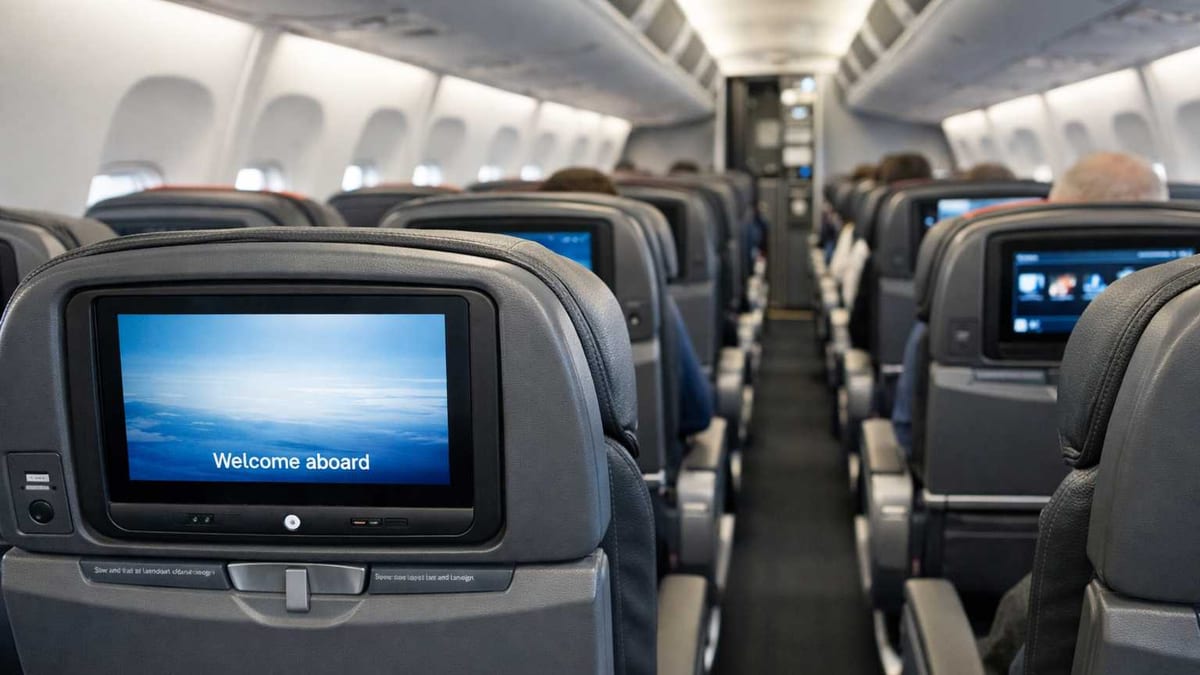
Recent aviation industry coverage reports that American will sharply increase the share of premium seats on its short and medium haul jets and return to installing seatback entertainment screens after several years of relying on personal-device streaming. New single-aisle aircraft entering the fleet later this decade, along with retrofitted narrowbodies, are expected to feature the upgraded cabins, with more spacious seating zones and refreshed interiors.
Long-Haul and Flagship Cabins Get Parallel Upgrades
While narrowbodies handle much of American’s domestic network, the airline is also investing heavily in its long-haul widebody fleet. A multi-year initiative often referred to in industry reporting as Project Olympus is reconfiguring Boeing 777-300ER aircraft with revamped premium cabins intended to match or exceed the standards being introduced on the latest 787-9 jets.
The first refurbished 777-300ER completed extensive cabin work at a specialist facility in Hong Kong and is expected to enter service in the coming months, according to international aviation news coverage. The refit is described as one of the most significant premium upgrades at American in years, aimed at closing a perceived gap with transatlantic rivals and domestic competitors on high-profile long-haul routes.
These long-haul changes build on American’s rollout of new Flagship Suite seats and premium economy cabins on certain widebodies and forthcoming A321XLRs. The overarching goal is to create a more consistent premium experience across both new deliveries and existing aircraft, so that business and high-status leisure passengers encounter similar comfort, privacy and entertainment standards regardless of route.
By raising the density of premium seating on its international aircraft and aligning soft products such as dining and amenities, American is seeking to tap into demand from corporate contracts and affluent leisure travelers who have shown a willingness to pay for additional comfort, especially on overnight and long-distance flights.
Inflight Connectivity Shifts to Faster, Free Models
Alongside seating changes, American is recasting its approach to inflight connectivity, a key differentiator on domestic and regional routes. Company disclosures and annual reporting show that the carrier has introduced complimentary high-speed Wi‑Fi, sponsored by a major telecommunications partner, for members of its AAdvantage loyalty program on an expanding share of the mainline fleet. The airline has set an ambition to have fast, free access available on every American-operated flight by spring 2026, positioning connectivity as a core part of its value proposition.
In parallel, reports indicate that American has selected a new satellite provider to upgrade inflight Wi‑Fi on more than 500 Airbus aircraft, focusing initially on narrowbody jets. The retrofit program will install low-latency, high-bandwidth systems designed to support streaming, video calls and real-time messaging for a high number of concurrent users, particularly on dense domestic routes.
Regional jets are also scheduled to benefit from a refreshed interior program that includes new seat coverings, in-seat power and a continued rollout of satellite Wi‑Fi. American has described the objective as harmonizing the onboard experience between smaller regional aircraft and mainline jets, so that travelers connecting through hubs encounter similar connectivity and charging options regardless of aircraft size.
Taken together, these changes move American closer to rivals that have already invested in high-speed satellite solutions and, in some cases, offered free Wi‑Fi for several years. For passengers, the shift signals that reliable, fast connectivity is becoming a standard expectation rather than a paid add-on.
Competition and Financial Rationale Behind the Upgrades
American’s focus on premium cabins and connectivity comes at a time when major U.S. airlines are racing to capture more revenue from the front of the plane. Industry analysis frequently points out that Delta Air Lines and United Airlines have widened their profit lead in recent years, helped in part by strong performance from premium and extra-legroom products on both domestic and international routes.
By increasing the proportion of seats dedicated to first class, premium economy and extra-legroom economy, American is seeking to shift its revenue mix toward higher-yield fares. Investor presentations emphasize premiumization as a pillar of the airline’s strategy, with management highlighting the potential to serve substantially more premium customers by the early 2030s as retrofits and new aircraft deliveries accumulate.
At the same time, returning to seatback entertainment screens on a broad scale marks a notable reversal of the carrier’s previous cabin standard, which had removed screens from many single-aisle jets in favor of personal-device streaming. Aviation commentators note that competitors have used modern seatback systems, coupled with powerful Wi‑Fi, as a way to distinguish their onboard product and support onboard retail, advertising and loyalty engagement.
For American, the combination of more premium seats, improved inflight Wi‑Fi and upgraded entertainment systems is intended to make its aircraft more attractive to corporate travel buyers and frequent flyers while supporting ancillary revenue from paid upgrades and bundled fare products. The investment also reflects a broader industry view that passengers emerging from the pandemic period place greater value on space, connectivity and a seamless digital experience throughout the journey.
What Travelers Can Expect in the Coming Years
Because the retrofit programs will roll out gradually, travelers will see a mix of old and new cabin configurations over the next several years. Some A319 and A320 aircraft are already flying with additional first class seats and updated interiors, while others remain in legacy layouts. Similar variation is expected across the Boeing 737 and Airbus A321 fleets as production slots become available and aircraft cycle through modification lines.
On long-haul routes, the first reconfigured Boeing 777-300ERs and new 787-9 aircraft with enhanced premium cabins are expected to appear on flagship transatlantic and transpacific services, particularly from American’s hubs in cities such as Dallas–Fort Worth, Miami and New York. As more aircraft complete upgrades, the new cabin standard should become more common on major business markets.
For passengers, the most visible changes will be an increased chance of finding more rows of domestic first class or premium economy, additional extra-legroom seating in the main cabin, larger overhead bins and a greater likelihood of fast, free Wi‑Fi on both mainline and regional flights. Over time, more travelers will also encounter new seatback entertainment systems as retrofitted and newly delivered aircraft enter service.
Although the full program will take years to complete, American’s latest moves underscore how fiercely airlines are competing on comfort and connectivity as they seek to attract and retain the most valuable segment of the market: travelers willing to pay for a better experience at 35,000 feet.