


Santa Claus Village, just north of Rovaniemi in Finnish Lapland, promises something no other destination can: the chance to meet Santa at the Arctic Circle, any day of the year. But behind the glowing log cabins and Instagram snowfalls lies a more complicated question many travelers now ask: is it actually worth the time and money, or has the world’s most Christmassy village become an overhyped tourist trap? Recent seasons have brought record visitor numbers, rising prices, and plenty of divided opinions. Here is what travelers really experience, and how to decide if it belongs on your itinerary.
Get the latest updates straight to your inbox!
Where Exactly Is Santa Claus Village and What Is It Really Like?
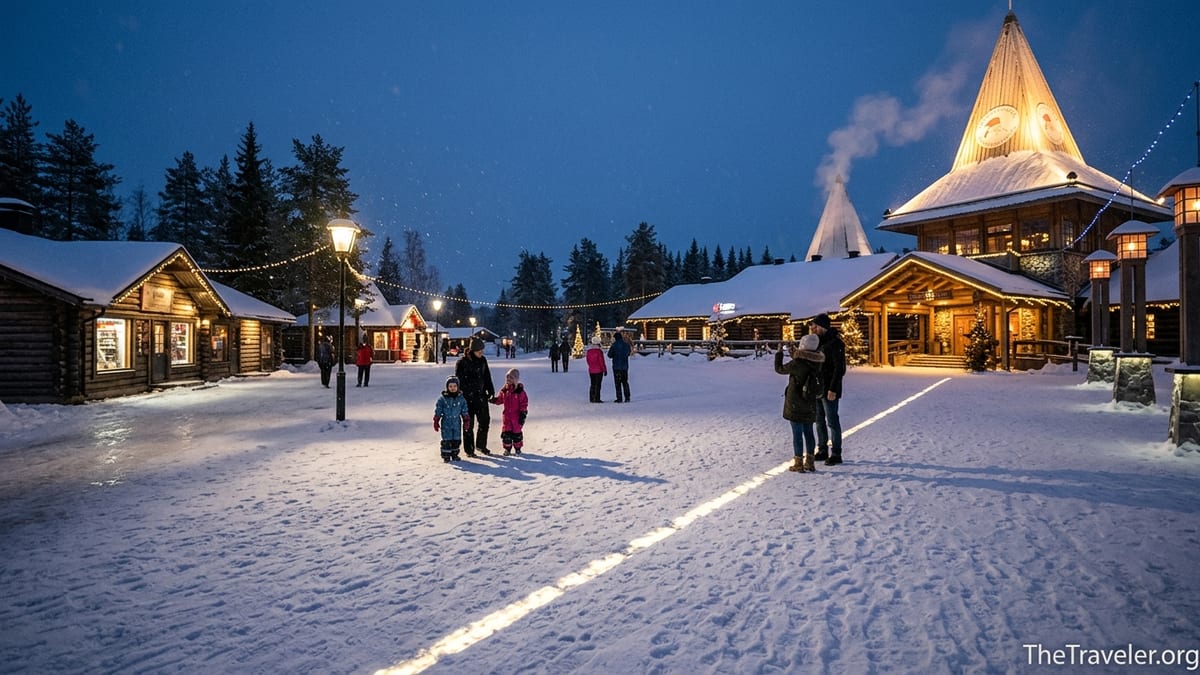
Santa Claus Village is a purpose-built Christmas resort about 8 kilometers north of Rovaniemi, the capital of Finnish Lapland, positioned on the line that marks the Arctic Circle. The complex is open year-round and laid out like a small village of wooden cabins, souvenir shops, cafes, activity desks and attractions clustered around a central square. Underfoot in winter you are walking on compact snow and ice; in summer, it becomes more of a log-cabin shopping and activity area with bare ground and pine forest around.
At its core, the village is a themed commercial area rather than a historic town. Travelers who love Christmas aesthetics often describe it as “Disneyland at the Arctic Circle”: fairy lights on every roof, giant baubles, illuminated reindeer and Christmas music playing outside even in March. Families tend to find the atmosphere magical, especially at dusk when the sky turns deep blue and the snow reflects the warm yellow lights. Independent travelers and backpackers are more divided, with some calling it charmingly kitsch and others seeing it as little more than a shopping center in the snow.
The Arctic Circle line itself is one of the major photo spots. It is marked on the ground through the main square and highlighted with signage so visitors can pose with one foot in the Arctic and one outside. Technically the geographic line shifts slowly over time, but the symbolic marker has become a major attraction in its own right, and many visitors talk about the simple thrill of saying they have “crossed the Arctic Circle” here.
The village is very easy to reach. It sits directly on the main E75 road, less than a 10-minute drive from Rovaniemi Airport and about 15–20 minutes from the city center by bus or taxi. This convenience is one reason it attracts more than half a million people a year, especially around December, when charter flights arrive packed with families doing short, Santa-focused breaks.
What You Can Actually Do There: Highlights and Letdowns
The signature experience is meeting Santa himself. Inside Santa’s main office, visitors follow a themed queue through twinkling corridors before stepping into a cozy room where Santa sits in his red armchair for a short, friendly chat and a photograph. The meeting is free, but you pay for the official photo and video. Recent visitor reports describe digital photo packages starting around 50–60 euros for a family, with prints and add-ons costing more, so it is worth factoring that into your budget before arriving with excited children.
Another big draw is Santa Claus Main Post Office, an official Finnish post branch decked out in red and white with postal elves sorting letters. Children can send postcards bearing a special Arctic Circle postmark or schedule letters from Santa to be delivered the following Christmas. Many travelers mention this as one of the most charming parts of the village, partly because you can browse real letters from children all over the world and because simply sending a card here is relatively affordable compared with other activities.
Outside, you will find reindeer paddocks and husky kennels run by local operators. Short reindeer sleigh rides around the forest edge, often 400–800 meters, typically cost the equivalent of several tens of euros per person, and longer husky safaris run into three-figure prices for a couple or family. Reviews are generally positive about the animals and scenery but mixed about value, especially for the short loops that feel over quickly. Many Arctic guides point out that the same style of husky and reindeer excursions in the wider Lapland countryside can feel wilder and less crowded, sometimes at slightly better prices.
Beyond that, the village offers snowmobile tours, kid-friendly snow playgrounds, ice bars in peak winter, simple sledding hills, and a dense cluster of souvenir shops selling everything from Lapland-branded chocolate and reindeer-hide products to high-end design brands. Some visitors love wandering between the warm cabins, buying wool mittens and tasting local salmon soup. Others complain that too many units sell near-identical trinkets and that the commercial focus overwhelms any sense of authenticity.
Costs, Crowds and Practical Realities Travelers Should Know
One of the clearest themes from recent traveler reviews is that Santa Claus Village feels expensive once you add everything up. Walking around the village and crossing the Arctic Circle are free, and children will already enjoy the snow and decorations. However, nearly every special moment has a price tag attached: the photo with Santa, the short reindeer ride, the husky taster loop, the snowmobile safari, the buffet lunch and hot chocolates inside the heated restaurants.
To give a sense of scale, couples report spending around 150–250 euros in a single afternoon if they pay for a Santa media package, one short animal ride each and a sit-down meal. Families doing multiple activities and buying souvenirs can easily exceed that. Prices do fluctuate by provider and season, but it is wise to plan your “must-do” items first, check current rates with operators or tour agencies, and then decide what fits your budget instead of improvising on the day with excited children asking for every ride.
Crowds are another decisive factor. In the run-up to Christmas, especially from late November through early January, the village can be extremely busy. Tour buses arrive from morning to late afternoon, and queues for Santa, reindeer rides and restaurants can take 30 minutes or more at peak times. Air travel and accommodation costs in Rovaniemi also spike. Many independent travelers now prefer to visit in shoulder periods, such as mid-January, February or early March, when snow conditions are still good, aurora chances are decent and the village feels less congested.
Logistics are straightforward but worth planning. A public bus connects Rovaniemi city center, the airport and the village, and tickets are typically affordable compared with taxi fares, which some visitors have flagged as surprisingly high in winter. There is a small but growing cluster of hotels, glass igloos and cabins directly around Santa Claus Village itself, offering the appeal of stepping outside straight into the lights and snow. Staying instead in central Rovaniemi can give you more dining options and a clearer separation between the theme-park feel of the village and normal Finnish everyday life.
Who Loves Santa Claus Village, and Who Ends Up Disappointed?
Families with young children are, by far, the group most likely to describe Santa Claus Village as “worth every euro.” For many parents, the highlight is watching kids’ faces light up when they cross the Arctic Circle or when Santa greets them by name in his office. Travelers recall children chattering excitedly for days about giving their wish lists directly to Santa or seeing real reindeer for the first time. For these families, the convenience of having Santa, reindeer, huskies and snow play in one compact, well-signposted area outweighs the commercialism.
Christmas enthusiasts and nostalgic adults also tend to rate the village highly. Many describe a childlike joy in stepping into a place where it is effectively Christmas all year. One couple in their thirties, traveling without kids, wrote that sharing a quiet conversation with Santa in February, when crowds had thinned, was surprisingly moving and not nearly as cheesy as they expected. For them, the combination of Arctic twilight, snowflakes in the air and log cabins glowing with yellow light delivered exactly the cozy fantasy they hoped for.
By contrast, budget-conscious backpackers and travelers seeking raw, untouched Arctic nature often come away underwhelmed. Some compare the central area to an outdoor shopping mall with snow, and several note that the village can feel disconnected from local culture beyond the surface layer of reindeer imagery. A recurring comment from Finns on travel forums is that many visitors confuse this carefully staged, international resort experience with everyday Lapland life, which is much quieter and more understated.
Independent travelers also sometimes regret giving the village a full day in peak season when they could have spent more time snowshoeing in the forest, visiting the Arktikum museum in Rovaniemi, or staying in a smaller village farther north where the northern lights and silence are the main attractions. For them, Santa Claus Village works better as a half-day or even a few-hour stop within a wider Lapland itinerary rather than the entire point of the trip.
Real Traveler Opinions: Tourist Trap or Once-in-a-Lifetime Magic?
Recent reviews on major travel platforms and Reddit threads show a clear split: many visitors describe Santa Claus Village as “magical but pricey,” while others call it a “tourist trap” redeemed mainly by children’s reactions. One frequent sentiment from those who enjoyed it is that they went in fully expecting a commercial theme park. With that mindset, they were pleasantly surprised by how much they liked the snowy setting, the friendliness of staff and the simple thrill of being at the Arctic Circle.
On the other side, travelers who arrive hoping for a quiet, rustic village often express disappointment. They highlight the number of tour buses, the heavy branding, queue systems that feel like amusement parks, and what they see as inflated prices for everything from coffee to snowmobile rides. A few locals have voiced concerns about overtourism in December, pointing out that visitor numbers can reach many times Rovaniemi’s population, straining roads and services and changing the character of the area at peak times.
Yet even among critics, there is often an acknowledgment that children tend to see none of this. Accounts from families who visited in recent winters almost always emphasize that kids loved the experience, and adults later felt the trip was worth it when they looked back at photos and videos. One parent who called the village a “cynical money-maker” admitted that watching their 6-year-old talk earnestly with Santa while snowflakes floated outside the window became one of their favorite travel memories.
The most balanced verdict from regular Lapland visitors is this: yes, Santa Claus Village is touristy and commercial, but if you treat it as a themed attraction rather than as an authentic village and you manage expectations around price and crowds, it can be a genuinely special stop, especially for families and Christmas lovers.
How to Make a Visit Truly Worth It
Maximizing the value of a trip to Santa Claus Village starts with timing. If your schedule is flexible and you do not need to be there right before Christmas, consider visiting from mid-January to early March. The snow is still deep, the village remains fully decorated, but lines are shorter and package prices for flights and hotels often ease compared with December. For those who want the novelty of a quieter experience without deep winter cold, early April can also work, though some snow-based activities may be winding down.
Planning your day helps too. Before you go, decide which “big ticket” experiences are non-negotiable. For a family of four, this might be one paid photo session with Santa and a single longer husky or reindeer ride rather than multiple short tasters. Pre-booking key activities with reputable operators can reduce queue time and stress, especially during school holiday periods. If you are staying in Rovaniemi city, aim to arrive early in the morning when the village first gets busy, then head back to town for a late lunch as the day’s peak crowds build.
Budget-savvy visitors focus on the free or low-cost charms. Walking across the Arctic Circle line, playing in the snow, watching sleds go by, wandering into the post office, and popping into a cafe for a single hot chocolate can already create strong memories, especially for young children. Many families choose to limit souvenir purchases to one or two meaningful items, such as a Lapland-made wool hat or a Christmas ornament, rather than filling a suitcase with impulse buys.
It is also worth pairing Santa Claus Village with more grounded Lapland experiences. Spend half a day at the village, then visit Rovaniemi’s museums to learn about Sámi culture and Arctic nature, or book an evening excursion farther from city lights to chase the northern lights. Travelers who combine the festive fantasy with quieter, more educational or wilderness-focused activities usually report feeling they got a richer, more rounded sense of Lapland overall.
The Takeaway
So, is Santa Claus Village on the Arctic Circle worth visiting? The honest answer is that it depends on who you are and what you want from Lapland. For many families and Christmas enthusiasts, it delivers exactly what it promises: a bright, snow-dusted stage where children can meet Santa in his “official” hometown, cross a symbolic Arctic Circle line and step into a concentrated world of festive lights and reindeer for a few unforgettable hours.
For others, especially budget travelers and those seeking raw Arctic wilderness or deep cultural immersion, the village can feel too curated and commercial for the price. The key is to treat it as a theme park rather than as a traditional Finnish village, to go in with clear expectations about costs and crowds, and to see it as one part of a broader Lapland journey rather than the whole reason to travel so far north.
If you can accept the fairy-tale packaging, plan ahead, and combine your visit with time in the wider landscapes around Rovaniemi, Santa Claus Village can still be a destination where the magic outweighs the marketing. If not, you may prefer to skip the elves and spend your Arctic days under quiet spruce trees and northern skies instead.
FAQ
Q1. Is Santa Claus Village really on the Arctic Circle?
The village is built around a clearly marked Arctic Circle line that visitors can cross and photograph. The true geographic line shifts slowly over time, but this symbolic marker is widely accepted as the “official” crossing point for tourism purposes, and it has become one of the main reasons many travelers stop here.
Q2. Is Santa Claus Village worth visiting if I am an adult without children?
It can be, if you enjoy Christmas aesthetics and do not mind a themed, commercial setting. Many child-free couples report enjoying the lights, snow, post office, and a relaxed meeting with Santa in quieter months. If you dislike crowds, queues and overtly touristy places, you may prefer to limit your visit to a short stop or skip it in favor of more nature-focused activities.
Q3. How much money should I budget for a visit?
Walking around is free, but most special experiences cost extra. A realistic estimate for a couple doing a Santa photo package, one animal activity each and a simple meal can easily reach a few hundred euros. Families with several children may spend more, especially if they add multiple rides and souvenirs. Checking current prices before you go and deciding your must-dos in advance is the best way to avoid bill shock.
Q4. When is the best time of year to visit Santa Claus Village?
December offers the strongest Christmas atmosphere but also the biggest crowds and highest prices. Many experienced travelers recommend mid-January to early March for a balance of deep snow, festive decorations and fewer queues. If you prefer milder temperatures and quieter paths, late winter or very early spring can be a good compromise, though some snow-based activities may be limited.
Q5. How long do I need at Santa Claus Village?
Most visitors find that half a day is enough to meet Santa, explore the main square, cross the Arctic Circle line, browse the post office and do one key activity. Families with young children or those staying in nearby accommodation sometimes spread things out over a full day, building in time for naps, snacks and snow play. Only a small minority feel they need multiple full days in the village itself.
Q6. Is Santa Claus Village very crowded?
In peak season, especially from late November to early January and during school holidays, it can be extremely busy with tour buses and package groups. This often means queues for Santa, restaurants and activities. Outside those periods, the atmosphere is calmer and more relaxed. Arriving early in the morning or later in the afternoon also helps you dodge some of the heaviest crowds.
Q7. Can I visit Santa Claus Village on a budget?
Yes, but it requires discipline. You can go by public bus, walk around for free, enjoy the snow, visit the post office and take photos at the Arctic Circle line without paying for multiple rides. Many budget travelers choose one key paid experience, such as the Santa photo or a single animal activity, and avoid impulse purchases in the souvenir shops. Bringing snacks or eating in Rovaniemi city can also keep costs down.
Q8. Is Santa Claus Village suitable outside the Christmas season?
The village is open all year, and Santa is available even in summer. Outside winter, you will not have the same snowy wonderland, but you will still find log cabins, shops, cafes and the post office, along with forest surroundings. Some travelers like the quieter, less intense atmosphere between late spring and early autumn, though it feels more like a themed shopping and activity area than a classic Christmas scene.
Q9. How does Santa Claus Village compare to other Lapland experiences?
Santa Claus Village is the most concentrated, family-oriented Christmas attraction in Lapland, with everything close together and heavily themed. Other Lapland destinations, including smaller villages and wilderness lodges, tend to emphasize nature, silence, northern lights and Sámi culture more than Christmas branding. Many travelers feel happiest when they do both: a short, focused visit to Santa’s world and then several days in quieter surroundings.
Q10. Is Santa Claus Village a tourist trap?
Opinions vary. Critics use the term because of the dense souvenir shops, high prices and packaged feel. Supporters argue that it is upfront about being a themed attraction and delivers exactly what it promises: an accessible, family-friendly Christmas fantasy at the edge of the Arctic. Whether it feels like a trap or a dream largely comes down to your expectations, budget and travel style.