


Santa Claus Village in Rovaniemi looks wonderfully simple in photos: meet Santa, cross the Arctic Circle, play in the snow and fly home with a camera full of Christmas magic. In reality, the experience is shaped by daylight that vanishes after lunch, surprise costs, sold-out activities and Arctic weather that can swing from slush to minus 25 degrees Celsius in a single week. Before you land in Lapland, there are important details most visitors overlook that can make the difference between a stressful day trip and an unforgettable Arctic adventure.
Get the latest updates straight to your inbox!
Understanding the Arctic Circle Reality, Not the Brochure
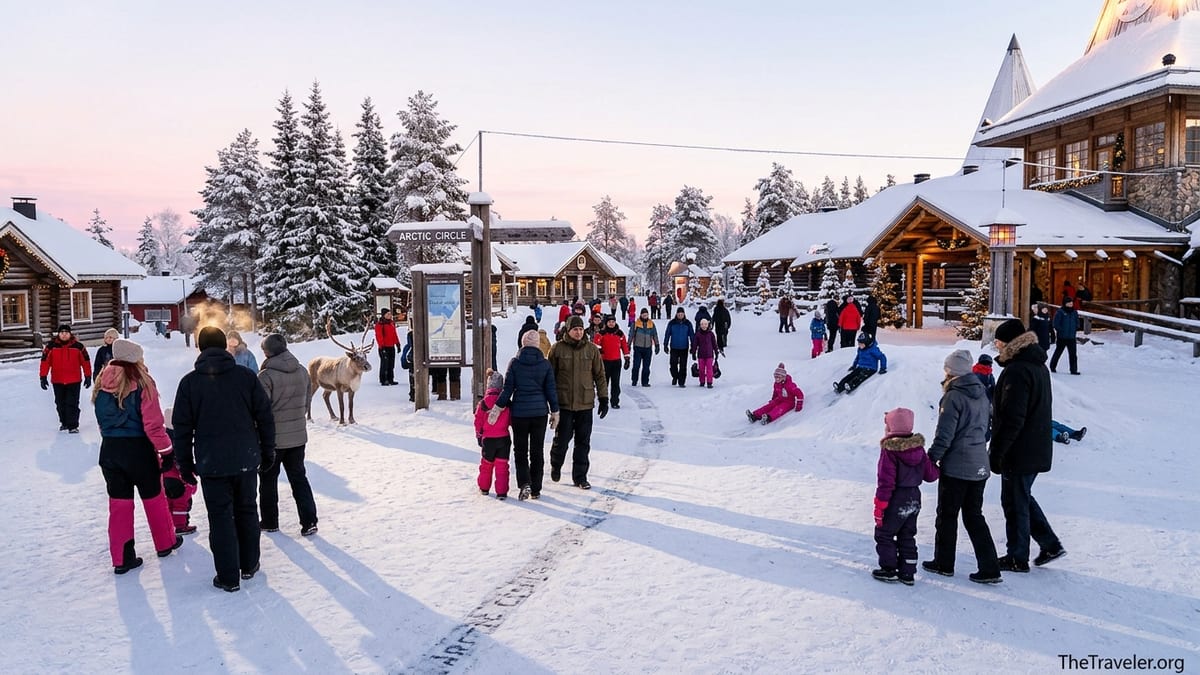
Many visitors arrive at Santa Claus Village expecting a classic winter day similar to a ski resort in the Alps. Rovaniemi sits almost exactly on the Arctic Circle at around 66 degrees north, which means light, temperature and snow conditions are very different from what most travelers are used to. In late December you may only get two or three hours of true daylight, with the rest of the day in blue twilight. By contrast, in early November or late March you can still have a bright afternoon and a sunset visit to the Village.
Temperatures also surprise first timers. Guides often describe minus 10 degrees Celsius as “good winter weather” because it is cold enough for stable snow, while cold snaps can drop to around minus 25 degrees for a few days in midwinter. At the same time, brief warm periods can bring wet, heavy snow or even rain near zero degrees, especially in November or April. That means what looks like the same “snowy” photo on social media can feel totally different depending on the week you visit.
Travelers often underestimate how that affects children and older relatives. A three year old thrilled to meet Santa indoors may last only 20 minutes outdoors on the snow slides before fingers and toes start to hurt, even in decent gear. Conversely, on a mild, slushy day parents are surprised to find that everyone gets soaked to the knees unless boots and snow pants are truly waterproof. Planning flexible outdoor time, with a warm cafe or indoor activity every hour or so, will keep the day enjoyable rather than a battle against the weather.
Finally, the Arctic Circle line itself is a real geographic marker, not just a photo backdrop. The main painted line across Santa Claus Village is positioned close to the official latitude, and walking across it is an experience children remember. But because the Earth’s axial tilt slowly shifts, the exact location of the Circle moves slightly over the decades. Treat the line as symbolic and fun rather than a scientifically perfect border.
The Hidden Time Costs: Transfers, Queues and Crowds
On the map, Santa Claus Village looks disarmingly close to everything. It is about 8 kilometers north of Rovaniemi city center and only a short distance from Rovaniemi Airport. In practice, though, visitors can lose hours in transfers and queues if they do not plan ahead. A common winter scenario is a morning flight into Rovaniemi, luggage pick up, then waiting for a bus or taxi so that you only reach the Village much later than expected.
From the airport, dedicated buses usually connect the terminal, Santa Claus Village and the city. A local service branded as Santa’s Express often runs in winter and costs only a few euros per person for the short hop between the airport, the Village and downtown. A standard Airport Express bus or shared shuttle is slightly more expensive but still cheaper than a private taxi for solo travelers. Taxi rides from the airport to the Village are often around the cost of a short city ride in other Nordic towns, but for a family of four they can be competitive with the bus, especially if you are carrying several suitcases and want door to door convenience.
From Rovaniemi city center, a regular public bus, frequently numbered 8 in winter schedules, usually connects the railway station, the main streets and Santa Claus Village in about 15 to 20 minutes. Tickets bought from the driver or via local transport apps are typically a few euros each way, making this the cheapest option for most guests. Many visitors only learn about this bus after they have paid for a more expensive dedicated transfer, so check schedules before you arrive and screenshot them in case your phone connection struggles in the cold.
Inside the Village, the biggest hidden time cost is waiting for Santa. Meeting Santa at his official office is free to enter, but queues can run well over an hour during the Christmas peak in December and around school holidays. Travelers with young children often do not realize this and reach the building at midday, exactly when group tours also arrive. If your schedule allows, go straight to Santa’s office near opening time in the morning or closer to closing time in the afternoon, then explore the rest of the Village afterwards. This simple adjustment can save you most of the waiting and keep kids excited rather than exhausted.
Budgeting Beyond the Free Village Experience
It is technically possible to spend several hours in Santa Claus Village without paying entry fees. Walking around the snowy central square, crossing the Arctic Circle line, visiting Santa’s official post office and browsing the gift shops all cost nothing beyond what you choose to buy. This is one reason the destination appeals to regional visitors from other parts of Finland, who may stop by for an afternoon outing without booking any activities.
International travelers, especially families flying in just for a long weekend, often expect more included in the experience and are surprised at how quickly small costs add up. A printed or digital photo with Santa, for example, is a paid service. Exact prices vary with the season and packages on offer, but you should plan for the photo and video bundle to cost roughly the same as a mid priced sit down meal for two in Rovaniemi city center. Souvenirs inside the post office and larger boutiques are mostly mid to high range Nordic gifts: enamel mugs and small plush reindeer can be relatively affordable, while hand crafted knives, local design textiles or branded outerwear easily run into three figure prices.
Food is another area that catches visitors by surprise. There are several cafes and restaurants within the Village, ranging from simple self service counters selling hot dogs, soup and pastries to more atmospheric log cabin style dining rooms. A basic lunch of reindeer soup or salmon soup with bread and a hot drink can easily reach the equivalent of a casual restaurant price in Western Europe. Families looking to manage costs often bring snacks and thermos flasks for children, then choose one warm main meal during the day to avoid constant impulse purchases of hot chocolate and pastries.
The most significant expenses, however, are usually activities that technically happen outside the core Village area but are sold through booths and hotel desks there. Short snowmobile rides for children, ten minute taster reindeer sleigh loops or brief husky sled rides around a track are appealing, but on a per minute basis they can be much more expensive than longer excursions booked in town. For example, a five to ten minute mini husky ride around a small circuit inside or near the Village might cost nearly as much as a half hour or one hour ride purchased as part of a group tour that departs from Rovaniemi. Travelers with limited budgets may want to do one or two high quality activities outside the Village and treat the in Village options as a fun extra rather than the main event.
Prebooking Arctic Activities: What Sells Out and What Does Not
A common mistake before visiting Santa Claus Village is assuming that all activities will be open and available to book on the spot once you arrive. During the quiet shoulder weeks in early December or late January you may indeed find last minute slots available for snowmobile safaris, reindeer farm visits and Northern Lights tours. In peak weeks from mid December through New Year and around school holidays, popular time slots sell out weeks or even months in advance.
If you are traveling primarily for Santa and winter fun rather than serious skiing or trekking, you will probably be interested in a small set of classic experiences: husky sledding, a reindeer sleigh ride, some kind of snowmobile outing and an evening aurora chase. Many tour operators based in Rovaniemi city center, at resorts like Apukka or at nearby wilderness hotels bundle these into half day or full day programs with transfers that include a visit to Santa Claus Village or outdoor time near the Arctic Circle. These longer experiences almost always require advance booking, especially for families that need several places on the same departure.
By contrast, a number of smaller activities do not need much forward planning. Slides and snow play areas inside the Village are open access when conditions allow and can be enjoyed for free. Seasonal attractions such as Snowman World, which builds ice and snow structures and offers ice slides and skating, typically sell day passes but often have availability even at busy times, as visitor numbers are spread throughout the day. SantaPark, the underground Christmas theme park nearby, sells dated tickets and is extremely popular in December, yet many travelers still manage to secure same week or same day visits, especially outside weekends.
The best approach is to decide your non negotiable experiences before you travel. If a proper one hour husky sled safari at a countryside kennel and an aurora hunt far from city lights are must do items, book them first through a reputable operator that includes transport from your accommodation or the city center. Then treat Santa Claus Village as a flexible add on: you can visit between activities, on arrival day or departure day, or on a spare afternoon and still enjoy its atmosphere without trying to fit every single paid attraction into one rushed visit.
Dressing for the Arctic: What Rental Gear Does and Does Not Solve
Many tour companies and some hotels in and around Rovaniemi provide clients with heavy duty winter overalls and boots for the duration of their booked activities. This leads some visitors to assume they can travel in light urban clothing from home and rely entirely on rental gear once they arrive. In reality you need a reliable personal base layer system even if you plan to use provided outerwear for excursions, because you will still spend time walking between buses, restaurants, Santa’s office and your accommodation without a guide.
Think in layers rather than individual items. A typical winter day around the Arctic Circle feels comfortable with a moisture wicking thermal base layer, a warm mid layer such as a fleece or wool sweater, and a windproof insulated jacket on top. Legs should be protected with thermal leggings and waterproof snow pants. Hands and feet are the most common problem areas. Many travelers bring only one pair of everyday leather gloves or city boots, which quickly become cold and wet. Instead, pack at least two pairs of insulated gloves or mittens and two sets of wool or thermal socks so you can dry one while wearing the other.
Rental overalls and boots are excellent for long snowmobile rides or husky safaris, but they are often bulky and not ideal for strolling around shops and cafes in the Village itself. A practical combination is to wear your own winter jacket and snow pants during general sightseeing and keep the heavier suit for specific excursions. Children benefit particularly from one piece snowsuits and balaclavas that cover cheeks and ears. In photos, Scandinavian children may appear underdressed because they are used to the climate and wear high quality technical clothing. Visitors from milder countries should err on the side of more insulation, not less.
One detail many people miss is eye and skin protection. On overcast days the light can feel flat, but in bright conditions or when the low sun reflects off fresh snow, sunglasses and sunscreen are surprisingly important, especially from February onwards when the days grow longer. Lip balm and simple moisturiser help prevent chapped skin, which can become uncomfortable after just a couple of days outdoors in wind and subzero temperatures.
Beyond Santa: Making Time for Rovaniemi and Lapland
First time visitors often assume that Santa Claus Village is the only major attraction in the area and plan an in and out visit that barely includes Rovaniemi itself. The city is not a picture perfect village of log cabins, but it offers a compact, walkable center with museums, riverside paths and local restaurants that give context to the Arctic experience. Spending at least one full day based in town before or after your time at the Village allows you to discover Lapland beyond the Christmas postcard.
Close to the city center, the Arktikum museum introduces Arctic cultures, climate and nature, helping visitors understand the landscape they are playing in. The Science Centre Pilke focuses on northern forests and sustainable use of wood. Families often find that a morning at Arktikum, followed by a simple lunch in town and an afternoon walk along the frozen river or up to the Ounasvaara hill viewpoint, balances the commercial cheer of Santa Claus Village with quieter, more educational experiences.
Many tour operators use Rovaniemi as a base for day trips deeper into Lapland. It is possible to combine a visit to Santa with an overnight at a glass igloo style resort, a snow hotel or a wilderness cabin where the Northern Lights are more easily visible. Some visitors book an evening at a snow sauna or ice restaurant outside town, using shuttle buses organized by the resort. Others take bus trips to nearby nature areas where marked trails allow short snowshoe walks through silent forests only a short distance from the city.
Thinking of Santa Claus Village as part of a wider Lapland itinerary rather than the only goal changes how you pace your trip. Instead of trying to do everything in one long, exhausting day, you might schedule your Santa visit on your arrival afternoon, then focus on huskies and reindeer the next day and an aurora tour another night. This slower approach helps children and adults alike adjust to the time zone, the darkness and the temperature, turning a bucket list tick into a real Arctic holiday.
The Takeaway
Santa Claus Village on the Arctic Circle is not a self contained theme park where all you need is an entrance ticket and a smile. It is a cluster of attractions, businesses and experiences embedded in a genuine Arctic environment that rewards a bit of homework. Those who arrive with realistic expectations about daylight, weather and costs, a clear idea of which activities to prebook, and clothing suitable for subzero temperatures tend to come home with stories of Northern Lights, friendly huskies and quiet snow rather than memories of queues and cold toes.
Before you visit, zoom out from the marketing images. Look at the bus maps between Rovaniemi, the airport and the Village, estimate what you really want to spend on souvenirs and activities, and decide which Lapland experiences matter most for your group. Build spare time into your schedule so that children can play on the free snow slides, adults can warm up over coffee and everyone has a chance to enjoy both Santa’s magic and the wider Arctic landscape. With that mindset, Santa Claus Village becomes not just a photo with a famous man in red, but a gateway to understanding and enjoying life on the edge of the Arctic Circle.
FAQ
Q1. Can I visit Santa Claus Village as a day trip or should I stay overnight in Rovaniemi?
It is entirely possible to visit Santa Claus Village on a day trip, especially if you arrive on a morning flight and depart in the evening or if you are staying elsewhere in Lapland. However, most travelers benefit from spending at least one or two nights in Rovaniemi. Staying overnight lets you spread out your Santa visit, fit in a husky or reindeer excursion, and have a realistic chance of joining a Northern Lights tour. It also gives you flexibility if weather or queues change your plans on the day.
Q2. How much time should I plan to spend at Santa Claus Village itself?
For a typical first visit, plan at least half a day and preferably a full day if you travel with children. Simply walking around, meeting Santa, visiting the post office and enjoying the snow play areas can easily fill three or four hours once you factor in queues and photo stops. If you add a visit to nearby attractions such as Snowman World or a short reindeer or husky ride, a full day disappears quickly. Extra time also helps if buses are delayed or weather changes unexpectedly.
Q3. Is Santa Claus Village expensive once I am there?
Walking around the Village, crossing the Arctic Circle line and entering Santa’s office or the official post office is free. Costs arise from food, souvenirs, photos with Santa and extra activities. Snacks, hot drinks and simple lunches are usually priced similarly to other Nordic tourist areas, so a family can spend a noticeable amount if they buy everything on site. Photos with Santa and short taster rides on huskies, reindeer or snowmobiles are extra. You can keep costs manageable by bringing some snacks, choosing one main meal on site and booking larger activities with tour operators in advance where you can compare prices.
Q4. Do I need to book a meeting with Santa in advance?
For the main Santa office in Santa Claus Village, visits usually operate on a walk in basis and you do not reserve a specific time slot. During very busy periods such as the week before Christmas, you may experience queues of an hour or more. The best strategy is to visit early in the morning or later in the afternoon rather than at midday. Some hotels and private experiences elsewhere in Lapland offer prebooked, small group Santa meetings, but those are separate products from the Village and should be reserved well ahead of time.
Q5. What is the easiest way to get from Rovaniemi city center to Santa Claus Village?
The most straightforward option for most visitors is the regular local bus that connects the city center and railway station with Santa Claus Village in around 15 to 20 minutes. Tickets are typically a few euros each way and can be bought from the driver or through local ticket apps, depending on the current system. Taxis are readily available and convenient for families or groups with luggage, but they cost more than the bus. During winter, some resorts and tour operators also run their own shuttles that include stops at the Village.
Q6. What should I wear for a winter visit to Santa Claus Village?
Dress in layers that you can adjust as you move between warm indoor spaces and the cold outdoors. A thermal base layer, a warm mid layer like fleece or wool, and an insulated, windproof outer jacket work well. Combine these with waterproof snow pants, insulated boots, warm socks, a hat that covers your ears, a scarf or neck warmer and good gloves or mittens. Even if your tour company provides heavy winter overalls for excursions, you will still need your own proper winter clothing for independent time in the Village and around Rovaniemi.
Q7. Can I see the Northern Lights from Santa Claus Village?
It is possible to see the Northern Lights from Santa Claus Village because it lies under the auroral belt, and sometimes the lights are bright enough to show even above the softly lit central area. However, artificial light from shops, restaurants and accommodation can reduce visibility. For a better chance of a strong display, join a dedicated Northern Lights tour that drives you away from the city lights, or stay at a countryside resort or glass igloo that offers darker skies. Think of Santa Claus Village as a bonus viewing spot rather than your main aurora plan.
Q8. Is Santa Claus Village suitable for very young children or older travelers?
Yes, the Village is designed to be accessible and family friendly. Paths are generally flat and kept clear of deep snow, and there are places to warm up indoors. The main challenge for both very young and older visitors is the cold and the limited daylight in midwinter. Plan for frequent indoor breaks, avoid long periods standing in queues in the cold, and consider a stroller or sled for toddlers. Older travelers should have footwear with good grip for icy surfaces and may prefer to visit in late November, early December or March, when temperatures are often slightly milder and days are longer.
Q9. Do I need to rent a car to enjoy Santa Claus Village and Rovaniemi?
Most visitors do not need a car, especially in winter. The airport, city center and Santa Claus Village are connected by buses and taxis, and many tours include hotel pickup. Having a car can be convenient for exploring more remote parts of Lapland at your own pace, but driving on icy roads in the dark Arctic winter is challenging for those without experience. For most short stays focused on Santa, huskies, reindeer and the Northern Lights, using public transport and organized tours is simpler and safer.
Q10. When is the best time of year to visit Santa Claus Village?
The answer depends on what you want most from your trip. For the most intense Christmas atmosphere, decorated trees and a high chance of deep snow, late November through early January is ideal, though it is also the busiest and darkest period. For a balance of winter activities, slightly longer days and often more stable cold weather, many travelers prefer late January and February. March offers brighter, sunnier days when children can play outside for longer, with good conditions for husky and reindeer safaris, although the core Christmas feeling is less prominent. Santa Claus Village itself is open year round, so summer visits are also possible for those who prefer mild temperatures and almost continuous daylight.