


Standing at the rim of Bryce Canyon National Park for the first time rarely feels casual. Even seasoned national park travelers say the same thing: the view into the Bryce Amphitheater, with thousands of flame-colored hoodoos packed together like a stone forest, is one of the most startling landscapes in the American West. But is Bryce Canyon truly worth a detour on a Utah road trip or even a dedicated journey of its own? For most visitors, the answer is yes, and for very specific, real-world reasons that go far beyond pretty photos.
Get the latest updates straight to your inbox!
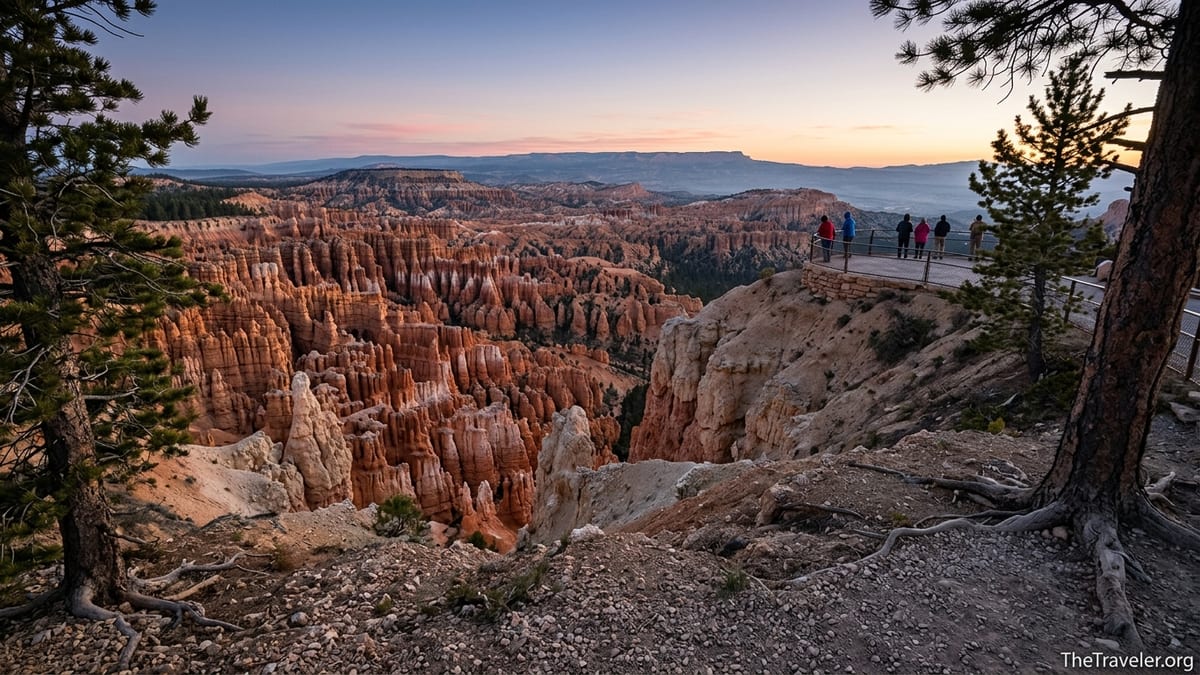
What Makes Bryce Canyon Different From Other Utah Parks
Bryce Canyon National Park is not actually a canyon carved by a river. It is the eroded edge of a high plateau in southern Utah, where frost and rain have sculpted soft rock into dense clusters of hoodoos, the tall, thin spires that define the park. The Bryce Amphitheater, the park’s most famous bowl-shaped basin, holds one of the greatest concentrations of hoodoos on Earth, which is why many travelers describe it as an amphitheater of stone rather than a single viewpoint and move on.
Compared with nearby heavyweights like Zion and the Grand Canyon, Bryce is smaller and more compact. The main park road runs for about 18 miles from the entrance to Rainbow Point, but most visitors spend their time in the first few miles, where four marquee viewpoints overlook the Bryce Amphitheater: Sunrise, Sunset, Inspiration, and Bryce Point. This layout means you can see headlining scenery in a half day, a full day, or string together a few days of sunrise, hiking, and stargazing without long drives inside the park.
Travelers often comment that Bryce feels more manageable than Zion or Arches. While those parks can require complex shuttle logistics and early-morning lineups, Bryce’s free seasonal shuttle focuses on moving people between Bryce Canyon City, the visitor center, and the main viewpoints. In practice, this can turn a potentially stressful midday visit into a relaxed series of hop-on, hop-off stops where you simply step out, walk to the rim, and let the view do the work.
Weather and elevation also set Bryce apart. The rim of the Bryce Amphitheater sits around 8,000 to 9,000 feet above sea level, which means cooler temperatures than many desert parks and a genuine four-season feel. In summer, travelers escaping 100-degree heat in Las Vegas or at Zion often appreciate that Bryce afternoons are typically noticeably cooler on the plateau, while winter visitors may find snow dusting the hoodoos and quiet trails under blue skies.
Views Travelers Remember Long After the Trip
For many visitors, the answer to whether Bryce Canyon is worth visiting is decided in the first ten minutes at the rim. Sunrise Point and Sunset Point, which sit facing each other on a short paved stretch of the Rim Trail, are usually the introduction. From Sunrise Point, you look south into a maze of red-orange and cream-colored hoodoos with named features like the Sinking Ship and Boat Mesa on the horizon. From Sunset Point, you get classic views of Thor’s Hammer, one of the park’s most photographed single hoodoos, rising like a column with a block of rock balanced on top.
Travelers regularly report that the best strategy is to arrive at least 30 minutes before sunrise, especially in summer, and watch the light work its way down the formations. In real terms, that might mean driving in from Bryce Canyon City at 5:30 a.m. in July, parking at Sunrise Point, and joining a quiet crowd huddled in jackets on the rim. As the sun clears the horizon, the hoodoos shift from deep purple shadow to bright orange, and the amphitheater seems to glow from within. People who have visited dozens of national parks often call this one of their top three sunrise experiences.
Later in the day, Inspiration Point offers a slightly higher, more dramatic view into the Bryce Amphitheater, with what many photographers describe as a “sea of hoodoos” stacked densely below. Meanwhile, Bryce Point, a short drive or shuttle ride away, is another favored sunrise location. From there you can look back along the curve of the amphitheater and watch the first light sweep sideways across the formations instead of straight on.
Because these viewpoints sit so close together, it is easy to experience multiple angles in a short visit. A typical first-day itinerary that many travelers follow is simple: park at the visitor center or Sunrise Point mid-morning, walk the paved Rim Trail to Sunset Point, stop for lunch at the lodge or a picnic area, then drive or shuttle out to Bryce Point and Inspiration Point in the afternoon. Without any serious hiking, you will have seen the park’s most iconic vistas from four very different perspectives.
Signature Hikes: Getting Down Among the Hoodoos
While the rim views alone convince many travelers that Bryce is worth the journey, what people rave about afterward is the feeling of walking among the hoodoos on the park’s signature trails. The most famous route is the Queen’s Garden and Navajo Loop combination, a roughly 2.9 mile loop that connects Sunrise Point and Sunset Point. The National Park Service and many recent visitors recommend hiking it clockwise: descend from Sunrise Point on the gentler Queen’s Garden trail, wander through arches and sculpted formations at the bottom, then climb back up the steeper switchbacks of the Navajo Loop to Sunset Point.
In real terms, this is not an all-day backcountry challenge. Most reasonably fit travelers complete the loop in two to three hours with stops for photos. The key factor is elevation: you drop and then regain roughly 600 feet at around 8,000 feet above sea level, so the walk back up feels more strenuous than the mileage suggests. For many families or casual hikers, this is their main “below the rim” experience of the trip, and reviewers consistently call it their favorite hike of an entire Utah itinerary, even when they have also visited Zion, Capitol Reef, and Arches.
Beyond this showcase loop, several other trails help answer whether Bryce is worth more than a quick stop. The Peekaboo Loop, which starts from the Bryce Amphitheater area, adds distance and elevation for those who want a half-day adventure among more remote hoodoos. Fairyland Loop, often praised by experienced hikers, offers a quieter eight-mile outing with sweeping views and fewer crowds. Shorter options like the 1.8 mile Queen’s Garden out-and-back or the paved Rim Trail section between Sunrise and Sunset Points give travelers with limited time or mobility a chance to get closer to the formations without committing to steeper climbs.
Seasonal conditions affect these trails. In winter or early spring, snow and ice can turn switchbacks into slippery slopes, and sections of the Navajo Loop, particularly the narrow Wall Street slot-like section, are sometimes closed due to rockfall or mudslides. Even when that happens, travelers generally still find the park worthwhile, substituting Queen’s Garden out-and-back or combining other short trails with extended rim walks.
Accessibility, Shuttles, and How Easy It Is to Visit
One of the practical reasons travelers see Bryce as worth visiting is how easy it can be to experience the park’s best scenery without intense effort. The National Park Service operates a free shuttle in the main season, generally from April through October, connecting Bryce Canyon City, the visitor center, the lodge area, and the four major amphitheater viewpoints. The cost is built into the standard private vehicle entrance fee, so once you have paid at the gate or used an America the Beautiful pass, you can ride as much as you like.
In real-world use, this means a couple arriving in Bryce Canyon City on a summer afternoon can leave their car at the shuttle station next to the main hotels and campgrounds, hop on a bus every 10 to 15 minutes, and step off at places like Sunrise Point or Bryce Point without worrying about parking congestion. Many visitors plan their day around this system: a morning bus to the rim for sunrise, a late-morning ride to the lodge area for coffee, a midday rest back in town, and a final sunset run to Inspiration Point.
Accessibility is another strong point. Several of Bryce’s classic viewpoints, including Sunrise, Sunset, and Inspiration Points, have paved overlooks and parking that work for wheelchairs, strollers, and travelers with limited mobility. The short paved portion of the Rim Trail between Sunrise and Sunset Points is especially popular with multigenerational groups. It allows grandparents, small children, and non-hikers to share some of the best views in the park in a half-mile mostly level walk along the edge of the amphitheater.
For those who want to get below the rim but cannot manage steep climbs, outfitters authorized by the park offer guided horseback rides into the amphitheater area during the main season. A typical two-hour ride lets guests wind between hoodoos on established horse trails while the animals handle most of the elevation change. Families who try this option often mention that it allowed less-mobile parents or older relatives to experience the stone maze up close without the exertion of hiking Queen’s Garden and Navajo Loop on foot.
When to Go and How Long to Stay
Timing plays a big role in whether Bryce Canyon feels worth the trip. The most popular months are late spring through early fall, when all park roads are typically open, the shuttle is running, and trails like Queen’s Garden and Navajo Loop are largely free of snow. Summer brings the largest crowds, but also the longest days. On a July visit you can reasonably watch sunrise, hike a loop below the rim, rest during the bright midday hours, then return for a late-evening stroll or stargazing session after dinner.
Shoulder seasons in May, June, September, and early October are often described as a sweet spot. Daytime temperatures tend to be moderate, evenings cool, and while the park is still busy, parking and trail congestion can be more manageable than during peak summer holiday weeks. Travelers doing a larger Utah loop frequently slot Bryce between stops at Zion and Capitol Reef, spending one or two nights either in Bryce Canyon City just outside the park entrance, at the Bryce Canyon Lodge inside the park, or in nearby small towns such as Tropic.
Winter, from roughly late November through March, offers a very different experience. The main road is usually plowed to at least some viewpoints, but snow and ice are common, and some trails or sections may close for safety. For prepared visitors, the reward is seeing bright orange hoodoos capped with snow under low winter light and sharing viewpoints with only a handful of people. Some travelers rent traction devices for their boots at local outdoor shops or bring their own, then take short rim walks or join ranger-led snowshoe walks when conditions allow.
In terms of trip length, Bryce can work as a rewarding day trip or a multi-day stop. Many visitors driving up from Zion or Kanab arrive by late morning, visit the amphitheater viewpoints, do a shorter hike, and return the same evening. Others choose to stay one or two nights, allowing time for two sunrises, a longer hike such as Fairyland Loop or the Peekaboo Loop, and an evening dedicated to astronomy. Travelers who give the park at least a full day and a night generally report the highest satisfaction, saying they felt able to experience both the iconic viewpoints and the quieter moments after day-trip crowds have left.
Dark Skies, Stargazing, and Night Programs
Another aspect that pushes Bryce from “nice stop” into “trip highlight” for many travelers is the night sky. The park sits far from major urban light pollution, at a high elevation, and has been recognized for protecting its dark skies. On a clear, moonless night, visitors often mention being able to see the Milky Way stretching clearly from horizon to horizon and spotting constellations they cannot see at home.
In practice, this might look like walking a few steps away from the lodge area after dinner, letting your eyes adjust for 15 to 20 minutes, and then looking up to find the sky crowded with stars. Families traveling with teenagers often talk about lying on the benches at Sunrise Point or near the visitor center parking area and spending an hour identifying satellites and meteor streaks. Photographers regularly bring tripods to the rim, capturing long exposures of hoodoos silhouetted under the Milky Way.
The park also offers ranger-led astronomy programs in the main season, which can include constellation tours with green-laser pointers and telescope viewing nights. Availability and schedules vary, so travelers commonly check at the visitor center when they arrive to see what is on offer during their stay. Even without a formal program, simply stepping outside after dark and looking up is one of the easiest high-impact experiences Bryce offers, and it comes at no extra cost beyond your park entrance fee and lodging.
For travelers coming from big cities where only a handful of bright stars are visible, this is often an unexpected highlight. Reviews that begin with praise for sunrise at the rim and the Queen’s Garden and Navajo Loop hike frequently end with an almost equal focus on how unforgettable the night sky was, especially for children seeing the Milky Way clearly for the first time.
Who Will Love Bryce Canyon, and Who Might Not
Understanding what type of traveler you are can help decide whether Bryce Canyon is worth a special trip. If you enjoy dramatic scenery that can be accessed quickly, short to moderate hikes with big payoffs, and the chance to see a truly dark night sky, Bryce fits extremely well. It is particularly appealing to road trippers who want a mix of intense landscapes and relatively low-friction logistics. You can see bucket-list views within an hour of arriving, then decide how much more you want to invest in hiking or exploring the longer scenic drive to Rainbow Point and Natural Bridge.
Families often find Bryce easier than some other national parks. The short, paved rim walks and frequent shuttle buses simplify moving between viewpoints with young kids. Teens and active adults get a sense of adventure descending into the hoodoos, while grandparents or less mobile relatives can still participate by staying on the rim. The elevation can be tiring but the distances are manageable, and most accommodations in Bryce Canyon City are only a few minutes from the park entrance.
On the other hand, travelers who are looking for extensive backcountry solitude or all-day river canyon treks may find Bryce a bit limited. While there are longer trails, the park is relatively compact, and its main attractions cluster around the amphitheater. Some visitors who prefer lush, forested landscapes over rock scenery also report that a short visit felt sufficient. Additionally, people who are very sensitive to altitude might find the 8,000-foot elevation challenging, particularly on steep climbs like the Navajo switchbacks.
Weather can influence impressions as well. In summer, afternoon thunderstorms sometimes roll across the plateau, briefly closing high, exposed trails and adding a chill to what had been a sunny morning. In winter and early spring, icy paths and partial trail closures can limit options. Travelers who arrive prepared with layers, sun protection, and realistic expectations about trail conditions tend to come away far more positive about the experience than those caught off guard by mountain weather in what they assumed would be low-elevation desert.
The Takeaway
Is Bryce Canyon National Park worth visiting? For most travelers, the park delivers far more than the time and effort it takes to reach its high plateau. In a relatively small footprint, it offers globally distinctive geology, easy-to-access viewpoints, memorable half-day hikes, and some of the best dark skies on a standard Utah road trip. A single sunrise at the Bryce Amphitheater or a walk through the hoodoos on the Queen’s Garden and Navajo Loop trail is often enough to move Bryce into a traveler’s personal top tier of U.S. national parks.
The park is not perfect for everyone. If your ideal trip involves multi-day wilderness routes or lush riverside trails, Bryce may function best as one striking stop among several in southern Utah rather than as your main destination. Seasonal conditions, trail closures, and altitude are real considerations. Yet even visitors who encounter partial closures frequently report that the remaining viewpoints and rim walks were more than enough to make the trip feel worthwhile.
For first-time visitors to the region, the park slots neatly into a loop that might include Zion, Capitol Reef, and the Grand Canyon. For returning travelers, it offers new ways to see familiar formations at different times of day or in different seasons, from snow-dusted hoodoos in January to late-summer thunderstorms echoing across the amphitheater. If you value unusual landscapes, accessible adventure, and star-filled skies, Bryce Canyon earns its reputation as one of the most rewarding stops in the American Southwest.
FAQ
Q1. Is Bryce Canyon National Park worth visiting if I only have one day?
Yes. In one day you can see the main Bryce Amphitheater viewpoints, walk the short paved Rim Trail between Sunrise and Sunset Points, and hike part or all of the Queen’s Garden and Navajo Loop combination if conditions and your fitness allow. Many travelers on tight Utah road trip schedules still rank Bryce as a highlight after just a single full day.
Q2. How difficult is the Queen’s Garden and Navajo Loop trail for beginners?
The combined loop is relatively short in distance, around three miles, but it involves about 600 feet of elevation change at high altitude. Beginners who are reasonably active usually manage it with plenty of breaks, water, and sturdy footwear. Those unsure about the climb back up often start with Queen’s Garden out-and-back, turning around before the steeper sections and saving the full loop for a future visit.
Q3. What is the best time of year to visit Bryce Canyon?
Late spring through early fall offers the widest range of open trails and services, with the free shuttle operating and evenings often comfortable for stargazing. Shoulder months like May, June, September, and early October tend to balance good weather with somewhat lighter crowds. Winter visits can be beautiful with snow on the hoodoos but require more preparation for cold, icy trails, and possible closures.
Q4. Are the main viewpoints at Bryce Canyon accessible for people with limited mobility?
Yes, several of the marquee viewpoints, including Sunrise, Sunset, and Inspiration Points, have paved overlooks suitable for many visitors with limited mobility. The short paved Rim Trail section between Sunrise and Sunset Points is especially popular with wheelchair users and families using strollers. As always, exact accessibility can vary with weather, so recent conditions are worth checking on arrival.
Q5. Do I need a car, or can I rely on the park shuttle?
You can see the main Bryce Amphitheater area using the free seasonal shuttle, which connects Bryce Canyon City, the visitor center, and the key viewpoints. Many visitors park once in town or at the visitor center and ride the shuttle for the rest of the day. If you want to explore the full 18-mile scenic drive to Rainbow Point at your own pace, having a car is more convenient outside of shuttle-served areas.
Q6. How does Bryce Canyon compare to Zion or the Grand Canyon?
Bryce is smaller and more compact, with its most famous scenery concentrated in a single amphitheater, while Zion and the Grand Canyon spread their highlights over larger areas. Travelers often describe Bryce as easier to see in one or two days and less overwhelming in terms of logistics. Many visitors who see all three parks on one trip say each feels distinct, but Bryce delivers some of the most surprising and photogenic views in the shortest amount of time.
Q7. Is Bryce Canyon still worth visiting if some trails are closed?
Yes. Even when sections of trails like the Navajo Loop close temporarily for snow, ice, or rockfall, the park’s rim viewpoints, paved Rim Trail segments, and other routes such as Queen’s Garden or Fairyland Loop usually remain open. Travelers who encounter partial closures often focus more on sunrise and sunset at the rim, alternate hikes, and the scenic drive, and still consider the visit very worthwhile.
Q8. Can families with young children enjoy Bryce Canyon?
Families with young children usually find Bryce very manageable. Short, paved walks near Sunrise and Sunset Points provide big views with minimal effort, and kids often enjoy spotting shapes in the hoodoos from the rim. Parents who want a bit more adventure sometimes take older children partway down Queen’s Garden, turning around when the climb back would become too demanding. Many hotels and campgrounds nearby cater to families, making logistics simpler.
Q9. How important is it to see sunrise or sunset at Bryce?
While Bryce is striking at any time of day, sunrise and sunset are when the hoodoos show their most dramatic colors and shadows. Many travelers plan at least one sunrise at Sunrise Point or Bryce Point and one sunset at Sunset Point or Inspiration Point. Those who make the effort to be at the rim during these golden hours frequently say these moments were the most memorable parts of their trip.
Q10. Is Bryce Canyon a good destination for non-hikers?
Yes. Non-hikers can still experience much of what makes Bryce special by using the shuttle or driving to the main viewpoints, strolling the paved Rim Trail segment, attending ranger talks, and enjoying stargazing from easily reached areas near the lodge or visitor center. Optional guided horseback rides into the amphitheater give non-hikers another way to get close to the hoodoos without tackling steep trails on foot.