


Shanklin Old Village is one of those places that appears on almost every Isle of Wight postcard: a tight cluster of thatched cottages, overflowing hanging baskets and small tea rooms at the top of a wooded ravine called Shanklin Chine. For some visitors it is the highlight of the island, for others it can feel a little too carefully packaged. If you are planning a trip to the Isle of Wight in the coming seasons and wondering whether Shanklin Old Village is actually worth the time and money, this guide looks at what it offers right now, who will enjoy it most, and the practical details that can make or break a short visit.
The character and atmosphere of Shanklin Old Village
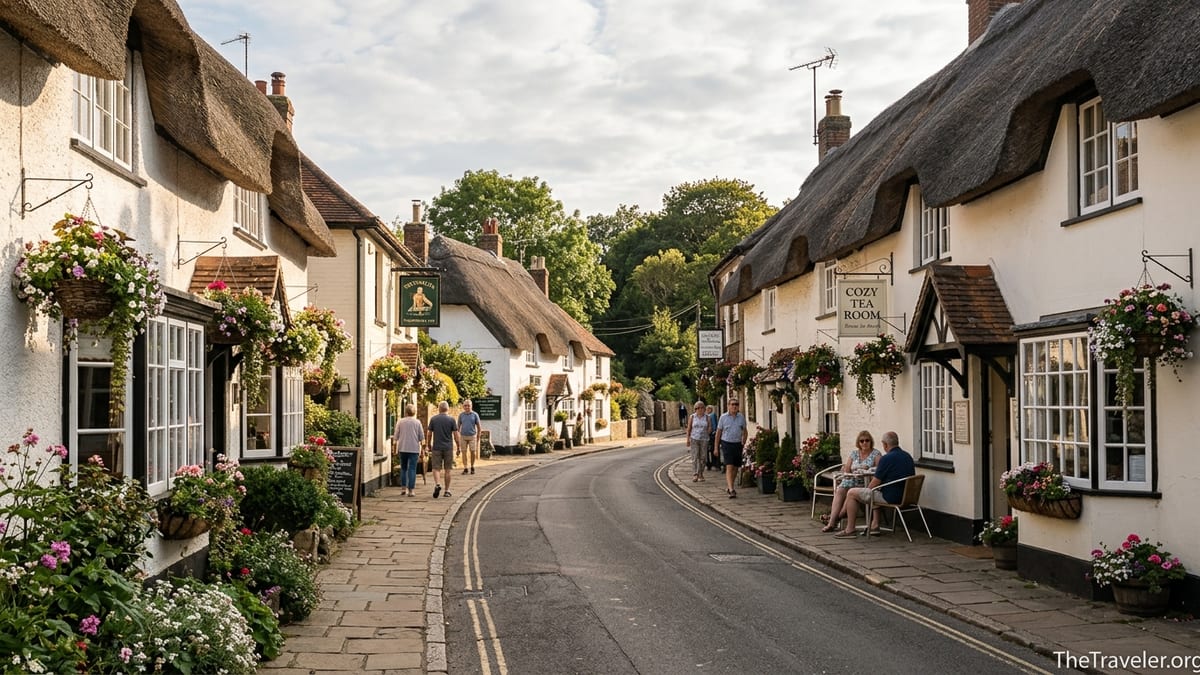
Shanklin itself is a traditional seaside town on Sandown Bay, but the Old Village is a compact, historic corner set back from the main beach and promenade. It sits at the top of Shanklin Chine, a narrow wooded gorge that drops steeply to the sea. Here the streets curve around a cluster of low, whitewashed cottages with deep thatched roofs, overflowing window boxes and small front gardens. It is an area that has been photographed and painted for more than a century, and walking through today still gives a clear sense of that Victorian and Edwardian resort heritage.
The atmosphere is at its best outside the busiest hours. On a sunny weekday morning in spring, you may find locals buying newspapers, delivery vans pulling up outside tea rooms and only a handful of day trippers pausing to take photos. By mid afternoon on a warm August weekend, however, the narrow pavements can feel crowded with coach parties and families, and queues often form outside the most photogenic tearooms and pubs. If you value quiet exploration, planning to arrive earlier or later in the day can transform the experience.
The Old Village is not a museum piece. Many cottages are private homes and several have been converted into small hotels, restaurants and gift shops. This mix gives the area a lived-in feel, even if much of the economy is built around visitors. Because the streets are compact and gently sloping, most people can cover the whole village on foot in less than half an hour, but its charm lies more in lingering at a table or exploring nearby walks than in rushing around to tick off sights.
For travellers deciding whether it is worth visiting, the key is expectations. Shanklin Old Village offers a very specific kind of English village scenery, focused on thatch, flowers and cream teas. If that appeals, the atmosphere alone justifies a stop. If you seek cutting-edge culture or nightlife, you will not find it here, and another Isle of Wight base such as Ryde or Newport might suit better.
What you can actually see and do
Although the Old Village is small, there is more to do than simply take a few photographs and move on. One of the main draws is Shanklin Chine, the steep, tree-lined ravine that connects the village with the beach below. The chine is a paid attraction, laid out with pathways, bridges and viewpoints where you can see waterfalls, ferns and sea views. Evening illuminations in peak season add coloured lighting to the waterfalls and foliage, turning it into a gentle night-time walk that many families combine with an early dinner in the village.
At the heart of the Old Village are several long established thatched buildings that now operate as tearooms and pubs. Vernon Cottage, for example, sits at the entrance to the village with thick thatch and cottage-style gardens, and is regularly recommended for cream teas and lunches in the flower-filled outdoor areas. Visitors can sit among tubs of geraniums and hanging baskets, with views of the narrow street just beyond the hedge. A few doors away, Pencil Cottage combines a small café with gift rooms selling seasonal souvenirs in one of the oldest properties in the village, and an enclosed garden that can be particularly appealing for families looking for a more contained, relaxed space.
Across the road, The Crab Inn and The Old Thatch Tea Shop offer variations on the same theme of low beamed ceilings, traditional signage and hedged gardens. The Old Thatch, in particular, has built a reputation among recent visitors for crafty, fairy garden style details in its outdoor space, which can be a hit with children as well as adults looking for a whimsical setting for a cream tea. In practice this means small figurines, winding paths and planting that encourages a sense of discovery as you move through the garden rather than a plain terrace of tables.
Beyond food and drink, there are a few small gift and craft shops, including places selling local fudge, Isle of Wight glass, postcards and prints. These are pleasant to browse for half an hour but are not destination shopping in their own right. For a more active interlude, many travellers pair the Old Village with a circular walk: down through Shanklin Chine to the beach, along the Esplanade to the thatched Fisherman’s Cottage pub on the sand, then back up to the village via the cliff lift or road. This loop can easily occupy a leisurely half day.
Costs, value for money and when to visit
One of the main questions travellers ask is whether Shanklin Old Village justifies the cost in an era when family budgets are tight and travel prices have climbed. Entry to Shanklin Chine itself is a paid ticket and recent visitors often comment that while the walk is beautiful, it can feel relatively expensive for its length if you are not particularly interested in plants or photography. For a couple or family, this can add up once you include food, drinks and transport, so it is worth checking current prices before you go and planning to make a full outing of it, perhaps timing your visit to enjoy both daylight and the evening illuminations on the same ticket.
Cream teas and lunches in the Old Village are typically priced at a level comparable to other tourist hotspots in southern England. You can expect to pay a moderate amount for a homemade scone with jam and clotted cream, plus a pot of tea, in a popular thatched tearoom. Pub main courses such as fish and chips, pies or vegetarian specials usually sit in the mid-range for UK coastal towns. There are cheaper options elsewhere on the Isle of Wight, such as takeaway cafés along Shanklin’s main beach or in less tourist-focused towns, but most visitors feel that the setting of the Old Village adds value to the meal.
To stretch your budget, you can enjoy much of the village’s atmosphere for free simply by walking the lanes, taking photographs and perhaps sharing a drink or ice cream instead of a full meal. Bringing a picnic to eat on a bench at nearby Keats Green, which looks out over the bay, is another way to enjoy the surroundings without committing to restaurant prices. This approach can work especially well for families who want the experience of exploring thatched streets without multiple rounds of ordering in cafés.
Season also affects both cost and experience. Shanklin Old Village is busiest from late May through early September and during school holidays, when accommodation rates are at their highest and queues for popular spots are common. Shoulder seasons in April, early May and late September can offer better value and a calmer feel, with many businesses still open. In winter months some tearooms and attractions reduce hours or close, and while the streets are quieter and easier to photograph without people, you should check opening times in advance if there is a particular pub or café you do not want to miss.
Who will enjoy Shanklin Old Village the most
The Old Village tends to appeal strongly to certain types of travellers. If you enjoy traditional English village aesthetics, heritage architecture and gardens, you are likely to find it very rewarding. Photographers often single it out as one of the most picturesque corners of the Isle of Wight, especially on overcast days when the white cottages and greenery stand out softly without harsh shadows. Couples on short breaks often use the village as a backdrop for leisurely afternoons, lingering over tea in Vernon Cottage’s gardens or under the thatch of The Old Thatch, then strolling down to the beach in the evening.
Families with children can also find plenty to like, especially when combining the Old Village with Shanklin Chine and beach time. The steep paths through the chine, the small waterfalls and illuminated foliage after dark can feel just adventurous enough for school-age children, and gardens decorated with fairy features or animal sculptures add an extra layer of interest. The walk down to the seafront is manageable for most, though parents with pushchairs or anyone with mobility challenges may prefer to use the road route or Shanklin’s cliff lift rather than tackling steep steps.
Shanklin Old Village can also suit solo travellers and older visitors who appreciate a slower pace. There are enough benches and quiet spots to sit with a book or people-watch, and several of the tea rooms are accustomed to serving solo guests who simply want a relaxed break between walks. For international visitors keen on a condensed version of “storybook England,” the cluster of thatched roofs, hanging baskets and pub signs provides exactly that, without the need to hire a car and seek out remote rural villages.
On the other hand, if your interests lean towards nightlife, live music, or extensive shopping and galleries, the Old Village will likely feel limited. While pubs sometimes host live entertainment, especially on the seafront, the Old Village itself is largely quiet by late evening, with visitors drifting back to hotels or down to the beach. Those seeking contemporary culture may prefer to base themselves in larger island towns and visit Shanklin Old Village for a short, focused excursion rather than an all-day stay.
Practicalities: getting there, getting around and accessibility
Reaching Shanklin Old Village without a car is relatively straightforward. Shanklin has a railway station on the Island Line from Ryde, which connects with ferries from Portsmouth. From the station, it is roughly a 15 to 20 minute walk uphill to the Old Village, depending on your pace and luggage. Alternatively, local buses operated by Southern Vectis serve Shanklin from towns such as Ryde, Newport, Sandown and Ventnor, with routes 2 and 3 among those linking Ryde and Shanklin. These buses stop near the main shopping streets, from where it is a short further walk to the Old Village.
If you are driving, on-street parking immediately within the Old Village is limited and can be tightly controlled in peak season. Many visitors instead use nearby public car parks in Shanklin and walk up, or park closer to the seafront and combine the beach and village in a single outing. Because the streets are narrow and often busy with pedestrians stepping off the pavements for photos, it is wise to avoid trying to drive through the village itself unless you are staying in accommodation right there that provides clear instructions.
Within the Old Village, surfaces are mostly paved but can be uneven, with some gentle gradients. For travellers with limited mobility, it is possible to enjoy the central stretch of road that passes landmark cottages and pubs without tackling steep hills, but accessing Shanklin Chine’s paths or walking down to the seafront through the gorge involves significant slopes and steps. The cliff lift, when in operation, offers an alternative link between the upper town and beach, though you should check current status and operating times when planning your visit.
Public facilities are an important consideration as well. Shanklin town has public toilets near key points such as the cliff lift and library, and visitors report that these are generally serviceable even outside peak season. Many tea rooms and pubs in the Old Village also have their own facilities for customers. If you are visiting during a quieter time of year, keep in mind that shorter daytime opening hours for some businesses may limit access to these, so it can be useful to plan refreshment breaks around known open venues.
How Shanklin Old Village compares with other Isle of Wight highlights
To decide whether Shanklin Old Village deserves a place on your itinerary, it helps to compare it with some of the Isle of Wight’s other well known spots. Godshill, for instance, is another inland village famous for its thatched cottages and tea rooms. While Godshill offers a slightly more rural setting with a hilltop church and a model village attraction, Shanklin Old Village has the advantage of immediate access to the coast, the chine and a wider range of accommodation options within walking distance. Travellers often choose to visit both, but if time is short and you want thatched buildings plus a beach in one stop, Shanklin has the edge.
Ventnor, a short bus ride away, presents a different atmosphere again, with terraced Victorian houses clinging to steep slopes above a sheltered bay and a more bohemian reputation, including a botanical garden and independent shops. Compared to Ventnor, Shanklin Old Village feels more overtly traditional and perhaps more polished. If you like quiet, leafy lanes and heritage cottages, you may gravitate toward Shanklin. If you prefer a slightly edgier, less manicured feel, Ventnor might appeal more.
Against the island’s big-ticket attractions such as the Needles, Osborne House or the various coastal theme parks, Shanklin Old Village stands out for its human scale and walkability. You do not need timed entry tickets or long car journeys to enjoy it, and you can combine it easily with a morning on the beach or a coastal walk without much planning. For visitors staying in Shanklin, it is effectively an extension of the town, somewhere to wander into after breakfast or before dinner, rather than a stand-alone expedition.
Ultimately, if you are piecing together a weekend or short break, Shanklin Old Village is best thought of as one component in a wider Isle of Wight itinerary. It pairs naturally with a stroll through Shanklin Chine, a drink at Fisherman’s Cottage on the beach and perhaps a bus trip to Godshill or Sandown. As a compact, walkable snapshot of the island’s older resort charm, it earns its spot alongside larger, more dramatic sights.
The Takeaway
Is Shanklin Old Village worth visiting on the Isle of Wight? For many travellers, the answer is yes, provided you arrive with realistic expectations and plan your timing. The village offers a concentrated dose of traditional English charm, with its whitewashed thatched cottages, flower-filled gardens and cluster of tea rooms and pubs, all perched above a wooded coastal ravine that leads to a long sandy beach. It is particularly rewarding for those who enjoy slow travel, photography, gentle walks and lingering over cream teas rather than chasing high-adrenaline activities.
At the same time, it is important to recognise what Shanklin Old Village is not. It is not a place of late-night bars, big-name museums or cutting-edge restaurants, and its small size means that, on its own, it is unlikely to fill a whole day for most visitors. Costs, especially for families paying entry to Shanklin Chine and eating out, can add up quickly, and during high season crowds can diminish some of the quaintness that draws people there in the first place.
Approached as part of a broader day out, however, the Old Village can be a highlight of an Isle of Wight trip. Arrive early or later in the day to avoid peak crowds, budget for at least one sit-down drink or meal to fully enjoy the atmosphere, and consider combining your visit with the chine and a beach walk. If picturesque thatched streets, traditional pubs and the sound of seabirds overhead match your idea of a coastal escape, Shanklin Old Village is likely to feel well worth the journey.
FAQ
Q1. How long do I need to visit Shanklin Old Village?
Most visitors are satisfied with two to three hours in the Old Village itself, which allows time for a leisurely walk, a cream tea or pub stop and browsing a few shops. If you add Shanklin Chine and a beach walk, you can comfortably fill half a day.
Q2. Is Shanklin Old Village suitable for visitors without a car?
Yes. Shanklin has a railway station connected to Ryde and regular Southern Vectis bus services from other island towns. From the station or bus stops it is a short walk to the Old Village, so you can easily visit using public transport.
Q3. Are the tea rooms and pubs open all year round?
Many venues in the Old Village open through most of the year, but some reduce their hours or close in the quietest winter months. If you are travelling between late autumn and early spring, it is wise to check individual opening times or plan to visit around midday when places are most likely to be open.
Q4. Is Shanklin Old Village very crowded in summer?
During school holidays and warm weekends, the narrow streets can become busy, especially in the middle of the day when coach groups and day trippers arrive. Visiting early in the morning or later in the afternoon usually offers a calmer experience, even in high season.
Q5. Can I visit Shanklin Chine and the beach from the Old Village?
Yes. The Old Village sits at the top of Shanklin Chine, and paths through the chine lead down to the seafront. From the bottom you can walk along the Esplanade, visit the beach and stop at seafront pubs such as Fisherman’s Cottage before returning via the same route or by road.
Q6. Is Shanklin Old Village accessible for people with limited mobility?
The main street through the Old Village is relatively gentle, though surfaces can be uneven. Those with limited mobility may prefer to stay on this central stretch and avoid the steep paths and steps of Shanklin Chine. If you use mobility aids, it is worth checking access details with specific tea rooms or pubs before visiting.
Q7. How expensive is it to eat and drink in Shanklin Old Village?
Prices are in line with other popular tourist areas in southern England. Cream teas and pub meals are not the cheapest on the island, but many visitors feel the historic thatched settings provide good value. Budget-conscious travellers can limit costs by sharing dishes, choosing lighter snacks or picnicking nearby.
Q8. Is Shanklin Old Village a good base to stay on the Isle of Wight?
Shanklin as a whole makes a solid base, with the Old Village providing character and the wider town offering more accommodation, shops and beach access. Staying within walking distance of the Old Village can be ideal if you like evening strolls to traditional pubs and tea rooms after daytime excursions elsewhere on the island.
Q9. What is the best time of year to visit Shanklin Old Village?
Late spring and early autumn often offer a good balance of pleasant weather and manageable crowds. Summer brings the liveliest atmosphere and longest opening hours, while winter is quieter and more atmospheric but with fewer services operating daily.
Q10. Is Shanklin Old Village worth it if I am only on the Isle of Wight for one day?
If you have just one day, it depends on your priorities. Travellers seeking classic English village scenery combined with a sandy beach often choose Shanklin Old Village and the chine as their main focus. If you are more interested in dramatic coastal views or major historic sites, you might instead prioritise locations such as the Needles or Osborne House and reserve Shanklin for a future visit.