


Few Caribbean excursions are as famous or as debated as Stingray City in Grand Cayman. For some travelers, hand-feeding southern stingrays in clear turquoise water becomes the highlight of an entire cruise. For others, the crowds, cost or ethical questions leave them wishing they had chosen a quieter reef or beach day instead. This guide walks through who Stingray City is best for, what it really costs and feels like in 2026, and when another Grand Cayman tour might be a better fit.
Get the latest updates straight to your inbox!
What Exactly Is Stingray City in 2026?
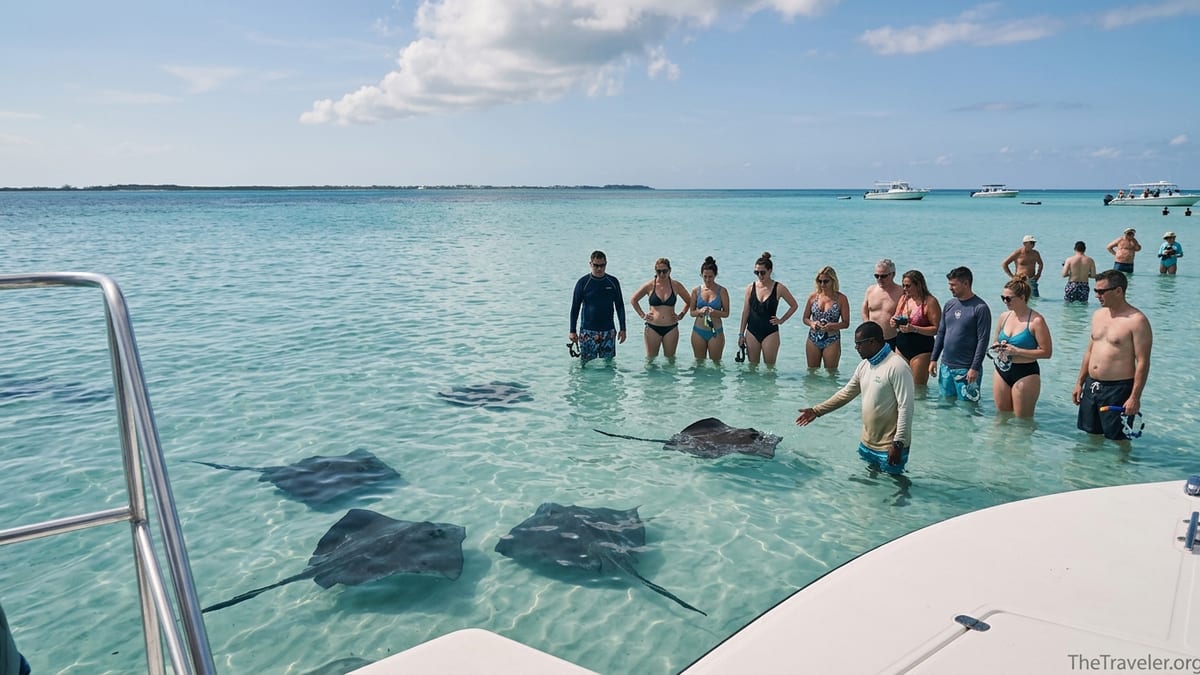
Stingray City is a shallow sandbar and nearby dive site in Grand Cayman’s North Sound where wild southern stingrays regularly gather to be hand-fed by visitors. Boats anchor in waist- to chest-deep water on the sandbar, guests step down a ladder into the sea, and guides help them hold, touch or feed stingrays that have become accustomed to interacting with people. It is not an aquarium or enclosure; the rays are free-ranging animals that choose to stay because of the steady food supply.
The Cayman Islands Government formally designated the Stingray City Sandbar and adjacent area as Wildlife Interaction Zones. Within these zones, licensed operators are allowed to feed and closely interact with stingrays under specific rules intended to protect both animals and people. Outside these zones, touching or feeding stingrays is tightly restricted, and several recent enforcement actions highlight how seriously authorities take those protections.
On a typical modern excursion, you board a mid-size tour boat at a marina near Seven Mile Beach or from a pier used by cruise lines. After a 20 to 30 minute ride across the North Sound, the captain anchors on the sandbar. Guides usually spend 30 to 45 minutes helping guests pose for photos, pass around pieces of squid for feeding, and explaining stingray behavior, followed by a stop at a nearby reef or Starfish Point before heading back.
The experience is often described by repeat visitors as surprisingly gentle and almost dog-like. The stingrays, used to years of hand-feeding, brush up against legs and arms looking for food and tolerate being handled far more than truly wild rays usually would. For some travelers that tame feel is magical; for others, it is precisely what raises ethical concerns.
Is Stingray City Worth It for Cruise Passengers?
For cruise passengers in particular, the question is usually whether limited port time and excursion budget should go toward Stingray City or something like a beach club on Seven Mile Beach. Most ships anchor off George Town, then tender passengers ashore by small boats. This tendering process eats into your day and makes timing important when choosing a tour.
Cruise-line excursions to Stingray City, such as packages sold by Carnival or Royal Caribbean that combine the sandbar with a snorkel reef or turtle encounter, commonly run around 80 to 110 US dollars per adult and slightly less for children as of mid-2026. Independent local operators advertising online or in port may offer similar itineraries from around 40 to 70 US dollars per person for a basic two-stop tour, sometimes including soft drinks and snorkel gear. That price difference is why experienced cruisers often book directly with local companies, provided schedules line up safely with the ship’s all-aboard time.
The trade-off is security versus savings. Ship-sponsored tours will wait if the excursion is delayed by traffic or weather and can coordinate directly with the cruise line in an emergency. With a local operator, you are responsible for getting back to the pier in time to catch the last tender. In practice, many well-known Cayman operators build conservative schedules, aiming to have cruise guests back in George Town at least one to two hours before all-aboard, and they depend heavily on cruise business, so they have strong incentive not to cut it close.
If you are on a short visit with just six or seven hours in port, Stingray City is usually worth considering if: you are comfortable being in a group tour setting; you prioritize “only in Cayman” experiences over a generic beach day; and you do not mind spending roughly half your shore time on the water. If you prefer wandering on your own through cafes and shops, or you are stressed by tight schedules, a flexible beach or island tour might suit you better.
Families, Non-Swimmers and Nervous Guests
Parents often worry most about whether Stingray City is appropriate for young children or family members who cannot swim. The sandbar is naturally shallow, with water typically around waist deep on an average adult, but this can change by 30 to 60 centimeters with tides and weather. On calm days, many children as young as five or six stand comfortably while holding onto an adult or the boat ladder. Most tour boats also provide snorkel vests or inflatable belts for weaker swimmers.
If you have a non-swimmer in your group, the most important factor is the day’s conditions. In light wind, the North Sound is almost glassy, and the sandbar feels like a saltwater paddling pool. When a weather system drives stronger trade winds or a front through the area, chop and current can make the water feel more intimidating, especially for kids and older travelers. Some operators cancel or modify Stingray City stops on rough days, but others still go out. Families with nervous swimmers might want to confirm cancellation policies and ask how often the company skips the sandbar when conditions are poor.
Another consideration is how tactile your group is comfortable being with marine life. Guides frequently encourage guests to kiss a stingray for luck, hold one for photos, and hand-feed it pieces of squid. Some families love the playful atmosphere, while others prefer a more observational approach. If the idea of close handling does not appeal, you can still stand in the water and watch or gently touch the rays as they pass by without feeding or posing.
For multi-generational groups, a combo tour that includes a calm snorkel stop on a shallow reef or a visit to Starfish Point can balance things out. That way, family members who decide the stingrays are not for them still enjoy a scenic boat ride and swim in clear water, and no one feels they spent the entire outing on a single activity that not everyone loved.
Wildlife Lovers, Ethics and Crowds
For travelers who care deeply about animal welfare and marine conservation, Stingray City is one of the more nuanced decisions in the Caribbean. The sandbar has decades of history as a case study in wildlife tourism: scientists and regulators have documented both the economic benefits and the ecological impacts of habituating stingrays to daily feeding by thousands of visitors each week.
Research has found that stingrays at feeding sites like Stingray City show altered behavior, including gathering in unnaturally high densities, changing their daily movements, and relying more heavily on handouts than on natural foraging. Conservation groups have also raised concerns that heavy handling and crowding can lead to stress or injury for individual rays. In response, the Cayman Islands created specific Wildlife Interaction Zone rules, such as limits on the type and amount of food used, guidelines around lifting rays out of the water, and encouragement to keep interactions brief and gentle.
On busy cruise days, cruise forums and recent traveler reports describe a dozen or more boats moored around the sandbar at once, each with 20 to 50 people. At peak moments, that can mean several hundred tourists in the water together, all wanting their turn to hold or feed a stingray. Some operators manage this with clear rotation systems and strong guiding presence. Others can feel more chaotic, where rays are passed from group to group like props. Travelers who value quiet, low-impact wildlife encounters often find these peak periods off-putting.
If you want a more ethical or intimate version of the experience, consider booking the earliest possible morning departure or a late-afternoon small-group tour on a day when fewer cruise ships are in port. Some independent operators cap their boats at 20 or fewer guests and emphasize gentle interaction, minimal handling and time spent observing natural behaviors rather than staging photographs. While this does not eliminate the fundamental issues of provisioning wildlife, it can reduce the stress on individual animals and make the experience more meaningful for wildlife-minded travelers.
Weather, Safety and When Tours Get Canceled
From roughly December through April, Grand Cayman’s dry season typically brings more stable weather, with frequent sunny days and moderate tradewinds. This is also peak cruise season, so calm days can be quite crowded at Stingray City. In the wetter months from May through November, you might encounter more afternoon showers, squalls and the risk of tropical systems. During hurricane season, particularly August through October, strong winds or rough seas in the North Sound sometimes cause last-minute cancellations or rerouting of excursions.
Safety at the sandbar is influenced heavily by wind direction and strength. Even when the sea outside the reef looks choppy, the protected North Sound can stay manageable, but there are days when whitecaps roll across the sandbar, making it harder for small children or nervous swimmers to stand steadily. Reputable operators monitor marine forecasts closely and will cancel or switch to more sheltered snorkel sites when conditions are marginal. Checking recent reviews for how a company handles poor weather can be more informative than reading only polished brochure descriptions.
As for the stingrays themselves, incidents of serious injury at Stingray City are extremely rare given the huge number of visitors each year. The southern stingrays there are habituated and typically avoid reacting defensively unless stepped on or grabbed roughly. Guides instruct guests to shuffle their feet rather than step down hard, which helps avoid surprising a ray buried in the sand. They also usually position rays horizontally in the water when allowing brief, supported “holds,” rather than lifting them fully into the air, which reduces stress.
Still, families should be realistic about personal comfort with wild animals in the water. While the stingrays are generally gentle, they are not domesticated pets. People uncomfortable around fish or eels may find the sensation of their smooth bodies brushing against legs or the suction feel when they take food from your hand unnerving. Watching from the boat or standing in the shallows without feeding is always an option, and no guest should feel pressured by crew or family to participate more directly than they wish.
Costs, Value and When Another Tour Is Better
By mid-2026, a typical Stingray City excursion purchased through a major cruise line often costs around 85 to 115 US dollars per adult for a 3 to 4 hour outing that includes transport from the pier, the boat ride, stingray interaction and at least one additional stop such as a snorkel reef or turtle facility. Independent local tours advertised through island tourism sites and marina kiosks can range from approximately 40 to 90 US dollars per person depending on duration, boat size and add-ons. Private charters for small groups, which allow more flexibility in timing and crowd avoidance, usually start in the several hundred dollars range for a half-day.
Whether Stingray City feels “worth it” depends heavily on what you compare it to. For example, if you are deciding between a 90 US dollar stingray and snorkel combo and a 45 US dollar round-trip transfer to a beach club with loungers and rum punch, the wildlife interaction and boat ride need to be central to your travel priorities for the higher price to make sense. Conversely, if you already live near beautiful beaches and rarely have access to clear, fish-filled Caribbean waters, paying extra for a uniquely Caymanian experience may feel entirely justified.
There are several realistic scenarios where another Grand Cayman tour may be a better choice. If you or a travel companion has significant mobility challenges and cannot safely climb boat ladders or stand in moving water, a land-based island tour that includes panoramic viewpoints, historical sites and a relaxed beach stop might offer more enjoyment for less stress. If you are traveling with very young toddlers who are likely to be afraid of large animals brushing against them, a shallow protected beach near Seven Mile, or a visit to a wildlife center where viewing distances can be controlled, might be calmer.
Travelers who prioritize independent exploration sometimes find more value in renting a taxi out to quieter stretches of Seven Mile Beach or to spots like Smith’s Barcadere, then snorkeling from shore at their own pace. Others opt for reef-only snorkel boats that skip the stingrays entirely, focusing on coral gardens and fish instead. These options often cost similar or slightly less than a stingray combo and appeal to snorkelers who prefer observing wild behavior without provisioning or crowding.
How to Decide: A Simple Personal Fit Checklist
To decide if Stingray City is truly worth it for you in 2026, it helps to be brutally honest about your preferences and tolerances. Imagine yourself on a boat with thirty or forty other guests, everyone eager for their photo with a stingray. If that mental picture makes you excited and you can already see the smiles in your vacation album, the excursion is likely a good fit. If instead you feel claustrophobic or uneasy about the animals being passed from person to person, your money might be better spent on a small-group eco tour or a quiet day on the reef.
Ask yourself how comfortable you are in the ocean. You do not need to be a confident swimmer for Stingray City, but you do need to be okay with standing in moving saltwater where you cannot see the bottom perfectly and where animals are occasionally brushing against you. If your instinct is to tense up or panic in that kind of environment, consider a glass-bottom boat, submarine-style tour, or simply snorkeling from a calm beach where you can always move back to shallows when you want.
Consider also how you feel about the ethical dimension. Some travelers accept that almost all tourism has an environmental footprint and see regulated interaction zones like Stingray City as a relatively controlled way to concentrate human impact while supporting local livelihoods. Others prefer to avoid any activity centered on feeding or handling wildlife, reasoning that their vacation money can better support reef-safe snorkeling, marine parks or on-land cultural experiences. There is no universally right answer, but your trip will feel more satisfying if your choices align with your values.
If your group is mixed, a compromise could be splitting up for a morning. Those excited about the rays can join a small-group tour timed away from cruise crowds, while others stroll George Town, visit a museum or enjoy a beach club. You can meet up later and swap stories over conch fritters and mocktails on shore.
The Takeaway
In 2026, Stingray City remains one of the Caribbean’s most memorable and controversial excursions. For many cruise passengers and families, standing in luminous, waist-deep water as gentle southern stingrays glide past is as close as they will ever come to a structured encounter with wild marine life, and it often becomes the story they tell friends first when they return home. The combination of a scenic boat ride, warm shallow water and guided interaction is particularly appealing to travelers who are curious about the ocean but not comfortable with deep open-water snorkeling or diving.
At the same time, the experience is not for everyone. Crowds on busy cruise days, the reality of animals conditioned to seek handouts, and the physical demands of standing in moving water can all diminish the magic for certain travelers. Ethical concerns about provisioning and handling, especially for wildlife lovers who favor low-impact encounters, are real and worth factoring into your decision. Weather and timing add another layer of unpredictability, with rougher conditions sometimes making the sandbar less suitable for children, older guests or non-swimmers.
If you decide to go, you can maximize the chances that Stingray City feels “worth it” by choosing a reputable, small-group operator, aiming for an early or late tour on days with fewer ships in port, and setting clear expectations within your group about how closely you want to interact with the rays. If you decide instead to spend your limited Grand Cayman hours snorkeling a quiet reef, relaxing on Seven Mile Beach or exploring the island’s cultural and natural sites, you will not have wasted the stop. Grand Cayman offers plenty of alternatives that can be just as rewarding in a different way.
Ultimately, the right choice is the one that matches your comfort with crowds and wildlife interaction, your budget, and the type of travel memories you want to bring home. Stingray City can be awe-inspiring and joyful, or it can feel staged and crowded. Thinking through the factors in this guide before you book will help ensure your day in Grand Cayman fits the kind of traveler you are.
FAQ
Q1. Is Stingray City safe for kids and non-swimmers?
Stingray City can be safe for kids and non-swimmers on calm days because the sandbar is shallow and most boats provide flotation vests. However, wind and waves can make conditions challenging, so it is important to check forecasts, choose a reputable operator, and be prepared for children or nervous adults to stay on the boat or use lifejackets if they feel uncomfortable.
Q2. How much does a Stingray City tour typically cost in 2026?
As of 2026, cruise-line excursions that include Stingray City often range from about 85 to 115 US dollars per adult, while independent local operators may charge roughly 40 to 90 US dollars depending on group size, length of tour and added stops such as coral reef snorkeling or Starfish Point.
Q3. Do I have to touch or feed the stingrays?
No. Even on tours where guides encourage feeding or holding rays for photos, you can choose to simply stand in the water and watch. You are not required to touch or feed the stingrays, and reputable guides will respect guests who prefer a more hands-off experience.
Q4. When is the best time of day to visit Stingray City to avoid crowds?
The least crowded experiences are usually on the earliest morning departures or late-afternoon small-group tours, especially on days when fewer cruise ships are in port. Midday tends to be busiest, when multiple cruise and resort boats converge on the sandbar at once.
Q5. What happens if the weather is bad on the day of my tour?
If winds are strong or seas are rough in the North Sound, some operators will cancel or reschedule Stingray City stops for safety, while others may substitute a more sheltered snorkel site. Check your operator’s cancellation policy before booking and, if possible, have a backup plan for how you will spend your day in Grand Cayman.
Q6. Is Stingray City ethical from a wildlife perspective?
Opinions differ. The rays are free-ranging, and the Cayman Islands regulate feeding and interaction in designated Wildlife Interaction Zones, but scientific studies show that frequent feeding and handling change stingray behavior and reliance on human-provided food. Travelers concerned about wildlife ethics may prefer small-group tours that emphasize gentle interaction and observation or may choose non-provisioning activities instead.
Q7. Can I do Stingray City on my own without a tour?
Most visitors reach Stingray City by licensed tour boat, and the Wildlife Interaction Zone rules are designed with commercial operators in mind. While private boat rentals exist, safely navigating the North Sound, anchoring properly and following local environmental regulations can be challenging for first-time visitors, so joining an established operator is generally recommended.
Q8. Will I still have time to see other parts of Grand Cayman if I book a Stingray City excursion from a cruise ship?
Typically, a Stingray City excursion from a cruise ship takes about 3 to 4 hours including transfers, which often leaves only limited additional time in port. You may have an hour or two for a quick walk around George Town or a short beach visit, but it is difficult to combine a full Stingray City tour with an in-depth island exploration on a single short cruise stop.
Q9. What should I bring with me on a Stingray City tour?
You should bring reef-safe sunscreen, a swimsuit, towel, secure strap-on sandals or water shoes if desired, and possibly a rash guard for sun protection. Most tours supply snorkel gear, but you can bring your own mask if you prefer. A waterproof phone pouch or camera is useful for photos, though boat photographers often sell images as well.
Q10. Are there good alternatives if I decide Stingray City is not for me?
Yes. Alternatives include half-day snorkel trips that focus on coral reefs without feeding wildlife, relaxing at a beach club on Seven Mile Beach, visiting scenic shore spots like Smith’s Barcadere, or taking a guided island tour that combines viewpoints, local food stops and a relaxed beach swim. These options can offer a strong sense of Grand Cayman without stingray interaction.