


If you only have one precious day in Shenandoah National Park, choosing how to spend it can feel surprisingly high stakes. Old Rag has the mythic reputation, Stony Man gets rave reviews for sunsets, and waterfall hikes like Dark Hollow Falls lure first timers. Yet many regulars quietly point to another option: Hawksbill Mountain, the park’s highest peak. Is it really worth building your limited day around this one summit, or should you focus elsewhere along Skyline Drive instead? This guide breaks down what Hawksbill actually offers, how it fits into a realistic one day itinerary, and whether it deserves a spot on your short list.
Get the latest updates straight to your inbox!
What Makes Hawksbill Mountain Special
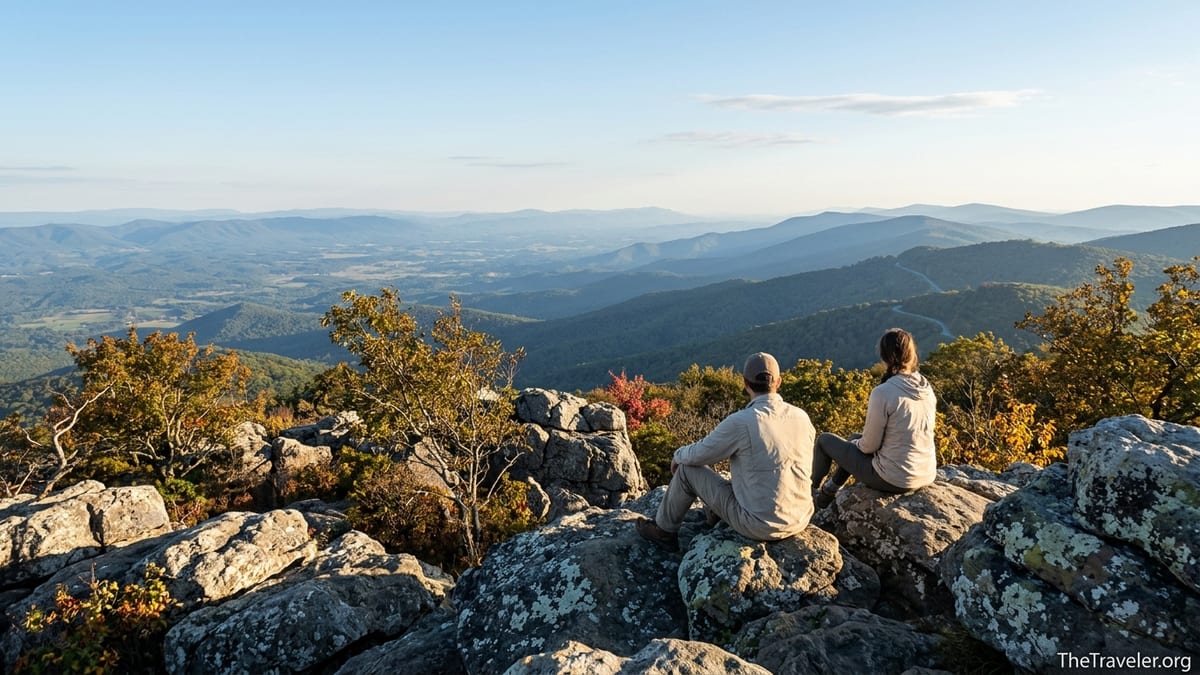
Hawksbill Mountain is the highest point in Shenandoah National Park at roughly 4,050 feet, rising above the spine of the Blue Ridge Mountains that Skyline Drive follows for 105 miles. The summit is not just a high number on a map. It has a wide open rock outcrop and a built viewing platform that looks out across the Shenandoah Valley to the west and the rolling Virginia Piedmont to the east. On a clear day you get classic Blue Ridge layers stacked to the horizon, the kind of scene people imagine when they book a trip here.
Because the trailheads begin high on Skyline Drive near Hawksbill Gap, you are not climbing from the valley floor. Instead you gain only a few hundred vertical feet to reach the summit, which makes Hawksbill unusual among the park’s big view hikes. Routes from Hawksbill Gap and Upper Hawksbill parking lots are generally in the 1.7 to 2.9 mile round trip range with around 650 to 800 feet of elevation gain. For visitors who want serious views without sacrificing their entire day to a single climb, that ratio of effort to payoff is a major part of Hawksbill’s appeal.
The summit experience feels surprisingly wild for such a short hike. There are low scrubby trees and exposed rocks, often with vultures or hawks riding the thermals at eye level. On busy summer weekends and peak foliage days in October you will not be alone, but the layout allows people to spread out along the rocks and platform. On a weekday in shoulder seasons like late April or early November, it can feel quiet enough that you hear little beyond the wind and the occasional call of a raven.
In short, Hawksbill stands out because it gives you a “big mountain” feeling in a bite sized package. When your time in Shenandoah is limited, that matters.
Trail Options, Difficulty, and Timing
There are two main approaches most day visitors consider for Hawksbill. The shortest is the Hawksbill Summit hike from Hawksbill Gap on Skyline Drive. Expect about 1.7 miles round trip and a hike time of roughly an hour to 90 minutes for most casual hikers, including photo stops. The grade is steady but not extreme, with a few rocky sections that might have you catching your breath but rarely require hands for balance.
A slightly longer option is the Hawksbill loop that combines the Lower Hawksbill Trail with a stretch of the Appalachian Trail. This loop runs closer to 2.7 to 3 miles and adds a bit more variety, with shaded hardwood forest, occasional glimpses through the trees, and the novelty of walking a section of the famous long distance trail. Many visitors budget 1.5 to 2 hours for the loop, including time at the summit to sit on the rocks and eat a quick snack.
From Upper Hawksbill parking, another approach climbs steadily through forest before breaking out near the rocky top. This is a similar commitment in terms of time and distance, and some regulars prefer it for sunset because the return trip stays mostly on gentle forest path instead of steeper rock. In all cases you are looking at hikes that fit comfortably into a morning or late afternoon, even for families with school age kids or travelers adjusting after a long drive from Washington, Richmond, or farther afield.
Terrain wise, none of the Hawksbill routes compare to the scrambling on Old Rag or Bearfence. You will encounter rocks and occasional roots, and after heavy rain some short muddy sections, but the trails are well built and signed. A reasonably fit person in standard trail shoes or sturdy sneakers can handle them. That makes Hawksbill particularly attractive for mixed ability groups, or for travelers who want something more challenging than an overlook pullout but less committing than a full day epic.
How Hawksbill Fits into a One Day Shenandoah Itinerary
When you only have one day in Shenandoah, the real question is not just whether Hawksbill is a good hike but how it fits into everything else you hope to do. A common one day plan for first time visitors coming from Washington or Charlottesville is to enter the park at Thornton Gap, drive a central section of Skyline Drive, mix in one or two short hikes, and stop at several overlooks before exiting in late afternoon or evening.
In that context, Hawksbill works best as the “headline” summit of the day, paired with one shorter hike and generous time for scenic drives. For example, a realistic itinerary might look like this in practice: arrive at Thornton Gap around 9:30 a.m., drive south along Skyline Drive with photo stops at Pinnacles or Jewell Hollow overlooks, hike Stony Man or Dark Hollow Falls late morning, then continue to Big Meadows for a picnic lunch or a stop at the wayside restaurant. From there you could reach Hawksbill Gap in midafternoon, hike the summit loop, linger for views, and still have time to meander south another 20 to 30 miles before exiting near Rockfish Gap or backtracking to your lodging.
Because Hawksbill generally takes no more than two hours door to door, it does not crowd out other key experiences. Travelers staying in nearby towns such as Luray or Elkton sometimes do a pre breakfast drive to a nearby overlook, come back to town for coffee, then return to the park for a midday Hawksbill hike and late afternoon waterfalls. Others reverse the order and aim to be at the summit for evening light before descending to cabins at Skyland or Big Meadows Lodge.
If your single day is part of a longer East Coast road trip and you are already facing a two or three hour drive to your next stop, Hawksbill’s efficiency matters. You can realistically arrive at the trailhead at 3 p.m., hike, enjoy the summit, and be back at your car by 5 p.m., leaving enough daylight to reach a hotel in Harrisonburg, Charlottesville, or Front Royal without feeling rushed. Few of the more famous Shenandoah hikes match that balance between reward and time commitment.
Hawksbill vs Old Rag, Stony Man, and Waterfall Hikes
To decide if Hawksbill is worth it on a one day visit, it helps to compare it to Shenandoah’s other marquee trails. Old Rag is the name most often mentioned in guidebooks, and for good reason. It is a demanding all day adventure with several miles of rock scrambling, roughly 2,000 feet of elevation gain, and a remote feel that belies its popularity. The catch is that from March through November, Old Rag requires a dated day use ticket in addition to your park entrance pass, and logistics often dominate your schedule. If you only have one day and did not secure a ticket in advance, Hawksbill becomes a much more realistic way to experience a major summit.
Even for those with an Old Rag reservation, it is genuinely difficult to combine that hike with multiple other meaningful stops on Skyline Drive. Many visitors report spending six to eight hours door to door on Old Rag between hiking, parking, and shuttling, which leaves little flexibility for a leisurely lunch at Big Meadows, a visit to the Byrd Visitor Center, or spontaneous pulls at scenic overlooks. In contrast, a Hawksbill loop plus a waterfall such as Dark Hollow Falls or Rose River gives you both high ridge views and the classic mossy ravine experience in a single manageable day.
Comparisons with Stony Man are also helpful. Stony Man sits just north of Big Meadows and is the only other 4,000 foot class summit in the park. Its trail is slightly shorter and easier, and many regulars favor it for sunsets because the main view faces west over the Shenandoah Valley. If you are traveling with small children or anyone who dislikes steeper grades, Stony Man might be the better primary summit. However, Hawksbill’s height and 360 degree panorama feel a bit more expansive, and the hike itself feels more like a “real” mountain walk than the gentle Stony Man trail from the lot near Skyland.
Waterfall hikes present another trade off. Dark Hollow Falls is one of the most popular options south of Big Meadows, and Whiteoak Canyon further north offers a full day of cascades and swimming holes. If you especially love waterfalls and do not care much about ridge top views, you might prioritize those instead. But if your mental image of Shenandoah includes broad mountain horizons and ridgelines fading to blue, Hawksbill is often more aligned with the experience people come to the park seeking.
Crowds, Parking, and Seasonal Considerations
Because Hawksbill is short, scenic, and close to Big Meadows, it is a very popular hike, especially on fall weekends and during peak summer vacation periods. There are designated parking lots at Hawksbill Gap and Upper Hawksbill along Skyline Drive, but both can fill by late morning on Saturdays in October or sunny holiday weekends. If your one day visit falls during a busy time, plan to hike Hawksbill either early in the morning or later in the afternoon to reduce parking stress.
In practical terms, that might mean leaving your lodging in Luray by 7 a.m., entering at Thornton Gap soon after, and aiming to start your Hawksbill hike before 9 a.m., when many day visitors are still queuing at entrance stations. Alternatively, if you enjoy golden hour light, you could plan to arrive at the trailhead two hours before sunset, hike up in the cooler part of the day, catch the warm light at the top, and be back at your car just as the sky turns fully dark. In either case, having a backup plan such as continuing to a nearby overlook, then returning to the lot later, can keep frustration low.
Season matters too. In winter and early spring, sections of Skyline Drive occasionally close due to snow or ice, and even when the road is open, the Hawksbill summit can be windy and several degrees colder than the valley below. Smart one day planners traveling from places like Richmond or Washington in January check current road and weather conditions before committing to the drive. In midsummer, the shaded forest sections of the trail are a relief, but humidity can make the uphill sections feel more strenuous than the numbers suggest, so carrying adequate water and taking advantage of morning coolness are both wise.
Autumn is the most celebrated season around Hawksbill. Maples, oaks, and hickories create a patchwork of reds, oranges, and golds that photograph beautifully from the summit rocks. The trade off is heavier traffic on Skyline Drive, longer entrance station lines, and crowded parking areas. If your one day visit falls in October and your schedule is flexible, a midweek visit gives you a better chance of finding a parking spot at Hawksbill without circling for 20 minutes behind other cars.
Practical Tips to Make Hawksbill Worth Your Limited Time
If you decide to include Hawksbill in your single day plan, a few practical choices will help you get the most from it. First, treat the hike like a real outing even though it is relatively short. Wear proper walking or trail shoes instead of flip flops, bring at least one water bottle per person, and pack a light layer even in summer. The summit can feel breezy or chilly compared to parking lots and lower elevation towns, and being comfortable encourages you to linger instead of snapping two photos and heading down.
Second, think about where Hawksbill sits in your day’s arc of energy. Visitors driving in from major cities often underestimate how tiring several hours of winding mountain road can be, especially if they left home early. Doing Hawksbill as a first hike before lunch can capture your group’s enthusiasm while everyone is still fresh. If you prefer an easy morning, save it for late afternoon after time at Big Meadows or the Byrd Visitor Center, when you are ready to concentrate your energy on one immersive experience rather than multiple starts and stops.
Third, bring something small to enjoy at the top, whether that is a simple picnic, a thermos of coffee for a chillier day, or just a favorite snack. There are no services at the summit itself, so anything you want you will need to carry up and pack out. Many visitors stop at Big Meadows Wayside earlier in the day to pick up sandwiches, trail mix, and drinks, then enjoy them on Hawksbill’s rocks while watching clouds drift across the valley.
Finally, leave time for the drive itself. Part of Hawksbill’s value on a one day visit is its location along one of Skyline Drive’s most scenic stretches. Plan a few extra minutes to pull into overlooks just north and south of Hawksbill Gap. The roadside views at places like Spitler Knoll or Franklin Cliffs help you appreciate the larger sweep of the Blue Ridge and keep the day from feeling like a straight march between parking lots.
The Takeaway
For most travelers with only one day in Shenandoah National Park, Hawksbill Mountain is worth the effort. It offers a rare combination of short, manageable mileage, the largest views in the park, and convenient access from some of the most scenic sections of Skyline Drive. You get a true summit experience without sacrificing your entire day or needing special permits, technical skills, or ultra early start times.
That said, priorities matter. If you are laser focused on experiencing a legendary all day challenge and you have secured the necessary ticket, Old Rag might still be your best single hike. If you are traveling with very young children or family members who prefer gentler grades and minimal climbing, Stony Man or a short waterfall hike could be a better fit. But for most mixed groups who want a defining mountaintop moment plus time for overlooks, visitor centers, and at least one additional trail, Hawksbill hits the sweet spot.
When you stand on Hawksbill’s summit, looking out over the Shenandoah Valley and the soft blue folds of the Blue Ridge, it tends to feel less like a rushed box checked on a busy itinerary and more like the anchor memory of the entire trip. In a single day, that is exactly the kind of experience you are hoping to find.
FAQ
Q1. How long does it take to hike Hawksbill Mountain?
Most visitors complete the Hawksbill summit hike in about 60 to 90 minutes round trip, depending on route, fitness level, and how long they linger at the top.
Q2. Is Hawksbill Mountain suitable for beginners or families?
Yes. The main routes are short and well maintained, with moderate elevation gain. Families with school age children and beginner hikers typically manage it comfortably with breaks.
Q3. Do I need any special permits or reservations to hike Hawksbill?
No special permits are required for Hawksbill beyond the standard Shenandoah National Park entrance fee, unlike Old Rag, which has a separate day use ticket system in peak season.
Q4. When is the best time of day to hike Hawksbill if I only have one day?
Early morning or late afternoon usually offers cooler temperatures, softer light, and easier parking, leaving the middle of the day free for overlooks, lunch, or a second hike.
Q5. How does Hawksbill compare to Old Rag for a one day visit?
Old Rag is an all day, strenuous rock scramble that dominates your schedule, while Hawksbill is a shorter, moderate hike that leaves time for Skyline Drive stops and other trails.
Q6. Can I combine Hawksbill with other hikes in the same day?
Yes. Many visitors pair Hawksbill with a shorter hike such as Stony Man, Dark Hollow Falls, or Bearfence and still have time for overlooks and a meal at Big Meadows or Skyland.
Q7. Is parking at Hawksbill a problem on busy days?
Parking can fill on peak summer and fall weekends. Arriving before midmorning or closer to late afternoon improves your chances of finding a spot without a long wait.
Q8. What should I pack if Hawksbill is my main hike in Shenandoah?
Comfortable walking shoes or trail runners, water, a light extra layer, sun protection, and a small snack or picnic are usually adequate for most seasons and conditions.
Q9. Is Hawksbill a good choice in winter or early spring?
It can be, but conditions vary. Skyline Drive sometimes closes for snow or ice, and the summit can be windy and cold, so check road status and weather before committing.
Q10. If I only have time for one summit, should I choose Hawksbill or Stony Man?
If you want the park’s highest point and a slightly more substantial hike, choose Hawksbill. If you prefer an easier walk and a classic west facing sunset view, Stony Man is a strong alternative.