


Washington, DC rewards a bit of planning more than almost any other American city. The monuments are free, the museums are world-class and many neighborhoods are easy to explore on foot. Yet first-time visitors regularly burn precious hours in ticket lines, overpay for transportation, or miss major sights because they did not understand how the city really works. Before you book that Capitol Hill hotel or hop in a rideshare from the airport, it is worth knowing the mistakes many travelers make and how to avoid them.
Get the latest updates straight to your inbox!
Ignoring Timed Entry and Advance Reservations
One of the biggest surprises for first-time visitors is that many of DC’s most sought-after attractions are free to enter but control crowds with timed entry or advance reservations. The National Museum of African American History and Culture on the National Mall, for example, requires free timed-entry passes for all visitors, released on a rolling basis about 30 days in advance, with a limited batch of same-day passes released online each morning. If you show up at 11 a.m. on a busy spring Saturday without a pass, you will likely be turned away or face a long wait hoping for same-day availability.
Similar systems exist at several other headline attractions. The Library of Congress Thomas Jefferson Building, home to the ornate Main Reading Room overlook, uses free timed-entry tickets that typically open 30 days ahead, with a smaller number of same-day tickets released around 9 a.m. Eastern. The U.S. Capitol Visitor Center recommends reserving a specific tour time, particularly during peak season, and the National Archives, which houses the Declaration of Independence and the Constitution, encourages visitors to secure a timed entry in advance, sometimes charging a small nonrefundable service fee for the reservation even though admission itself remains free.
Travelers who do not research these policies often waste time walking between institutions only to discover they cannot get in that day. A common scenario in high season is a family starting at the Washington Monument, then trying to “pop into” the African American History museum and the Archives in the same afternoon, only to find both are fully booked. A better approach is to identify one or two timed-entry sites that matter most to you, secure those time slots first, and then build the rest of your day around them with flexible, no-reservation museums such as the National Museum of American History or the National Gallery of Art.
Another frequent misstep is underestimating security screening times. For places like the Capitol and the Archives, you should plan to arrive at least 30 to 60 minutes before your ticket time, especially during school trips and summer holidays. Visitors who cut it too close often find that even with a timed ticket they have to choose between rushing through an exhibit and missing a subsequent reservation elsewhere.
Misunderstanding the Metro and Transit Costs
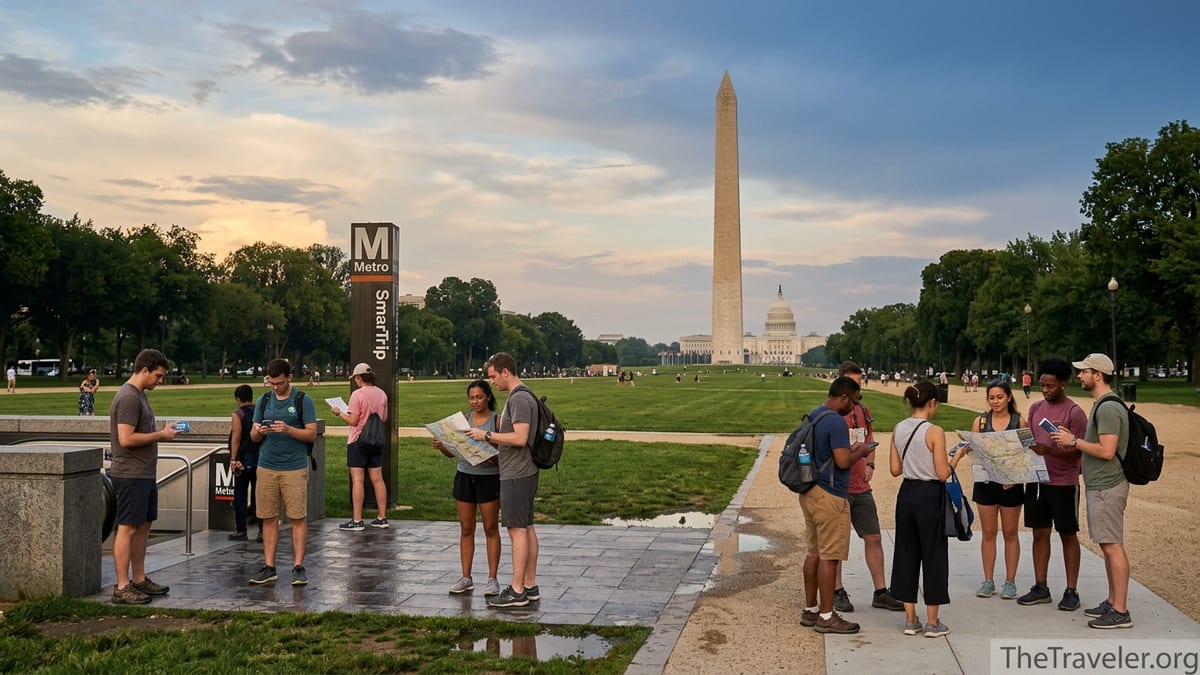
Washington’s Metrorail system is generally clean, logical and efficient, but it is not as intuitive for tourists as tap-and-go systems in some other cities. A recurring mistake is assuming you can simply buy a paper ticket and be done. In reality, the Metro and most local buses use a reloadable fare card system called SmarTrip, which also exists in digital form for Apple and Google wallets. Each person older than about five needs their own card. Purchasing a physical SmarTrip at a station vending machine or adding a digital one to your phone is one of the first tasks you should handle after arrival if you plan to ride more than once or twice.
Another pitfall is ignoring fare structures and peak pricing. Metro fares vary based on distance and time of day rather than offering a simple flat fee, and they can be noticeably higher during weekday rush hours. Visitors staying in outer suburbs sometimes think they have scored a bargain with a low hotel rate, only to discover they are spending significantly on daily round-trip Metro commutes for the whole family. If you anticipate riding multiple times per day, looking into passes or simply choosing a hotel near a central station such as Metro Center, Gallery Place or L’Enfant Plaza can keep both costs and travel time under control.
Many visitors also assume rideshare is always easier than public transit, particularly from the airports. From Ronald Reagan Washington National Airport, though, the Metro’s Yellow and Blue lines deliver you directly into downtown in around 15 to 20 minutes, often for a fraction of the price of a taxi or rideshare caught in traffic on the 14th Street Bridge. From Dulles International Airport, the Silver Line now connects the terminal area with downtown and Northern Virginia. Travelers who are unfamiliar with this relatively new extension sometimes spend an hour or more in highway congestion in a car when they could have been gliding past on the train.
A final, more subtle mistake is not thinking about safety and common-sense awareness in transit spaces. Metro is generally safe, but like any big-city system it has occasional petty scams, such as people offering to “sell” you preloaded cards at a discount near fare machines. If someone approaches you in a station insisting they can load your SmarTrip or buy your tickets for you, decline and use the official machines instead. Keep an eye on bags in crowded cars and aim to avoid the very last trains of the night if you are unfamiliar with the system.
Underestimating Distances and Heat on the National Mall
On a map, the National Mall looks compact. In reality, the stretch from the U.S. Capitol down to the Lincoln Memorial is nearly two miles, and most visitors walk much more than that once they factor in detours to the Tidal Basin, Smithsonian museums and side streets. One of the most common mistakes new arrivals make is assuming they can visit the Capitol, a couple of museums, and all of the major memorials in a single afternoon on foot, often in summer heat and humidity.
During the popular cherry blossom period or around July 4, temperatures on the Mall frequently climb into the 80s or 90s Fahrenheit with high humidity, and shade can be scarce along some stretches. Travelers who start the day late without water or sun protection often find themselves exhausted halfway between the Washington Monument and the Lincoln Memorial. Families with younger children are especially prone to meltdowns when a planned “short walk” turns into an hour-long trek. Comfortable walking shoes, a refillable water bottle, sunscreen and hats are not optional accessories in peak season; they are essentials.
There is also a psychological distance problem. The Lincoln Memorial, Korean War Veterans Memorial and Vietnam Veterans Memorial sit in the same general area, but they involve several separate walks and stair climbs. The Tidal Basin loop for the Jefferson, Martin Luther King Jr. and Franklin Delano Roosevelt memorials adds another substantial detour. Visitors who try to “do it all” in one go sometimes end up giving only a cursory glance to each site or skipping important memorials entirely when daylight or energy runs out.
A more sustainable approach is to group the Mall into zones and spread them over at least two days. One day might focus on the Capitol, Supreme Court, Library of Congress and nearby museums of American or Native American history. Another can cover the Washington Monument, World War II Memorial, Lincoln Memorial area and Tidal Basin. Strategic Metro usage helps as well: for instance, riding to Smithsonian or Federal Triangle at the start of the day, then ending near Foggy Bottom or Arlington Cemetery and taking transit back rather than walking the full length back to your hotel.
Choosing the Wrong Neighborhood or Misjudging Costs
DC’s hotel landscape is more complex than many visitors realize. You can book a recognizable brand in downtown or near the Convention Center for typical nightly rates that often land in the mid to upper hundreds of dollars, especially on popular dates, but then you may face additional daily parking fees that run well above 50 dollars at some properties. Travelers who focus only on base room rate and ignore the cost of parking, resort or destination fees, and daily commuting end up with a trip far more expensive than planned.
Another frequent error is booking solely by price without considering transit access or neighborhood atmosphere. Budget-minded travelers sometimes choose remote suburban hotels along major highways that advertise free parking and lower nightly rates, assuming they can “just drive in” to see the sights. In practice, daytime traffic into central DC can be heavy, street parking around the Mall is limited and heavily enforced, and commercial garages in areas like Penn Quarter or near the White House charge premium rates for short stays. A slightly more expensive hotel in Arlington’s Rosslyn or Crystal City, or in DC neighborhoods such as Dupont Circle or Capitol Hill, can end up cheaper and far more convenient once you factor in Metro access and parking realities.
It is also easy to misjudge daily food and incidental costs. Museum cafeterias, such as the very popular one in the African American History museum, can be excellent but are priced accordingly. Many travelers save by planning a simple breakfast from a grocery store or cafe near their lodging and reserving budget for one sit-down meal a day. Areas like Penn Quarter, 14th Street, and the Wharf have dense clusters of restaurants at a range of price points, while some government-office districts can feel surprisingly quiet and short on dining options in the evening.
Weekend versus weekday pricing is another nuance. Business travel drives much of DC’s hotel demand, so some downtown hotels drop rates significantly on Friday and Saturday nights when offices empty out, while others fill with leisure travelers on long weekends and during major events. Checking a few different date combinations and being flexible by even one night can produce considerable savings, especially outside peak spring and fall seasons.
Overplanning Museums and Underplanning Security, Lines and Breaks
With more than a dozen Smithsonian museums, plus the National Gallery of Art, the United States Holocaust Memorial Museum and several smaller institutions, Washington offers far more indoor culture than most visitors can reasonably process. A classic mistake is packing the itinerary with four or five museums in a single day. Even for enthusiastic adults, museum fatigue sets in quickly as eyes glaze over exhibit text and feet protest another polished marble floor.
Security screening at many major institutions also consumes more time than newcomers expect. Bag checks at Smithsonian museums, the Holocaust Museum, the Archives and other federal sites can take anywhere from a few minutes to half an hour or more during busy school-tour season. Those delays multiply when you bounce from place to place. Visitors who schedule timed tickets back-to-back often discover that they cannot clear security at the second site in time, particularly if they rely on walking between widely spaced buildings on the Mall.
A more realistic strategy is to choose one “anchor” museum for a long, immersive visit and pair it with just one lighter stop nearby, then leave room for breaks in parks or cafes. For example, you might spend most of a day in the National Air and Space Museum or the Museum of American History, then simply wander into the Smithsonian Castle visitor center or the Hirshhorn sculpture garden afterward. If you want to visit emotionally intense spaces like the Holocaust Museum or war memorial exhibitions, plan them for times of day when you are not already drained.
Families in particular benefit from scheduling breaks that are not just about eating. The lawns around the Mall, the U.S. Botanic Garden near the Capitol and neighborhood playgrounds such as those in Capitol Hill or near Logan Circle are welcome pressure valves for younger travelers. A 30-minute stop at an ice cream shop in Penn Quarter on the way back from the Archives can do more for everyone’s mood than one more exhibit gallery squeezed into an already full day.
Misjudging Safety, Protests and Government Schedules
Visitors often arrive in the capital with heightened expectations about security, and occasionally with misconceptions fueled by news coverage of protests or political events. Overall, the central tourist areas of DC are comparable in safety to other major U.S. cities, especially during daylight hours, but they do have rhythms that reflect government and political life. One common mistake is not checking for major demonstrations, parades or road closures that might affect movement around the Mall or Pennsylvania Avenue. Large protests, charity races and official ceremonies can close streets, re-route buses and make it tougher to reach your timed-entry museum slot if you do not leave extra time.
Another nuance is the schedule of government institutions themselves. The U.S. Capitol, Supreme Court and Library of Congress have specific opening hours and may close unexpectedly for official events, security concerns or inclement weather. Travelers sometimes show up on a Monday assuming every attraction will be open only to find that some key sites, including the Library of Congress reading rooms and certain museums, operate on reduced hours or are closed that day. Checking operating schedules during federal holidays is especially important, as some monuments remain open while certain museums and offices close.
At night, misjudging neighborhood character is a more localized mistake. Areas such as Georgetown, the Wharf, Penn Quarter and sections of 14th Street bustle with restaurants and foot traffic into the evening, while parts of the federal core near the Capitol or along office-lined avenues can feel very quiet after dark and on weekends. Staying in a primarily office district might leave you walking several blocks for dinner options once the workday ends, which can feel uncomfortable if you are not familiar with the surroundings. As in any city, sticking to well-lit streets, traveling in pairs when possible and using licensed taxis or rideshare from clearly marked pickup points are straightforward precautions.
Finally, some visitors underestimate how early things wind down. While DC has lively nightlife pockets, many museums close by 5 or 5:30 p.m. on most days, with only a handful offering extended evening hours on select nights. If you dream of wandering the Smithsonian galleries after dinner, you will need to time your visit to coincide with those late openings or shift your main museum time earlier in the day.
Skipping Local Neighborhoods and Only Seeing the Postcard Sights
Spending the entire trip within a narrow rectangle between the Capitol and the Lincoln Memorial is perhaps the most understated mistake visitors make. DC is a city of distinct neighborhoods, and you miss much of its character if you never leave the Mall. First-time travelers often feel obligated to tick off every monument at the expense of everyday local life, then leave with an impression of Washington as a collection of marble buildings and tour buses rather than a living city.
Neighborhoods such as Dupont Circle, Adams Morgan, Capitol Hill, Shaw and the H Street Corridor each offer a different slice of local culture: rowhouse-lined streets, independent bookstores, Ethiopian restaurants, jazz clubs, open-air markets and relaxed cafes. A morning wandering Eastern Market on Capitol Hill, for instance, with its food stalls and weekend art vendors, shows you a side of the city that no museum can. Even a simple stroll along the Georgetown waterfront or through Rock Creek Park helps balance the formality of federal Washington with a sense of everyday life.
Another overlooked experience is DC’s culinary diversity. Beyond the expected steakhouses and political power-dining spots, the city has deep communities from regions such as the Caribbean, Central America, the Middle East and the Horn of Africa. Visitors who pick only familiar national chains near their hotel miss the chance to try a half-smoke sausage at a historic local stand, sample Ethiopian injera on U Street, or enjoy Salvadoran pupusas in Mount Pleasant. Asking hotel staff, museum workers or local guides for a favorite neighborhood restaurant can yield far more memorable meals than following only the most famous names.
If you are short on time, consider dedicating at least one evening to a non-Mall neighborhood. Ride Metro to a stop like U Street, Columbia Heights or Navy Yard, then give yourself permission to simply wander, stopping for a casual dinner and a dessert or drink. These hours often become the most vivid memories of a trip, precisely because they contrast with the solemn grandeur of the capital’s official buildings.
The Takeaway
Washington, DC is one of the easiest major cities to visit if you understand its quirks in advance. Most of the capital’s headline attractions are free, but they often rely on timed entry and security screening that reward early planning. The Metro system can be a fast, affordable backbone for your trip if you embrace SmarTrip cards and avoid assuming that every journey requires a rideshare. Distances on the National Mall are longer and the weather more demanding than many first-timers expect, so comfortable shoes, water and realistic daily goals matter.
The most common mistakes visitors make come down to overstuffed schedules, underestimating logistics and staying confined to the postcard version of the city. By building in buffer time between timed-entry sites, grouping museums and monuments by area, and venturing into at least one or two local neighborhoods, you can experience both the symbolic Washington of civics textbooks and the lived-in Washington of markets, parks and corner cafes.
Spend a little time before your trip learning how tickets, transit and opening hours work, and the capital will largely open itself to you. Do that, and you are far more likely to leave with a sense of connection rather than a blur of security lines, sore feet and missed reservations.
FAQ
Q1. Do I really need to book timed-entry tickets for DC attractions?
Timed-entry tickets are strongly recommended for the most popular sites, including the National Museum of African American History and Culture, the Library of Congress and the National Archives, especially in spring and summer.
Q2. Is it better to use Metro or rideshare in Washington, DC?
For many trips, especially to and from the airports and major sights, Metro is faster and cheaper than rideshare, but short late-night trips or routes without nearby stations may still favor taxis or rideshare.
Q3. Which neighborhood should I stay in for a first visit?
Areas like downtown, Penn Quarter, Dupont Circle, Capitol Hill and parts of Arlington such as Rosslyn or Crystal City balance transit access, safety and dining options for most first-time visitors.
Q4. How many museums can I realistically see in one day?
Most travelers find that one major museum and one smaller or lighter stop in the same area is the upper limit for an enjoyable day, especially when you include security, meals and walking time.
Q5. Are DC’s monuments open at night, and is it safe to visit them then?
Most outdoor monuments and memorials on the National Mall are accessible 24 hours a day, and many visitors enjoy them after dark when they are illuminated, as long as they stick to well-traveled areas and basic safety precautions.
Q6. What is the best way to handle food and snacks around the National Mall?
Combining a planned meal at a museum cafe or nearby restaurant with snacks and water you bring yourself works well, since food options directly on the Mall can be limited and lines sometimes long.
Q7. Can I just walk the entire National Mall in one go?
You can, but it is a long, tiring walk, especially in hot or humid weather. Many visitors prefer to break it into sections over two days or to use Metro or buses to shorten some segments.
Q8. How early should I arrive for security at places like the Capitol or Archives?
Arriving 30 to 60 minutes before your scheduled tour or timed-entry window provides a reasonable cushion for security lines during most busy periods.
Q9. Are there any days when attractions are closed that surprise visitors?
Yes. Some sites, such as the Library of Congress and certain museums, are closed or operate reduced hours on Mondays and major federal holidays, so checking schedules in advance is important.
Q10. How many days do I need in Washington, DC to see the main sights?
A long weekend of three full days lets you experience key monuments, a few major museums and at least one neighborhood beyond the Mall, while four or five days offer a more relaxed pace.