


Washington, D.C. rewards visitors who plan ahead. Timed museum entries, increasingly popular night tours, and a new wave of boutique and luxury hotels mean that a little advance research can easily turn a good visit into a great one. This guide brings together standout tours, well-located hotels, and smart experiences to book now for a smooth, memorable trip to the U.S. capital in 2026.
Get the latest updates straight to your inbox!
How to Plan a Smart Washington, D.C. Itinerary
Washington, D.C. looks compact on the map, but the distances between neighborhoods, museums, and monuments can be larger than first-time visitors expect. Many travelers try to cover the National Mall, Capitol Hill, Georgetown, and museum hopping in a single day and end up exhausted. A more realistic approach is to group your days by geography: one day for the National Mall and Smithsonian museums, one for Capitol Hill and the Library of Congress, and one that combines Georgetown or the Wharf with an evening monuments tour.
Timed tickets are now common at major sights. The National Archives Museum, where you see the Declaration of Independence and Constitution, releases free timed-entry tickets that are available months in advance and already extend into late 2026 for peak dates. Booking a late-morning or mid-afternoon slot leaves room to explore the surrounding area, including the National Gallery and the museums along Constitution Avenue, without rushing.
It also helps to understand what is and is not covered by tours. A standard U.S. Capitol Visitor Center tour is free and runs most Mondays through Saturdays, but it does not include the House or Senate galleries. Those require separate passes from your member of Congress. Similarly, many “highlights” city tours drive past the White House rather than going inside, since public tours of the building itself must be arranged through a congressional office and are subject to strict security and limited availability.
A final planning tip is to reserve any must-do experiences 60 to 90 days in advance where possible. That window lines up with the request period for White House tours, the release of some timed museum passes, and the booking curve for the most popular night tours. You can still build in flexibility by leaving one evening open for spontaneous dining or a last-minute Potomac River cruise if the weather cooperates.
Essential Government & History Tours to Book
For many visitors, seeing the centers of American government from the inside is non-negotiable. The most in-demand experiences are the U.S. Capitol tour, the White House public tour, and visits to the Library of Congress and National Archives. None of these charge admission, but access is managed tightly and can require advance coordination.
The U.S. Capitol Visitor Center runs frequent free guided tours that include the Rotunda, the historic Old Hall of the House (Statuary Hall), and key public spaces. Advance reservations are recommended, especially for spring and early summer, though same-day passes are often available outside major holidays. Recent visitor reports indicate that showing up earlier in the morning improves your chance of securing a convenient time slot if you did not book online ahead of time.
The White House is more complex. Public tours run on select mornings and must be requested through your member of Congress between 7 and 90 days before your visit. Even with a timely request, approval is not guaranteed, and you may not receive final confirmation until a couple of weeks before your trip. Travelers who do not secure a tour can still deepen their understanding at the White House Visitor Center on Pennsylvania Avenue, which offers exhibits, artifacts, and a short film about life and work inside the building.
Do not overlook the Library of Congress and the National Archives, which many travelers end up rating as highlights of their trip. The Library of Congress Jefferson Building offers free timed-entry and guided tours that showcase its ornate Great Hall and exhibitions on everything from rare maps to presidential papers. The National Archives Museum uses timed-entry tickets to moderate crowding around the founding documents, creating a calmer experience even during busy school vacation periods. Booking these entries before you arrive means you can build a logical walking route from Capitol Hill down the Mall without backtracking.
Seeing the Monuments: Daytime Walks and Night Tours
Monuments and memorials are where D.C. feels most cinematic, and you can experience them either on your own or as part of a guided tour. A self-guided walk from the Washington Monument to the World War II Memorial, Lincoln Memorial, Korean War Veterans Memorial, and Martin Luther King Jr. Memorial covers several miles and can easily take half a day once you factor in photos and reflection time. Comfortable walking shoes and a refillable water bottle are essential, especially in the humid summer months.
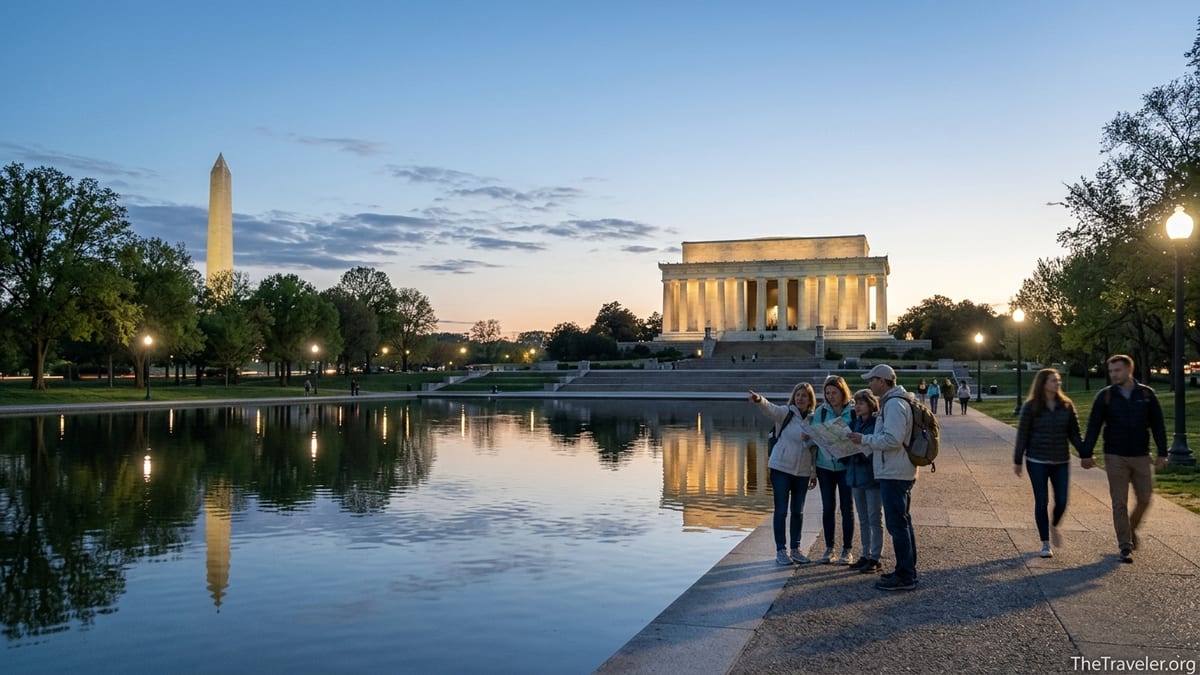
Many visitors now pair that daytime walk with a dedicated night tour. Companies such as Signature Tours of DC run evening bus and walking combinations where a guide narrates the history and symbolism of each site while you see them illuminated. Recent itineraries often include 3 to 4 hours of touring, with stops at major memorials and viewpoints across the Potomac. Pricing typically runs from around 60 to a little over 100 dollars per adult depending on group size and whether monument entry (such as Washington Monument elevator tickets) is bundled in.
If you prefer an open-air experience, consider a monuments-by-moonlight trolley or open-top bus tour. These tend to depart from central locations like near the National Mall or major downtown hotels and offer elevated views of landmarks such as the Capitol dome, Washington Monument, and Jefferson Memorial reflected in the Tidal Basin. Travelers who have done both daytime and nighttime visits often report that the night version offers calmer crowds and more atmospheric photography.
The Washington Monument itself requires separate timed tickets for elevator access to the observation deck. These free or low-cost tickets are released in advance and can also be booked day-of when available. Combining a late-morning Washington Monument visit with an evening monuments tour creates a full but manageable day focused on the National Mall, leaving another day free for museums or neighborhoods.
Best Neighborhoods to Stay: Location Matters
Hotel choice in Washington, D.C. is as much about neighborhood as it is about brand. For first-time visitors without a car, downtown and adjacent areas such as Penn Quarter, the West End, and Dupont Circle offer the best balance of walkability and Metro access. You can often reach the National Mall in 10 to 20 minutes on foot or via a short ride on the Metro’s Blue, Orange, or Silver lines.
Penn Quarter and the East End place you near the Capital One Arena, the National Portrait Gallery, and a cluster of restaurants that stay open later than much of the federal core. The Kimpton Hotel Monaco in a historic post office building is one of the best-known boutique options here, offering character-rich rooms and a walkable route down 7th Street to the Mall. Travelers who prioritize quick access to the Smithsonian museums often find this area a convenient base.
West of downtown, the West End, Georgetown, and Foggy Bottom areas tilt slightly more residential but still offer strong connectivity. Properties like Park Hyatt Washington in the West End, known for its Blue Duck Tavern restaurant, appeal to travelers who want quieter evenings and higher-end dining on-site. Georgetown itself is ideal if you care more about cobblestone streets, boutiques, and waterfront restaurants than being within immediate walking distance of the Capitol.
For visitors who plan to rely heavily on night tours, consider a hotel close to the tour departure points, which are often near the National Mall or major downtown hotels. Staying within a short walk or quick taxi ride reduces the logistical friction of returning late at night, especially for families. When comparing options, factor in resort or destination fees, which some D.C. hotels now add per night and can meaningfully increase your final bill.
Standout Hotels for Different Travel Styles
Luxury travelers looking for a polished base near the monuments have several strong choices. Salamander Washington DC, in the Southwest waterfront area, offers views toward the Tidal Basin and easy access to both the National Mall and the Wharf’s dining scene. In the West End, Park Hyatt Washington combines understated design with amenities like a spa and a high-end restaurant, making it appealing for couples who plan to mix sightseeing with slower mornings and leisurely dinners.
Boutique hotels are a growing strength of the city. Eaton DC on K Street blends hotel, co-working, and cultural space, with a lobby coffee bar and a rooftop that draw both guests and locals. Its emphasis on sustainability and social programming makes it a good fit for travelers who value a sense of community and design-forward interiors. In Dupont Circle, properties such as The Dupont Circle Hotel put you in a lively neighborhood known for cafes, embassies, and leafy avenues, while still remaining a short Metro ride from the Mall.
For travelers who want historic character, Melrose Georgetown and Le Méridien Washington, D.C., The Madison offer a mix of heritage and modern comfort. Melrose Georgetown, part of Historic Hotels of America, sits along Pennsylvania Avenue between Georgetown and the downtown core, which means you can walk toward either the waterfront or the White House area. The Madison, now under the Le Méridien flag, has long been a favorite for business travelers who also want quick access to Logan Circle, McPherson Square, and K Street.
Budget-conscious visitors might choose chain hotels slightly removed from the Mall but close to Metro stations, such as properties along the Red Line in NoMa or near Union Station. While these may not have the same level of character or amenities, the savings can be significant, especially on peak spring and fall weekends when central rates rise sharply. When booking, compare cancellation policies and check whether breakfast is included, which can easily save a family tens of dollars per day.
Beyond the Basics: Food Tours, River Cruises and Neighborhood Walks
Once you have your core government and museum visits locked in, consider adding a few more experiential tours to round out your trip. Food tours are increasingly popular, particularly in neighborhoods like Georgetown, U Street, and Capitol Hill. These typically last 3 to 4 hours, include multiple tasting stops, and provide context on the city’s immigrant communities, music history, or local politics through the lens of food. Prices generally range from around 75 to 120 dollars per person, depending on how many tastings and drinks are included.
On the water, Potomac River cruises offer a different perspective on D.C.’s skyline. Short sightseeing sailings run during the day and at sunset, passing by landmarks such as the Kennedy Center, the Washington Monument, and Reagan National Airport’s riverside runways. Some boats operate from the Wharf or Georgetown waterfront, making them easy to pair with dinner nearby. While basic narrated cruises are relatively affordable, specialty sailings with dining or live music can cost considerably more, so it is worth checking inclusions carefully before booking.
Self-guided neighborhood walks can also enrich your understanding of the city at very little cost. In Georgetown, you can follow historic markers that trace the area’s role as a tobacco port and later as a student and diplomatic district. On U Street and Shaw, public murals and preserved jazz clubs tell the story of “Black Broadway” and the Civil Rights movement. Reserving at least one afternoon for unscripted wandering, interspersed with cafe stops, often yields some of the most memorable trip moments.
Families and repeat visitors might also explore less obvious stops such as the U.S. Botanic Garden near the Capitol, the Smithsonian National Postal Museum by Union Station, or a Nationals baseball game in the Navy Yard neighborhood. These experiences complement the core monuments and museums and help balance heavier historical content with lighter, everyday slices of city life.
Practical Booking Tips for 2026
Demand patterns in Washington, D.C. have shifted in recent years, with strong rebounds in school group travel, conventions, and domestic tourism. Spring (particularly March and April during cherry blossom season) and early summer are the busiest times, followed by fall weekends tied to major events and college visits. If you are traveling during these windows in 2026, it is wise to secure refundable hotel rates several months in advance and then layer in tours and timed entries once your dates are locked.
For government-related tours, keep in mind that security protocols and availability can change on relatively short notice due to events in the city or on Capitol Hill. It is a good idea to build some redundancy into your plans: for example, pairing a Capitol tour attempt with guaranteed timed entries at the Library of Congress or National Archives in the same area. That way, even if one reservation falls through or is rescheduled, you still have a meaningful experience nearby.
Weather can also influence which tours make sense. Summer heat and humidity can make mid-afternoon walking tours uncomfortable, so consider early-morning monument visits and evening bus-based tours during June, July, and August. In winter, shorter daylight hours mean that a late-afternoon city tour will transition into night views of the monuments, which some travelers find more magical than a strictly daytime circuit.
Finally, check cancellation policies for all paid tours. Many operators in D.C. allow free cancellation up to 24 or 48 hours before departure, which gives you room to adjust plans based on weather, energy levels, or last-minute government tour approvals. Keeping confirmations organized in a single folder or travel app, and noting meeting points relative to your hotel, will make execution smoother once you are on the ground.
The Takeaway
Washington, D.C. is one of the few cities where your itinerary can move from viewing the original Constitution to standing on the steps of the Lincoln Memorial and then to dinner along a revitalized waterfront, all in a single day. The key to making that combination feel inspiring rather than exhausting is thoughtful planning and strategic booking.
By securing timed entries for high-demand museums, coordinating government tours where possible, choosing a hotel in a well-connected neighborhood, and layering in memorable experiences such as night monument tours, food walks, and river cruises, you can create a visit that feels both efficient and rich in detail. In 2026, when interest in civics and American history remains high and D.C.’s hospitality scene continues to evolve, a little advance work goes a long way.
Whether you are coming for a first glimpse of the Capitol dome or returning to explore new neighborhoods, approaching the city through a mix of structured tours and open-ended wandering will help you see beyond the marble facades and experience the capital as a living, changing place.
FAQ
Q1. How far in advance should I book Washington, D.C. tours for 2026?
For peak spring and early summer dates, aim to book popular night monument tours, food tours, and Potomac cruises 1 to 3 months in advance. Government-related tours such as the White House require requests to be submitted 7 to 90 days before your visit, so it is smart to lock in your travel dates at least three months out if these are priorities.
Q2. Are guided tours of the monuments worth the cost, or should I explore on my own?
Both approaches work, but guided night tours add context and convenience that many visitors find worthwhile. A typical 3-hour evening bus and walking tour includes narration, curated photo stops, and transportation between widely spaced memorials, which can be especially valuable in hot weather or for travelers with limited time.
Q3. Which neighborhoods are best for first-time visitors booking hotels?
Downtown, Penn Quarter, the West End, Dupont Circle, and parts of Foggy Bottom are among the most convenient for first-time visitors without a car. These areas offer a balance of walkability to major sights, easy access to multiple Metro lines, and a broad mix of hotels at different price points.
Q4. Is it necessary to rent a car for a visit to Washington, D.C.?
In most cases, a car is more burden than benefit. Central D.C. is well served by Metro, buses, rideshare services, and walkable corridors. Parking at hotels and around the National Mall can be expensive, and traffic around rush hours is often heavy, so most visitors rely on public transit and taxis instead of renting a vehicle.
Q5. How do I get tickets for the U.S. Capitol and major museums?
The U.S. Capitol Visitor Center offers free tour reservations online, and same-day passes are often available on a walk-up basis outside of major holidays. Many Smithsonian museums remain free with open entry, but select sites and the National Archives use timed-entry passes. It is best to check current policies for your specific dates and secure tickets in advance where required.
Q6. What is a realistic daily budget for tours and experiences in D.C.?
Because many major sights are free, your tour budget will depend on how many guided experiences you choose. A traveler who books one paid tour per day might spend from 60 to 150 dollars daily on activities, while a more budget-conscious visitor who relies on free museums and self-guided walks could spend much less.
Q7. When is the best time of year to visit Washington, D.C.?
Spring and fall are the most popular, thanks to milder temperatures and events like cherry blossom season. Summer brings longer daylight hours but also higher heat and humidity, while winter can be quieter and more affordable. Your ideal timing depends on whether you prioritize weather, crowd levels, or specific seasonal events.
Q8. Are D.C. tours and hotels family-friendly?
Yes. Many night monument tours welcome children and offer reduced fares, and several hotels near the National Mall provide family rooms or connecting options. Families often appreciate staying near a Metro station and building in kid-friendly stops such as the National Air and Space Museum, the National Zoo, or a Nationals baseball game.
Q9. How accessible are major tours and attractions?
Most major monuments, museums, and tours have made significant accessibility improvements, including ramps, elevators, and options for visitors with mobility, visual, or hearing impairments. When booking a specific tour, it is wise to review accessibility details in advance or contact the operator directly to confirm accommodations.
Q10. Can I still have a good trip if I cannot get White House tour tickets?
Absolutely. While touring the White House is special, many travelers rate the Capitol, Library of Congress, National Archives, and nighttime monument tours as equal or greater highlights. Visiting the White House Visitor Center and viewing the building from Lafayette Square still provides a strong sense of its history and symbolism.