


Zadar often slips under the radar of travelers fixated on Split’s energy or Dubrovnik’s Old Town walls. Yet this compact Adriatic city quietly offers sea views, Roman ruins, modern art installations and easy access to islands and national parks. If you are planning a Croatia trip and wondering whether Zadar deserves a place on your itinerary, this guide breaks down who will enjoy it most, how it compares with Split, Dubrovnik and Rijeka, how long to stay, and what to expect from beaches, prices, nightlife and day trips.
Get the latest updates straight to your inbox!
Who Zadar Is Best For (And Who Might Skip It)
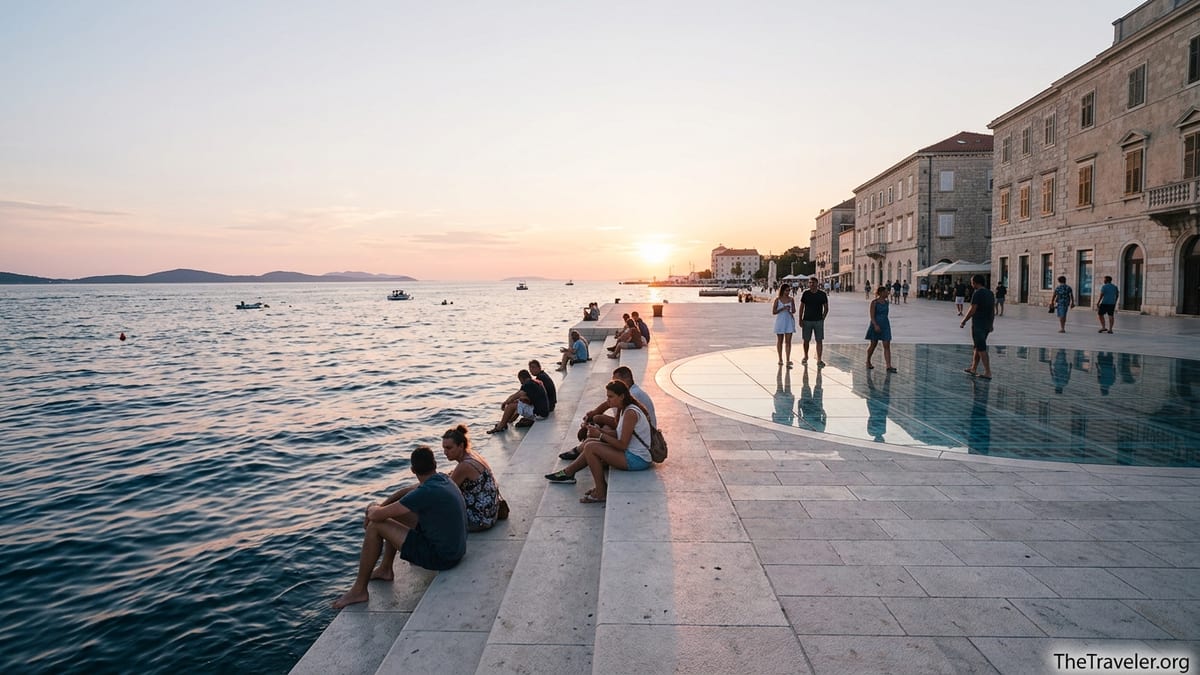
Zadar is ideal for travelers who like a balance of history, relaxed coastal living and good logistics without overwhelming crowds. The compact Old Town sits on a small peninsula, with Roman-era ruins, medieval churches and Venetian gates all within a 15-minute walk. You can stroll from the Roman forum to the modern Sea Organ and Greeting to the Sun on the waterfront in under 10 minutes, stop for a coffee on Kalelarga (the main stone-paved street), and still have time for a sunset swim at Kolovare Beach. This suits couples, culture lovers and independent travelers who prefer wandering old streets to queuing at blockbuster sights.
The city also works well for families and mid-range travelers who want Adriatic charm without Dubrovnik-level prices. Apartments in and around Zadar’s Old Town often come in cheaper than those in Dubrovnik or Hvar in high season, and many include kitchenettes and on-site parking. Families can base themselves in quieter residential districts like Borik or Diklo, where many small hotels and vacation rentals are a short walk from the sea, playgrounds and bakeries. The pace is slower than in bigger coastal cities, which can make moving around with children less stressful.
Zadar is less compelling if you crave high-octane nightlife or a dense cluster of sandy beaches. There are bars and a few late-night spots, but it does not rival Split’s club scene or Hvar’s party image, especially in July and August. Likewise, most nearby beaches are pebbly or concrete platforms with ladders, typical of much of Croatia. If your non-negotiable is wide sandy strands with beach clubs, you might be happier on islands like Brač or in parts of Istria instead of basing solely in Zadar.
The city is best appreciated by travelers who enjoy day-tripping and exploring a region rather than staying in one resort. From Zadar you can reach island villages, kayak to sea caves, or visit national parks like Paklenica and Krka on organized excursions or self-drive. If your style is to “stay put” at one hotel pool and not move for a week, Zadar itself may feel a touch quiet compared with larger resort hubs.
Zadar vs Split, Dubrovnik and Rijeka: How They Really Compare
Compared with Split, Zadar feels smaller and calmer, with fewer cruise ships and less nightlife but a similar mix of history and seafront living. Split’s center is built into Diocletian’s Palace, a Roman imperial complex now filled with bars, boutiques and apartments, and it typically draws a younger, more nightlife-driven crowd in summer. Visitors often describe central Split in July as busy and sometimes congested, with popular spots like Bačvice Beach and Riva promenade packed. Zadar, by contrast, sees fewer stag groups and offers easier last-minute dinner seating in many konobas and wine bars, especially outside peak weekends.
Dubrovnik is more visually dramatic, with its complete city walls and cliffside views, and it remains the most internationally famous of Croatia’s coastal cities. That fame brings higher prices and dense crowds when cruise ships are in port, particularly in July and August. Many travelers now base themselves in quieter coastal towns and only visit Dubrovnik for a day. Zadar represents an alternative: you do not get Dubrovnik’s towering walls, but you do get intact Roman streets, medieval churches like St Donatus and modern waterfront art installations without needing to time your visit around cruise-ship timetables.
Rijeka, further north in Kvarner Bay, feels more like a working port city with a cultural edge than a classic holiday town. It has industrial heritage, Austro-Hungarian architecture and an emerging arts scene, and it served as a European Capital of Culture in recent years. Tourists often use it as a transit point to nearby island resorts like Krk or Opatija rather than a primary base. Compared with Rijeka, Zadar feels more overtly “holiday-focused,” with its waterfront promenade, island ferries, and sunset ritual at the Sea Organ and Greeting to the Sun drawing visitors every evening in summer.
In terms of logistics, Zadar sits roughly between Rijeka and Split on the coast and connects to Zagreb by the A1 motorway, making it a practical stop on a north-south road trip. The local airport sees seasonal direct flights from several European cities, and budget carriers often price Zadar more affordably than Split or Dubrovnik for shoulder-season arrivals. Ferry connections fan out from Zadar’s port to islands such as Ugljan, Dugi Otok and others in the archipelago, giving it strong credentials as a base for island-hopping without the big-city feel of Split.
How Long to Stay: Sample Timeframes That Work
For many travelers, one full day in Zadar Old Town is enough to see the main highlights. You can walk the Roman forum, climb the bell tower of St Anastasia’s Cathedral for city and sea views, listen to the Sea Organ at sunset and stay after dark to watch the light show of the Greeting to the Sun. Add a stop for ice cream on the Riva promenade and a seafood dinner at a konoba just off Kalelarga and you have experienced Zadar’s core in a relaxed way.
If you want a more complete feel for the city and a nearby beach, plan two to three nights. This allows a slower day exploring the markets and museums, plus a half-day at Kolovare Beach or the Borik area for swimming. With three nights you can add a simple island excursion, such as taking the frequent ferry from Zadar to Preko on Ugljan. The crossing takes around 20 minutes and runs many times a day in summer, so you can easily have lunch in Preko, walk up to the hilltop fort of St Michael for panoramic views, and return for another sunset at the Sea Organ.
Travelers using Zadar as a hub for the wider region may want four to six nights. This window lets you slot in day trips to Krka National Park, the cliffs and canyons of Paklenica, or a boat trip through the Kornati islands, as well as a slower day on nearby beaches. A typical rhythm might be: one day in the Old Town, one on an island, one at a national park and one largely unscheduled to simply swim, sit in cafes and explore side streets. This length of stay suits couples, photographers and families who like to alternate activity days with rest.
If your Croatia itinerary already includes several coastal towns, Zadar can also work as a one-night stop on a road trip between Zagreb and Split or between Istria and southern Dalmatia. Many visitors driving the A1 motorway detour into Zadar in mid-afternoon, check into a guesthouse just outside the walls, and spend the evening wandering the Old Town and waterfront before continuing south the following morning. In this case, the city becomes a memorable but efficient break in a longer journey rather than the main event.
Beaches in and Around Zadar: What to Expect
The closest central option is Kolovare Beach, around a 15 to 20 minute walk from the Old Town along the waterfront. It is a mix of pebbles and concrete platforms, with pine trees for shade and ladders into clear water. In summer it sees both locals and visitors, and there are usually kiosks selling snacks and drinks. You will not find soft sand or a long shallow entry, but you will get the typical Adriatic combination of deep blue water and solid swimming from platforms and small pebble stretches.
Many travelers looking for more of a “holiday beach” atmosphere base themselves in the Borik or Diklo areas, a short drive or bus ride northwest from the Old Town. Here you will find resort-style beaches with loungers and umbrellas for rent, beach bars, and easy access to hotels and apartment complexes. The water entry is usually pebbly or via small concrete jetties, but these areas are well set up for families who want playgrounds and casual dining within walking distance of their accommodation.
For a broader choice of beaches, some visitors use Zadar as a gateway to nearby coastal towns. Nin, roughly a 20-minute drive away, is known for its shallow, sandy Queen’s Beach with views of Mount Velebit on clear days. Travelers with cars often drive there for a day of easier wading and sandcastle-building, especially with young children. To the south, villages along the coast toward Biograd na Moru and the islands beyond offer a mix of smaller pebble coves and pine-fringed bays that are quieter than the city in high summer.
Zadar is also a jumping-off point for island beaches. On Dugi Otok, reachable by ferry from Zadar’s Gaženica port, beaches like Sakarun are widely photographed for their turquoise shallows and white pebbles. Many boat tours from Zadar include stops there or in sheltered bays within nearby nature parks, allowing travelers without a car to experience more remote swimming spots. When deciding if Zadar is “a beach destination” for you, imagine pebbles, jetties and deep clear water rather than wide sandy strands directly in front of the Old Town.
Prices and Value: What Your Money Buys in Zadar
In recent seasons, prices along the Croatian coast have risen compared with the late 2010s, and Zadar is no exception. Travelers often report restaurant and bar prices that feel closer to a mid-range city in Western Europe or the United States than to a budget beach destination. For example, in central Zadar you can expect a coffee on a main square to cost in the same general range as in a mid-sized European city, and a draft beer in a bar to be similar to or slightly under typical prices in many US cities. Simple lunches such as a pizza or pasta dish in tourist-facing restaurants are usually priced accordingly, while seafood in sit-down konobas costs more.
Accommodation is where Zadar can still feel better value than Dubrovnik or some of the most in-demand islands, especially outside peak dates. A clean, mid-range apartment or small hotel room within walking distance of the Old Town often comes in noticeably cheaper than an equivalent just outside Dubrovnik’s walls in July. Many travelers report finding decent double rooms or studios for what they would pay for a basic hotel in major US or Western European cities, particularly if they book several months in advance or travel in May, June, September or early October.
Transport and activities are generally in line with other coastal hubs. Ferries to nearby islands such as Ugljan are typically modestly priced, especially for foot passengers, and run frequently enough that you can treat them like local commuter boats in high season. Organized day trips to national parks or island-hopping tours from Zadar’s marina cost what you would expect for small-group excursions in Europe, with prices varying by operator, duration and whether meals are included. Savvy travelers often compare a few agencies in person on the Riva promenade before committing, as offerings and inclusions can differ.
Overall, Zadar tends to feel like good value if you are used to Western European or North American prices, but less of a “bargain” than Croatia might have been a decade ago. You will stretch your budget further by eating occasionally at bakeries, konobas in residential streets just outside the Old Town core, and local pizzerias rather than always choosing the most scenic tables on the waterfront. Self-catering in an apartment, even just for breakfasts and a few dinners, can also noticeably reduce daily costs.
Nightlife and Atmosphere After Dark
Zadar’s nightlife is social and low-key rather than wild. Evenings begin with the sunset ritual at the Sea Organ and Greeting to the Sun at the tip of the peninsula, where both visitors and locals gather to listen to the wave-powered sounds echoing from the steps and watch the solar-powered light installation pulse with color after dark. Street musicians often perform along the Riva promenade, children run around the illuminated glass disks of the Greeting to the Sun, and couples sit on the steps with takeaway drinks from nearby cafes.
After sunset, most people drift back into the Old Town’s stone lanes. Wine bars and cocktail spots tucked into side streets off Kalelarga fill up, with small terraces offering local wines and simple bar snacks. You will find a handful of livelier bars that stay open into the early hours, especially in July and August, but the city does not have the dense cluster of clubs you find in Split or on party islands like Pag. Music is more likely to be live jazz in a bar, a DJ at a beach club in Borik, or an open-air event in summer than a string of large nightclubs.
For many visitors, this is a feature rather than a flaw. Zadar feels safe and walkable at night, and you can enjoy a late drink without navigating large groups or intense noise outside a few specific venues. Families appreciate that, even in peak season, the Old Town’s main streets are busy but not overwhelming, so pushing a stroller or letting older kids walk beside you feels manageable. Couples often structure evenings around a relaxed dinner, a stroll along the walls and waterfront, and a final glass of wine in a courtyard bar before walking back to their hotel.
If you are specifically seeking a “nightlife destination” with major clubs and beach parties, you may prefer to base yourself elsewhere and visit Zadar as a day trip. For example, some travelers stay on Pag, known for its summer party strip at Zrće Beach, and drive or bus into Zadar for a more cultural day out. Others focus on Split for nightlife and then move on to Zadar for a calmer few days among the Roman ruins, churches and sea views.
Day Trips: Why Zadar Works as a Regional Hub
One of Zadar’s biggest strengths is how easily you can fan out into different landscapes in a single day. To the north and west lies the Zadar archipelago, a maze of islands reachable by ferries and excursion boats from the city’s ports. Foot-passenger ferries to nearby Ugljan make it straightforward to spend a half day wandering island villages, hiking up to a viewpoint above Preko, and swimming off quieter piers. Many small-group boat tours from Zadar also run to the Kornati National Park area, threading through limestone islets and stopping in coves where you can swim directly from the boat.
Inland, Zadar is a practical base for reaching several national parks. Krka National Park, famous for its waterfalls and river landscapes, is typically visited on organized day tours or by self-drive within a couple of hours, depending on traffic and entry points. Paklenica National Park, set in the Velebit mountains, is a major hiking and climbing area; guided day trips from Zadar often include relatively accessible hikes into the canyons, making it appealing even for moderately fit visitors who simply want dramatic scenery rather than technical climbing.
Further afield, Plitvice Lakes National Park can be visited as a long day trip from Zadar, though it results in a full day out with early departure and late return. Some travelers choose instead to stay a night near Plitvice when driving between Zagreb and Zadar to reduce travel time. Other excursions from Zadar include visits to historic coastal towns such as Nin, the lake-and-birdlife area around Vrana Lake, or even road trips north along the coast toward the Kvarner region, using Zadar as a midpoint on a longer journey.
Buses connect Zadar with many of these destinations, but renting a car for at least part of your stay greatly expands your options and flexibility, especially for early starts at national parks or detours to lesser-known beaches. That said, even without a car you can join organized excursions sold by agencies clustered around the Old Town and the waterfront. If your travel style involves filling your days with new landscapes and activities, Zadar’s position and transport links make it an efficient hub.
The Takeaway
Zadar is worth visiting if you value a walkable historic center, memorable waterfront art installations and flexible day-trip options more than headline-grabbing landmarks or intense nightlife. It offers a quieter, often more affordable alternative to Dubrovnik and a more relaxed atmosphere than Split, while still delivering Roman ruins, medieval churches and sunset rituals that feel distinctly Croatian rather than generic resort.
Stay at least one full day to experience the Old Town, Sea Organ and Greeting to the Sun, and plan two to three nights if you want time for a beach and a nearby island. Use four to six nights if you intend to build in national park excursions and slower days by the sea. Expect pebbly and platform-style beaches close to the city, rising but still reasonable prices compared with major Western cities, and nightlife that centers on wine bars, sunset drinks and occasional events rather than mega-clubs.
For many travelers, Zadar shines as part of a broader Croatian itinerary: easily linked with Zagreb by motorway, with Split and the islands to the south, and with inland parks like Plitvice and Krka. If that mix of accessible culture, sea air and manageable crowds sounds like your style, Zadar likely deserves a spot on your route.
FAQ
Q1. Is Zadar worth visiting if I only have one day in Croatia?
Yes, Zadar works well for a single day because the Old Town, Sea Organ, Greeting to the Sun and main waterfront are all within a short, walkable area, so you can see the highlights without rushing.
Q2. How many days in Zadar is ideal for most travelers?
Most visitors are happy with two to three nights, which allows time for the Old Town, at least one beach or island visit, and a relaxed evening at the Sea Organ and Greeting to the Sun.
Q3. Is Zadar or Split better as a base for first-time visitors?
Split is better if you want stronger nightlife and frequent ferries to a large number of popular islands, while Zadar is better if you prefer a calmer base with easy access to islands and national parks and fewer crowds in the center.
Q4. How does Zadar compare to Dubrovnik for atmosphere and cost?
Dubrovnik is more dramatic visually and more famous, but it is usually busier and more expensive in peak season; Zadar feels less crowded, generally more affordable, and easier to enjoy without planning around cruise-ship schedules.
Q5. Are beaches in Zadar sandy or pebbly?
Most beaches in and around Zadar, such as Kolovare and those in Borik, are pebbly or concrete platforms with ladders into the sea, while nearby towns like Nin offer shallow, sandy stretches if you are willing to travel a short distance.
Q6. Is Zadar a good destination for nightlife?
Zadar has bars, wine spots and some late-night venues, but its nightlife is generally relaxed and smaller in scale; if you want big clubs and party beaches, you will likely prefer Split, Hvar or Pag.
Q7. Do I need a car in Zadar to explore the region?
You do not need a car to enjoy the Old Town and basic island ferries, and there are organized tours to major parks, but renting a car gives you more freedom to reach beaches, villages and national parks on your own schedule.
Q8. Is Zadar suitable for families with children?
Yes, Zadar suits families thanks to its compact center, relatively calm atmosphere, family-friendly beaches in areas like Borik and Diklo, and easy day trips to islands and nature areas.
Q9. When is the best time of year to visit Zadar?
Late May, June, September and early October usually offer warm weather and sea temperatures suitable for swimming, with fewer crowds and slightly lower prices than peak July and August.
Q10. Can I use Zadar as a base for visiting Croatian national parks?
Yes, Zadar is a practical base for visiting several parks, including Krka, Paklenica and, on a long day trip or with an overnight stop, Plitvice Lakes, via self-drive or organized excursions.