


Driving through Seaside Heights, with its neon arcades, pizza windows, and thumping boardwalk music, I thought I knew what a New Jersey beach day was going to feel like. Then the road narrowed, the houses fell away, and the dunes rose up on both sides of the car. By the time I passed the gatehouse into Island Beach State Park, it felt like I had crossed a border into a different version of the Jersey Shore, one where the ocean, the wind, and the birds still seemed to be in charge.
Get the latest updates straight to your inbox!
First Impressions of an Almost-Empty Shore
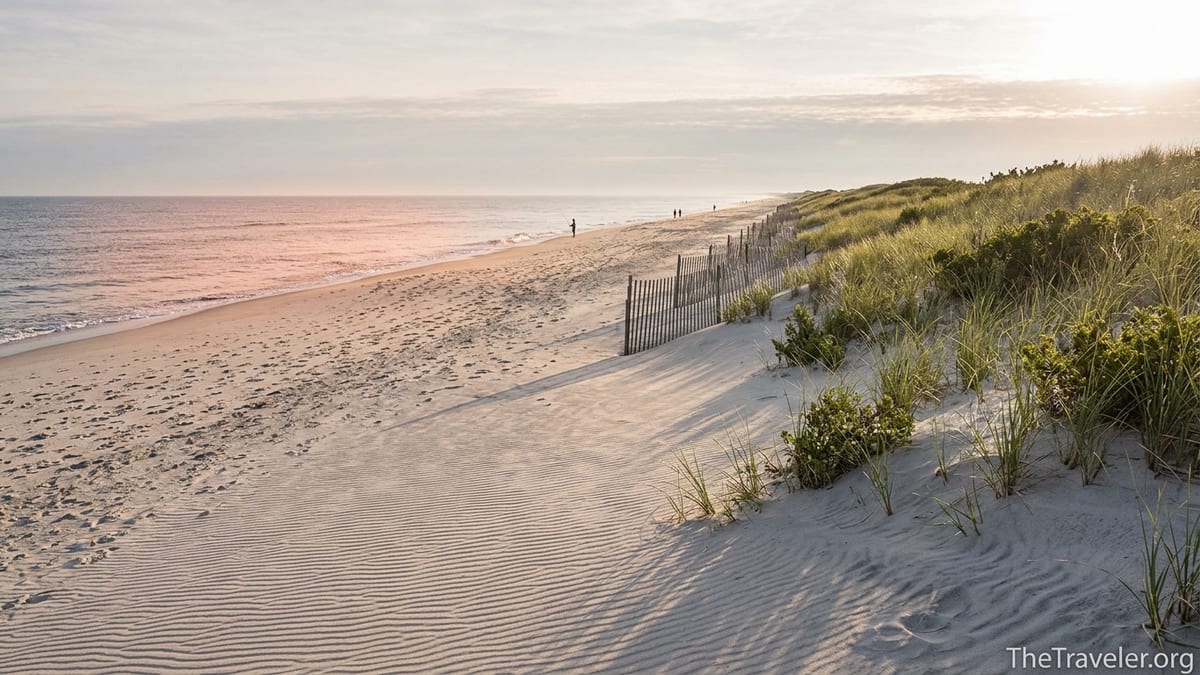
The most startling moment came within minutes of parking at Swimming Area 1, one of the guarded ocean beaches inside Island Beach State Park. Instead of a boardwalk lined with bars and souvenir stands, I stepped out into the sound of the surf and the clatter of wind in dune grass. The parking lot sat behind a wall of sand and shrubs, and the only way to the water was along a narrow fenced path over the dunes. That simple detail, the fact that you never walk directly from asphalt onto sand, set the tone for the entire visit.
On a warm early summer weekday, the long stretch of white sand in front of the swimming area was busy but never felt crowded. Families with coolers spread out in small clusters, and a few surfers paddled just beyond the lifeguard flags. Yet as soon as I walked ten minutes south along the tideline, the people thinned to a handful of anglers and solitary beach walkers. Looking back, the park’s low-profile facilities were barely visible above the dune line. It was striking how quickly the scene shifted from typical Jersey Shore beach day to something that looked and sounded almost like a protected national seashore.
Even the practical details contributed to that mood. At the entrance gate, an attendant collected the standard New Jersey state park day-use fee per vehicle, which in peak season is generally under twenty dollars depending on residency and day of the week. Inside, there were no upsell parking tiers, no wristbands, and no loudspeaker promotions. The sense was that your entry fee bought access to the landscape itself, not an entertainment complex layered on top of it.
It is worth remembering that Island Beach State Park protects one of the last largely undeveloped barrier island systems on New Jersey’s northern coast, backed by Barnegat Bay on one side and the Atlantic Ocean on the other. The state park’s own materials emphasize that it preserves a living example of the kind of shifting dunes, maritime forest, and tidal marsh that once ran almost continuously along this shoreline. Walking out to the water and seeing only dunes, vegetation, and sky instead of condominiums and high-rises, that mission is immediately visible.
Why the Dunes Feel So Wild
For many travelers, the biggest surprise at Island Beach is not the beach itself but everything between the road and the ocean. The dunes here are tall, layered, and mostly off limits. Fenced walkways channel foot traffic along narrow sandy cuts so that the beach grass and low shrubs that hold the dunes together are not trampled. Signs posted by the New Jersey Department of Environmental Protection explain that these vegetated ridges are a first line of defense against storms and erosion, and that staying on the path protects both the plants and the wildlife that depend on them.
On the short walk from the parking lot at Swimming Area 2 to the Atlantic, the progression of habitats is surprisingly distinct. Near the road, scrubby maritime forest shades the sand, with twisted pitch pines and holly trees. Farther along, the shrubs thin out into open dunes filled with beach grass, bayberry, and seaside goldenrod. On a breezy afternoon the blades of grass hiss and rattle against one another, adding a layer of sound beneath the crash of the surf. It feels less like a resort and more like a living, shifting landscape that you are a guest in for the day.
That sense of wildness is reinforced by the wildlife protections in place. Island Beach regularly hosts nesting populations of shorebirds like piping plovers and terns, which are protected under state and federal law. During nesting season, which typically stretches through the warmer months, sections of the upper beach are roped off and marked with informational signs. Visitors weave their beach blankets and fishing carts around these closures, which change from year to year as the birds choose different patches of sand. It can be mildly inconvenient if your favorite stretch of beach is off limits, but it is also a rare opportunity to see how much space a bird colony really needs to survive on a crowded coast.
The park’s interior trails add another layer of surprise. A short drive south of the main swim areas, trailheads like the Spizzle Creek and Johnny Allen’s Cove walks lead from the oceanside road into a maze of boardwalks and sandy paths through marsh and shrubland. These low-key trails do not have the manicured feel of a suburban nature preserve. Instead, the planks creak slightly underfoot, fiddler crabs skitter sideways into their holes, and ospreys circle overhead. You are reminded that inland from the sunbathers and surf, this narrow island is still largely a functioning wild system.
Barnegat Bay and the Sedge Islands: Untouched from a Kayak
If the ocean side feels surprisingly undeveloped, the bay side of Island Beach State Park often feels even more remote. A short drive down the park road brings you to bayside access points such as Area 15 and Area 21, where paddlers can launch kayaks and stand-up paddleboards into the calmer waters of Barnegat Bay. From here, the horizon is a low tapestry of marsh grasses and sinuous creeks stitched into the Sedge Island Marine Conservation Zone, New Jersey’s first officially designated marine conservation area.
Joining a guided Sedge Island kayak ecotour, which typically departs from the bayside near Parking Area 21 in summer, adds structure to that exploration. Outfitters associated with Island Beach nature programs provide sit-on-top kayaks, paddles, and life vests, and the cost is generally comparable to a half-day guided paddle elsewhere on the mid-Atlantic coast. Over two to three hours, small groups thread along narrow channels between marsh hummocks, sliding past oyster beds and submerged grasses that shelter juvenile fish and blue crabs. Interpreters point out osprey platforms, explain how the tides flush nutrients through the marsh, and occasionally pause to dip a net into the shallows to show kids tiny shrimp and snails.
What stands out in this part of the park is what you do not see. There are no bulkheads, no rows of bayfront houses, and no jet skis buzzing through the channels. Tidal creeks bend out of sight with only the sound of paddles and distant gulls. Even boating here comes with a conservation mindset; speed is naturally limited by shallow water and marked channels, and the emphasis from guides is on watching, listening, and understanding how the system works. For travelers used to highly developed bayfront towns elsewhere along the Jersey Shore, the contrast is stark.
Some visitors reach this watery maze on longer educational trips, such as multi-day workshops that base out of rustic facilities in the Sedge Islands. These programs often combine marsh walks, birding sessions, and hands-on lessons about crabbing or clamming with time on the water. While not every traveler will sign up for an immersive workshop, knowing that such low-impact, science-focused programs exist here underscores just how seriously New Jersey treats this park as a living classroom rather than just another summer playground.
Low-Key Amenities That Keep the Focus on Nature
One of the reasons Island Beach State Park feels so untouched is that the amenities, while practical and appreciated, are scaled to the landscape instead of overwhelming it. Near the main swimming areas, low-slung bathhouse pavilions offer restrooms, changing areas, and outdoor rinsing showers. Seasonal food stands, such as the Islander Food Court operations inside the park, serve familiar beach fare: burgers and hot dogs in the ten to fifteen dollar range, cold drinks, ice cream, and basic groceries and beach supplies. Yet these concessions sit tucked behind the dunes or integrated into existing buildings so that, from the waterline, the horizon remains largely natural.
There are no multi-level parking decks, amusement rides, or waterfront bars with pounding music. Inside the park, business is conducted at the scale of a state park, not a resort town. Even the beach rental options, such as umbrellas, chairs, and boogie boards sold near the pavilions, feel like services added to support a day in nature rather than draw attention away from it. Travelers who prefer to bring their own gear will find that the park’s bathrooms, freshwater taps, and shaded picnic tables at select lots make self-catering entirely realistic for a full day visit.
The absence of development is also a conscious policy choice. Smoking is restricted to personal vehicles, fires are limited to designated areas outside the guarded swim zones, and there are clear rules about pets, alcohol, and late-night use of the parking lots. For anglers who obtain a mobile sport fishing vehicle permit, driving a four-wheel drive vehicle onto designated sections of beach is allowed for fishing only, and even that access is sometimes reduced to protect nesting birds. The result is a park that can host swimmers, surfers, birders, and fishermen in the same few miles of shoreline without tipping into a free-for-all.
Importantly, the park staff and seasonal lifeguards reinforce that ethos. At the guarded beaches, lifeguards call out rip current conditions and politely but firmly steer swimmers back between the flags. At the nature centers, interpreters answer questions about dune plants and osprey nests. Even the entrance gate attendants are quick to explain how parking capacity works on busy summer weekends, when the park can close to additional vehicles once the lots are full. Travelers quickly learn that Island Beach rewards early arrivals and a bit of planning, rather than impulse drive-bys in the heat of the afternoon.
How to Experience the “Untouched” Side as a Visitor
Part of what makes Island Beach State Park feel so pristine is how visitors choose to move through it. A typical first-time itinerary might begin at the main swim beaches near the northern end of the park, where lifeguards are on duty in season and concessions are close at hand. After a few hours of swimming and lounging, many travelers pack up their gear and drive farther south along the park road, using the numbered access points as a guide. Pulling off at a quieter lot with only a small dune path and a composting toilet, they discover how quickly the crowds vanish when there are no food stands in sight.
Walkers and runners can turn that exploration into a more deliberate outing by parking once and using the firm sand near the water as a natural promenade. Heading south along the tideline in the late afternoon, with the sun at your back, you can cover several beach access markers before you encounter more than a handful of other people. In cooler months, this same stretch becomes a favorite of striped bass anglers, who spread out along the surf with sand spikes and tackle carts, lending the scene an almost timeless feel.
Travelers who want a more structured introduction to the park’s ecology often begin at the interpretive nature centers located roughly a mile into the park from the main gate. These small facilities, open seasonally, feature exhibits on dune plants, shorebirds, and the park’s role as habitat for migratory species. Staff and volunteers can point out short self-guided nature trails that cross from the highway to the bay and back, allowing even casual visitors to experience both sides of the barrier island in less than an hour.
Because facilities and programs can vary by season, it is wise to check current hours and any special advisories before visiting, especially during shoulder seasons in spring and fall. Rip current risks, bird nesting closures, and occasional weather-related access changes are part of life on a dynamic barrier island. Embracing those variables is itself part of experiencing the park as a living, changing place rather than a static resort.
Practical Tips for Keeping It Wild
Maintaining the untouched feel of Island Beach State Park is a partnership between land managers and visitors. Many of the most effective contributions travelers can make are simple habits. Staying on marked dune crossings protects the root systems of beach grasses that anchor the sand. Packing out food wrappers and using the dumpsters near the swim areas keeps windblown trash from ending up in the surf or bay. On the bay side, giving wide berth to marsh edges while paddling and avoiding propeller damage in shallow grass beds helps the Sedge Island conservation zone continue to function as a nursery for marine life.
Timing your visit can also enhance both your experience and the park’s resilience. On peak summer weekends, arriving when the gate opens in the morning not only increases your odds of securing a parking spot before capacity is reached, it also gives you a few hours of relative quiet before midday crowds arrive. Visiting on a shoulder-season weekday in late May or September often reveals an even calmer version of the park, with cool water but wide expanses of nearly empty sand. Outside of high season, some services are limited, so plan to be more self-sufficient with water, snacks, and sun protection.
Travelers with children can lean into the educational side of the park by turning small moments into informal lessons. Pointing out an osprey nest on a platform in the bay, reading the shorebird protection signs aloud, or asking kids to notice how the sand feels different near the high tide line versus the dry upper beach can make the day feel like an adventure rather than simply a sun-and-swim outing. Stopping by the interpretive center to watch a live osprey camera feed or examine a dune plant display can give kids context for what they see outside.
Above all, treating Island Beach as something more than a backdrop for social media helps preserve its character. Photography is welcome, of course, but travelers who put down their phones long enough to listen to the wind in the dunes and the sound of waves on a relatively undeveloped shoreline often come away with the same surprising impression: that they were allowed a day in a wild place within sight of one of the most built-up coasts in the country.
The Takeaway
My biggest surprise at Island Beach State Park was how thoroughly it defied the stereotypes of the Jersey Shore. Just a short drive from boardwalk lights and crowded resort towns, this narrow strip of sand and scrub still feels fundamentally untamed. The dunes are fenced and protected, the bay side opens onto a true marine conservation zone, and even the busiest swim areas are framed by vegetation rather than high-rises.
That feeling does not come from isolation in the traditional sense. On a summer afternoon, lifeguard whistles, children’s laughter, and the rumble of traffic on the park road are all present. Yet the underlying structure is different. Development stops behind the dunes, the ecosystem is given room to function, and visitors are invited to participate in a low-key, respectful way. It is a model that shows what a popular, accessible state park can look like when its primary purpose remains conservation rather than entertainment.
For travelers planning a trip along the mid-Atlantic coast, Island Beach State Park is worth seeking out precisely because it still feels like a piece of the shore that time and development almost forgot. Go early, walk beyond the first crowd you see, wander a bayside trail, or paddle into the Sedge Islands. With each step away from the parking lot, you are likely to feel that same quiet surprise settle in: that in the shadow of some of New Jersey’s busiest beach towns, an untamed barrier island has been allowed to remain itself.
FAQ
Q1: Where is Island Beach State Park located?
Island Beach State Park is on a narrow barrier peninsula along the Atlantic Ocean in Berkeley Township, Ocean County, New Jersey, just south of Seaside Park.
Q2: How much does it cost to enter Island Beach State Park?
The park charges a per-vehicle day-use fee that varies by season, day of the week, and New Jersey residency, generally in the single to low double digits for most passenger cars.
Q3: Are there lifeguards on the beach?
Yes, lifeguards are on duty at designated swimming areas during the summer season. Swimming is only permitted where lifeguards are present and conditions allow.
Q4: Can I buy food and rent umbrellas inside the park?
Seasonal concessions near the main swim areas sell prepared food, cold drinks, snacks, and basic beach supplies, and often offer rental umbrellas and chairs.
Q5: Is Island Beach State Park really less developed than other Jersey Shore beaches?
Yes. Unlike many nearby resort towns, the park has no boardwalk, high-rise hotels, or residential development along the oceanfront, preserving a largely natural dune and beach system.
Q6: Can I launch a kayak or paddleboard at Island Beach State Park?
Yes, non-motorized craft such as kayaks and paddleboards can be launched from specific bayside access points, and guided ecotours are typically offered in season.
Q7: Are there hiking or nature trails in the park?
Several short trails and boardwalks cross dunes and marshes on both the ocean and bay sides, providing opportunities for birdwatching and experiencing different habitats.
Q8: Does the park ever close due to capacity?
On busy summer days, the park can temporarily close to additional vehicles once parking lots are full, so arriving early or visiting on weekdays is recommended.
Q9: Are dogs allowed on the beach?
Pets are generally restricted in lifeguarded swim areas and during parts of the peak season, though policies can vary by section and time of year, so checking current rules before visiting is important.
Q10: What is the best time of year to experience the park’s wild side?
Late spring and early fall often offer fewer crowds and cooler temperatures while still showcasing the park’s dunes, migratory birds, and relatively undeveloped shoreline.