


Newark Liberty International Airport has a reputation: busy, confusing, and occasionally chaotic. Yet for most travelers, the worst experiences at Newark have surprisingly little to do with weather or delays and everything to do with one core, avoidable error. The biggest mistake travelers make at Newark is underestimating how long it takes to move through and around the airport, especially with current construction and security bottlenecks. That single miscalculation ripples into missed flights, frantic dashes between terminals, and costly last-minute rebookings.
Get the latest updates straight to your inbox!
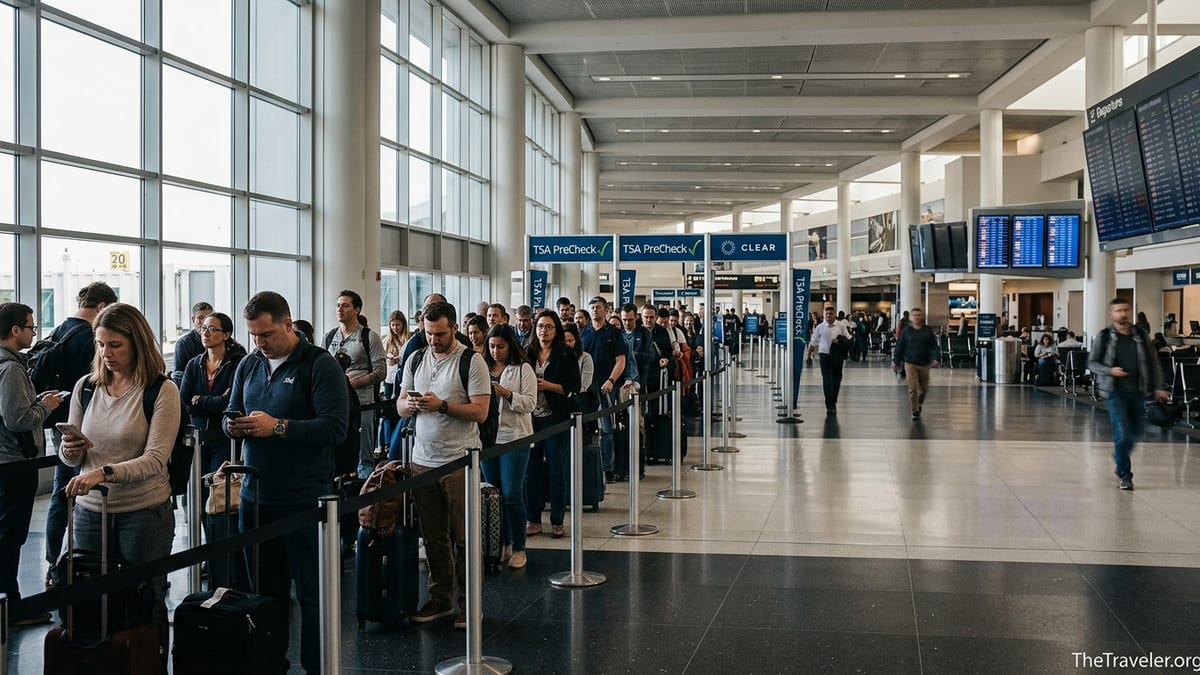
Misjudging Time: Newark’s Defining Traveler Mistake
Newark Liberty is not a small regional airport where you can glide from curb to gate in 25 minutes. In 2026, it is a sprawling, construction-heavy hub with three terminals, multiple security checkpoints, an aging AirTrain system in the middle of replacement, and fluctuating wait times that can swing from 10 minutes to over half an hour with little warning. Travelers who treat Newark like a compact, predictable airport often arrive with tight margins and then watch those margins vanish at check-in, security, or while waiting for an overcrowded shuttle.
Recent wait-time trackers and airport data suggest that average security waits at Newark often hover around the 30-minute mark, with some reports placing typical waits closer to 35 minutes during busy periods, and public advisories cautioning that lines in Terminal C can climb into the mid-30-minute range during peak travel days. At the same time, anecdotal reports from frequent flyers show that on a quiet Tuesday morning you might be through TSA in under 10 minutes. That volatility is what makes Newark especially tricky: you may breeze through one trip, then assume the same timing will work again, only to face a line snaking up the stairs of Terminal C on your next visit.
The fundamental mistake is not simply “arriving late.” It is building a plan around the best-case scenario instead of the likely one. Many travelers still show up 60 to 90 minutes before a domestic flight from Newark, relying on a rideshare estimate that looks optimistic on a clear afternoon but ignores the extra 20 minutes the AirTrain shuttle might add, or the seasonal surge around holidays when Newark’s lines fill with infrequent flyers. At a hub where a single missed connection can domino into hundreds of dollars in fees and a wasted travel day, that is a costly gamble.
Think of Newark timing less like a routine commute and more like a complex connection with multiple legs. Every segment from home to gate can introduce friction, and in 2026 there are more sources of friction than usual. The travelers who thrive at Newark are the ones who assume at least one part of their journey will take longer than expected and plan accordingly.
Construction, AirTrain Changes, and the Hidden Time Trap
One of the most dangerous blind spots for Newark travelers right now is the impact of the AirTrain replacement project. For years, visitors were told that the AirTrain was the simple way to move between the terminals and the Newark Liberty Airport Rail Station, where NJ Transit and Amtrak connect to Manhattan and beyond. That message lingered long after service patterns started shifting. In early 2026, segments of the AirTrain route between the rail station and the airport were replaced or supplemented by shuttle buses, creating an extra transfer at the P4 parking area and forcing passengers to factor in bus frequency, loading times, and road congestion.
In practice, this means that a trip many travelers still picture as “NJ Transit to Newark Airport Station, then a quick AirTrain ride straight to my terminal” can now involve getting off the train, following signs to a shuttle bus, waiting for the next coach, riding to P4, then transferring again to the remaining AirTrain segments or another shuttle to reach the actual terminal. For a traveler arriving at Newark Liberty Station expecting a five-minute monorail ride, this extra complexity can easily add 15 to 30 minutes, especially if buses are crowded after a bank of arriving trains.
Imagine a business traveler catching a 7:30 p.m. domestic departure from Terminal A. They leave Manhattan at 5:45 p.m., assuming a typical NJ Transit run of roughly 30 minutes to the airport rail station, a quick AirTrain hop, and a modest security line. Instead, their train arrives just after a shuttle has departed, and they wait 10 minutes for the next one. The coach then crawls toward the airport amid curbside congestion, and by the time they have transferred again and reached Terminal A, the clock reads 6:50 p.m. With a 25-minute security line and no checked baggage buffer, one delayed elevator or additional screening is all it takes to turn an otherwise reasonable plan into a missed boarding call.
The same dynamic trips up passengers connecting between terminals. A traveler landing at Terminal B on a late-running international flight may assume that reaching a United connection in Terminal C is as simple as walking through a secure connector. At Newark, the AirTrain operates outside the secure area, which means you must exit, ride to your next terminal, and then clear TSA again. If you arrived with only a 60-minute connection that looked acceptable on paper, that extra screening layer can instantly make your itinerary feel unrealistic.
Terminal Confusion and Wrong-Entrance Missteps
Newark’s three-terminal layout can be surprisingly unforgiving if you show up at the wrong place. Terminal A now serves major domestic carriers like American, Delta, JetBlue, and segments of United. Terminal B hosts a mix of international airlines and some United operations. Terminal C remains United’s primary hub, concentrating a huge swath of the airline’s domestic and international flights and funneling thousands of passengers through a limited set of security checkpoints. This mixture is confusing enough in theory. Add rideshare drivers who default to familiar drop-off points and signage that feels different from older guidebooks, and it is not hard to end up at the wrong terminal door.
The cost of a wrong-terminal drop-off is rarely just a short walk. Because the AirTrain sits outside security and requires re-clearing TSA at the correct terminal, a traveler dropped at Terminal B for a Terminal C departure cannot simply stroll along a corridor to fix the mistake. Instead, they must either walk or shuttle to B’s AirTrain station, catch a monorail shuttle, then re-enter the security queue at C. Depending on the time of day and construction impacts, that can easily cost 25 to 40 minutes, a delay that is devastating if you built your schedule around arriving 75 minutes before departure.
Consider a family on a peak summer Friday flying United to Orlando from Terminal C. Their rideshare driver, glancing quickly at a phone, pulls into Terminal B thinking all United flights depart from there. By the time they confirm with a curbside agent that their flight is actually out of C, they have two choices: attempt a curbside re-drop, which can involve circling in heavy traffic, or walk to the nearest AirTrain access point with their luggage and kids. In either case, they must then stand in a new security line alongside several other families who have made the same error. An itinerary that looked comfortable when they left the suburbs becomes precarious simply because no one triple-checked the terminal.
Even when you arrive at the correct terminal, using the wrong entrance can cost time. Terminal C, for instance, often funnels different flows of passengers through separate checkpoints, some dedicated to TSA PreCheck and CLEAR. In busy periods, one entrance may look shorter from the curb but lead to a bottlenecked queue inside, while another that seems busy actually feeds multiple open lanes. Travelers who do not check their airline app or the airport’s security guidance before pickup often ask to be dropped “wherever,” then discover that moving landside between entrances with luggage is slower than expected.
Underestimating Security: Volatile Waits and Peak-Time Surprises
Security at Newark is not uniformly terrible, but it is consistently volatile. Recent third-party trackers and airport guidance suggest an average checkpoint wait time somewhere between the low 20s and mid 30s in minutes, with Terminal C frequently flagged as a hotspot that merits at least 30 extra minutes of buffer for most travelers. During spring and summer peaks, Newark officials have publicly warned of general-screening queues in the half-hour range at C while TSA PreCheck passengers cleared much faster. These variations make one-size-fits-all advice dangerous.
On a quiet weekday afternoon, travelers report gliding through Terminal A’s TSA line in under 10 minutes, especially with PreCheck or CLEAR. On other days, especially early morning bank departures or Sunday evenings, the same checkpoints can swell to 30 minutes or more for standard screening. At Terminal C, one frequent flyer may sail through with CLEAR in 10 minutes at 9 a.m., while another traveler at nearly the same time on a different day experiences a 30-minute wait because several lanes close for staffing or equipment checks. The underlying mistake is assuming yesterday’s good luck will repeat itself without checking conditions.
Many travelers still default to traditional rules of thumb: “Two hours for domestic, three for international.” At Newark in 2026, that guidance is incomplete. For a 6 a.m. domestic departure from Terminal A on a random Tuesday, arriving at 4 a.m. with PreCheck might feel excessive when you clear security in five minutes. Yet for an 8 a.m. departure from Terminal C on the Friday before a holiday, even a 5 a.m. arrival can feel tight if you hit a 40-minute check-in line for baggage and then a 25-minute TSA queue behind hundreds of infrequent flyers unfamiliar with screening rules.
The smartest Newark travelers increasingly rely on multiple data points instead of a single rule. They check their airline app, which often embeds live or forecast security waits. They look at an independent tracker that aggregates official feeds to see if Terminal C is currently calm or spiking. Then they layer that information onto their own risk tolerance, adding more time if they are checking bags, traveling with children, or connecting to an international flight with tighter boarding deadlines. The key is to plan for the worst reasonable wait time you might encounter, not the best one you hope to enjoy.
Ground Transportation Gambles: Rideshare, NJ Transit, and Parking
Another way travelers underestimate Newark is by treating the airport as if it were insulated from the region’s traffic and rail quirks. In reality, your timing problems often begin long before you see a TSA officer. Rideshare pick-ups from Manhattan, Jersey City, or Brooklyn are notoriously variable: a 30-minute drive from Midtown at 11 a.m. on a clear Wednesday can easily stretch past an hour during Friday rush hour or in bad weather. Apps may show a rosy estimate that does not fully account for bottlenecks in the approach roads or the time it takes to navigate terminal loops already congested by multiple drop-offs.
Public transportation introduces a different set of variables. NJ Transit trains from New York Penn Station to Newark Liberty Airport Station frequently run on a schedule that looks straightforward on paper, but delays, crowded peak-hour trains, and the extra transfer to airport shuttles or the AirTrain can erode your margin. Travelers who simply count “25 minutes by train” and forget to add even 10 minutes of overhead for finding the right platform, boarding a busy train with luggage, and navigating from the rail station up to the airport shuttle frequently find themselves entering the security line far later than expected.
Parking decisions can be just as consequential. Official Newark parking, especially the closer terminals’ garages, often fills or becomes pricier during holidays and major events. Budget-conscious travelers who switch at the last minute to off-airport parking lots may find themselves waiting 15 to 20 minutes for a full shuttle to return, then looping the terminal complex while the driver makes multiple stops. A traveler who budgeted only 20 extra minutes for parking might use nearly all of it just riding the shuttle, leaving little room for unexpected TSA or check-in complications.
The risk escalates when travelers stack multiple assumptions: assuming light traffic, a fast NJ Transit connection, a quick off-airport shuttle, and a short security line all at once. At Newark, every assumption has a meaningful chance of failing. It might not matter at a small airport with modest volumes, but at one of the New York region’s main international gateways, a single misjudgment in ground transportation timing can easily compound into a missed boarding group or a closed gate.
Ignoring Airline- and Terminal-Specific Realities
Because Newark is a major hub, particularly for United Airlines, each terminal has its own rhythm, bottlenecks, and amenities that affect how you should plan your time. Treating them all as interchangeable is another extension of the core mistake. Travelers who fly out of Terminal A on a quiet midweek Delta flight and then copy-paste that same timing to a peak-time United departure out of Terminal C are especially vulnerable.
Terminal C, home to United’s hub operations, frequently sees heavier crowds, longer check-in lines for checked baggage, and more intense waves of passengers around the airline’s flight banks. United’s premium services, including Premier Access check-in and Polaris lounge access for eligible international business-class passengers, can help mitigate some of the impact, but they do not eliminate the need to arrive early. Even passengers with CLEAR and PreCheck sometimes report needing 20 to 30 minutes from the start of the security queue to the conveyor belt during busy windows, especially when PreCheck lanes are consolidated or temporarily closed.
Terminal A, by contrast, is newer and often feels more spacious, but its security pattern can still swing significantly depending on when major carriers like American and JetBlue schedule their early-morning banks. A traveler with CLEAR and TSA PreCheck might pass through at 4:30 a.m. in under 10 minutes one day, then face a noticeably longer line another morning if several departures align. Terminal B, with its mix of international carriers, can deliver its own surprises, particularly around evening departures to Europe and South America when multiple widebody flights converge on the same departure window and funnel passengers through a limited set of checkpoints and immigration desks.
Failing to recognize these terminal-specific rhythms leads travelers to underestimate their individual situation. A weekend leisure traveler on a low-cost carrier out of Terminal B may assume that because a colleague breezed through Terminal A at dawn, they can arrive 75 minutes before their 9 p.m. departure. In reality, that late-evening international wave may require closer to three hours at the airport, especially with checked bags, no trusted traveler status, and a family group that moves more slowly than a solo road warrior.
How to Avoid Newark’s Biggest Timing Mistake
While Newark can be challenging, it is far from impossible to manage. The remedy for its defining mistake is not complicated: over-prepare and build in generous buffers at every step. For many domestic travelers, that means treating Newark more like a busy international hub than a regional gateway. Aim to be at your terminal 2 hours before domestic departures during off-peak times and closer to 3 hours before during holidays or Friday evenings, particularly if you are flying out of Terminal C, checking bags, or traveling with children.
One practical strategy is to work backward from your departure time. If you decide you want to be inside security 90 minutes before departure, assume security might take 35 minutes, then add another 20 to 30 minutes if you are checking baggage. From there, factor in a realistic travel time to the airport that includes possible traffic slowdowns or rail delays plus any additional overhead for shuttle buses or parking. It is not unusual, especially from Manhattan or Brooklyn, to find that you should be leaving your front door 4 to 4.5 hours before flight time for a high-stakes trip out of Newark.
Leaning on trusted-traveler programs and technology can also buy you back time, though they are not a substitute for planning. TSA PreCheck and CLEAR, both available at Newark, often reduce security waits significantly, especially when standard lines balloon during peak periods. Airline apps that display live or forecast security wait times, gate changes, or updated boarding timelines are especially valuable here. Checking them an hour before you depart for the airport gives you a clearer picture of whether you are headed into a calm or crowded window and can help you decide whether to leave earlier than planned.
Finally, accept that an extra 30 minutes at Newark is usually cheaper than the alternative. If you arrive early and breeze through, you can explore a lounge, grab a meal at one of Terminal C’s well-known restaurants, or simply decompress at the gate with a book. If you cut your timing too close and discover that the AirTrain shuttle is slow or Terminal C’s line is wrapping through the check-in hall, there may be no amount of sprinting that can fix the problem. The small inconvenience of waiting at the gate pales in comparison to the cost, stress, and disruption of a missed flight in a busy hub.
The Takeaway
Newark Liberty International Airport challenges travelers not because it is uniquely chaotic but because it magnifies the consequences of underestimating time. AirTrain construction, shifting shuttle patterns, volatile security waits, terminal-specific rhythms, and dense regional traffic all conspire against tight schedules. The single biggest mistake travelers make is treating Newark like a straightforward, predictable airport and arriving with too little margin for everything that can and often does go wrong.
Travelers who thrive at Newark do not count on best-case scenarios. They leave earlier than feels necessary, they triple-check their terminal and entrance, they allow for extra minutes on buses and shuttles, and they assume security could be busier than it looks on a website snapshot. They treat each step of the journey as a potential friction point and build buffers accordingly. In exchange, they trade a little extra time at the gate for a much smoother and more reliable travel day.
If you remember one rule for Newark Liberty, make it this: never plan your trip around everything going right. At this airport, success belongs to those who expect at least one thing to go wrong and leave themselves enough time to handle it with calm instead of panic.
FAQ
Q1. How early should I arrive at Newark Liberty for a domestic flight?
For most domestic flights, arriving at the airport 2 hours before departure is the minimum, and 2.5 to 3 hours is wise during holidays, peak Fridays, or if you are flying from Terminal C, checking bags, or traveling with children.
Q2. How early should I arrive at Newark Liberty for an international flight?
Plan to arrive at least 3 hours before an international flight, and closer to 3.5 hours during peak travel seasons or busy evening departure banks from Terminals B and C, especially if you need to check luggage.
Q3. Is the AirTrain still the fastest way to reach the terminals at Newark?
The AirTrain is being replaced, and current operations involve shuttle buses for some segments, particularly between the rail station and airport. Expect additional transfers and time, and do not assume a quick, continuous monorail ride from the train platform to your gate.
Q4. What is the biggest timing mistake people make when using NJ Transit to Newark Airport?
Many travelers count only the scheduled train time and forget to add extra minutes for platform navigation, possible delays, shuttle or AirTrain transfers from the rail station, and the full security process once they reach their terminal.
Q5. Are security lines really worse at Terminal C than at other terminals?
Terminal C, United’s main hub at Newark, often experiences heavier crowds and longer average waits, particularly during morning and evening bank departures. While some days are smooth, you should build in extra buffer time compared with Terminals A and B.
Q6. Does TSA PreCheck or CLEAR guarantee a short wait at Newark?
TSA PreCheck and CLEAR usually shorten security times and are valuable at Newark, but they do not guarantee no lines. During peak periods, even trusted-traveler lanes can take 15 to 30 minutes, so you should still arrive early.
Q7. What happens if my rideshare drops me at the wrong terminal?
If you are dropped at the wrong terminal, you will likely need to take the AirTrain or a shuttle to the correct one, then go through security there. This can add 25 to 40 minutes, so confirming your terminal in advance is critical.
Q8. Is it safer to park on-airport or use an off-airport parking lot at Newark?
Both can work, but off-airport parking often requires waiting for a shuttle and making multiple terminal stops. If you choose off-airport parking, build in an extra 20 to 30 minutes on top of your usual airport arrival goal.
Q9. How can I check current security wait times before leaving for Newark?
You can use your airline’s mobile app and independent wait-time trackers that draw from official airport data to see current and forecasted security waits by terminal. Check them 30 to 60 minutes before you depart for the airport.
Q10. What is the single best way to avoid timing mistakes at Newark?
The most effective approach is to build generous buffers at every step: leave home earlier than you think you need to, add extra time for shuttles and security, and assume at least one part of your journey will take longer than expected.