


More news on this day
Phnom Penh’s latest national packaging competition is being used by Cambodian officials to signal a broader policy shift: small businesses will need export‑ready quality, safety and labelling standards, not just eye‑catching designs, if they want their products to reach supermarket shelves at home and abroad.
Get the latest news straight to your inbox!
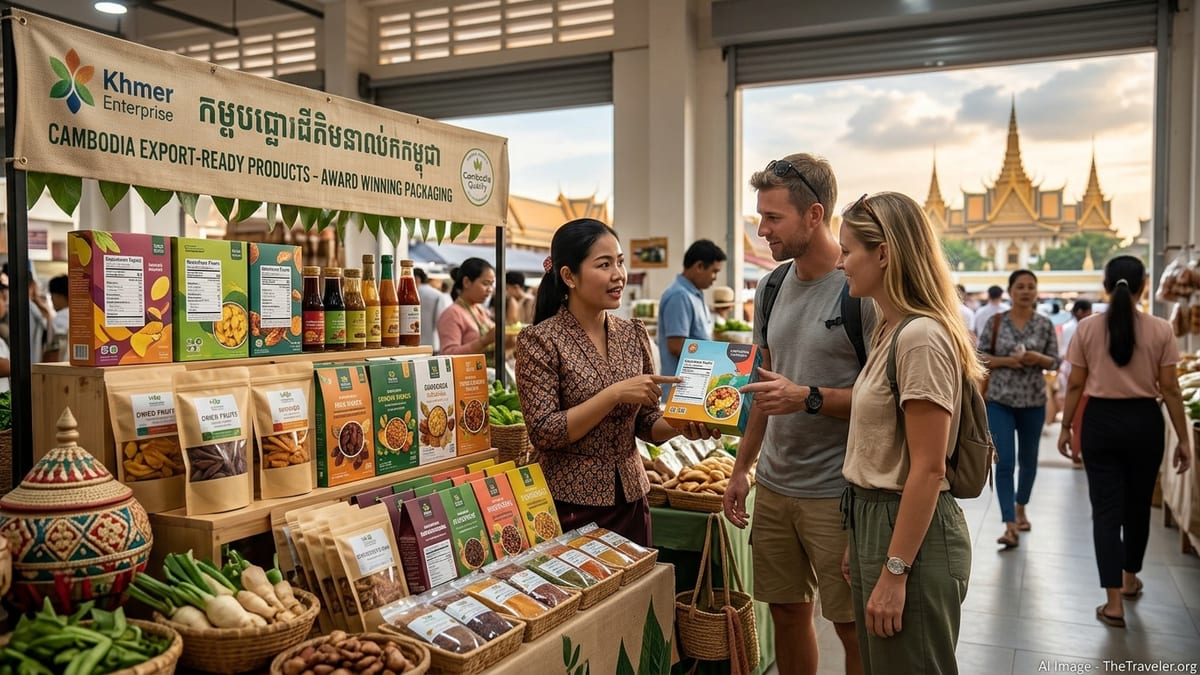
Packaging awards highlight export ambitions, not just looks
On November 17, 2026, Khmer Enterprise, a state‑backed entrepreneurship support agency under Cambodia’s Ministry of Economy and Finance, held the Packaging Design Competition Award 2026 handover ceremony in Phnom Penh. According to organizers, around 130 participants, including SMEs, designers, judges and partners, joined the program to co‑create new brand identities and packaging for locally made products, while aligning designs with packaging and labelling rules relevant to domestic and export markets.
Khmer Enterprise’s CEO, Chhieng Vanmunin, used the event to stress that packaging must now combine visual appeal with compliance. He said the program had “highlighted the importance of packaging aesthetics and quality in meeting established standards,” describing packaging as a strategic tool that can strengthen SME competitiveness in both domestic and international markets and help them connect with export‑oriented industries.
Organizers also framed the competition as part of a broader Entrepreneurial Ecosystem Campaign, linking design support with training, networking and access to business advisory services. However, officials did not announce any specific new export deals arising directly from the competition, underlining that updated packaging alone does not guarantee international market entry.
Government pushes SMEs beyond labels to full standards compliance
The packaging push comes as senior Cambodian officials repeatedly tell businesses that attractive branding is only one element of export readiness. On September 25, 2026, Commerce Minister Cham Nimul urged enterprises to improve product quality, food safety, production traceability and adherence to international standards, with packaging cited as just one component of wider upgrades needed as Cambodia integrates more deeply into global trade.
Industry, Science, Technology and Innovation Minister Hem Vanndy has delivered similar messages in recent months. Speaking at an agriculture and agro‑processing forum in Phnom Penh on October 24, 2026, he called for investment in modern processing technology, better quality standards, stronger national laboratory capacity and advanced packaging to capture more value from Cambodian agricultural production. Officials have also highlighted closer cooperation with the UN Food and Agriculture Organization to strengthen food safety systems, standards and testing infrastructure.
Nationally, the government reports that more than 2,600 domestic products were newly registered in the first nine months of 2026, a sign that more producers are formalizing and preparing for wider market access. Prime Minister Hun Manet has linked this trend to a call for higher product quality, stronger safety controls and improved packaging as Cambodia gradually loses some least developed country trade preferences and needs to compete on standards rather than special tariffs.
What this means for travelers and overseas buyers
For international travelers and buyers encountering Cambodian products abroad, these policy shifts should gradually translate into clearer, more informative packaging on food and consumer goods. Rather than just updated graphics, officials say they expect more products to carry standardized labels, ingredient lists, origin information and certifications that align with destination‑market rules, particularly in supermarkets and specialty stores.
Better‑regulated packaging and labelling can make it easier for importers and retailers in markets such as North America, Europe and East Asia to assess whether Cambodian products meet local requirements on allergens, nutrition, shelf life and traceability. For travelers who first discover Cambodian snacks, condiments or wellness products in Phnom Penh and then look for them back home, consistent branding and compliant labels increase the chances that those products will appear on international shelves in recognisable form.
The changes also have potential benefits for food safety and consumer confidence. As more Cambodian SMEs adopt formal quality management systems, submit products for laboratory testing and secure recognized certifications, visitors buying packaged goods for gifts or personal use should encounter more reliable expiry dates, storage instructions and safety information, whether they purchase items in Cambodia or in overseas stores.
Remaining hurdles for SMEs aiming at international shelf space
Officials and partners involved in the November ceremony repeatedly underlined that the competition is only one step toward export readiness. Many Cambodian SMEs still face high costs for testing and certification, pressure on working capital when upgrading equipment or ingredients, and gaps in skills related to quality control, documentation and logistics. These are described as ongoing challenges rather than issues already resolved by recent packaging initiatives.
To convert design awards into real international shelf space, SMEs will need to invest in robust quality systems, including regular lab testing where required, and obtain certifications demanded by foreign buyers. They must also demonstrate consistent production volumes, stable sourcing of raw materials and the ability to meet delivery schedules, alongside complying with technical packaging and labelling rules in target markets.
Travelers and overseas consumers interested in Cambodian products should therefore view the new wave of attractive packaging as a visible sign of deeper changes that are still in progress. Before relying on specific health or origin claims, it remains important to check for recognized certification marks, clear labelling and importer details, particularly as Cambodia’s regulators tighten enforcement and SMEs work to match their visual branding with fully compliant, export‑ready products.