


More news on this day
Marriott International has signed a franchise agreement with Panamanian developer Trinity Hills Valley, S.A. for a future Tribute Portfolio hotel and branded residences in a surf‑lagoon‑anchored resort on Panama’s Pacific coast, marking a fresh vote of confidence in the country’s fast‑growing, increasingly upmarket tourism sector just as official data confirm record visitor numbers in 2025 and strong growth so far in 2026.
Get the latest news straight to your inbox!
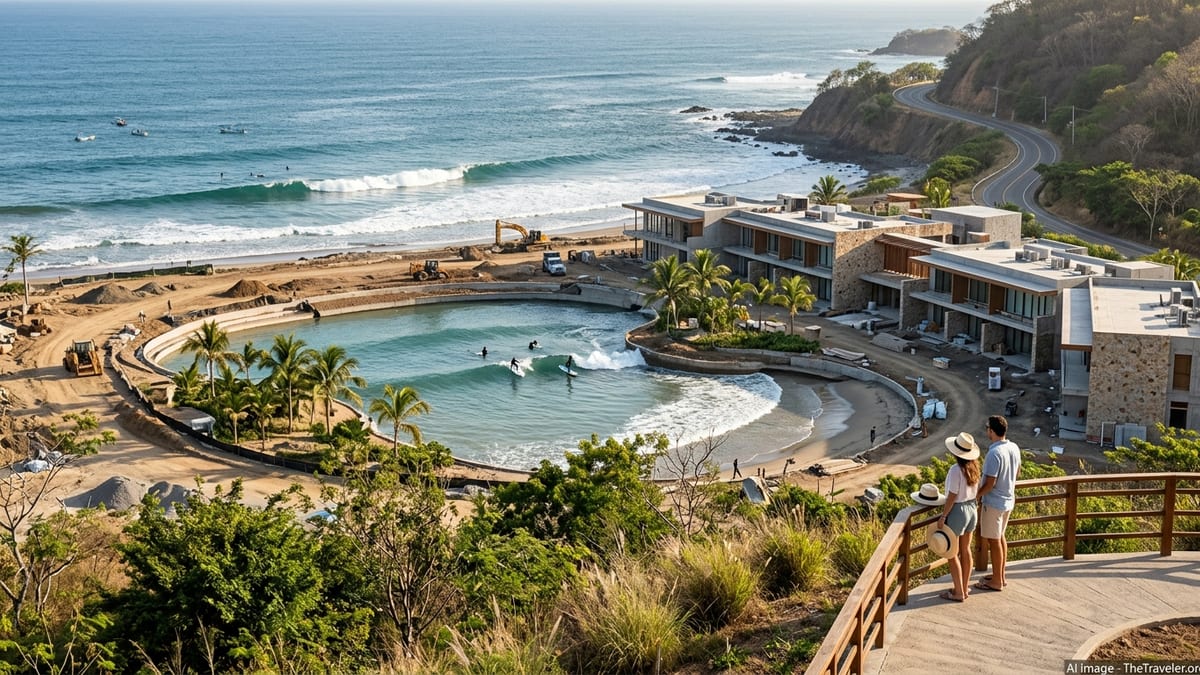
New surf‑lagoon resort planned with Tribute Portfolio flag
On 17 December 2025, Trinity Hills Valley, S.A. announced it had entered into a franchise agreement with Marriott International to bring a Tribute Portfolio hotel and branded residences to a new resort centered on an artificial surf lagoon on Panama’s Pacific shoreline. The project remains at the signing and planning stage, and neither Marriott nor the developer has yet published a confirmed opening date, room count or full amenity list.
Tribute Portfolio is Marriott’s collection of independently minded, upscale hotels that operate under Marriott’s reservation and loyalty platforms while retaining a degree of local character. Positioning the Trinity Hills Valley property under this flag signals an intention to target travelers seeking design‑forward, full‑service stays rather than mass‑market beach accommodation.
The developer has described the surf lagoon as the anchor attraction for the wider master‑planned resort, which will also include for‑sale branded residences. At the time of writing, public materials outline the concept at a high level but do not yet specify the exact site within Panama’s Pacific region or the scale of the residential component, and prospective visitors and buyers should treat all timelines as indicative rather than firm.
Record visitor numbers underpin Panama’s move upmarket
The Trinity Hills Valley announcement comes against a backdrop of historic tourism numbers. According to the Panama Tourism Authority, the country hosted 3,004,266 international visitors between January and December 2025, an 8.2 percent increase on 2024 and the first time Panama has surpassed the three‑million mark. Of these, roughly 2.3 million were overnight tourists, with the balance made up of excursionists and cruise passengers.
Tourism receipts have risen alongside arrivals. Official figures show visitor spending of approximately 6.583 billion balboas (around 6.58 billion US dollars at parity) in 2025, excluding international airfares, up 9.7 percent year on year. That performance has helped cement tourism as a key pillar of Panama’s service‑driven economy and provides one of the demand signals informing upscale resort investment.
More recent releases from the tourism authority indicate that growth has continued into this year. Preliminary data for the first months of 2026 point to international visitor arrivals running close to 18 to 19 percent higher than in the same period of 2025, with airport traffic and stopover programs both contributing. While those figures remain subject to revision, they support the narrative of a market where developers and global brands see room for additional high‑end capacity.
What the project could mean for future travelers
For travelers planning trips now, the Trinity Hills Valley resort is firmly a future option rather than an immediate booking prospect. Construction and opening timelines have not been finalized in public documents, and there is no Tribute Portfolio listing for the property in Marriott’s booking channels yet. Anyone interested in the development should approach it as part of a multi‑year pipeline that may evolve as permitting, financing and infrastructure progress.
If completed broadly in line with current plans, the project would expand Panama’s inventory of upscale beach‑oriented stays beyond existing Marriott‑affiliated options, which are currently concentrated around Panama City and selected coastal corridors. Today, travelers looking for Marriott brands in the country typically choose urban luxury properties such as JW Marriott Panama in Punta Pacífica or The Santa Maria, a Luxury Collection resort near the capital, along with established beach hotels like the Westin Playa Bonita on the Pacific side.
The surf‑lagoon concept differentiates Trinity Hills Valley from conventional oceanfront resorts by promising consistent, controllable wave conditions that are not dependent on local swell patterns. That model, already in use at a small number of surf‑park resorts worldwide, can appeal both to dedicated surfers seeking training environments and to leisure travelers interested in trying the sport in a more predictable setting, though detailed pricing and access rules for non‑residents have yet to be disclosed.
Branded residences and Pacific‑coast focus
Alongside the hotel, the Trinity Hills Valley plan includes Marriott‑branded residences, a format in which buyers purchase title to units that carry a hotel brand and typically have access to shared resort services. In many similar projects, owners can opt into rental programs managed under the hotel flag, but Trinity Hills Valley has not publicly confirmed any specific operating model, usage restrictions or rental pool structure for its Panama scheme.
The choice of a Pacific‑coast site aligns with wider efforts by Panamanian authorities and investors to distribute tourism spending beyond Panama City. Recent aviation and marketing initiatives have targeted beach areas along the central Pacific corridor, positioning them as complements to canal‑focused and urban stays rather than substitutes. A resort built around a surf lagoon and branded residential community could further anchor that diversification if it proceeds as planned.
At the same time, the project underscores how large hotel groups are segmenting their presence in Panama: urban luxury and business properties in and around the capital, established all‑inclusive and convention‑friendly beach hotels, and now a pipeline of lifestyle‑oriented coastal developments aimed at visitors willing to pay for design, amenities and branded service standards.
What travelers should watch next
Over the next few years, the key milestones for travelers to monitor will be planning and construction updates from Trinity Hills Valley and Marriott. These should clarify the resort’s exact location on the Pacific coast, the size and configuration of the Tribute Portfolio hotel, the range of facilities around the surf lagoon and how the branded residences will integrate with short‑stay guest operations.
Before considering any bookings or property purchases linked to the development, would‑be guests and buyers should look for the resort to appear on Marriott’s official channels with a confirmed opening date, along with transparent information on nightly rates, access rules for lagoon use and the status of local infrastructure such as road links and nearby airports. Given that 2025 tourism figures remain labeled as preliminary by Panamanian authorities and 2026 data are still being updated, travelers may also want to consult the latest statistics when deciding how busy they expect Panama’s peak seasons to be once the resort opens.
Until then, Panama’s existing mix of city‑based luxury hotels and established Pacific beach properties continues to serve current demand, while projects like Trinity Hills Valley illustrate how the country’s tourism offer is evolving for those planning trips a few seasons ahead.