


More news on this day
The United States has expanded security alerts across the Middle East after a series of Houthi attacks on Saudi Arabia, warning that hostilities "have the potential to escalate rapidly" and could severely disrupt civilian air travel and wider regional mobility.
Get the latest news straight to your inbox!
Coordinated Security Alerts Across the Middle East
Publicly available security alerts show that U.S. embassies in Saudi Arabia, Bahrain, Qatar, the United Arab Emirates and several other countries issued coordinated messages between October 19 and October 21, 2026, advising American citizens that Houthi hostilities against Saudi targets could spread quickly beyond currently affected areas. The alerts highlight the risk that missile and drone attacks may expand geographically with little or no warning.
Coverage by major U.S. and regional outlets describes a wave of near-simultaneous advisories pointing to a common phrase that hostilities "have the potential to escalate rapidly" beyond specific impact zones. These alerts follow weeks of intensified strikes on Saudi infrastructure and reflect heightened concern that further attacks could draw in additional actors or trigger wider military action.
The security messaging is not limited to Saudi Arabia. Reports indicate that advisories were also circulated by U.S. missions in Israel, Jordan, Kuwait, Oman, Lebanon, Iraq and other parts of the region, urging citizens to exercise heightened vigilance. The broadened geographic scope underscores official concern that fallout from the conflict could affect travelers transiting a wide arc of the Middle East, not only those visiting or residing in Saudi Arabia itself.
Deadly Strikes on Saudi Airports and Rising Traveler Risk
The latest alerts follow a series of high-profile attacks on Saudi airports in October 2026. Published coverage notes an October 10 strike on Riyadh’s King Khalid International Airport that killed at least 13 people, including an American citizen, and forced a suspension of commercial flights. Additional reporting describes attacks on King Fahd International Airport in eastern Saudi Arabia that resulted in at least one fatality and further damage to aviation infrastructure.
Regional and international media accounts describe visible fires and large plumes of smoke rising from fuel storage and facilities at King Khalid International Airport after one of the strikes. The incidents have been characterized in open-source reporting as a sharp escalation in the long-running confrontation between Yemen’s Iran-aligned Houthi movement and the Saudi-led coalition. For travelers, the targeting of major civilian airports represents a direct threat to safety and a serious disruption to established air corridors.
In response to the attacks, some carriers temporarily halted or rerouted flights into Riyadh and other Saudi cities, according to airline statements cited in news coverage. Although limited services have resumed at certain airports, the pattern of repeated strikes and warnings has created an environment in which schedules can change at short notice, leaving passengers vulnerable to unexpected cancellations and extended delays.
State Department Advisories and “Do Not Travel” Warnings
Alongside embassy alerts, the latest update to the dedicated Yemen advisory on the U.S. State Department’s travel platform, dated October 23, 2026, maintains a Level 4 “Do Not Travel” warning. The advisory cites terrorism, civil unrest, health risks, kidnapping, and landmines as core reasons, and references an increase in potential armed attacks by Iranian-supported Houthis and related threats to U.S. government personnel in the region.
Publicly available information on the same platform notes that U.S. citizens are at risk not only within Yemen but also from spillover effects in adjacent maritime and airspace zones. The United States Maritime Administration has separately warned of a heightened risk of attacks in the Gulf of Aden, Bab al-Mandeb, the Gulf of Oman and the North Arabian Sea, all of which are key corridors for both commercial shipping and cruise itineraries.
A separate worldwide caution notice, updated in July 2026, advises U.S. travelers that the broader security environment in parts of the Middle East remains complex, with the potential for unforeseen escalation. That global message encourages passengers to be prepared for sudden airspace closures and to closely follow real-time updates for their specific destination, guidance that has gained new urgency in light of the Houthi strikes on Saudi aviation targets.
Practical Implications for Air and Sea Travel
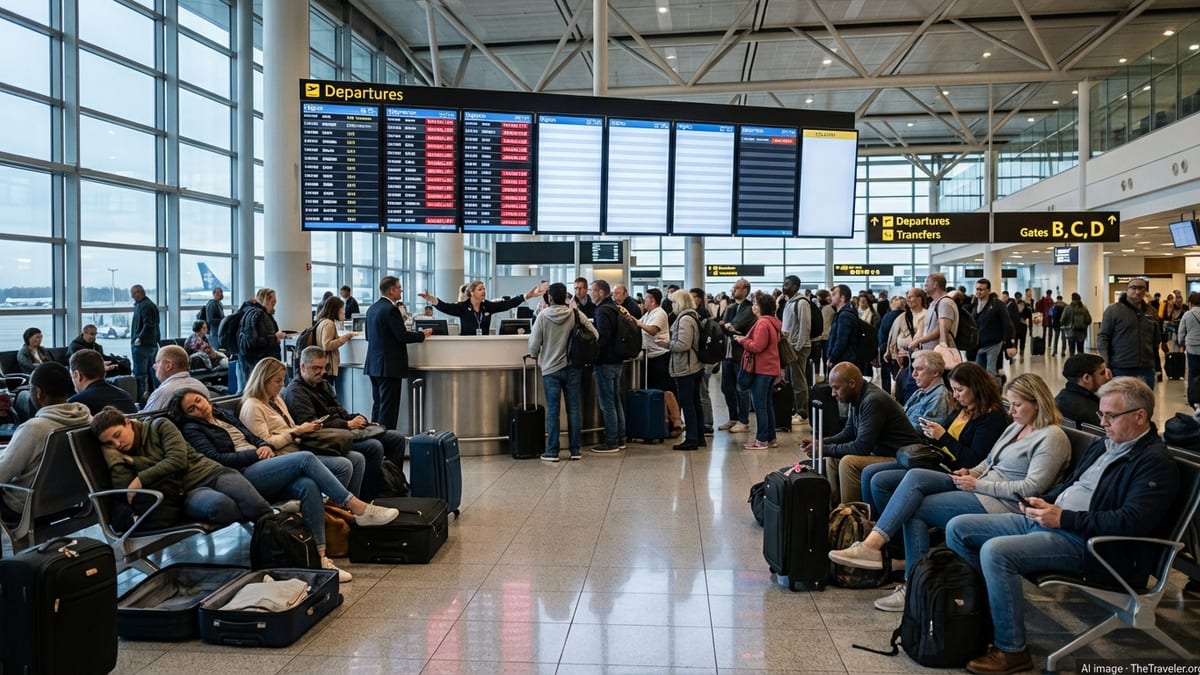
For travelers, the most immediate impact of the warnings lies in the aviation sector. Embassy alerts and media summaries repeatedly urge Americans in Saudi Arabia to anticipate potential attacks on airports, flight cancellations and last-minute airspace restrictions. Travelers transiting major Gulf hubs are advised to monitor airline notifications frequently, maintain flexible itineraries and consider contingency plans, such as alternative routings through Europe or South Asia, in case of prolonged disruption.
Travelers connecting through Riyadh, Dammam or other Saudi gateways should be aware that security conditions can shift quickly, with airport operations affected not only by direct damage but also by precautionary shutdowns while threats are assessed. Publicly reported guidance encourages passengers to allot extra time for security checks, ensure that mobile devices are configured to receive emergency alerts, and keep critical medications and essentials in carry-on bags in case they are stranded airside overnight.
The maritime dimension also matters for cruise passengers and those traveling on ferries or cargo vessels. U.S. maritime advisories and independent risk assessments describe continued concerns about projectile and drone activity in and around Red Sea and Arabian Sea chokepoints. While many cruise lines have already adjusted itineraries away from the most sensitive areas in recent seasons, the renewed emphasis on possible Houthi escalation may influence routing decisions for future voyages that had planned calls near the southern Red Sea or the Gulf of Aden.
How Travelers Can Respond to the Heightened Alert
In light of the current warnings, travel experts and risk consultancies cited in recent coverage encourage U.S. citizens to treat the alerts as actionable guidance rather than routine background advisories. For trips that are not time-sensitive, some commentators suggest considering deferral of nonessential travel that involves long layovers in Saudi Arabia or neighboring states most exposed to Houthi missile and drone activity.
For travelers who must be in the region, publicly available advice emphasizes several steps: enrolling in the Smart Traveler Enrollment Program where eligible, reviewing airline flexibility policies before purchase, and carefully checking whether travel insurance covers disruption linked to conflict or terrorism. Many standard policies include exclusions for war-related events, making it important to understand coverage limits before committing to itineraries that pass through higher-risk hubs.
Reports also underline the importance of maintaining updated contact information with airlines and, where appropriate, with local accommodation providers. In fast-moving situations, carriers may attempt to rebook passengers automatically or provide re-routing options via mobile notifications. Having reliable connectivity and backup communication methods can significantly improve a traveler’s ability to respond quickly if flight plans are altered due to security incidents or official airspace closures.
Across the Middle East, the central message of the latest U.S. alerts is that the situation around Houthi attacks on Saudi Arabia remains volatile and could deteriorate with minimal warning. For U.S. citizens and other international travelers, planning with this volatility in mind and staying closely informed before and during any trip in the region has become a critical part of managing risk.