


More news on this day
Passengers flying to and from Israel in the coming days are being advised to brace for schedule disruptions, as European air traffic control bottlenecks add fresh strain to an already tense summer travel season at Ben Gurion Airport.
Get the latest news straight to your inbox!
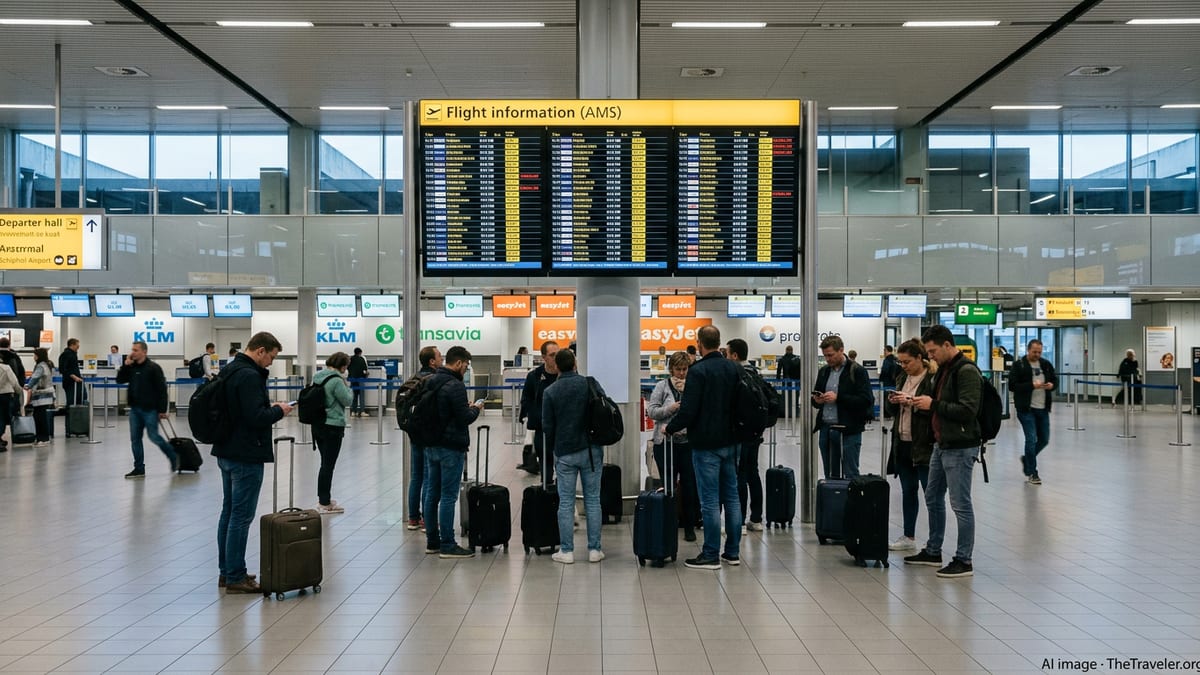
European air traffic control pressures ripple into Israel routes
According to recent updates from Eurocontrol and European aviation authorities, traffic across the continent is running above 2025 levels, with several area control centers reporting rising en route delays tied to weather patterns, congestion and staffing constraints. These issues are translating into longer holding times, reroutings and reduced capacity in key airspace sectors that handle traffic between Israel and major hubs such as Athens, Larnaca, Rome and central European gateways.
Israel-bound flights typically transit busy corridors over the eastern Mediterranean and southeastern Europe. When European control centers impose flow restrictions or reduce the number of aircraft allowed in a given segment of airspace, airlines are forced to slow flight departures, extend flight times or rebook passengers to later services. In practical terms, this means that even when operations at Ben Gurion Airport are stable, departures and arrivals can be pushed back by knock-on effects originating hundreds of miles away.
Industry data from recent weeks indicates that weather-related constraints and high-altitude turbulence episodes have further limited capacity in certain European sectors. These conditions have contributed to a pattern of modest but recurring delays that can escalate quickly during peak hours, especially on routes linking Israel with popular summer destinations in Greece, Cyprus, Italy and western Europe.
Airlines operating to Tel Aviv have been adjusting schedules, padding block times and building in more turnaround margin to cope with these European network pressures. While such measures can improve punctuality on paper, they also reduce operational flexibility when sudden air traffic flow restrictions are introduced mid-day.
Ben Gurion Airport already operating under constrained conditions
The warnings about new disruptions arrive as Ben Gurion Airport continues to manage an unusual mix of civilian and military aviation activity, alongside lingering capacity limits introduced earlier in 2026. Published coverage in Israeli and international media has described how the continued presence of United States military refueling aircraft and other operational considerations have restricted the share of the airfield available for commercial traffic.
Over recent months, officials involved in transport policy debates have exchanged differing assessments about the scale of potential cancellations at Ben Gurion this summer. Some commentary has pointed to the risk of widespread disruption if additional military aircraft were based at the airport, while more recent statements reported in Israeli press suggest that the number of such aircraft is being reduced or relocated to free up slots for civilian airlines.
At the same time, Israel’s aviation system is still in the process of returning to a more typical pattern of operations after airspace closures and capacity reductions associated with regional security events earlier this year. Previous limits on passenger loads per flight and caps on certain long-haul departures created bottlenecks that have not fully cleared, leaving carriers with complex backlogs to manage just as European summer travel demand peaks.
The reopening of Terminal 1 for domestic and selected international services, reported in June and July, has been framed as part of an effort by the Israel Airports Authority to spread traffic more evenly across the airport. However, the combination of local infrastructure constraints and external European air traffic issues means that the system remains finely balanced, with relatively little room to absorb new shocks.
What travelers can expect in the coming days
For passengers, the most visible impact of the current situation is likely to be rolling delays rather than mass cancellations. Publicly available information on recent traffic flows suggests that flights between Israel and European hubs are still operating broadly as scheduled, but with an elevated risk of departure or arrival times slipping by 30 minutes or more, especially during afternoon and evening peaks.
Travelers departing Israel may encounter longer dwell times on the tarmac while crews wait for updated takeoff slots or revised routings from European air traffic control centers. Arriving flights can be subject to airborne holding patterns or speed reductions en route if congestion builds in specific sectors. In tightly banked hub operations, those small disruptions can cascade into missed connections, overnight stays and baggage misalignments for onward journeys.
Industry practice in similar episodes suggests that airlines will continue to prioritize safety margins and regulatory requirements over on-time performance, particularly where weather and turbulence forecasts in European upper airspace require more conservative separation. This can be frustrating for travelers, but it also reflects a network that is operating near full capacity at the height of the summer holiday season.
Travel advisories from several governments already encourage passengers bound for or transiting through Israel to prepare for possible changes to flight times, temporary airspace restrictions and limited alternative options on short notice. With demand on many Europe–Israel routes running high, last-minute rebooking can be challenging, especially for larger groups or those relying on specific connection windows.
Airlines adjust schedules and routings to manage congestion
Carriers serving Tel Aviv have been reworking schedules for the summer period in response to both local and European constraints. Some have shifted departure banks to earlier or later time slots to avoid the busiest hours in certain European control centers, while others have trimmed frequencies or temporarily suspended marginal routes to preserve resilience on core services.
Low-cost and leisure-focused airlines, which rely heavily on rapid aircraft turnarounds and dense timetables, appear particularly exposed to the cumulative effect of short air traffic control delays across multiple sectors. When a single aircraft is scheduled to operate several legs in a day between European holiday destinations and Israel, an early morning slot restriction can translate into late-night arrivals and crew duty challenges down the line.
Network carriers with larger fleets and hub structures have more tools available, including aircraft swaps and rerouting via secondary hubs, but they too face pressure as Eurocontrol and national authorities apply traffic management measures to keep flows stable. The result is a summer schedule that is more complex and less predictable than pre-crisis norms, with airlines issuing frequent updates to passengers via apps and airport displays.
Air cargo flows into and out of Israel are also affected. Freight operators and combination carriers depend on predictable slots and routings to keep supply chains moving. Delays in European airspace can disrupt tightly timed connections for high-value and time-sensitive shipments, adding further incentive for carriers to lobby for additional capacity and more flexible routing options where safety conditions allow.
Practical steps for passengers flying to or from Israel
Given the heightened risk of disruption, travel industry guidance emphasizes preparation and flexibility for anyone planning to fly to or from Israel in the short term. Passengers are being encouraged to allow extra time at the airport, monitor airline communications closely and build generous buffers into any onward travel plans, such as rail connections or important appointments on arrival.
Travel agents and risk management firms advise that travelers on complex itineraries consider avoiding tight same-day connections where possible, particularly when connecting in congested European hubs that are already managing high traffic volumes. Opting for longer layovers or overnight stays en route can reduce the likelihood that a modest delay on the Israel leg will cascade into missed long-haul flights.
Some travelers are also exploring alternative routings, splitting journeys into separate tickets that first reach a European or regional gateway less exposed to current bottlenecks before continuing onward. While this can introduce additional logistical complexity, it may offer more options if schedules shift unexpectedly, provided that passengers are comfortable managing their own connections and potential rebookings.
Travel insurers and corporate travel departments are watching the evolving situation closely, reviewing policy terms around delays, missed connections and schedule changes. As European air traffic control centers and the Israel Airports Authority continue to align their planning for the remainder of the peak season, passengers can expect a dynamic operating environment in which up-to-date information and flexible arrangements are key to keeping journeys on track.