


More news on this day
Peak summer travel along the U.S. East Coast faced fresh disruption on Monday as the Federal Aviation Administration began slowing flights into New York’s three major airports and Philadelphia International Airport, citing a combination of severe weather and ongoing air traffic control staffing shortages.
Get the latest news straight to your inbox!
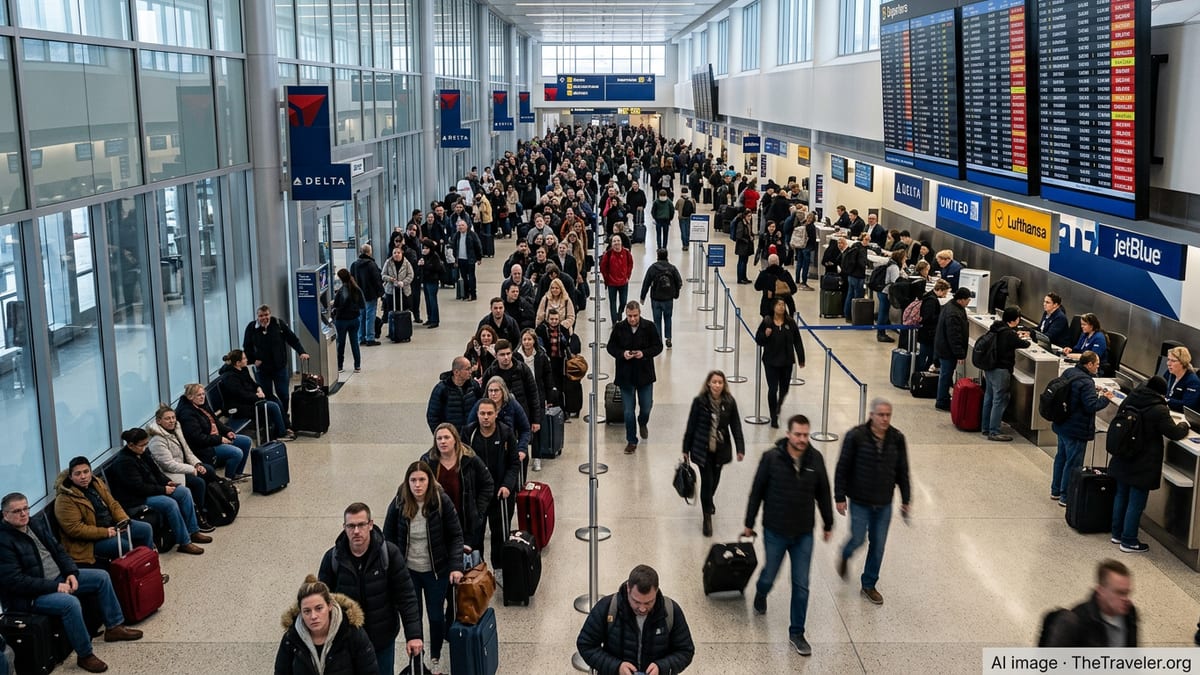
Ground delays ripple across key Northeast gateways
According to publicly available airspace status data, arrival and departure flows at John F. Kennedy International, LaGuardia, Newark Liberty and Philadelphia International airports were being metered on Monday afternoon, resulting in longer-than-normal waits on the ground and in the air. Real-time advisories indicate that some New York airports were seeing average departure delays exceeding an hour, with additional spacing requirements for incoming traffic.
Reports from national airspace monitoring tools show that the measures include ground delay programs, which allow flights to continue operating but assign controlled departure times at origin airports to manage congestion at busy hubs. In practice, that means aircraft bound for affected airports may be held at their departure gates or taxiways until a revised takeoff slot becomes available.
Travel industry coverage notes that the FAA expects the New York market in particular to experience disruption through the evening travel peak, with potential knock-on effects to connections across the country. Airlines have advised customers to check their flight status frequently and to allow extra time at airports as schedules adjust to the evolving restrictions.
The latest slowdown follows a series of difficult days for travelers in the Northeast this month, as repeated rounds of thunderstorms and capacity limits have triggered rolling delays, diversions and cancellations at some of the nation’s busiest airports.
Storms and chronic staffing gaps drive constraints
Published reports indicate that the immediate trigger for Monday’s slowdown is a line of severe summer storms tracking across the Mid-Atlantic and Northeast, bringing low clouds, periods of heavy rain and the risk of lightning near major airport corridors. Such conditions typically force controllers to reduce arrival and departure rates in order to maintain safe spacing between aircraft.
However, the weather is colliding with a longer-running constraint: staffing shortfalls at key air traffic control facilities managing the complex airspace around New York and, more recently, portions of New Jersey and Pennsylvania. Federal Register documents and agency notices over the past year have described controller staffing in some facilities as well below target levels, prompting regulators to cap hourly operations and grant airlines temporary flexibility from slot usage rules.
In June and July, the FAA extended those measures for New York-area airports, including limits on scheduled movements at Newark and usage relief at Kennedy and LaGuardia, in an effort to curb chronic congestion. Industry analyses have pointed out that even with caps in place, these airports remain among the most delay-prone in the United States when storms roll through the region.
On Monday, the intersection of constrained staffing and convective weather left little margin to absorb schedule pressure. As a result, the agency’s command center implemented flow programs that slow the rate of arrivals into the four impacted airports, trading short-term inconvenience for reduced risk of gridlock in the air and on crowded taxiways.
Impact on airlines and passengers during peak season
Airlines serving New York and Philadelphia moved quickly to adapt to the latest restrictions. According to carrier advisories, some major U.S. and international airlines have issued travel waivers for customers booked to or from the affected cities, allowing itinerary changes without additional fees within specified date ranges and fare rules.
For passengers, the most visible impact is longer waits and a higher risk of missed connections. Data from flight-tracking services on recent delay days in the region show hundreds of flights arriving late and significant numbers canceled outright when thunderstorms have lingered over departure and arrival corridors. With Monday’s slowdown affecting four major hubs simultaneously, disruptions are likely to cascade across national and even transatlantic networks.
Travel media outlets recommend that passengers flying into or out of New York or Philadelphia monitor their airline’s app or website, enroll in text alerts and consider earlier departures where possible, particularly on days with a forecast of afternoon thunderstorms. Flyers connecting through the region may also look to reroute via alternative hubs in the Midwest or South when rebooking options are available.
Crew scheduling and aircraft positioning can further complicate recovery once delays take hold. When inbound aircraft and flight crews arrive late to the New York and Philadelphia area, evening departures may face additional knock-on delays or cancellations, making the overnight reset period critical to restoring normal operations for the following morning.
Part of a broader pattern of summer strain
Monday’s action fits into a broader pattern of strain across the U.S. aviation system during recent summers, particularly in the congested Northeast corridor. Analyses by aviation data providers have highlighted how a mix of volatile weather, busy schedules and still-rebuilding staffing pipelines has made the region especially vulnerable to large-scale disruption.
Regulatory filings show that, in anticipation of these pressures, the FAA has repeatedly renewed temporary waivers around slot rules and schedule limits at New York’s airports, encouraging airlines to trim marginal flights and build more buffer into their operations. Despite those steps, rapidly developing thunderstorms and constrained airspace can still outpace available capacity on peak travel days.
Industry observers note that carriers have responded by investing in more robust operational control centers, expanding the use of predictive weather tools and increasing the number of reserve crews based near high-risk hubs. Yet as the latest slowdown demonstrates, systemic vulnerabilities remain, especially in shared airspace where issues at one facility can quickly affect multiple major airports.
For travelers, the episode underscores how even routine summer storms can now trigger far-reaching delays once layered on top of structural capacity limits, making flexibility and real-time information essential parts of planning trips through the nation’s busiest air corridor.
What travelers through New York and Philadelphia can do now
With delays and metering programs in place, consumer advocates and travel experts emphasize preparation. They advise that passengers with upcoming itineraries through Kennedy, LaGuardia, Newark or Philadelphia review their airline’s waiver policies and, if eligible, consider moving flights to earlier in the day, when storms are typically less intense and the system has more room to recover.
Travel coverage also suggests building additional time into connections, especially for international trips that depend on tight domestic links through New York. Where practical, some travelers may opt for nonstop routes that bypass the region entirely or choose alternate gateways such as Boston, Washington or mid-continent hubs if seats are available at comparable fares.
At the airport, having essential items in a carry-on, including medications, chargers and basic toiletries, can lessen the impact of extended ground holds or overnight disruptions. Passengers facing significant delays are encouraged in public advisories to work proactively with their airline’s digital tools or airport agents to secure rebooking options before flights cancel or seats on alternate services fill up.
While the timing and intensity of storms will ultimately shape how long Monday’s slowdown persists, the combination of weather and staffing constraints suggests that travelers through New York and Philadelphia should brace for a period of unsettled operations, particularly during the late-July peak holiday window.