


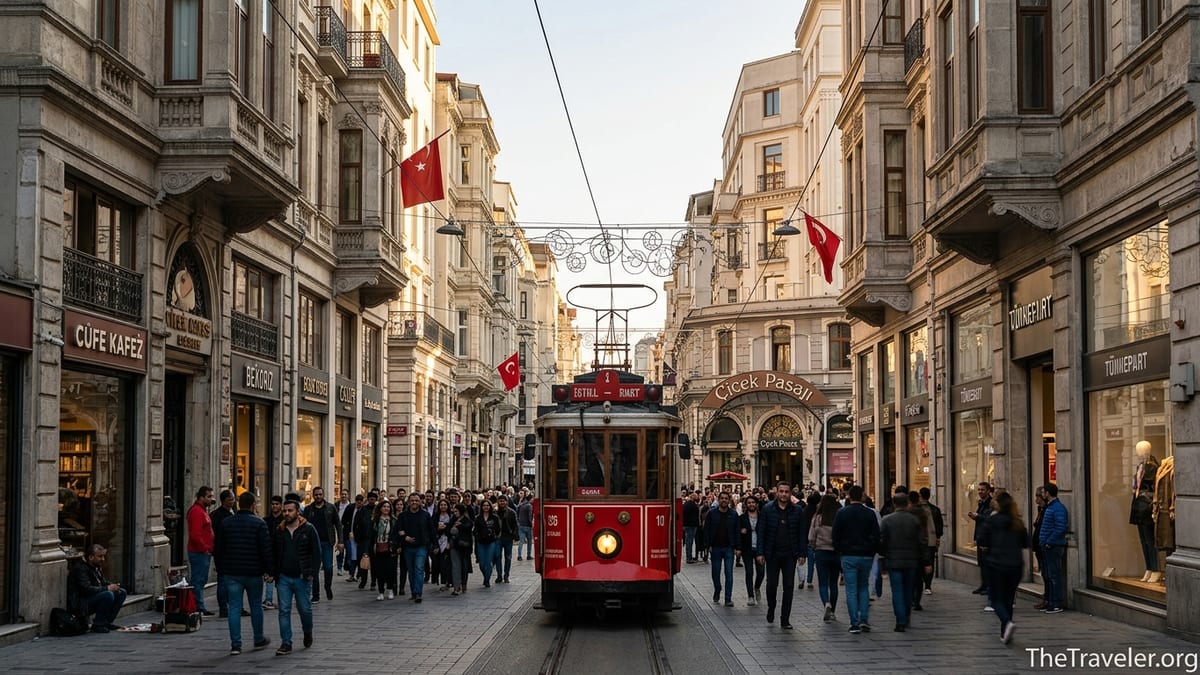
İstiklal Avenue is the Istanbul many visitors imagine before they land: a river of people flowing between 19th century facades, a red tram ringing its bell, churches and passages tucked behind shopfronts, and a downhill walk that runs from modern Taksim Square to the medieval lanes around Galata Tower. This guide takes you step by step along that 1.4 kilometer stretch, with concrete suggestions on what to see, where to pause, and how to time your visit so the crowds feel exciting rather than exhausting.
Get the latest updates straight to your inbox!
Orientation: From Taksim Square Down to Galata
İstiklal Avenue is a pedestrian street in Istanbul’s Beyoğlu district, running roughly 1.4 kilometers between Taksim Square at the top and Tünel Square at the bottom, just above Galata. Walking from Taksim to Galata is slightly downhill almost the entire way, which is why many locals recommend starting at Taksim and letting gravity carry you toward the tower district rather than doing the climb in reverse. Without stops the walk takes about 25 minutes, but most travelers comfortably stretch it into three or four hours with coffee breaks, side-street detours, and a few visits inside churches or passages.
At the upper end, Taksim Square itself is a modern transport hub and symbolic gathering point, anchored by the Republic Monument in the middle and flanked by the Atatürk Cultural Center and the entrance to the M2 metro. This is where you will likely emerge if you arrive by metro from Sultanahmet or by airport bus from Istanbul Airport. The nostalgic tram begins its run here and clanks southward down İstiklal, roughly tracing your walking route. At the lower end, Tünel Square sits by the 19th century Tünel funicular, which drops you in a minute or two down to Karaköy; from there it is an easy 10 minute uphill wander through narrow streets to Galata Tower.
Although the official street ends at Tünel rather than at the tower itself, in practice most visitors treat the walk as a continuous corridor: Taksim to Tünel along İstiklal, then through the Galata quarter to the base of Galata Tower for panoramic views. Plan your timing with that in mind. For example, you might set off from Taksim around 4 pm, arrive in Galata around sunset, and then finish with a tower climb and dinner in Karaköy or back up in Beyoğlu.
Because İstiklal is pedestrianized, much of the practical orientation is about finding the right side streets. Parallel to the avenue on the west side runs Meşrutiyet Avenue, a slightly quieter street where you find the Pera Museum and several consulates. To the east, downhill lanes drop toward Cihangir and the Bosphorus. When the crowds feel intense, it can be a relief to step one block away and then rejoin the main artery a few hundred meters later.
The Historic Tram and How to Use It
The red nostalgic tram that rattles along İstiklal Avenue is one of Istanbul’s postcard images. Reintroduced in the early 1990s as a heritage line, it connects Taksim Square and Tünel over roughly twenty minutes, with a passing loop around the midpoint near Galatasaray Square. The cars themselves are compact wooden trams decorated in cream and red, usually packed with a mix of locals commuting short hops and visitors taking photos out of the open windows.
For practical purposes, think of the tram as a slow scenic ride rather than a way to save time. It often moves at walking pace because of the crowds and frequent stops. Still, it can be a fun break, especially if you have already walked one direction. In summer 2026, a single ride on Istanbul’s public transport system typically costs the equivalent of only a couple of US dollars or less when paid with an Istanbulkart, so you can board the tram with the same contactless transport card you would use on the metro or ferries. Validate your card at the small reader by the entrance and hold on tightly; the starts and stops can be abrupt.
If you want the classic tram photo with fewer people in the frame, your best chance is early on a weekday morning between about 8 and 10 am, when commuters are spread across the city and day-trippers have not yet filled İstiklal. By late afternoon and into the evening the tram is often surrounded by selfie-takers and children trying to hang off the back platform, which makes for energetic street scenes but a less restful ride. Do not attempt to ride on the outside of the tram yourself; it is both unsafe and discouraged by staff, even though you may see teenagers doing it.
One useful trick is to walk most of the route and then hop on the tram for only one or two stops at the end when your legs are tired. For instance, after exploring the passages around Galatasaray Square you might ride the tram from there back up to Taksim or down to Tünel, using the journey as a moving vantage point to watch the architecture and shopfronts glide by from slightly above eye level.
Landmarks, Churches, and Passages Along the Way
İstiklal’s charm lies not only in the avenue itself but in what hides along its edges. As you leave Taksim heading south, one of the first major religious landmarks is the Greek Orthodox Church of Hagia Triada, with its two bell towers and large dome set just off the square. A little further down, several Roman Catholic churches sit directly on the avenue, including Santa Maria Draperis and the prominent red-brick Saint Anthony of Padua, which is the largest Catholic church in Istanbul. Its courtyard, often dotted with visitors taking photos of the neo-Gothic facade, offers a surprising pocket of calm away from the noise of the crowds.
Scattered between these churches are the consular-era buildings and late Ottoman apartment blocks that gave İstiklal its 19th century nickname, the Grande Rue de Péra. Look up above today’s shop signs and you will see carved stone balconies, French and Italian inscriptions, and elaborate cornices. Some of these buildings house language institutes or cultural centers from countries such as France, Germany, and Italy, which occasionally host exhibitions open to the public for free or for a small entry fee.
The passages, or pasajlar, are another signature feature. One of the most famous is Çiçek Pasajı, the Flower Passage, a covered arcade dating from the 1870s with a glass roof, marble floors, and a row of meyhanes serving seafood and mezze. Even if you do not sit down to eat, it is worth strolling through to admire the architecture. Nearby, the Balık Pazarı fish market spills into the narrow lanes with stalls selling fresh fish, mussels stuffed with spiced rice, and small lokanta-style eateries. Other historic passages such as Hazzopulo Pasajı or Atlas Pasajı mix small boutiques, tea houses, and independent cinemas behind relatively anonymous entrances off the main street.
Because the signage is often subtle, it is easy to walk past these spaces if you are just following the tram tracks. Make a point of ducking into any doorway labeled pasaj and spending a few minutes exploring the interior. For a short, atmospheric detour, you might step from the noise of İstiklal into Çiçek Pasajı for a glass of Turkish tea, then emerge on the far side into the fish market and rejoin the avenue a block later, having experienced a cross section of Beyoğlu’s late Ottoman social life.
Shops, Cafes, and Street Food: Where to Pause
İstiklal Avenue is lined with an eclectic mix of international brands, Turkish chains, and long-running independent shops. You will see familiar names for clothing and cosmetics occupying the ground floors of historic buildings, but woven between them are local bookstores, music shops, and dessert parlors. Around the halfway point near Galatasaray Square, look for classic pastry shops that have been operating for decades, where you can try baklava, sütlaç rice pudding, or cream-filled profiteroles for just a few dollars. These traditional places typically display their prices clearly in the window and offer counter service as well as small upstairs seating areas.
Cafes are everywhere, but they vary widely in style. For a quick, authentic Turkish coffee, many visitors seek out tiny spots that specialize only in coffee, where a single demitasse cup might cost the equivalent of a couple of US dollars and is served with a glass of water and sometimes a small piece of Turkish delight. Around İstiklal and in the nearby Cihangir and Çukurcuma neighborhoods, there is also a strong third-wave coffee scene with espresso-based drinks, flat whites, and pour-overs priced similarly to major European cities. These are good places to regroup, check maps, and watch the rhythm of the street from a quieter side window.
Street food is part of the experience. Simit sellers wheel red carts stacked with sesame-crusted bread rings, typically costing well under a dollar and perfect for snacking as you walk. You will also find vendors selling roasted chestnuts in cooler months and corn on the cob in summer. In the lanes around the Balık Pazarı, simple fish sandwiches, fried mussels, and kokoreç (seasoned offal grilled on a spit) cater to more adventurous eaters. Always check that food looks freshly prepared, and consider choosing stands with a steady flow of local customers, which is usually a reliable sign of quality and turnover.
For something more leisurely, the meyhanes tucked into side streets such as Nevizade Sokak serve long evenings of rakı and shared meze plates. Prices vary widely, but as a ballpark two people sharing several meze, a main course, and a bottle of rakı in a mid-range place may spend what you might pay for a nice dinner out in a major European city. To avoid surprises, it is wise to ask to see the menu first and confirm whether items like meze trays and bread are billed per portion or per person.
Side Streets, Street Performers, and Atmosphere
The constant movement on İstiklal is part of its appeal. At almost any hour from late morning to after midnight, you will find buskers playing anything from Turkish folk songs to Western pop, small groups of dancers drawing a circle of onlookers, and the hum of conversations bouncing between tram rails and balcony railings. On weekends and summer evenings, live music from bars on upper floors spills onto the street, creating overlapping soundtracks as you walk. Tipping street performers with loose change is appreciated but not obligatory; use your judgment based on how long you stay to listen.
Some of the most interesting experiences lie just off the main corridor. Nevizade Sokak, a narrow lane near Çiçek Pasajı, is lined with tightly packed meyhanes whose outdoor tables almost touch across the alley. A block or two away, the streets of Çukurcuma are filled with antique shops and design studios, rewarding travelers who have the time to loop away from İstiklal and then climb back. Another well-known side area is Cezayir Street, sometimes nicknamed the French Street, where colored staircases and cafes create another pocket of nightlife environment. None of these require special planning; you can simply follow whichever small street looks lively and still easily return to the main avenue.
Crowds are a defining feature. On busy Saturday nights it can feel like a slow-moving river, with shoulder-to-shoulder pedestrians, families pushing strollers, and vendors weaving carts between them. Many visitors describe this density as part of the fascination, but if you are sensitive to noise or tight spaces, consider timing your walk for a quieter period. Pickpocketing is not rampant but is possible in any packed urban environment, so keep bags zipped, wallets in front pockets, and phones securely in hand when taking photos.
The atmosphere shifts quickly block to block. Around Taksim there is a slightly more modern, commercial feel with big-name shops and fast-food chains. Closer to Galatasaray and the passages, the mood turns more historic and bohemian, with older facades and independent retailers. Near Tünel, the crowds thin a little and the lanes toward Galata become narrower and more intimate, lined with small boutiques, jazz bars, and boutiques selling locally designed clothing or ceramics.
Dealing With Crowds and Choosing the Best Time to Visit
Timing your walk can make the difference between a thrilling promenade and an overwhelming slog. In general, late afternoon into evening offers the fullest experience of İstiklal’s energy, with shops open, street performers active, and neon signs beginning to glow. This is when locals finish work and join visitors for shopping, dining, and nightlife, so expect the thickest crowds between roughly 6 pm and 10 pm, especially on Fridays and Saturdays.
If you prefer to see the architecture and passages without shoulder-to-shoulder traffic, aim for a weekday morning. Between about 9 am and noon many shops are already open, cafes are serving breakfast, and the tram is running, but the pedestrian volume is much lower. This can be a good time to photograph facades like Saint Anthony of Padua’s church or the upper stories of consular buildings without constant interruptions. It is also kinder on those traveling with children in strollers or with mobility concerns.
Season also matters. Spring from April to early June and autumn from September to early November typically offer mild temperatures that make long walks comfortable. In high summer, midday heat and humidity can be intense, particularly on an exposed avenue with little shade, so plan your main İstiklal walk for early evening or after dark if visiting in July or August. Winter can still be enjoyable, as the street rarely shuts down, but be prepared for rain, occasional wind sweeping up from the Golden Horn, and slippery pavements.
During large public events, holidays, or demonstrations, sections of Taksim and İstiklal may be extremely crowded or temporarily restricted, and security presence more visible. While such days can give a powerful sense of the city’s civic life, they are not ideal for a relaxed sightseeing walk. If you arrive in Istanbul during a national holiday, check with your accommodation or a local tourism office to understand what is planned in Taksim and adjust your schedule if you want a calmer experience.
Practical Tips for Walking From Taksim to Galata
Logistically, the route is simple, but a few practical details make the walk more pleasant. Footwear is crucial: although İstiklal itself is relatively smooth, much of the surrounding Beyoğlu area is built on slopes and cobbled streets. Choose comfortable walking shoes with good grip rather than sandals or heels, especially if you intend to explore side streets down toward Cihangir or Galata. In wet weather, worn stone steps in the older lanes can become slick.
Navigation is straightforward if you remember that Taksim is uphill and Tünel and Galata are downhill. From Taksim Square, face away from the Republic Monument toward the start of İstiklal and simply follow the tram tracks. You will pass major landmarks like Galatasaray High School, easily recognized by its large gate, before eventually reaching Tünel Square with its small tram terminus and the entrance to the funicular down to Karaköy. From there, if you want to reach Galata Tower on foot, head downhill for about 10 minutes along any of the main streets signposted for Galata, and then uphill again for a brief climb to the tower base.
Public transport connections at both ends help you integrate the walk into a wider itinerary. At the top, Taksim is served by the M2 metro line and a funicular that runs down to Kabataş on the Bosphorus, where ferries depart for places like Üsküdar and Kadıköy. At the bottom, the historic Tünel funicular provides a quick link to Karaköy, where you can connect to the T1 tram line toward Sultanahmet and the Grand Bazaar. This makes it easy, for example, to spend the morning in the Old City, ride the tram and funicular to Tünel, walk up through İstiklal to Taksim in the afternoon, and then take the metro back to your hotel.
Budget-wise, the walk itself is free, but costs accumulate through snacks, tram rides, and entrance fees. Galata Tower, if you choose to continue your walk there, usually charges a moderate entry fee that is comparable to other major city viewpoints worldwide. Coffee, street food, and small museum visits along the way can be as inexpensive or as indulgent as you like. Many visitors comfortably enjoy an afternoon on İstiklal and around Galata for a total of what they might spend on a single nice restaurant meal back home, provided they keep an eye on prices and avoid overly touristy establishments that push unsolicited items onto the table.
FAQ
Q1. How long does it take to walk İstiklal Avenue from Taksim to Galata?
Most travelers spend about three hours walking from Taksim Square to Tünel and onward to Galata Tower, including stops for coffee, photos, and brief visits inside churches or passages. Walking non-stop along the avenue itself takes around 25 minutes.
Q2. Is İstiklal Avenue safe to walk at night?
İstiklal Avenue and the surrounding Beyoğlu area are generally busy and feel reasonably safe into the late evening, especially on weekends. Normal big-city precautions apply: keep valuables secure, avoid very dark side alleys if you are alone, and use licensed taxis or public transport to return to your accommodation after midnight.
Q3. What is the best time of day to visit İstiklal Avenue?
Late afternoon into the evening offers the fullest atmosphere, with shops open, street performers active, and cafes buzzing. For fewer crowds and easier photography, a weekday morning between about 9 am and noon is ideal.
Q4. How much does the nostalgic tram cost and is it worth riding?
The nostalgic tram uses the same ticketing system as Istanbul’s other public transport, typically costing the equivalent of only a couple of US dollars or less per ride with an Istanbulkart. It is slower than walking but worthwhile for the historic experience and elevated view of the street.
Q5. Can I visit churches along İstiklal Avenue?
Yes. Notable churches such as Saint Anthony of Padua, Santa Maria Draperis, and Hagia Triada are usually open outside service times and welcome quiet visitors. Dress modestly, keep voices low, and check any posted guidelines at the entrance.
Q6. Are there good places to eat near İstiklal Avenue?
There are many. You will find everything from simit and street corn carts to seafood meyhanes in Çiçek Pasajı and Nevizade, traditional pastry shops near Galatasaray, and modern cafes and bistros on nearby side streets in Cihangir and Çukurcuma.
Q7. How do I avoid the worst of the crowds on İstiklal?
Visit on a weekday morning or early afternoon rather than a Friday or Saturday evening, and use quieter parallel streets like Meşrutiyet Avenue to bypass especially dense stretches. Ducking into passages and side lanes also gives you intermittent breaks from the main flow.
Q8. Is İstiklal Avenue suitable for families with children?
Yes, but keep a close eye on children during peak hours, as the crowds can be very dense and the tram moves through the middle of the street. Many families enjoy short tram rides, ice cream stops, and watching buskers together, especially earlier in the day.
Q9. What should I wear for a day on İstiklal and in Galata?
Comfortable walking shoes are essential, as surfaces range from smooth paving on İstiklal to uneven cobblestones in Galata. Dress for the season in layers, and carry a light jacket in spring and autumn when evenings can cool quickly.
Q10. Can I combine İstiklal Avenue with other major sights in one day?
Yes. A common plan is to visit the Old City’s highlights in the morning, take the tram and funicular to Tünel after lunch, walk up İstiklal to Taksim over the afternoon, and finish with dinner in Beyoğlu or a sunset visit to Galata Tower before returning to your hotel.