


Perched on a hillside between Taksim Square and the Bosphorus, Cihangir feels like a self-contained village in the middle of Istanbul. With its steep cobbled streets, terrace cafes, resident street cats and a creative, largely local crowd sprinkled with expatriates, it is the side of Beyoğlu many visitors miss while marching down İstiklal Avenue. For travelers who prefer neighborhood life to big sights, Cihangir can be both a perfect base and an easy day-time wander.
Get the latest updates straight to your inbox!
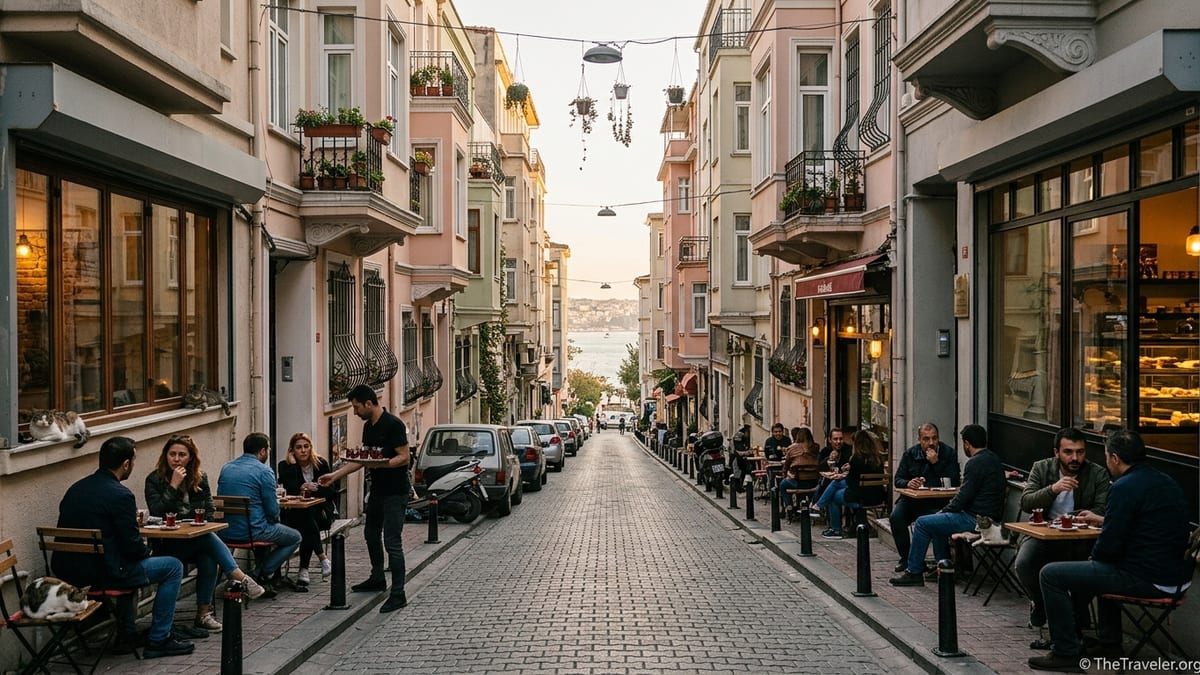
The Feel of Cihangir: Bohemian Hilltop Village in the City
Cihangir is officially part of Beyoğlu, yet its mood is noticeably calmer than nearby Taksim or İstiklal. The streets are narrow, often one-way and cobbled, lined with early twentieth-century apartment buildings with wrought-iron balconies and peeling pastel facades. You are constantly aware of the slope: many streets run straight down towards the Bosphorus, which means sudden vantage points opening between buildings where the water, container ships and Asian shorelines appear at the end of the hill.
This is one of Istanbul’s most talked-about “bohemian” quarters, and in practice that translates to a high density of independent cafes, small bars, yoga studios, wine shops and vintage stores. Many are owner-run, and regulars tend to be a mix of locals in creative industries, graduate students, working-from-laptop freelancers and long-term foreign residents who have chosen Cihangir over more touristic districts. English is widely understood, especially around the main streets, but the corner groceries, tailors and barbers still feel very neighborhood-first.
Traffic is present but rarely overwhelming, partly because the steep inclines discourage through-traffic. Instead, the soundtrack is the clink of tea glasses on cafe terraces, the rattle of delivery scooters and the call of seagulls circling between Cihangir Hill and the Bosphorus. In the evening, particularly on warm nights between May and October, the sidewalks and steps turn into informal living rooms, with groups nursing tea or beer on low stools outside tiny venues.
For visitors, the appeal of Cihangir lies less in must-see “sights” and more in its everyday rhythm. It is the kind of place where a morning plan might be nothing more than a slow coffee, a stroll to the park, an hour among antique shops in nearby Çukurcuma and a sunset at the mosque terrace.
Cafes, Breakfasts and Everyday Eating
Cihangir’s cafe scene is dense enough that you can easily spend a day doing little more than moving from breakfast to coffee to late-afternoon cake. On and around Akarsu Yokuşu and Susam streets, you will find long-established neighborhood fixtures such as Journey, which serves all-day breakfast dishes, salads and healthy bowls in a bright space that fills with both locals and digital nomads, and Van Kahvaltı Evi, a hugely popular Kurdish-run breakfast spot known for its spread of cheeses, olives, menemen and lashings of honey and clotted cream. Expect to pay a moderate per-person amount for a shared breakfast platter and tea, which counts as very good value for the amount of food.
For specialty coffee, Cihangir helped kick-start Istanbul’s third-wave movement. Kronotrop, which originally opened here, remains a go-to for single-origin pour-overs and flat whites, often with a laptop crowd at the small outdoor tables. Newer arrivals like Norm Coffee attract coffee-focused locals and baristas from other parts of the city, with a rotating selection of beans and a short pastry menu. A simple espresso or Americano will usually be priced slightly above the city average, reflecting the neighborhood’s more international clientele, but still affordable by Western European standards.
If you want a more classic Turkish cafe experience, places such as Savoy Pastanesi, an old-school pastry shop, and Tea or Coffee on a side street towards the Bosphorus, offer strong Turkish tea, simple filtered coffee and racks of cakes, poğaça and simit. At Savoy, locals buy cakes by the kilo for celebrations, while visitors might simply sit at one of the small tables outside with a slice of chocolate cake and a tea for just a few euros’ worth of lira. This mix of new-wave coffee bars and old-school patisseries is part of what makes Cihangir feel layered rather than fully gentrified.
Lunch and dinner options lean towards modern Turkish and Mediterranean. Several cafes along Akarsu Yokuşu turn into bistro-style spots in the evening, serving meze plates, grilled fish and vegetarian mains along with wine or rakı. Prices are generally mid-range: more than a working-class lokanta but below fine dining. If your budget is tight, small esnaf lokantası places just off the main streets still serve trays of stews, beans and rice at lunchtime where a filling plate and a soft drink remain relatively inexpensive.
Cats, Parks and Everyday Street Life
Cihangir is one of the Istanbul neighborhoods most associated with cats, and that reputation is deserved. Food bowls, cardboard boxes and improvised wooden shelters appear on nearly every block, sometimes formally placed by the municipality, sometimes organized by local volunteers. It is common to see residents emerging from ground-floor apartments with bags of dry food at dusk, tipping it into communal bowls before exchanging gossip with neighbors. Visitors who like cats will find plenty of friendly but independent felines lounging on car roofs, stairways and cafe chairs.
The area has two key green spaces. Cihangir Park sits slightly above the core cafe streets, a compact hilltop park with a playground, benches and one of the best everyday Bosphorus views in the area. In the late afternoon, families gather at the swings while teenagers share sunflower seeds and music on the steps. Down the hill, towards the water, the terrace around Cihangir Mosque offers another panorama, especially at sunset when ships in the Bosphorus glow in the low light and the domes and minarets of the Old City line the horizon.
Because sidewalks are narrow, much of everyday life spills into the street. Greengrocers stack crates of tomatoes and herbs directly on the pavement, and corner groceries known as bakkal display boxes of eggs, jars of pickles and water crates outside their doors. Street dogs coexist more quietly alongside the cats, generally well-fed and tagged by the municipality. For travelers, this means that a simple walk to buy water can feel like a small theatrical scene, with greetings in Turkish, a cat weaving around your ankles and the distant horn of a ferry on the Bosphorus below.
Evenings are sociable but rarely chaotic. While central Beyoğlu’s bar streets might feel overwhelming on weekend nights, Cihangir’s venues tend to be smaller, music is usually conversational rather than club-level, and closing times, though late, are shaped by the fact that most buildings are residential. It is common to see actors, writers and journalists sharing a bottle of wine at compact tables or groups of friends sitting on steps with takeaway beers from the corner shop, keeping volumes relatively low out of respect for neighbors.
Steep Streets, Stairs and Practical Mobility
The beauty of Cihangir’s sloping streets and unexpected viewpoints comes with a practical cost: getting around requires a tolerance for hills and stairs. Almost every route within the neighborhood involves either a steep climb or descent, and many lanes are uneven cobblestones. For fit walkers, this simply adds character, but for travelers with mobility issues, pushing strollers or carrying heavy luggage, it can be a serious consideration.
From Taksim Square, Cihangir is an eight to twelve minute walk, but the streets between can involve tight, slanting sidewalks and regular traffic. Many residents instead use short taxi rides, especially at night or when carrying shopping. Rides between Cihangir and Taksim, Karaköy or Galata remain relatively inexpensive when ordered via local apps or hailed from main streets, although travel times can fluctuate with traffic, particularly in the early evening rush.
To reach the tram and ferries along the Bosphorus at Kabataş or Fındıklı, you can walk downhill in around ten to fifteen minutes. Coming back up is the challenge. Some visitors choose to ride the F1 funicular between Kabataş and Taksim and then walk the gentler last section into Cihangir rather than tackling the direct hill. Others simply factor short taxis into their daily budget. For anyone traveling with elderly relatives, bad knees or heavy luggage, it is usually better to stay closer to Taksim’s flatter streets, in Karaköy by the waterfront or in the Old City rather than in the steeper interior of Cihangir.
Inside the neighborhood, many apartment buildings predate modern elevator requirements. Boutique hotels and newer serviced apartments usually have lifts, but older Airbnb-style rentals on upper floors may only be reachable by narrow staircases. When booking, it is worth checking explicitly whether there is an elevator, how many floors are involved and whether the entrance is on a slope. Guests who underestimate the hills sometimes find themselves avoiding going back to the room during the day, simply to skip extra climbs.
Antique Shops, the Museum of Innocence and Cultural Corners
One of Cihangir’s pleasures is how quickly it flows into neighboring Çukurcuma, a district famous for antique and vintage shops. From the cafe cluster around Akarsu Yokuşu, you can walk down in ten minutes to Çukurcuma Caddesi, where window displays are packed with Ottoman coffee sets, mid-century radios, chandeliers, postcards and furniture. Prices range from a few euros for a battered enamel mug to serious sums for restored pieces. It is less chaotic than the Grand Bazaar and better suited to slow browsing.
In the middle of Çukurcuma sits the Museum of Innocence, created by Nobel Prize winning author Orhan Pamuk as a physical companion to his novel of the same name. The museum occupies a narrow corner building and presents Istanbul life from the 1970s onwards through vitrines of objects arranged chapter by chapter: hair clips, lottery tickets, cigarette butts and dresses allegedly belonging to the novel’s characters. Opening hours and ticket prices can vary slightly by season, but visitors should expect to pay a modest entry fee comparable to other small European museums, with reduced rates for students and museum card holders.
Even those who have not read the novel often find the museum’s atmosphere moving, and it pairs well with the surrounding streets, many of which still retain the kind of low-rise housing and small workshops described in the book. A typical afternoon might involve coffee in Cihangir, a slow descent via antique shops, a visit to the Museum of Innocence, then a climb back up, stopping for a drink on one of the shady corners that connect Çukurcuma and Cihangir.
Elsewhere in the neighborhood, small galleries and studios come and go, often occupying ground-floor spaces of residential blocks. Exhibition openings, literary readings and small concerts are typically announced via posters on cafe notice boards or on social media rather than big signs, reinforcing the sense that Cihangir’s cultural life is intimate and word-of-mouth rather than heavily touristed.
Nightlife, Nearby Beyoğlu and Getting Home Late
Cihangir itself is not a major nightlife hub in the sense of large clubs or loud bar streets, but it is perfectly placed between some of Istanbul’s liveliest going-out areas. A ten to fifteen minute walk or short taxi ride takes you to Asmalımescit, Nevizade and other parts of Beyoğlu where traditional meyhanes, live music venues and contemporary cocktail bars crowd together. Travelers often choose to start the evening with dinner or drinks in Cihangir, then head up towards İstiklal for a concert or club before returning to the quieter streets to sleep.
Within Cihangir, most bars are small, low-key and mixed in with residential buildings. Wine bars on side streets pour Turkish and international bottles by the glass, while casual pubs draw a mix of expats and locals for quiz nights or live acoustic sets. A few places, especially near the tram route down the hill, lean more student-heavy and busy at weekends, but there are no continuous rows of bars blasting music late into the night, which makes the area popular with light sleepers who still want to be close to Beyoğlu’s energy.
Getting home late is usually straightforward. Taxis are easy to find on main streets, and Cihangir’s reputation among Istanbul residents is of a safe, familiar residential quarter rather than a risky nightlife zone. As always in big cities, standard precautions apply: check the taxi meter, keep valuables close and favor better-lit streets after midnight. Many visitors report feeling more comfortable walking back through Cihangir at night than around the busier, more tourist-heavy streets around Taksim or the lower end of İstiklal.
For those who prefer alternative night plans, simply picking up takeaway food, climbing to Cihangir Park or the mosque terrace and watching ferries move along the Bosphorus with a cup of tea can be just as memorable as a bar crawl. On summer evenings, these spaces fill with local groups listening to music quietly from portable speakers, families sharing snacks and solo visitors reading on the benches.
Is Cihangir a Good Place to Stay?
Whether Cihangir is the right base for your trip depends on your priorities. If you value a neighborhood feel, independent cafes and an everyday rhythm over immediate access to the major monuments, it can be an excellent choice. The area is especially popular with repeat visitors to Istanbul, digital nomads staying for a few weeks and couples who plan to spend at least half their time exploring Beyoğlu, Galata, Karaköy and Kadıköy rather than the Old City alone.
Accommodation ranges from design-led boutique hotels and serviced apartments to older rental flats. Properties such as Witt Istanbul Suites and several smaller hotels near Cihangir Mosque regularly attract guests who specifically want a stylish, residential environment. Prices reflect both the central location and the neighborhood’s popularity with foreigners, often sitting just below comparable suites in more upscale districts like Nişantaşı but above budget guesthouses in Sultanahmet. For longer stays, monthly rentals in Cihangir are among the higher in Istanbul for older stock, particularly for renovated, fully furnished apartments.
For a first-time, short visit focused on classic sights such as Hagia Sophia, the Blue Mosque and the Grand Bazaar, staying in Sultanahmet or near the tram in Karaköy may save time and energy, especially given Cihangir’s hills. Many travelers solve this by splitting their stay: a few nights in the Old City for early starts at major landmarks, then a few nights in Cihangir or nearby Galata to experience daily Istanbul life. Those planning frequent nightlife, shopping and dining in Beyoğlu often find Cihangir more relaxing than sleeping directly on İstiklal Avenue.
Security perceptions are generally positive. Cihangir is considered safe by Istanbul standards, with a stable local population and plenty of people on the streets at most hours. As in any inner-city area, there can be occasional late-night noise, and some streets feel a little worn at the edges rather than polished, but for most visitors this reads as lived-in rather than threatening. Choosing a room facing an inner courtyard or side street can reduce noise from cafes and scooters if you are a light sleeper.
Practical Tips for Enjoying the Neighborhood
Comfortable footwear is essential in Cihangir. Even short distances add up over uneven cobbles and staircases, particularly in summer heat. Bring shoes with decent grip for rainy days; the combination of steep inclines and smooth surfaces can get slippery in winter. If you are visiting between December and March, be aware that icy mornings on the slopes are possible, though snow rarely sticks for long.
Because Cihangir is primarily residential, many shops keep local hours. Greengrocers, bakeries and bakkals open early, but some cafes and restaurants take a slow start on weekday mornings and may close earlier on quiet nights. Reservations are usually not necessary for most cafes, though popular brunch spots on weekends can have short waits. For dinner at more in-demand bistros, especially on Friday and Saturday nights, calling ahead on the day or sending a message via social media is wise.
Prices in Cihangir are generally a bit higher than in more working-class neighborhoods, but still good value compared with Western Europe or North America. A specialty coffee, breakfast for two or a glass of wine will likely cost less than in comparable districts of cities like Paris or London. Tipping follows standard Istanbul practice: rounding up the bill or leaving around ten percent in sit-down restaurants is appreciated but not always expected in cafes.
Finally, keep an eye on the small social rituals that shape neighborhood life. Returning to the same cafe each morning quickly leads to recognition; after a few days, staff may remember your order. Greeting shopkeepers with a simple “merhaba” and saying “kolay gelsin” as you pass people at work is a small effort that often opens doors to short conversations and local recommendations, turning Cihangir from a pretty backdrop into a place that feels temporarily like home.
FAQ
Q1. Is Cihangir safe for solo travelers at night?
Cihangir is widely regarded as one of the safer central neighborhoods in Istanbul, with many residents out late and a lived-in, local feel. Normal big-city precautions still apply, but most solo travelers, including women, report feeling comfortable walking main streets at night.
Q2. How far is Cihangir from Istanbul’s main tourist sights?
By public transport, you can usually reach Sultanahmet in around thirty to forty minutes, combining a downhill walk or funicular ride to the tram with a tram ride across the bridge. Taxis can be faster outside rush hour but slower during peak traffic. It is not a walkable distance for most visitors due to hills and time.
Q3. Is Cihangir suitable for travelers with limited mobility?
The steep, cobbled streets and frequent stairs make Cihangir challenging for travelers with limited mobility, elderly visitors or families pushing strollers. In such cases, staying closer to flatter areas like Karaköy or the Old City and visiting Cihangir for a few hours by taxi is often more comfortable.
Q4. What kind of accommodation is available in Cihangir?
You will find boutique hotels, serviced apartments and individual holiday rentals in older residential buildings. Many cater to medium and higher budgets, with stylish interiors and good Wi-Fi. Budget hostels are less common here than around Taksim or Sultanahmet.
Q5. Are there good breakfast and coffee options in Cihangir?
Yes. Places like Van Kahvaltı Evi, Journey, Kronotrop, Norm Coffee and Savoy Pastanesi are popular for hearty Turkish breakfasts, specialty coffee and pastries. Weekends can be busiest, especially mid-morning.
Q6. How do I get around from Cihangir without using taxis all the time?
You can walk to Taksim Square for the M2 metro and F1 funicular, or head downhill to Kabataş or Fındıklı for trams and ferries. However, expect at least one steep stretch on most routes. Many visitors mix walking, public transport and short taxi hops depending on the time of day.
Q7. Is Cihangir noisy at night?
Cihangir is quieter than the busier bar streets of Beyoğlu, but there is still typical city noise from scooters, cafes and people on the streets, especially on weekends. Choosing a room facing an inner courtyard or a quieter side street can significantly reduce noise.
Q8. What is the best time of year to stay in Cihangir?
Late spring and early autumn, roughly May to early June and September to October, offer the most pleasant weather for climbing hills and sitting outdoors at cafes. Summer can be hot, particularly on the steep streets, while winter is cooler and wetter but still very manageable with appropriate clothing.
Q9. Is Cihangir a good base for nightlife?
Cihangir itself has relaxed bars and wine spots, and it sits within easy reach of livelier nightlife in other parts of Beyoğlu. Many visitors appreciate being able to go out in Asmalımescit or around İstiklal, then return to a quieter, more residential area to sleep.
Q10. Would you recommend Cihangir for a first visit to Istanbul?
If you prefer neighborhood life, cafes and a slower pace over being next to the big monuments, Cihangir can be an excellent choice, especially for stays of a week or more. For very short, first-time trips focused on major sights, combining a few nights in the Old City with a few nights in Cihangir gives a good balance.