


More news on this day
Passengers flying from the UAE today are seeing largely normal operations across Emirates, Etihad Airways, flydubai and Air Arabia, with live flight‑tracking data pointing to generally on‑time departures from the country’s main hubs alongside a scattering of delays on select regional and low‑cost routes.
Get the latest news straight to your inbox!
Emirates operations through Dubai reported broadly stable
Dubai International remains the UAE’s busiest departure point, and publicly available airport information indicates that scheduled services are running without widespread disruption today. The Dubai Airports live departures board is operational but has intermittently shown loading issues for individual users, so travelers are being encouraged by published guidance to verify their flight directly with their airline’s digital channels if the airport page fails to display results.
Emirates, which dominates long‑haul traffic from Dubai, is not the subject of any broad cancellation notices on major flight‑tracking and airport information platforms this morning. Available data instead points to routine, flight‑by‑flight adjustments typical of a normal operating day, such as minor shifts to departure times on some routes to Europe, North America and Asia rather than systemic disruption across the network.
For travellers departing today, the key message from publicly accessible trackers is that Emirates’ flights are, in general, operating close to schedule from Terminal 3. However, as individual sectors can still be retimed at short notice for operational reasons, passengers are advised to use the airline’s official website or mobile app to reconfirm check‑in and boarding times before setting out.
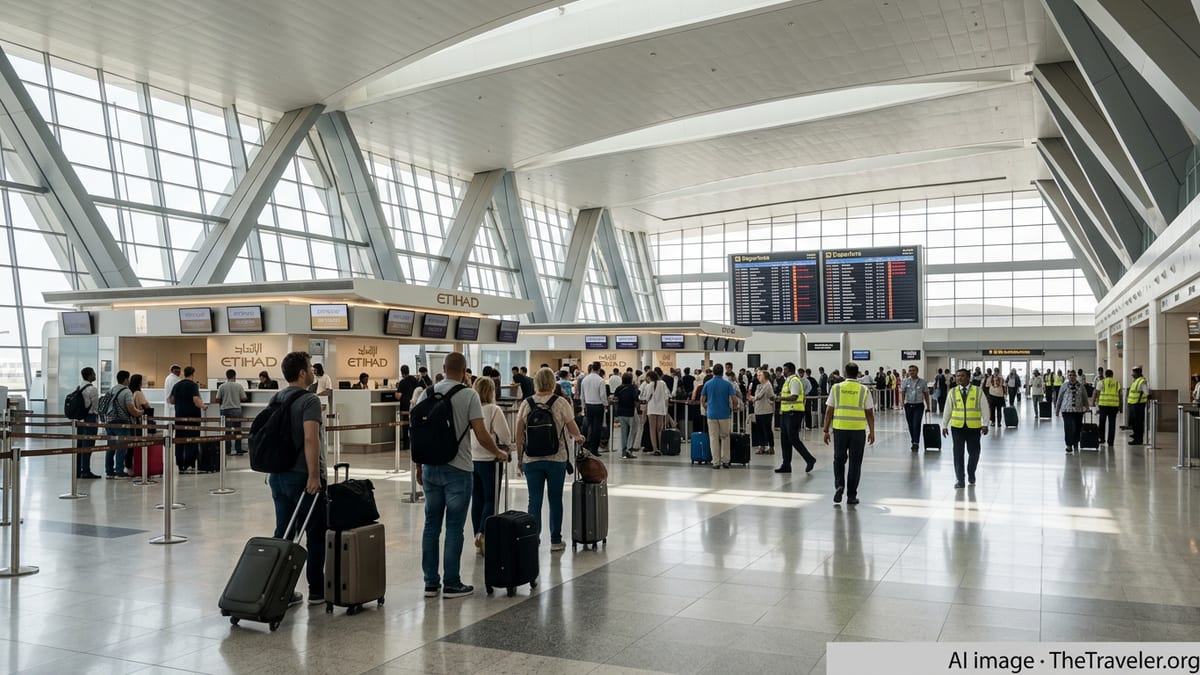
Etihad flights from Abu Dhabi show isolated delays
In Abu Dhabi, Etihad Airways’ schedule appears broadly intact, with selected services displaying modest delays rather than cancellations. For example, flight‑tracking data for EY583 from Abu Dhabi to Beirut today shows the service departing later than its planned 03:55 Gulf Standard Time slot but still operating, with an updated arrival estimate in Beirut published on live radar feeds. This pattern of operating flights with adjusted timings is echoed on other regional routes, according to real‑time trackers.
Long‑haul Etihad services from Abu Dhabi to Europe are also mostly running, with some flights flagged as slightly late. One monitoring platform lists EY65 from Abu Dhabi to London Heathrow as departing around 20 minutes behind schedule today, following a series of days in which the same rotation arrived later than originally planned. This suggests operational fine‑tuning rather than cancellations, but travellers booked on these sectors should still expect the possibility of shifted gate or boarding times.
Despite these pockets of delay, there is no clear evidence in public data this morning of a large‑scale disruption event affecting Etihad’s departures from Abu Dhabi. Nonetheless, passengers are strongly advised to consult Etihad’s own flight status tools in the hours before departure, particularly for early‑morning and overnight services which can be more vulnerable to knock‑on effects from previous rotations.
flydubai departures affected by timing changes, not mass cancellations
flydubai, which operates from Dubai International’s Terminal 2 and Al Maktoum International, is showing a similar pattern of normal operations coupled with isolated delays. Tracking information for services such as FZ755 from Dubai to Istanbul indicates that some flights are arriving later than scheduled, with today’s instance of the route recorded as “landing late” on a major radar platform. However, the flight is still operating, underlining that the issue is one of schedule slippage rather than outright cancellation.
Other flydubai sectors monitored on public tools display comparable behaviour, with departures pushed back by varying margins but remaining active. These timing changes can compress connection windows for passengers transferring in Dubai and may also affect planned onward ground transport at destination, especially on busy weekend travel dates.
Given the carrier’s focus on short and medium‑haul routes across the Middle East, South Asia and Europe, even small operational delays can quickly cascade during peak periods. Travellers flying today are therefore encouraged to keep a close eye on the latest gate information via flydubai’s app or the airline’s “manage booking” function and to arrive at the airport with additional time to accommodate possible queues and retimed boarding.
Air Arabia: Sharjah hub largely stable amid scattered delays
At Sharjah International Airport, data for Air Arabia flights illustrates a mostly stable schedule with individual examples of delay on certain regional sectors. One live flight‑tracking page for G9 155 between Riyadh and Sharjah lists today’s operation as scheduled and on time, signposting routine performance on this popular route. Another service, G9 555 from Peshawar to Sharjah, is recorded on an aviation status portal as “planned” and set to depart on schedule later this morning, with no interruption flagged at the time of the latest update.
Elsewhere in the network, some Air Arabia flights are running behind timetable rather than being cancelled outright. Trip‑based tracking for G9 801 from Kuala Lumpur to Sharjah, for example, shows the flight arriving significantly late on a previous rotation, with today’s operation again projected to reach Sharjah around two and a half hours after its scheduled arrival time. Flight history data for G9 455 from Kozhikode to Sharjah over recent days also highlights a pattern of late‑night departures leaving after their planned time but still operating and landing in the early hours.
While these cases illustrate that delays remain a factor on selected Air Arabia services, there is no indication in current public data of widespread cancellations across the Sharjah hub today. Passengers travelling on the low‑cost carrier are nevertheless advised to verify check‑in cut‑off times and boarding gates through the airline’s website or booking platform, as late‑running inbound aircraft can still prompt last‑minute schedule revisions.
What UAE passengers should do before heading to the airport
Across the country’s main hubs in Dubai, Abu Dhabi and Sharjah, the overall picture today is one of regular flight operations with a normal level of individual delays. Real‑time trackers for Emirates, Etihad, flydubai and Air Arabia point to active departures on key regional and long‑haul routes, alongside some services taking off or landing later than originally published. There are currently no broad advisories in public data indicating mass cancellations at any of the UAE’s primary airports.
However, as several examples from Etihad, flydubai and Air Arabia demonstrate, even modest timing changes can affect onward travel plans, particularly for those making tight connections or arriving at destination during overnight hours. With airport information services occasionally experiencing technical loading issues, travellers are being guided by published advice to rely primarily on their airline’s official apps, websites or customer‑communication channels for the latest gate and schedule details.
Passengers flying from the UAE today are therefore best served by checking their flight status repeatedly in the hours before departure, allowing extra time to reach the airport, and monitoring notifications from their carrier for any updates. Doing so will help ensure that routine operational adjustments across the country’s busy aviation hubs do not translate into avoidable disruption to individual travel plans.
Dubai Airports live flight status
Etihad Airways EY583 live tracking
flydubai FZ755 status and history