


More news on this day
ITA Airways is adding emergency Rome–Delhi services to help Italian nationals leave India after days of rolling flight cancellations, ground delays and airspace bottlenecks triggered widespread travel disruption across the country and on key Middle East corridors.
Get the latest news straight to your inbox!
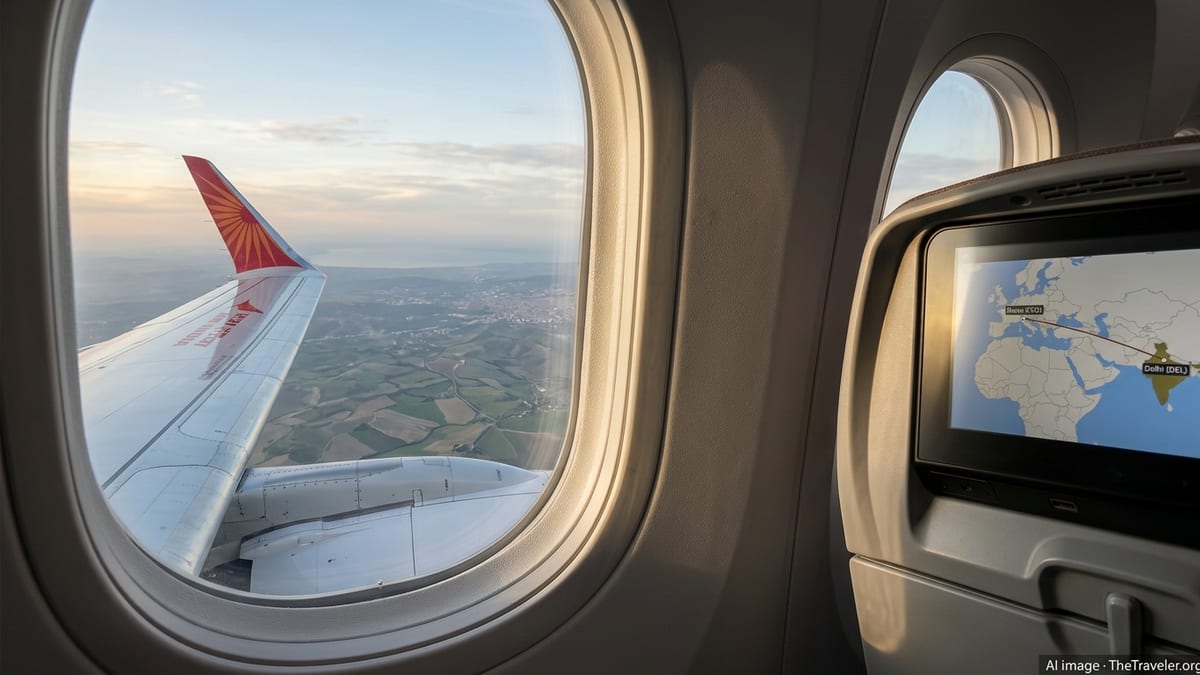
Extra Rome–Delhi Flights Activated to Clear Backlog
According to publicly available schedule data and press information, ITA Airways has scheduled additional Rome Fiumicino–Delhi services on select late‑March dates to cope with an unexpected surge in demand from passengers stranded in India. The extra rotations supplement the carrier’s existing daily link between the Italian and Indian capitals, which has been operating close to full capacity in recent weeks.
Industry reporting indicates that the extra frequencies were coordinated to coincide with peak return flows of Italian nationals and other Europe‑bound travelers who had been unable to secure seats after a wave of cancellations and missed connections across multiple airlines. The added flights are structured as round‑trip services, positioning aircraft from Rome to Delhi and then returning with stranded passengers to Italy.
Operational data shows that the Rome–Delhi sector, which typically runs overnight eastbound and daytime westbound, has been under particular pressure since disruptions in Middle Eastern airspace and several regional hub airports forced widespread rerouting. By inserting additional departures on tightly selected dates, ITA Airways is attempting to absorb the backlog of travelers who have been holding waitlisted tickets or who had previous flights canceled.
While the airline has not released passenger counts for the emergency services, booking engines and travel agency channels show limited remaining availability, suggesting that most of the extra capacity has already been snapped up by those attempting to leave India at short notice.
Conflict and Airport Bottlenecks Ripple Across Indian Routes
Travel chaos affecting Italy–India itineraries has been building since late winter, when conflict in parts of the Middle East triggered temporary airspace restrictions and capacity constraints at several connecting hubs. Publicly accessible flight tracking and aviation databases show that rerouted services have been forced onto longer trajectories, concentrating traffic on a smaller number of viable corridors between Europe and South Asia.
These pressures coincided with India’s own busy travel period and lingering effects from previous schedule disruptions among domestic carriers. Analysts note that the aftershocks of large‑scale cancellations by some Indian operators, together with labor actions and infrastructure strain at major airports, created a fragile environment in which even minor incidents could cascade into major delays.
Travelers on Italy–India routes have reported missed onward connections, involuntary overnight stays and difficulty rebooking on compatible itineraries. With Delhi serving as a critical gateway for both domestic and international connections, any disruption there tends to reverberate through the wider network, affecting passengers bound for Europe, North America and other parts of Asia.
In this context, nonstop or single‑connection options to Europe, such as ITA Airways’ Rome–Delhi service, have become especially sought after. The ability to bypass congested hubs or additional domestic legs inside India has made these flights an important lifeline for travelers attempting to exit the country during peak disruption.
Impact on Stranded Italian Nationals and Other European Travelers
Reports emerging from passenger forums, travel agencies and consular advisories describe Italian nationals and other European citizens stuck for days in India while they waited for seats to free up on westbound services. Many had itineraries that relied on smooth domestic feed into Delhi or Mumbai, only to encounter last‑minute cancellations or lengthy delays that broke their connections.
Some accounts mention travelers rebooked multiple times onto different airlines, only to see subsequent flights delayed, diverted or canceled as congestion intensified. Others describe long queues at airport service desks and conflicting information from different channels about seat availability and refund options. In several cases, travelers opted to purchase entirely new one‑way tickets at premium prices simply to secure a confirmed seat back to Europe.
For Italian citizens in particular, Rome’s status as a major European gateway has made the ITA Airways link especially valuable. Once in Fiumicino, passengers can connect onward to domestic destinations such as Milan, Venice or Naples, as well as to other European cities. The emergency flights are therefore functioning not only as repatriation services but also as the first leg in a broader return journey to homes spread across Italy and beyond.
Travel industry observers note that the situation highlights how quickly a combination of regional conflict, airspace constraints and local airport bottlenecks can leave even experienced travelers with limited options, especially when multiple carriers’ schedules are simultaneously affected.
How ITA Airways Is Reconfiguring Capacity on the India Route
Public schedule filings and airline communications show that ITA Airways has been incrementally reinforcing its India capacity for the current season. The carrier already operates a daily Rome–Delhi rotation and has announced plans to sustain a strong presence on the route into the upcoming peak travel months, with additional adjustments signaled for August to match seasonal demand.
Fleet data compiled by aviation analysts indicates that the airline is progressively transitioning its long‑haul network to newer widebody aircraft while retaining enough flexibility to deploy spare capacity on routes experiencing sudden demand spikes. The extra Rome–Delhi frequencies are understood to be operated within this flexible framework, with aircraft redeployed from less time‑sensitive sectors or through short‑term scheduling changes.
Industry commentary suggests that the decision to overlay extra flights, rather than simply upgauge individual services, reflects the need for schedule options at multiple times of day to accommodate passengers whose domestic or regional feeder flights arrive at different hours. Additional departures also make it easier to move rebooked travelers who have been scattered across several disrupted itineraries.
Looking ahead, ITA Airways’ broader strategy in Asia, which includes capacity increases on other long‑haul routes, appears to be aligned with rising demand from both leisure and visiting‑friends‑and‑relatives segments. The emergency deployment on the India sector is being interpreted by analysts as an example of how the airline may respond to future shocks in key long‑haul markets.
What Travelers Should Know About Flying Between Italy and India Now
For passengers planning to fly between Italy and India in the coming weeks, publicly available advisories from travel agents, aviation authorities and consumer groups emphasize the importance of monitoring flight status closely and allowing extra time for connections. Given the recent pattern of knock‑on delays, even services that are technically operating on schedule can be affected by crew rotation issues or late‑arriving aircraft.
Travel specialists recommend, where possible, choosing itineraries with generous minimum connection times, particularly at busy hubs within India or in the Middle East. Nonstop options between Delhi and European gateways such as Rome can reduce exposure to secondary disruptions, though demand for these flights remains elevated and last‑minute availability may be limited.
Passengers already in India are being advised through publicly circulated guidance to stay in regular contact with their airline via official apps or customer service channels, and to keep digital copies of tickets and receipts in case they need to pursue refunds or compensation later. Maintaining flexibility around travel dates and being prepared to accept rebooking via alternative European points can also improve the chances of securing a seat out of India during peak disruption periods.
As ITA Airways’ emergency Rome–Delhi flights operate over the coming days, aviation analysts will be watching closely to see whether the added capacity is sufficient to clear the backlog of stranded travelers. The carrier’s response is likely to be viewed as a test case for how mid‑sized European airlines can mobilize quickly when geopolitical events and regional operational crises collide to produce sudden surges in demand on specific long‑haul corridors.