


For a three-to-five-day hop to Rome, Paris or Barcelona, travel insurance can feel like an optional extra that airlines and booking sites push at checkout. The premiums are small compared with your flights and hotel, but the list of possible disasters is long. To decide whether cover is really worth buying, you need to separate the different risks, understand what the European Health Insurance Card does and does not cover, and look at concrete numbers for short city breaks rather than vague “peace of mind.”
Get the latest updates straight to your inbox!
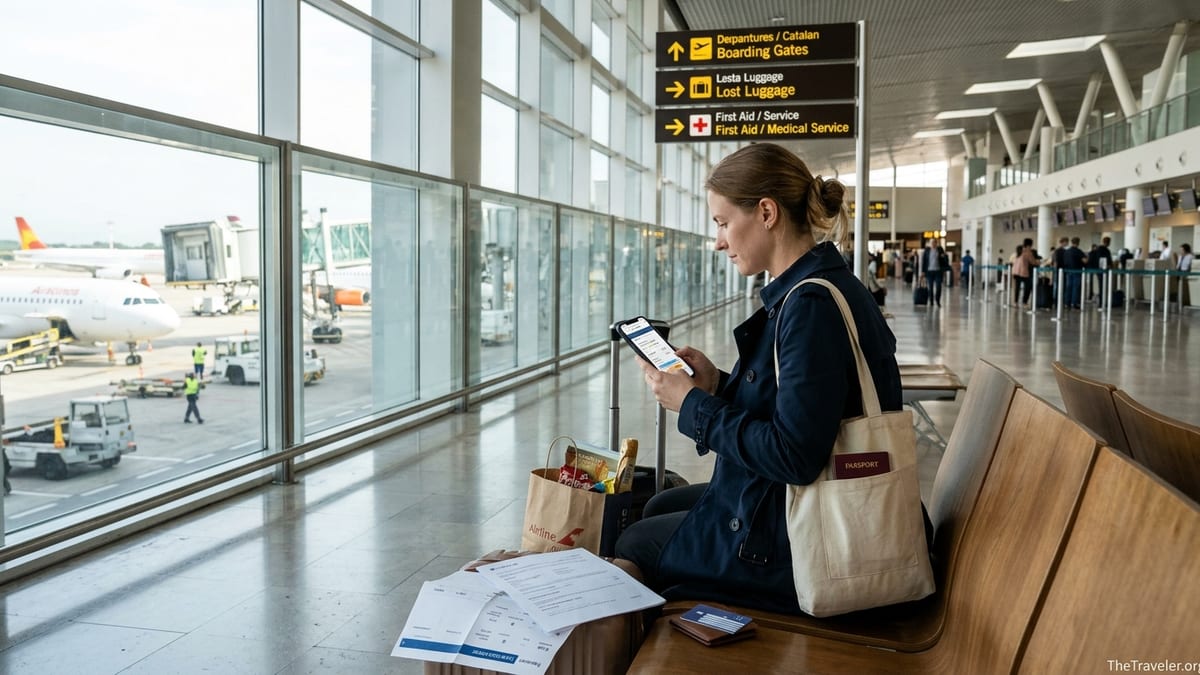
Breaking travel insurance into separate risks
Travel insurance is usually sold as a single product, but it bundles several distinct protections. For a European city break, the big one is emergency medical and medical evacuation: hospital treatment after an accident, diagnostic tests, surgery, ambulance transport and, in serious cases, repatriation to your home country. Travel medical policies for Europe often provide cover in the hundreds of thousands of euros, with medical evacuations sometimes costing more than 100,000 dollars when an air ambulance is required.
Separate from health care is trip cancellation, which reimburses prepaid, nonrefundable costs if you cannot travel for a documented covered reason such as illness, serious injury, a close family bereavement or, on some policies, jury service or home damage. Cancellation is only relevant to the money you have at risk before departure: nonrefundable flights, prepaid hotels, museum passes or tour deposits.
Trip interruption is the mid-journey cousin of cancellation. It steps in if you have to cut your break short or extend it because of an emergency. Interruption cover can refund unused portions of hotels and activities you miss, and sometimes pays for new one-way flights home. Baggage loss, damage and delay, meanwhile, addresses the very real nuisance of a suitcase that disappears in transit or arrives a day late. Finally, travel delay and missed departure benefits offer fixed cash amounts or reimburse expenses like food, airport hotels and replacement tickets when a defined delay threshold is reached, while personal liability covers you if you accidentally injure someone or damage property and are held legally responsible.
Thinking about these benefits one by one is essential. A healthy budget traveler on a refundable booking might reasonably skip cancellation but still want high medical and evacuation limits. A family with a nonrefundable apartment rental and expensive low-cost airline tickets might decide the reverse, prioritising trip cost protection alongside medical cover.
What the European Health Insurance Card really covers
For travelers who are citizens or insured residents of EU and some European Economic Area states, the European Health Insurance Card, or EHIC, is central to the calculation. The card entitles the holder to medically necessary, state-provided healthcare during a temporary stay in another EU or EEA country, as well as Switzerland, on the same terms as residents of that country. National health agencies confirm that the EHIC applies only when you receive treatment in the public system and that private hospitals or non-contracted clinics are not covered except in specific arrangements where they are part of the state scheme.
In practice, this means that if a French cardholder breaks an ankle in Barcelona and goes to a Spanish public hospital, they should receive emergency care under the same co-payment and pricing rules as a local patient. Necessary treatment for chronic conditions, such as asthma or diabetes, can also be provided during a short stay when medically required, provided it is arranged within the public system. However, the EHIC does not replace travel insurance. Official explanations stress that the card does not pay for mountain rescue, private ambulances, or any medical repatriation back home, nor does it offer compensation for lost baggage or cancelled trips.
There are important exclusions and practical limitations. The EHIC does not cover planned medical tourism. It will not reimburse you for private hotel rooms or family members’ accommodation near the hospital. You may still face user fees, prescription costs or co-payments that differ from those in your home country. National health authorities in several EU states explicitly recommend that residents carry both an EHIC and separate travel insurance with medical and repatriation cover when going abroad, even within Europe.
For non-EU travelers, including most Americans and many international visitors, the EHIC is not available. A US visitor who becomes ill in Rome, even at a public hospital, will usually be treated as a private, self-paying patient unless they hold specific insurance that settles bills directly. In those cases, a single emergency visit can quickly reach thousands of dollars, and an intensive care stay or evacuation home can be financially devastating without dedicated travel medical cover.
EU residents, Americans and others: who already has medical protection?
The starting point for EU residents is relatively strong. With an EHIC or its national successor card and access to public hospitals across the bloc, many emergency medical costs on a short break in Europe are already capped or heavily subsidised. That reduces, but does not eliminate, the need for additional medical insurance. The gaps remain around repatriation, rescue from remote locations, dental emergencies, and treatment in private facilities, which may be the nearest or only practical option in a large city at night.
By contrast, American travelers to Europe often have domestic health insurance that either provides no cover outside the United States or offers out-of-network reimbursement with high deductibles and co-insurance. Travel insurance brokers and comparison sites in 2026 typically highlight emergency medical and evacuation as the key benefits for US visitors to Europe, because serious hospital episodes or air evacuation can exceed six figures in US dollars. Many US policy examples now include 100,000 to 250,000 dollars of emergency medical cover and 500,000 dollars or more of evacuation for relatively modest premiums on short trips.
British travelers sit somewhat between these worlds. Following the UK’s exit from the European Union, new UK Global Health Insurance Cards continue to provide access to medically necessary state-provided care in EU countries and a limited number of associated states, though they do not replicate all EHIC arrangements and, like the EHIC, do not pay for repatriation, rescue, baggage or cancellation. UK consumer advice pages from regulators and financial media continue to stress that even with a health card, travel insurance remains important for medical evacuation, private treatment and non-medical benefits.
Other international travelers, from Canada, Australia or Asia, usually have to assume they will be private patients unless their domestic policy explicitly states otherwise. Some national health plans reimburse emergency treatment abroad at local rates back home, but usually only after you pay the foreign bill yourself. As a result, for non-European visitors, a dedicated travel medical policy for a city break can be as important as the flights themselves, while EU residents can make a more nuanced decision that weighs EHIC protection against cancellation and baggage risks.
Real-world prices for three-to-five-day city breaks
Insurance pricing data in 2026 shows clear patterns for short trips. Travel insurance aggregators analysing millions of policies report that comprehensive travel insurance for international trips tends to cost around 3 to 7 percent of the insured trip price, with most buyers paying somewhere in the middle of that range. Other large comparison platforms find that the average individual premium for overseas holidays works out at roughly 5 to 6 percent of trip cost when cancellation cover is included.
Short breaks are at the top end of the daily cost scale because of minimum policy fees, but the total premium remains modest. An Irish insurer’s 2026 data, for example, shows that a three-day city break from Ireland costs an average of about 20 to 21 euros in travel insurance premiums, or almost 7 euros per day, compared with around 4 euros per day for a two-week summer holiday. UK comparison examples in late 2026 quote basic single-trip cover for a week in a nearby European destination for a 32-year-old from roughly 16 to 60 pounds, implying that a three-night city break can often be insured for somewhere between 8 and 30 pounds depending on coverage limits and add-ons.
Looking at international policies from US-focused platforms, data from late 2025 and 2026 suggests that a four-to-seven-day overseas trip often attracts a typical comprehensive premium in the range of 120 to 180 dollars per policy, with the same analysis indicating an average daily cost of around 20 dollars across much longer average trip lengths. For a cheap European city break costing only a few hundred euros, many US travelers therefore buy more modest plans or medical-only policies that emphasise health and evacuation cover over high trip cost protection.
Annual multi-trip coverage can be surprisingly competitive. In UK and Irish markets in 2026 it is common to see annual European policies with medical, baggage and trip interruption benefits for around 50 to 80 pounds or euros for younger travelers, with higher prices for older ages or worldwide cover. Frequent city-break travelers who take three or more trips a year can quickly find that an annual policy is cheaper than a series of single-trip plans, especially when some cards or banks include built-in policies if flights or hotels are booked on that card.
Exclusions, deadlines and why “change of mind” is not covered
Price alone is not the full story. The small print around cancellation, pre-existing medical conditions and timing can determine whether a policy actually pays out on your short break. Leading comparison sites and consumer watchdogs repeatedly flag that cancellation cover only applies from the date you buy the policy, and that many travelers wait until just before departure to purchase insurance. If you book Paris flights in March for a trip in June and only buy insurance a week before flying, any illness or injury that prevented you from travelling in April or early May would not be covered.
Most mainstream insurers exclude claims that arise from existing medical conditions that were not declared and accepted. This might include heart disease, recent cancer treatment or complex chronic illnesses. Some automatically cover a shortlist of stable, well-controlled conditions, while others require medical screening and charge higher premiums. Travel insurance advisors warn that under-declaring risks can invalidate not only medical claims but also cancellation claims if you cancel due to a known but undeclared condition.
Deductibles and excess amounts are another practical consideration. European-focused single-trip policies often carry a standard excess of around 75 to 150 euros or pounds per person per claim section. For minor baggage losses or small medical bills this excess may wipe out much of the reimbursement. Trip cancellation sections usually specify a maximum reimbursement per person and per trip; on lower-cost budget policies, that can be around 1,000 to 2,000 euros per person, which is more than enough for a long weekend but not for a luxury multi-city itinerary.
Almost all travel insurance excludes cancellation because you simply change your mind, find a better deal or decide you would rather not travel due to general nervousness. Covered reasons are usually tightly defined: serious illness or injury confirmed by a doctor, death of a close relative, certain types of home damage, redundancy in some markets, or documented strikes and natural disasters. Flight cancellations caused by the airline fall first under passenger rights rules, and insurance generally only pays where there is a residual loss that those rules do not cover.
EU air passenger rights versus insurance benefits
In Europe, travellers benefit from strong airline compensation rules that sit alongside, and sometimes overlap with, insurance. Under European passenger rights regulations, airline passengers departing from the EU or flying on an EU carrier may be entitled to assistance, re-routing and compensation when flights are significantly delayed or cancelled for reasons within the airline’s control. Assistance can include meals, refreshments and hotel accommodation during long delays, as well as rebooking on the next available flight.
These statutory rights reduce the need for insurance in some delay scenarios on a short city break. If your Barcelona flight is cancelled the night before departure due to a technical fault, the airline should offer an alternative flight or a refund and pay fixed compensation where the law requires it. In this case, your economic loss is partly addressed by the airline itself. Travel insurance may then only pay for additional eligible costs, such as nonrefundable hotel nights that you lose because the new flight arrives too late to use them, or airport transfers you can no longer take.
However, passenger rights laws do not cover all situations. Weather-related disruptions, airspace closures or strikes that are not the airline’s responsibility may entitle you to re-routing or a refund but not automatic cash compensation. Travel delay benefits in your policy might then reimburse reasonable extra meals or hotel nights if you meet a stated delay threshold, for example a six-hour departure delay. Insurance can also address knock-on costs beyond aviation, such as the nonrefundable walking tour you miss in Rome because your inbound flight arrived after midnight.
Understanding this division of responsibility prevents double-counting. When calculating whether insurance is worth buying, estimate what airlines and EU regulations will already do for free, then focus on the residual risk: the pieces of your trip that no other party is obliged to protect.
Three worked examples for short European breaks
Consider three concrete scenarios. First, a solo budget traveller from Ireland books a three-night Barcelona break in March. Return flights cost 90 euros with a low-cost carrier, and the hotel is fully refundable up to two days before arrival at a cost of 210 euros. Activities are pay-on-the-day. The only truly nonrefundable element is therefore the 90-euro flight. Average Irish pricing for a three-day European trip suggests a stand-alone travel policy might cost around 20 euros. If the traveler is young, healthy and protected by both domestic healthcare and an EHIC, the maximum financial exposure from cancellation is just 90 euros. Buying 20 euros of comprehensive insurance solely to protect that 90-euro risk is questionable, although a cheaper medical-only plan at around 10 euros or an existing annual policy could still be justified for medical evacuation and baggage.
Second, a couple from the United Kingdom plan a long weekend in Rome in May. Their nonrefundable flights cost 400 pounds in total, and a prepaid apartment booked through a rental platform costs 800 pounds for three nights, with a strict no-refund policy. Their total nonrefundable exposure is therefore 1,200 pounds. A typical single-trip European policy for two middle-aged travellers, including cancellation up to that amount, may cost in the region of 40 to 60 pounds depending on medical history and coverage limits. Here, the premium is roughly 3 to 5 percent of the trip value. If one partner falls seriously ill a week before departure and a doctor certifies they are unfit to travel, a valid claim could reimburse most of the 1,200 pounds after any excess, turning a 50-pound premium into protection against a four-figure loss.
Third, a family of four from the United States are flying to Paris for a five-day city break, with total prepaid costs of 2,500 euros equivalent for flights, a nonrefundable mid-range hotel and advance tickets to a major attraction. US data on international travel insurance premiums suggests that comprehensive cover for trips of this value typically ranges from around 125 to 200 dollars per policy. Suppose they choose a 170-dollar plan that offers 100,000 dollars of emergency medical cover per person, 500,000 dollars of evacuation, 2,500 dollars of trip cancellation cover per person and standard baggage and delay benefits. Their maximum prepaid exposure is 2,500 euros, but their potential medical liability if someone needs hospitalisation without insurance is far higher. Even if no cancellation occurs, the policy limits the worst-case financial damage from a serious illness or injury abroad to their deductible instead of their entire savings.
Across these examples, the pattern is clear. When prepaid nonrefundable costs are low, and existing arrangements already soften the blow of medical expenses, a traveler can reasonably “self-insure,” meaning they accept the limited risk themselves. As trip value and exposure to foreign medical systems rises, the case for paying around 3 to 6 percent of trip cost for insurance becomes stronger, especially for families and older travelers.
Credit card benefits, duplicate cover and real incident scenarios
Premium credit cards and bank accounts add another layer to the calculation. Many mid-to-high tier cards in Europe and North America include built-in travel insurance when cardholders pay for their flights or entire trip with the card. These policies often provide emergency medical, evacuation, some baggage cover and limited cancellation for cardholders, sometimes extending to spouses and dependent children. Before buying a separate policy for your Rome weekend, it is worth confirming whether your card already offers medical cover up to a useful limit and checking any age caps or excluded destinations.
Duplicate cover can arise when a family has an annual multi-trip policy through a bank account, individual single-trip cover from an airline upsell and another policy via a premium card. While it is not usually harmful to be over-insured, it can be a waste of money, and insurers sometimes coordinate benefits so that you cannot claim the same loss twice. If your suitcase is delayed on a Friday evening arrival in Paris, a card benefit might pay a fixed amount to buy clothes and essentials, while a separate stand-alone policy reimburses additional purchases beyond that amount. In such cases, the marginal value of the second policy is lower than you might expect.
Realistic scenarios highlight who pays for what. Imagine a Friday evening flight from London to Barcelona is cancelled due to a crew shortage. EU passenger rights require the airline to offer re-routing and pay compensation if the conditions are met. Your travel insurer would usually only come into play if you incur extra hotel costs at the destination that the airline refuses, or you lose a prepaid, nonrefundable Saturday tour. In another example, a traveller develops appendicitis two days before a Paris break. With a doctor’s note confirming that travel would be unsafe and a policy purchased shortly after the trip was booked, cancellation cover could reimburse flights and the nonrefundable hotel. If the appendicitis strikes instead on day two of the trip, travel medical cover becomes crucial for hospital bills and possibly for changing flights home.
Luggage issues often involve overlapping responsibilities. If your checked bag is delayed for 36 hours en route to Rome, airline rules require the carrier to attempt to locate and forward the bag, but they are often vague on toiletries and clothing purchased in the meantime. Travel insurance policies frequently specify a maximum per person for baggage delay, for example a few hundred euros after a defined period, which can cover basic replacements. If the bag is ultimately declared lost, airline liability limits and insurance baggage cover together determine how much you recover, with both usually requiring purchase receipts or clear estimates.
How claims work in practice
Where insurance does apply, the claims process itself matters. Insurers expect timely notification, usually as soon as reasonably possible after an incident or within a set window such as 24 or 48 hours for certain emergencies. Policy documents commonly instruct travellers to contact a 24-hour assistance line before agreeing to major medical procedures or repatriation so that the insurer can confirm cover, arrange payment guarantees with the hospital and coordinate transport.
For cancellation claims before departure, you will usually need booking confirmations, proof of payment for flights and accommodation, and a detailed medical certificate or other documentary evidence supporting the covered reason. This might be a doctor’s letter stating that you are unfit to travel, a hospital discharge summary, or a formal notification of redundancy. Without this paperwork, claims handlers are likely to query or decline reimbursement.
Medical and emergency claims during the trip require even more documentation. Hospitals and clinics in Rome, Paris or Barcelona can provide itemised bills and medical reports. Insurers often ask for police reports for theft, especially if you claim for stolen luggage or valuables. Receipts are essential for out-of-pocket expenses such as replacement clothing during baggage delays, taxis to alternative airports, or new flights home after a trip interruption. Reporting deadlines vary by insurer and jurisdiction, but waiting until weeks after returning home can complicate or jeopardise a claim.
Travellers who keep digital copies of passports, boarding passes, booking emails, receipts and medical documents find claims significantly easier. When considering whether insurance is worth the cost, factor in not just the premium and potential payout but also the effort required to meet documentary requirements. Policies that promise rapid digital claims processing and clear evidence checklists can be more valuable in practice than slightly cheaper products with opaque procedures.
Verdict: who can self-insure and who should buy cover?
For a three-to-five-day European city break, travel insurance is rarely a path to saving money on average. Like any insurance, its purpose is to protect you from losses that would be painful or unaffordable, not to guarantee a return. The decision comes down to your health profile, your country of residence, the size of your nonrefundable costs and your appetite for risk.
Young, healthy EU residents booking low-cost flights and fully refundable accommodation within Europe, and holding an EHIC or equivalent health card, can often accept the modest risk of losing a few hundred euros. In these cases, self-insuring minor losses and relying on EU air passenger rights and public healthcare may be reasonable, especially if an annual policy or card benefit already provides some medical and baggage cover.
On the other hand, travellers of any age with nonrefundable flights and hotels worth over roughly 1,000 euros on a short break, families with dependent children, older travellers, and visitors from outside Europe who do not benefit from EHIC protections face quite different stakes. For them, paying 3 to 6 percent of the trip cost for comprehensive cover, or a smaller sum purely for strong medical and evacuation benefits, can be a rational trade to avoid catastrophic medical bills or substantial prepaid losses. Pre-existing conditions, adventure activities and connections through less predictable airports all tilt the scales further toward purchasing a policy.
The most practical approach is to build a simple comparison for your own trip: list every nonrefundable item, check what your domestic health system and any credit cards already cover abroad, look at realistic premiums from a couple of reputable insurers for your dates and ages, and decide whether the remaining uncovered risk is worth insuring. For many short European city breaks, the answer will be that limited self-insurance is perfectly sensible. For others, particularly high-value trips or travellers far from home, that small add-on at checkout might be one of the most important purchases you make.