


Italy and Spain are two of the most frequently shortlisted destinations in Europe for long term relocation. Both offer comparatively moderate living costs by Western European standards, progressive income tax systems and lifestyle profiles that appeal to remote workers, retirees and corporate assignees. This briefing compares Italy and Spain specifically on cost, taxation and lifestyle factors that materially affect a relocation decision, using recent data available in early 2026.
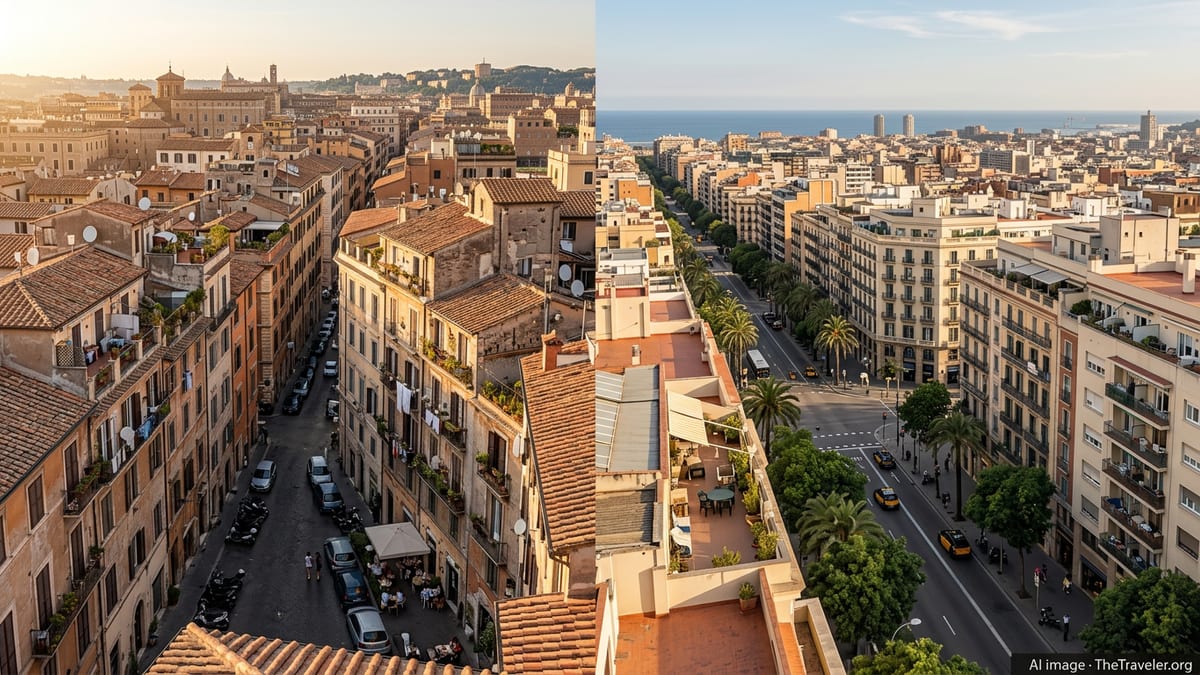
Overall Cost of Living: Italy vs Spain
Current comparative data indicates that Spain is generally slightly cheaper than Italy for day to day living, especially once rent is included. Recent cross country cost of living indices show total consumer prices in Spain typically a few percentage points below Italy, with the gap wider for rent and restaurant spending than for groceries. In practice this means a similar standard of living usually requires a somewhat lower monthly budget in Spain than in Italy, particularly in large cities.
For a single person excluding rent, recent 2026 oriented guides suggest Italy requires roughly 1,450 to 1,800 euros per month for a comfortable but not luxurious lifestyle, covering food, local transport, utilities and incidental spending. In Spain, consolidated 2025 and early 2026 estimates put a comparable single person budget closer to 1,200 to 1,600 euros per month excluding rent, reflecting slightly lower food prices and generally cheaper local services.
For a family of four, both countries show wide cost ranges depending on location and schooling choices, but typical guidance for a middle income family in a major city points to around 3,000 to 4,500 euros per month excluding rent in Italy, and approximately 2,700 to 4,000 euros in Spain. The difference is most evident in housing, utilities and eating out. Household goods, clothing and basic services show less divergence and often similar price levels between the two markets.
Price dispersion inside each country is significant. Northern Italian regions, especially Lombardy, record cost levels substantially above the Italian national average, while southern regions remain noticeably cheaper. In Spain, Madrid, Barcelona and some Balearic and Basque locations are meaningfully more expensive than mid sized cities in Andalusia, Valencia or inland regions. Relocation decisions should therefore focus on city to city comparisons rather than national averages alone.
Housing and Utilities Cost Comparison
Housing is typically the largest single cost driver, and the gap between Italy and Spain is clearest in urban rental markets. Early 2026 datasets and expat focused surveys show average one bedroom city center rents in Spain around 850 to 900 euros per month at the national level, while equivalent Italian averages are often somewhat higher. In both countries, prime districts of Madrid, Barcelona, Milan and Rome may command far above national medians, often 1,300 to 2,000 euros per month for a one bedroom unit.
Outside the main capitals, Spain tends to provide more competitive rental values than Italy for similar quality and size. Secondary Spanish cities such as Valencia, Seville or Málaga generally show city center one bedroom rents in the 700 to 1,000 euro range, and substantially lower costs in outlying districts. Italian mid sized cities can still be relatively expensive where demand is strong, though many southern or smaller provincial towns offer rents closer to 400 to 700 euros per month for comparable units.
Utilities narrow some of Spain’s overall cost advantage. In Italy, multiple sources for 2025 and 2026 estimate typical monthly utility bills for an 85 square meter apartment in the 120 to 200 euro range, depending on region, heating type and supplier. In Spain, recent commentary notes rising electricity and utility costs following changes to VAT and system charges, with average monthly bills for a similar apartment often quoted in the 120 to 190 euro range. The practical outcome is that utilities in Spain are no longer dramatically cheaper than in Italy and in some cases may be similar or slightly higher, especially in properties with electric heating or cooling.
Telecommunications costs are competitive in both markets and represent a smaller component of total outgoings. Italy has highly aggressive mobile and broadband offers, with mobile data plans frequently priced around 8 to 12 euros per month for generous allowances, and home broadband commonly between 25 and 35 euros per month. Spain shows broadly similar broadband pricing, often 25 to 40 euros per month depending on speed and bundled services, with mobile costs also low by Western European standards. These items therefore do not usually act as differentiating factors in a relocation cost comparison.
Everyday Expenses: Food, Transport and Services
Food costs are a central lifestyle and budget variable. Recent 2025 and 2026 analyses confirm that Spain retains a modest advantage in grocery pricing relative to Italy, with staples such as fresh produce, dairy and basic packaged goods often a little cheaper in Spanish supermarkets. One widely cited estimate for 2026 projects average monthly food and non alcoholic drink expenditure per household in Spain around 470 euros, though this figure will scale up or down with household size and shopping habits. Italian guidance generally places comparable grocery spending somewhat higher for similar consumption patterns.
Dining out follows a similar pattern. In both countries, casual restaurants and cafés can be relatively affordable compared with northern Europe, but Spain is commonly noted as slightly cheaper for everyday meals and drinks. Expat focused cost breakdowns for Spain describe low to mid range restaurant prices roughly 10 to 20 percent under comparable Italian benchmarks for equivalent urban areas. For relocation planning this means frequent dining out will inflate budgets more in Italy than in Spain, all else equal.
Public transport is reasonably priced across both markets, with local differences more important than the national label. In Spain, 2025 data indicates single urban tickets typically around 1.50 to 2.65 euros depending on the city, with monthly passes still modest by Western standards. Italian city transport tickets often fall in a similar range, though the structure of passes and discounts can vary, and some regional rail commuting in Italy can be relatively cost effective compared with Spain. Car ownership costs, including fuel and insurance, tend to be somewhat higher in Italy than in Spain, but not dramatically so.
Personal services such as hairdressing, basic healthcare not covered by the public systems, childcare and domestic help display moderate price levels in both countries. Spain again often registers marginally lower tariffs, particularly for occasional childcare and cleaning services in second tier cities. However, Italy may offer better value in small towns and non tourist provinces where local wage levels are lower. Relocating professionals and retirees should expect everyday service costs to make up a modest but not decisive share of their total expenditure in either location.
Personal Income Tax Structures and Burdens
Both Italy and Spain operate progressive personal income tax systems with multiple brackets, combined with regional and sometimes municipal surcharges. For tax resident individuals, worldwide income is generally taxable, subject to double taxation relief under applicable treaties. While headline top marginal rates appear similar, effective burdens depend strongly on income level, region and the availability of expatriate relief regimes.
In Italy, the national personal income tax, IRPEF, applies with several brackets. Recent 2025 focused guides commonly summarise the main national rates as approximately 23 percent on income up to around 15,000 euros, 25 percent for income between about 15,000 and 28,000 euros, 35 percent between 28,000 and 50,000 euros and 43 percent on income above 50,000 euros. On top of this, regional and municipal surcharges can add roughly 1 to 4 percentage points, so effective top marginal rates can sit near or slightly over the mid 40 percent range for high earners. Some recent reforms have sought to simplify brackets and ease the burden on lower and middle incomes, but Italy still presents a relatively high tax take at upper income levels.
Spain’s personal income tax, IRPF, is also progressive with a state component and an autonomous community component. The combined schedule for residents typically starts in the high teens or low twenties for lower incomes and climbs through several brackets to reach top marginal rates that can approach or exceed the mid 40 percent range, depending on the region. Central government scales have been relatively stable, but many autonomous communities adjust their regional portions, meaning the actual top combined rate can vary significantly between, for example, Madrid, Catalonia and Valencia. Some regions have implemented modest cuts or adjustments for lower to middle incomes, while others maintain higher progressive rates.
From a comparative perspective, both countries sit in a similar band to other large Western European economies in terms of headline personal tax burdens. For modest incomes, say under 30,000 euros, the effective average tax rates in Italy and Spain tend to be broadly comparable when regional and municipal elements are included. At higher incomes above 60,000 to 70,000 euros, regional choices become critical. Certain Spanish regions, such as Madrid, historically apply lower regional surcharges, which can produce an overall marginal rate slightly under some Italian regions. Conversely, high tax Spanish communities can meet or exceed the Italian combined burden.
Relocating employees and self employed workers must also consider social security contributions, which are separate from income tax and can significantly increase total labour costs in both countries. Employee and employer contributions in Italy and Spain are both substantial by international standards. For individuals assessing net take home pay, it is crucial to model combined income tax and social charges by specific region and employment status, rather than relying only on national headline percentages.
Special Tax Regimes for New Residents and Mobile Professionals
Both Italy and Spain have introduced preferential tax regimes in recent years aimed at attracting foreign professionals, retirees and high net worth individuals, which can materially change the relocation equation compared with standard resident taxation. These regimes are complex and often subject to eligibility criteria and time limits, so specialist advice is essential, but an overview is relevant for strategic comparison.
Italy offers several incentives for new tax residents, including preferential treatment for foreign sourced income in specific circumstances and reduced taxation for qualifying inpatriate workers. Certain schemes allow a large percentage of employment income to be exempt from tax for a fixed number of years, often with enhanced benefits in southern regions. There is also a flat tax option for high net worth individuals on foreign income in return for an annual lump sum payment, as well as specific wealth related taxes on foreign assets such as overseas property and financial holdings. These measures can make Italy significantly more attractive for specific profiles, particularly internationally mobile executives and investors.
Spain’s most prominent special regime is commonly referred to as the Beckham Law, a non resident style tax treatment available to qualifying inbound employees for a limited period. Under this regime, eligible individuals may be taxed at a fixed rate on Spanish source employment income up to a ceiling, with foreign income largely outside Spanish taxation, though several reforms in recent years have refined the conditions and scope. Spain also offers specific tax incentives for entrepreneurs, start up workers and certain categories of impatriates, though the detail varies and implementation is handled at both state and regional levels.
When comparing the two, Italy often provides more aggressive relief on employment income for qualifying inpatriates, at least during the incentive period, while Spain’s special regime can be particularly compelling for individuals with significant non Spanish passive or foreign business income that remains outside the Spanish tax base. The optimal choice depends on the location of income sources, expected duration of stay and whether the individual fits within the relatively narrow definitions required to access these preferential rules in either jurisdiction.
Lifestyle Factors Linked to Cost and Tax Decisions
While lifestyle is subjective, several lifestyle related factors have direct cost or tax implications and therefore legitimately enter a financial comparison between Italy and Spain. Climate influences energy consumption: many parts of Spain experience milder winters than northern and central Italy, which can translate into lower heating expenditure, though summer cooling costs may be higher in some Spanish regions. Conversely, in colder Italian locations, gas or combined heating bills can be a significant share of annual housing costs.
Urban structure and transport habits also shape budgets. Spain has invested heavily in urban public transport networks and high speed rail, and many residents in larger cities function without a car, limiting insurance, fuel and parking costs. Italian cities can be walkable and well connected by public transport in central areas, but in smaller towns and suburban settings car dependence is often higher, which raises monthly outgoings for fuel, tolls and maintenance. These differences may offset or amplify tax differentials, especially for families.
Work culture and working hours affect effective disposable time rather than direct financial cost, but they can indirectly influence spending patterns on childcare, commuting and leisure. Both Italy and Spain maintain flexible social schedules by northern European standards, yet the extent of remote work adoption, typical office hours and childcare availability can differ by sector and region. Families with school age children may experience varying ancillary costs such as extracurricular activities, private tutoring or private schooling, which can be more location specific than country specific but still contribute substantially to total living costs.
Finally, property ownership aspirations influence medium term cost comparisons. Transaction costs such as notary fees, registration taxes and ongoing property taxes differ between Italy and Spain and can materially affect the economics of buying versus renting over a five to ten year horizon. Although this briefing focuses on recurring costs rather than transaction events, individuals intending to purchase property should consider these additional fiscal layers in a follow up, country specific property and housing tax analysis.
The Takeaway
For many relocating individuals, Spain will appear modestly more cost effective than Italy on a like for like basis, largely due to slightly lower rents in numerous cities, cheaper groceries and marginally lower everyday service costs. However, this advantage is not uniform. High demand Spanish regions can be as expensive as, or more expensive than, many Italian urban centers, and recent increases in Spanish utility costs have narrowed the differences in household energy expenditure.
In tax terms, both Italy and Spain present progressive income tax systems with similar headline top marginal rates and meaningful regional variation. Without special regimes, average burdens for middle incomes are comparable, while regional choices drive outcomes for higher earners. Italy’s incentive packages for inpatriate workers and high net worth individuals can create substantial tax efficiencies in specific cases, while Spain’s non resident style regime can be attractive for those with significant foreign income. These rules are technical and evolving, so any decision should involve professional tax modelling.
From a lifestyle linked cost perspective, both countries offer relatively affordable everyday living compared with many northern European markets, but different patterns of energy use, transport reliance and food and leisure habits will shape individual budgets. Northern Italian cities may appeal to those prioritising certain professional sectors despite higher costs, while many Spanish coastal and mid sized cities offer a balance of lower rents and moderate taxes that is compelling for remote workers and retirees.
Ultimately, the choice between Italy and Spain for relocation on cost, tax and lifestyle grounds is not one size fits all. Decision makers should build a city specific budget, model personal tax scenarios in both jurisdictions, and weigh how lifestyle preferences influence recurring expenses. Only by integrating these factors can a relocating household arrive at a decision that is financially sustainable and aligned with day to day living expectations.
FAQ
Q1. Is Italy or Spain cheaper overall for everyday living costs?
Spain is generally modestly cheaper for everyday living, particularly for rent, groceries and dining out, although exact differences depend heavily on city and lifestyle.
Q2. How do typical monthly budgets for a single person compare between Italy and Spain?
Recent estimates suggest a single person needs roughly 1,450 to 1,800 euros per month excluding rent in Italy, versus about 1,200 to 1,600 euros in Spain for a comparable standard.
Q3. Which country has higher income tax rates for residents, Italy or Spain?
Both apply progressive systems with top marginal rates in the mid 40 percent range when regional and local taxes are included. Actual burdens depend on income level and region rather than the country label alone.
Q4. Are special expat tax regimes more favorable in Italy or Spain?
Italy often offers stronger relief on employment income for qualifying inpatriates, while Spain’s non resident style regime can be more advantageous for individuals with significant foreign source income.
Q5. How do rent levels in major cities like Rome, Milan, Madrid and Barcelona compare?
Prime districts in all four cities are expensive, commonly 1,300 to 2,000 euros per month or more for a one bedroom unit, with Spain usually slightly cheaper on average but with considerable overlap.
Q6. Are utilities more expensive in Italy or Spain?
Utilities used to be clearly cheaper in Spain, but recent changes have brought average monthly costs closer together. In many cases, utilities now cost similar amounts in both countries.
Q7. Does climate make a noticeable difference to living costs between Italy and Spain?
Yes. Colder Italian regions can incur higher winter heating bills, while hotter Spanish areas may face higher summer cooling costs. The net impact varies by specific location and housing type.
Q8. How do social security contributions influence take home pay in Italy and Spain?
Both countries levy substantial social security charges on top of income tax. Combined contributions can significantly reduce net pay and should be modelled alongside income tax when comparing offers.
Q9. Is car ownership significantly more expensive in one country than the other?
Car ownership costs, including fuel and insurance, tend to be somewhat higher in Italy, though the difference is not extreme. Greater car dependence in some Italian areas can magnify this effect.
Q10. For a remote worker choosing freely, does Spain or Italy usually offer better value?
For many remote workers prioritising moderate rent and everyday costs, Spain, especially its mid sized cities, often delivers better value, while Italy may appeal more where specific professional or personal factors outweigh the cost differential.