


More news on this day
Italy’s iconic Mediterranean shoreline is at the center of a fierce political and legal showdown, as national and regional reforms to expand free public beaches collide with entrenched seaside concession interests and mounting European Union pressure.
Get the latest news straight to your inbox!
EU Pressure and the Bolkestein Directive Reach Italy’s Shores
The latest phase of Italy’s beach controversy is unfolding under the shadow of the EU Services Directive, widely known as the Bolkestein Directive. The measure seeks to guarantee open competition for service concessions across the bloc and has been interpreted as requiring transparent tenders for stretches of state-owned coastline historically leased on long and often automatically renewed contracts.
European court decisions over the past decade have criticized blanket extensions of Italian seaside concessions, judging that such renewals without competitive procedures breach EU law on fair access to public resources. Italian administrative courts have echoed that interpretation, defining beaches as a scarce resource and urging competitive tenders for existing operators that have in some cases enjoyed the same plots for generations.
In response, successive governments in Rome have adopted transition rules and postponements that critics describe as de facto extensions. The current reform agenda, framed as a way to finally bring Italy into line with European law, links the tender process to a broader rebalancing between private concessions and free or low-cost public access along the Mediterranean coast.
National Reform Plans Promise More Free Beaches
At the heart of the new debate is how much of Italy’s coastline should remain occupied by private establishments and how much must be returned to free public use. Existing national legislation already refers to the need for an “adequate balance” between concession areas and free or freely accessible beaches, but implementation has long varied from region to region and from resort town to resort town.
Parliamentary records from spring 2026 show lawmakers scrutinizing the way coastal municipalities apply this balance, with particular attention to tourist hotspots where uninterrupted lines of beach clubs leave residents and visitors struggling to find open sand. The government’s stated objective is to couple concession tenders with a measurable expansion of stretches that remain entirely free to enter, even as local councils retain the possibility of creating “equipped” free beaches with basic services.
Environmental data are adding urgency to the discussion. Updated figures from Italy’s national environmental institute indicate that the country’s beaches occupy only a small fraction of its total territory and that erosion, ports, sea walls and urbanization are steadily compressing usable shoreline. This scarcity is being cited in policy debates as a reason to limit private occupation and prioritize universal access where possible.
Regions Redraw the Map of Access Along the Mediterranean
While national rules set the framework, much of the practical impact is emerging at regional level, where authorities are rewriting coastal management plans in anticipation of tenders and stricter quotas on concessions. Several Adriatic and Tyrrhenian regions have updated their coastal strategies to spell out minimum percentages of shoreline that must remain free or publicly accessible, often revisiting plans dating back more than a decade.
On the Ligurian and Adriatic coasts, recent regional measures adjust zoning to preserve or create new public beaches near built-up waterfronts where private establishments had steadily expanded their footprint. In central regions, planning documents highlight the need to reconnect fragmented public areas and ensure that access points, paths and services make free stretches genuinely usable rather than merely nominally available.
Island territories are also moving. In Sicily, new guidelines on seaside concessions, presented as aligning regional practice with national and European standards, place stricter limits on the size of individual plots and underscore the primacy of environmental and landscape safeguards. Regional communications highlight that new concessions will be awarded through public tenders and that physical barriers such as turnstiles and fences along the shoreline are to be phased out.
Legal Rulings Raise the Stakes for Concession Holders
As political negotiations continue, the judiciary is playing a decisive role. Recent decisions by Italy’s Council of State have reiterated that coastal concessions cannot be considered perpetual and that automatic renewals conflict with both EU law and principles of fair competition. These rulings characterize the shoreline as a limited public resource, reinforcing the legal basis for stricter caps and tenders.
The Italian Constitutional Court has added further pressure in specific cases. In 2024 the court struck down regional provisions that extended beach concessions beyond national deadlines, citing their incompatibility with European obligations on competition and the internal market. Legal analysts view this as a clear signal that attempts to shield existing operators through local derogations are unlikely to withstand scrutiny.
For thousands of family-run beach clubs, the new legal landscape introduces uncertainty over investments made under earlier regimes. Trade associations warn that short concession horizons and competitive tenders could discourage maintenance and upgrades of facilities. Reform advocates counter that transparent auctions, combined with social and environmental criteria, can both protect jobs and open coastal access to a wider public.
Public Opinion Splits Over the Future of the Italian Beach
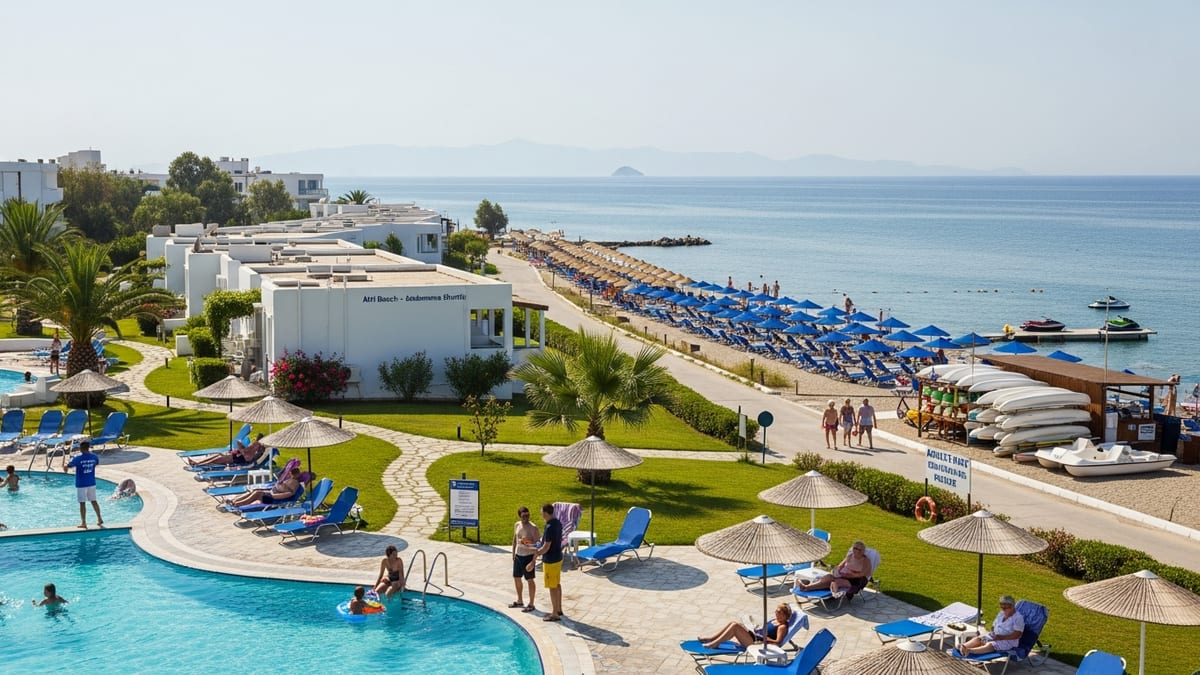
Beyond the courtrooms and committee rooms, Italy’s beach reform has become a cultural flashpoint. Social media debates and petitions to European institutions describe overcrowded stretches where umbrellas and loungers leave only narrow corridors of free sand near the waterline. Commentators contrast this with neighboring Mediterranean countries where extensive free beaches are seen as a core public good rather than a commercial asset.
Local communities along the Riviera and in major resort towns are deeply divided. Many residents value long-standing relationships with concession operators who provide seasonal employment and maintain facilities that support tourism. Others argue that rising prices for sunbeds and services effectively privatize the Mediterranean, excluding lower-income families and undermining the coastal commons.
Tourism bodies are watching closely, aware that visitors increasingly weigh affordability and openness when choosing summer destinations. Municipal initiatives to create inclusive, fully accessible free beaches for people with disabilities and lower-income groups are being presented as models of how Italy might reclaim parts of its shoreline without sacrificing the quality that draws travelers from around the world.
As the next bathing seasons approach, Italy’s attempt to reconcile European law, local economies and the ideal of free access to the sea is emerging as a test case for coastal nations across the Mediterranean. Whether the reforms ultimately tip the balance toward more open sand or preserve today’s dense grid of concession umbrellas will shape both the country’s summer landscape and its relationship with the sea for years to come.