


More news on this day
American Airlines is expanding awareness of its “It’s Cool to Fly American” program, a practice travel experience designed to help families with autism and other special needs navigate air travel with more confidence.
Get the latest news straight to your inbox!
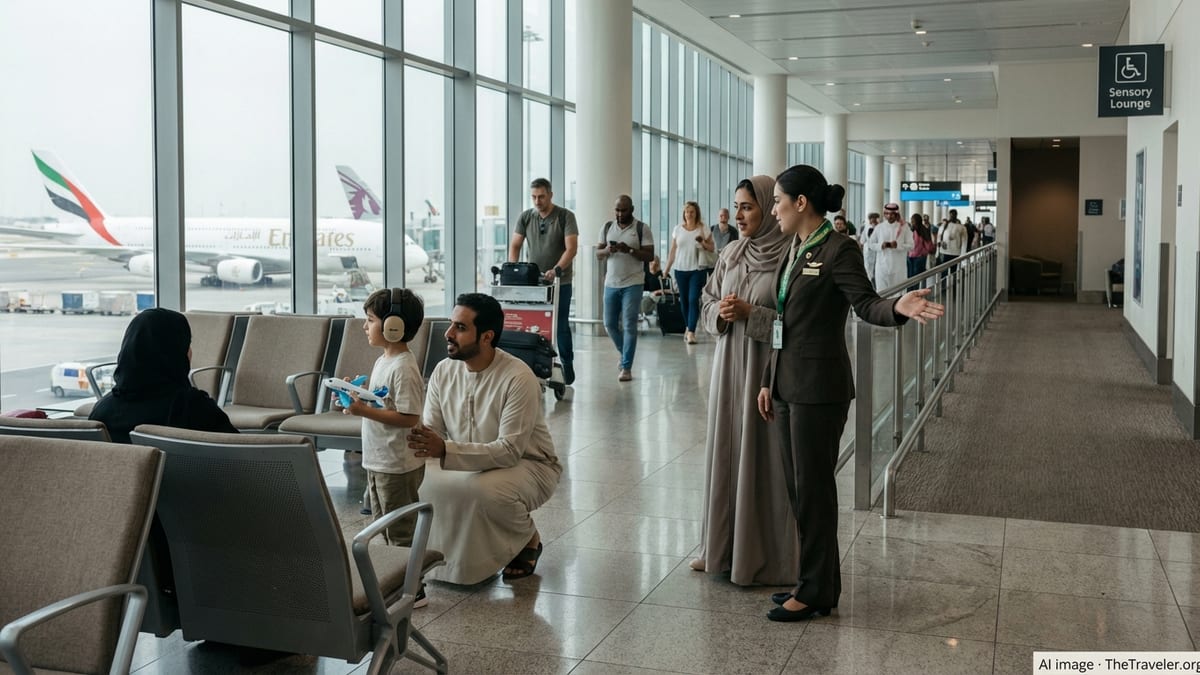
A Mock Flight Designed to Feel Like the Real Thing
The “It’s Cool to Fly American” initiative recreates an entire day of travel, from parking at the airport to collecting bags at baggage claim, but without the pressures of an actual departure time. Publicly available information shows that participants check in at the ticket counter, pass through security, wait at the gate, board a real aircraft and taxi before returning to the gate, all in a controlled, small-group setting.
Reports on recent events indicate that the experience typically lasts several hours and is staffed by volunteer employees from American Airlines, local airports and partner organizations. Families receive boarding passes, interact with gate agents and cabin crew, and settle into assigned seats, mirroring each stage of a commercial flight.
According to published coverage, the program was first launched in the mid-2010s and has since operated at dozens of airports across the United States, including major hubs such as Dallas Fort Worth, Charlotte Douglas and Los Angeles International. While many events are scheduled in April, aligning with Autism Acceptance Month, information from participating airports shows they are held periodically throughout the year.
The airline describes the sessions as a way to transform unknowns into familiar routines. By repeating the steps of travel in a supportive environment, families are able to identify potential stress points and plan practical strategies before booking a ticket.
Supporting Travelers With Autism and Other Hidden Disabilities
Travel industry coverage highlights that “It’s Cool to Fly American” was created with children on the autism spectrum in mind, but participation has broadened to include travelers of various ages with developmental disabilities, anxiety and other conditions that can make flying overwhelming. The sensory load of airports, from loud announcements to crowded boarding lanes, can be especially challenging for these passengers.
At many events, small groups move through the airport at a slower pace than on a typical travel day. Participants can practice presenting identification, placing items on the security belt and walking through screening equipment, while caregivers observe how each step affects their child. This rehearsal allows families to decide, for example, whether noise-reducing headphones, visual schedules or additional support at security might be needed on future journeys.
Airport and airline sources describe the atmosphere as low-pressure and flexible. If a participant becomes overwhelmed, they can step aside, pause in a quieter corner of the terminal or adjust how closely they engage with each activity. The goal is not to complete every step perfectly, but to offer a safe environment where mistakes, questions and second attempts are expected.
Some events also connect families with local advocacy groups and disability services, giving travelers a single point of contact to learn about further accommodations such as early boarding, wheelchair assistance or pre-arranged support on the day of travel.
Growth Across U.S. Airports and Community Partnerships
Public reports indicate that “It’s Cool to Fly American” has reached thousands of participants in cities large and small, from Chicago and Nashville to San Diego and Jacksonville. At several airports, regional partners such as PSA Airlines and Envoy have contributed crew members and aircraft, allowing more locations to host practice flights.
Recent coverage from aviation and travel outlets notes that the program has resumed in-person events after pandemic-related pauses, with American Airlines focusing on a network of key hubs. Charlotte Douglas, Philadelphia, Los Angeles and select additional airports are among the locations where practice runs have been held in the past few years, often drawing long waiting lists from local families.
Community organizations play a central role in organizing each session. Autism advocacy groups, disability nonprofits and airport-based accessibility committees assist with outreach and registration, helping identify families who might benefit most from the experience. In some cities, local chapters of national organizations coordinate transportation, social stories and follow-up support for participants.
Information from corporate responsibility and sustainability reports suggests that “It’s Cool to Fly American” is now part of the airline’s broader inclusion and accessibility efforts. Alongside employee resource groups focused on disability and neurodiversity, the program is presented as one way the carrier is working to remove barriers to travel for passengers with a range of needs.
How Practice Flights Change Real Travel Days
Accounts from previous events describe tangible changes in how families approach later trips. After a practice session, some children reportedly tolerate the security screening process more easily or feel more comfortable sitting through boarding and taxiing, because they recognize the sequence of events and know what comes next.
Parents and caregivers also gain a clearer sense of timing. By living through the full process in real time, they can estimate how early to arrive at the airport, which checkpoints might take longer and when to build in sensory breaks. This information can guide decisions about flight schedules, connection times and whether to choose smaller or less crowded airports when possible.
Travel experts who track accessibility trends point out that programs like “It’s Cool to Fly American” can also benefit airport workers and airline staff. By interacting with families in a training-focused context, employees become more familiar with communication styles, mobility aids and sensory tools that passengers may bring on actual flights, which can translate to smoother service during regular operations.
Although the mock flights do not eliminate all stress, families who participate often go on to book trips they had postponed for years, according to regional news features and nonprofit partners. Practice and preparation, they say, turn air travel from an intimidating unknown into a manageable, if still busy, part of family life.
Part of a Wider Movement to Make Air Travel More Inclusive
The “It’s Cool to Fly American” initiative is part of a growing set of programs aimed at making air travel more accessible to passengers with autism and other disabilities. Other airlines and airports in the United States have launched similar practice-boarding days, and national advocacy groups promote airport rehearsals as a best practice.
Industry observers note that these efforts align with wider adoption of sunflower lanyards and other visual identifiers for hidden disabilities in terminals worldwide. Together with formal policies on pre-boarding and in-flight accommodations, rehearsal-based programs are intended to give travelers more control over how and when they seek assistance.
American Airlines’ latest sustainability and customer-experience materials reference continued investment in inclusive travel initiatives, with “It’s Cool to Fly American” highlighted as one of the grassroots programs shaped by employee volunteers. The program’s continued presence in annual reports and local news coverage indicates that it remains a visible part of the carrier’s accessibility strategy.
For families weighing whether a first flight is possible, these mock travel days can act as an essential bridge between staying home and boarding a commercial aircraft. As more airports host events and awareness grows, practice flights are becoming a more common option in the toolkit for travelers with special needs who want to explore the world by air.