


More news on this day
Air travelers across Japan are facing a difficult start to the week as United Airlines, Japan Airlines, All Nippon Airways and Lufthansa ground 23 flights, triggering delays and missed connections at major hubs in Narita, Tokyo, Osaka, Nagoya and Kagoshima.
Get the latest news straight to your inbox!
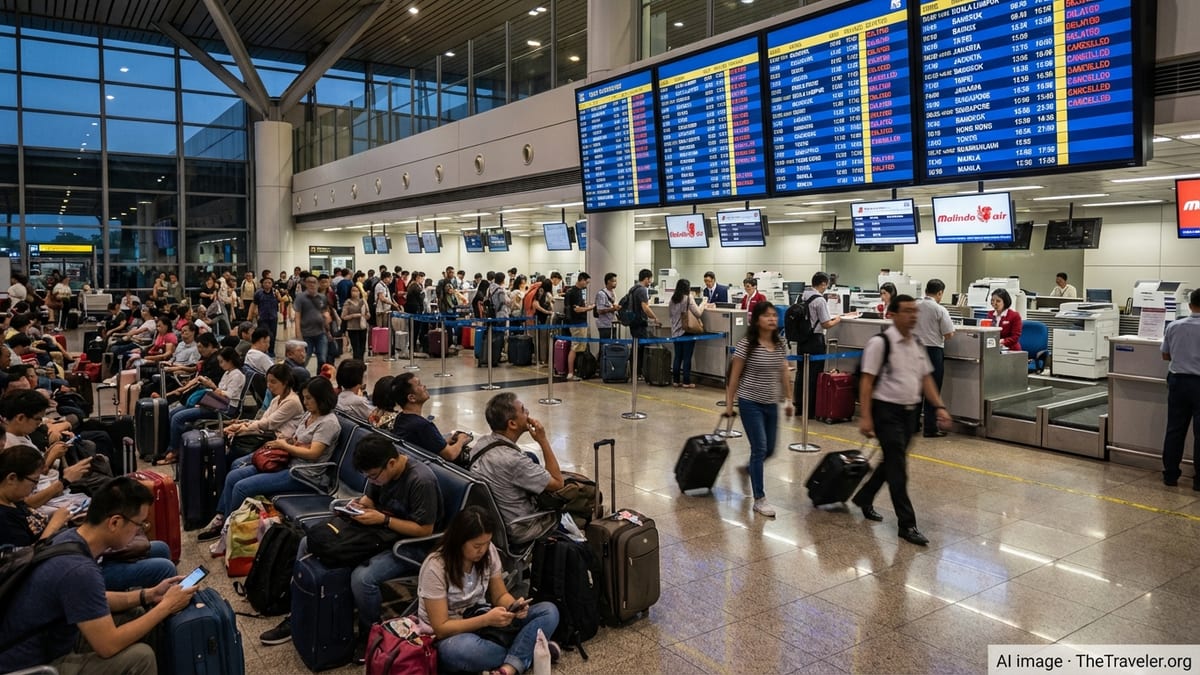
Wave of Cancellations Hits Key Domestic and International Routes
Published airport and flight-tracking data for April 14 indicate that a cluster of cancellations and extended delays has accumulated into 23 grounded flights operated by United, Japan Airlines (JAL), All Nippon Airways (ANA) and Lufthansa across Japan. The disruption affects a mix of long haul and regional services, complicating journeys for both international visitors and domestic travelers moving between Japan’s main islands.
The grounded flights include transpacific and transcontinental services linking Japan with North America and Europe, as well as high-demand domestic routes connecting Tokyo with Osaka, Nagoya and Kagoshima. These sectors act as key feeders into global networks, meaning missed onward connections and rebookings are rippling outward far beyond Japanese airspace.
Publicly available schedules show that several of the affected services were expected to depart during peak morning and evening banks, periods when airports already experience significant congestion. As a result, even flights that remain scheduled are departing with revised times, tighter turnaround windows and heavier passenger loads.
While some flights are being rescheduled within the same day, others are cancelled outright, forcing passengers to seek alternatives on later departures or with other airlines. In many cases, travelers are being moved onto different Japanese gateways than initially booked, adding further complexity to on-the-ground logistics.
Narita and Tokyo Struggle With Congestion and Knock-On Delays
Tokyo’s dual-airport system, split between Narita International Airport and Haneda Airport, is under particular strain. Recent months have already seen reports of long queues and processing delays at Narita immigration, especially during busy arrival periods, and today’s flight cancellations risk compounding that pressure for departing passengers trying to rebook.
Haneda, which handles a dense mix of domestic shuttles and international services, is experiencing its own schedule pressure as airlines adjust departure and arrival times to accommodate grounded aircraft and displaced passengers. Flight-status feeds show multiple services operating with delayed departures, with some evening long-haul flights pushed back by more than 15 minutes as operations teams reshuffle aircraft and crews.
Travel forums and passenger tracking tools suggest that travelers attempting tight connections between domestic arrivals and international departures in Tokyo are especially vulnerable. When an originating domestic leg is delayed or cancelled, passengers may miss their Narita or Haneda long-haul flight entirely, a scenario that appears to be playing out with greater frequency today as airlines work through the 23 affected services.
For visitors arriving from overseas, the situation can be particularly confusing, as itinerary changes are sometimes processed while flights are already en route. That can mean landing in Tokyo to find an onward sector rebooked to a different airport or a later date, requiring overnight stays or new ground transport arrangements.
Osaka, Nagoya and Kagoshima Face Regional Repercussions
Beyond Tokyo, Japan’s regional hubs are also feeling the impact. Osaka’s Itami and Kansai airports are central to the domestic network, serving as gateways for western Japan and major transfer points for business travelers. Disruptions to ANA and JAL shuttle services between Osaka and Tokyo are leading to bottlenecks, as passengers scramble for available seats on remaining departures.
Nagoya’s Chubu Centrair International Airport, a critical link for central Japan’s manufacturing and export industries, has already seen schedule adjustments by several global carriers in recent seasons. The grounding of flights today by United and Lufthansa adds fresh uncertainty for passengers who rely on direct links from Nagoya to North American and European hubs.
Further south, Kagoshima’s role as a connecting point for Kyushu and nearby island destinations means that Japan Airlines and ANA cancellations reverberate across short-haul domestic routes. Travelers planning multi-stop itineraries, such as combining Kagoshima with Osaka or Tokyo in a single trip, are reporting last-minute changes that extend total journey times and, in some cases, require backtracking through alternative cities.
Tourism operators in these regions are watching developments closely, as a day of widespread disruption can translate into missed tours, shortened hotel stays and reworked itineraries, especially for international visitors on tight schedules.
Airlines Cite Operational Pressures and Network Adjustments
Although the specific reasons for each grounded flight vary, publicly available information points to a combination of operational constraints, aircraft rotations and ongoing network adjustments by the carriers involved. United and Lufthansa, in particular, are engaged in longer-term fine-tuning of their Japan schedules, including capacity shifts at Nagoya and Osaka that can leave certain days more vulnerable when irregular operations occur.
Japan Airlines and ANA are simultaneously managing dense domestic schedules and the reintroduction or modification of international routes ahead of the summer travel peak. The need to position aircraft for upcoming high-demand periods can make it harder to absorb unexpected delays or technical issues without resorting to cancellations on less-profitable or more flexible sectors.
Industry analysts note that Japanese airports continue to navigate the long-tail effects of earlier safety incidents and infrastructure constraints, which have led to tighter slot management and limited spare capacity at peak times. Under such conditions, grounded aircraft and delayed departures can quickly cascade through the system, affecting flights far from the original problem point.
Some carriers are responding by increasing scheduled buffer time between key connections and by encouraging passengers to build in longer layovers, particularly when transiting between domestic and international flights in Tokyo. Flexible tickets and travel insurance remain important tools for travelers seeking to reduce the financial and logistical impact of sudden schedule changes.
Travelers Urged to Monitor Flights and Allow Extra Time
For travelers currently in Japan or preparing to depart in the coming days, the latest disruptions highlight the importance of closely monitoring flight status and being prepared for abrupt changes. Flight-tracking platforms and airline notifications are proving essential as departure times shift and aircraft assignments change.
Passengers with same-day transfers between Narita, Haneda, Osaka, Nagoya and Kagoshima are particularly advised to allow generous buffers for immigration, baggage reclaim and transport between terminals or airports. Even when their own flights remain scheduled, upstream delays to inbound aircraft can produce late gate arrivals and compressed boarding windows.
Travel planners recommend that visitors keep accommodation and ground transport arrangements as flexible as possible while airlines work through today’s 23 grounded services and any residual knock-on delays. Rebooking options may include rerouting through alternative Japanese hubs or accepting itineraries that add an extra stop but preserve the overall trip.
With Japan continuing to attract strong demand from inbound tourists and domestic travelers alike, aviation watchers suggest that periods of heightened disruption could recur, especially around busy holiday windows. For now, those flying in and out of Narita, Tokyo, Osaka, Nagoya and Kagoshima are facing an unwelcome reminder of how quickly a handful of grounded aircraft can reverberate across an entire travel day.