


More news on this day
Air travelers across Georgia, Florida, New York, Massachusetts, and California faced a difficult day as publicly available tracking data showed 399 flight delays and 44 service withdrawals affecting key hubs in Atlanta, Orlando, New York John F. Kennedy, Boston Logan, and Los Angeles International, with Delta Air Lines, JetBlue, American, Southwest, and several international carriers all struggling to keep schedules on track.
Get the latest news straight to your inbox!
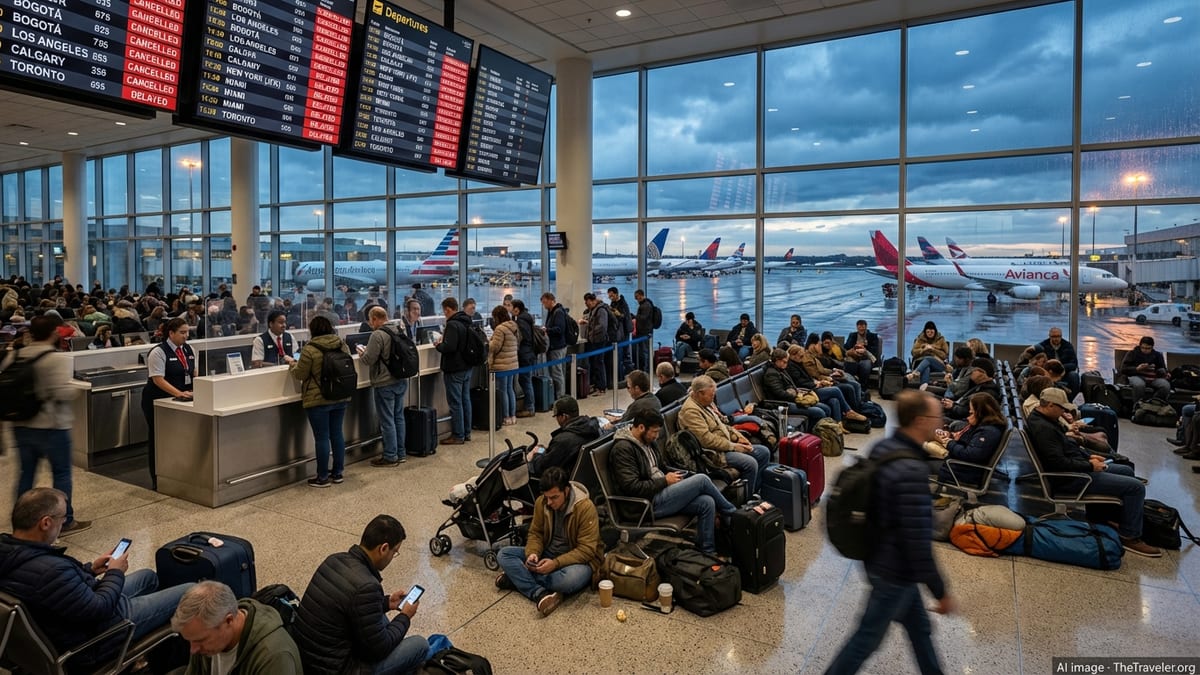
Operational Strain Spreads Across Major Coastal and Sunbelt Hubs
The latest disruption pattern underscores how tightly connected the nation’s busiest airports have become. According to aggregated aviation tracking boards and recent network performance summaries, the bulk of today’s delays are concentrated at Hartsfield-Jackson Atlanta International, Orlando International, New York John F. Kennedy International, Boston Logan International, and Los Angeles International, creating knock-on effects throughout domestic and transatlantic networks.
Published coverage of the ongoing post-holiday aviation crunch indicates that Atlanta and other large connecting hubs have already been grappling with sustained congestion in May, as late-arriving aircraft and ground capacity constraints ripple through schedules. Industry-focused reporting this week described a multi-week pattern of elevated disruptions in which core gateways such as Atlanta and Los Angeles act as pressure points for the wider system.
Data tools that combine Bureau of Transportation Statistics records with live feeds from air traffic advisories and weather services show that the main drivers of delays remain late inbound aircraft, carrier-related issues such as crew scheduling, and weather or airspace restrictions. These same factors appear prominently at today’s affected airports, where a high proportion of flights operate as part of complex, tightly timed connections.
Within this landscape, the 44 service withdrawals recorded across the five highlighted states reflect a mixture of same-day cancellations, route suspensions, and schedule trims. Aviation analysts note that even small numbers of cancellations at hubs like JFK or Los Angeles can strand large numbers of passengers, given the volume of long-haul and international services that depend on feeder traffic from domestic routes.
Delta, JetBlue, American, Southwest and International Partners Under Pressure
Publicly accessible operations dashboards show that Delta Air Lines, JetBlue, American Airlines, and Southwest are among the most affected carriers in the current wave of disruptions, alongside a cluster of international partners that codeshare on critical routes. Delta’s extensive hub presence in Atlanta, New York, Boston, and Los Angeles exposes its network to cascading delays when any one of these airports comes under stress.
Recent industry reporting has already documented schedule adjustments by Delta on key international services from Atlanta, JFK, and Boston, including an extended pause on certain transatlantic and Middle East routes. Those strategic withdrawals, announced in late April, have reduced some long-haul capacity even as domestic demand remains high, increasing the stakes when irregular operations hit remaining flights.
JetBlue, which relies heavily on New York and Boston as core focus cities and maintains important transcontinental links to California, has been reshaping its route map through a series of station exits and frequency cuts in 2026. Aviation community discussions and regional news summaries point to JetBlue withdrawing from select California and Latin American destinations while adjusting schedules on links out of JFK and Boston, tightening spare capacity that might otherwise absorb day-of-operations disruptions.
American and Southwest, both significant players in the Orlando and Los Angeles markets, are also visible in today’s disruption tallies. Southwest’s recent operational incidents, including a high-profile bird-strike return to Boston Logan reported on regional television news, illustrate the kind of unplanned events that can quickly consume available aircraft and crew resources, especially when networks are already finely balanced.
Atlanta and Orlando Amplify Systemwide Cascades
In the Southeast, Atlanta and Orlando function as critical connective tissue for both business and leisure travel. Recent weather-related ground stops at Atlanta, highlighted in local broadcast news coverage in late April, demonstrated how quickly a temporary halt to arrivals can metastasize into widespread schedule disorder as aircraft and crews fall out of position.
Today’s combination of 399 delays and multiple withdrawals appears consistent with that broader pattern. When flights into and out of Atlanta run late, downline services to cities such as Boston, New York, and Los Angeles can be delayed or canceled even if conditions at the destination airports remain favorable. Publicly available historical performance data for key Delta and American trunk routes between Atlanta and the Northeast show that late-arriving aircraft is repeatedly cited as a leading cause of extended arrival delays.
Orlando, a major leisure hub, adds another layer of complexity. The airport’s heavy concentration of peak-time departures and arrivals to and from the Northeast and Midwest means that minor disruptions can snowball during holiday and school-break travel periods. Aviation analysts have recently pointed to Orlando’s rising delay counts as an example of how growing demand in tourist markets can challenge ground infrastructure and airline staffing plans.
With both Atlanta and Orlando feeding large volumes of passengers into JFK, Boston, and Los Angeles, irregular operations in the Southeast can quickly translate into missed connections on cross-country and international flights. Travelers routed through these hubs today are reporting itinerary changes that involve unplanned overnight stays, multi-stop reroutes, or lengthy holds while carriers seek open seats on already crowded services.
JFK, Boston Logan, and LAX Highlight Coastal Vulnerabilities
On the East Coast, JFK and Boston Logan are exhibiting familiar signs of congestion that have been building through the spring. FAA performance summaries published for core U.S. airports show that JFK has ranked among the country’s leading hubs for departure delays in recent years, with Boston Logan also recording notable increases as traffic rebounds and runway capacity remains constrained.
Recent winter and early spring disruptions documented in public guidance materials from Delta and American highlighted particular vulnerabilities at JFK and Boston, where tight gate availability and weather-sensitive operations have repeatedly forced carriers to proactively trim schedules when storms or staffing issues loom. Those same constraints can magnify the impact of even modest day-of-operations irregularities, a pattern that aligns with the elevated delays recorded today.
In Massachusetts, regional coverage of the Southwest bird-strike incident on a Boston to Nashville flight illustrated how a single unscheduled return can reverberate through an airline’s tightly rotated aircraft plans. While that particular event occurred earlier in the week, it serves as a reminder that safety-related returns, maintenance inspections, and follow-on repositioning all absorb capacity that might otherwise handle weather or congestion-driven disruptions.
On the West Coast, Los Angeles International remains one of the nation’s most complex hubs, with a mix of domestic trunk routes, transpacific services, and Latin American connections. Recently reported cancellation clusters affecting Los Angeles and other West Coast airports, including San Francisco, have been tied in industry coverage to a combination of crew availability constraints and knock-on effects from earlier thunderstorms and airspace management initiatives further east.
Travelers Face Difficult Choices Amid Ongoing Network Instability
The scale of today’s 399 delays and 44 withdrawals across five states highlights a broader trend that aviation commentators have been tracking through the spring: schedule reliability on U.S. carriers remains volatile, particularly on routes touching large coastal and Sunbelt hubs. Independent analysts quoted in recent airline-industry reports have warned that a combination of high demand, lean staffing, and aging infrastructure is likely to keep disruption risk elevated into the summer travel season.
Public-facing guidance from airline customer resources and consumer advocates now consistently advises passengers to build in longer connection times, favor early-morning departures where possible, and closely monitor the movement of their inbound aircraft on tracking platforms. These recommendations are designed to mitigate the effects of cascading delays, which can convert a single late arrival into a chain of missed connections over the course of the day.
Within the current disruption window, the most affected passengers appear to be those relying on multi-leg itineraries that pass through at least one of the highlighted hubs. With mainline carriers and their regional and international partners operating at high load factors, rebooking options can be limited once same-day cancels accumulate. Reports from traveler forums this week describe re-accommodation offers that push journeys into redeye departures, add additional connections, or reroute via entirely different hubs than originally ticketed.
As airlines adjust schedules and attempt to restore on-time performance, the disruption totals observed today across Atlanta, Orlando, JFK, Boston, and Los Angeles will serve as another data point in an already turbulent year for U.S. commercial aviation. For travelers planning upcoming journeys through these airports, the emerging pattern suggests that flexibility, contingency planning, and close monitoring of real-time information will remain essential tools for navigating a strained system.