


More news on this day
Travelers using Dubai International and Sharjah International airports are facing a new wave of disruption as a combined 156 delays and 11 cancellations ripple across busy regional and long haul routes, affecting services operated by Emirates, Flydubai, Air Arabia, IndiGo, Qatar Airways and several other carriers.
Get the latest news straight to your inbox!
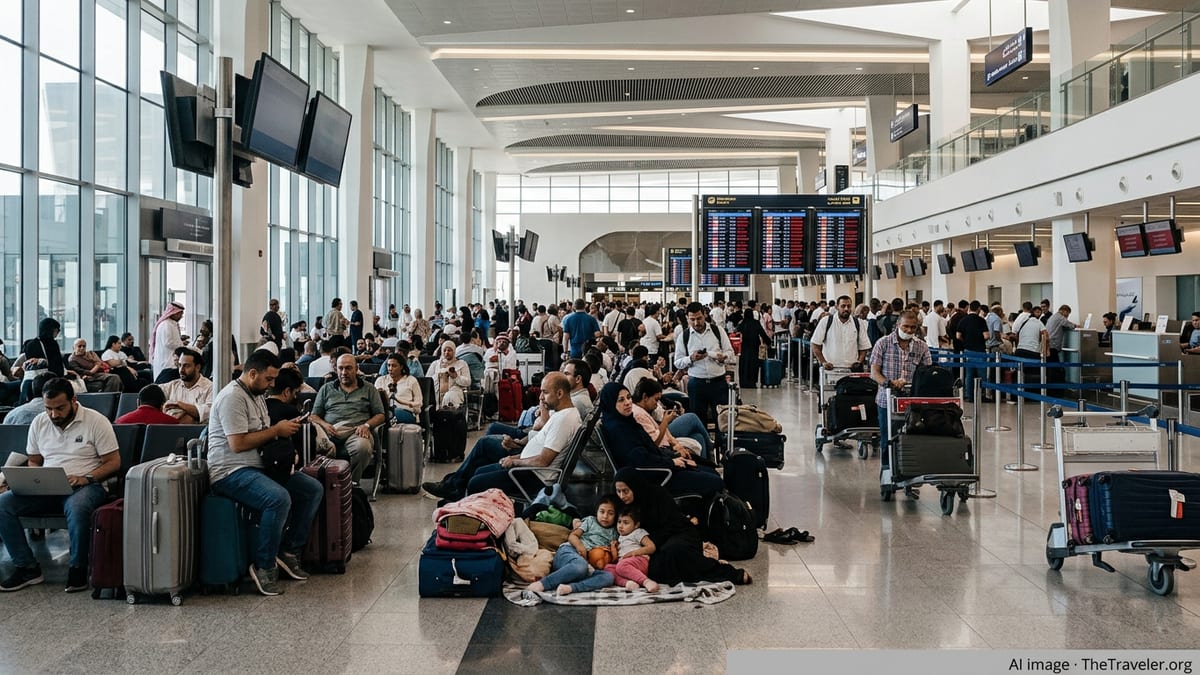
Dubai and Sharjah See Concentrated Wave of Flight Disruptions
Published coverage and operational tallies indicate that Dubai International Airport has absorbed the bulk of the latest disruption, with more than 120 flights delayed and several cancellations clustered across a single operating window. Sharjah International Airport has recorded a smaller but still significant share of the problems, with several dozen departure and arrival delays alongside a number of outright cancellations.
The combined impact across both airports points to 156 delayed flights and 11 cancellations, a level of disruption that is notable even by the elevated standards of recent months in Gulf aviation. Real time schedule data and aggregated reports show that the issues are spread across peak morning and evening banks, when the hubs normally handle dense connection waves linking Asia, Europe and the Middle East.
Travelers report extended waits at departure gates and crowded transfer areas as airlines work through backlogs, with some services departing hours behind schedule and others being removed from the timetable altogether. Publicly available airport boards continue to show rolling changes to estimated departure and arrival times, underlining the fluid nature of the situation.
While the disruption is concentrated in Dubai and Sharjah, the knock on effects are being felt across the wider network of connected airports as delayed departures lead to late arrivals and tightened turnaround times at outstations.
Multiple Airlines and Key Routes Affected
The current wave of irregular operations is affecting a broad mix of airlines. Emirates and Flydubai, the main operators at Dubai International, feature prominently in the list of delayed and canceled services, while Air Arabia and IndiGo are among the most visible names in the Sharjah data. Qatar Airways flights touching Dubai and Sharjah are also affected, alongside services from other regional and international carriers.
Route data indicates that both high profile long haul and dense regional markets are caught up in the disruption. Published coverage highlights delays and cancellations on flights linking Dubai and Sharjah with London, Mumbai, Riyadh, Istanbul and Cairo, among other cities. These corridors carry a blend of business travelers, migrant workers and leisure passengers, magnifying the impact of even a handful of cancellations.
Some of the most heavily affected sectors appear to be high frequency links to the Indian subcontinent and key Gulf capitals, where short haul rotations mean a single late arrival can cascade through the rest of the day’s flying program. Flights between Sharjah and cities such as Istanbul, Delhi and Kochi have recently shown a pattern of delays and sporadic cancellations in live tracking feeds, in line with the broader tally now emerging across the two UAE hubs.
Despite the disruption, core connectivity remains in place, with most scheduled services still operating, albeit in some cases with extended journey times or last minute schedule tweaks.
Operational and Airspace Pressures Behind the Delays
Recent analysis of Middle East aviation conditions points toward a combination of factors behind the latest disruption. Regional airspace constraints and rerouting, which have been a recurring issue in recent months, continue to exert pressure on schedules, with some flights operating longer than normal routings to avoid restricted areas. This increases block times and can make it harder for airlines to keep tightly timed banks of flights running on schedule.
In parallel, the dense traffic volumes handled by Dubai International and Sharjah International mean that any small change in runway availability, ground handling capacity or inbound flow control can quickly ripple across departure and arrival boards. Earlier waves of cancellations and delays linked to wider regional instability have already left airlines operating with limited slack in aircraft and crew rotations, making recovery from fresh disruption slower and more complex.
Publicly available information from air travel rights organizations and flight tracking platforms has, in recent weeks, highlighted repeated instances of large scale delays and cancellations across Gulf airports, including earlier episodes involving hundreds of disrupted services in the United Arab Emirates. The latest figures from Dubai and Sharjah fit within that broader pattern of a strained but still functioning regional network coping with sustained operational headwinds.
Weather, air traffic management decisions and congestion at alternative hubs can also play a part on any given day, although the exact blend of causes for individual flights is not always immediately clear from public data.
Knock On Impact for Passengers and Regional Connectivity
For travelers, the most immediate consequences are missed connections, elongated layovers and last minute changes to itineraries. Passengers journeying between Europe and Asia via Dubai, or between India and the Gulf via Sharjah, are particularly exposed when delay clusters form around peak connecting periods. In some cases, travelers are being rebooked onto later flights or alternative routings, while others face overnight stays if onward options are limited.
The disruptions also carry broader implications for regional connectivity. Dubai International is one of the world’s busiest hubs by international passenger traffic, and Sharjah plays a key role for value focused itineraries linking South Asia, the Middle East and parts of Europe and North Africa. When both hubs experience simultaneous strain, downstream airports from London and Riyadh to Mumbai and Istanbul can see their own departure boards become peppered with late running services.
Capacity on certain high demand routes remains tight as airlines balance strong passenger bookings with a more volatile operating environment. Industry observers note that repeated waves of disruption can reinforce this tension, as aircraft and crews are repositioned or held in reserve to recover schedules, limiting the room for additional frequencies or ad hoc extra sections that might otherwise relieve pressure.
Although the absolute number of cancellations in the current episode is limited compared with previous mass disruption events in the region, the elevated delay count underscores how even relatively modest schedule changes can heavily affect passengers once networks are already running close to their limits.
What Travelers Can Do if Their Flight Is Affected
Passenger rights and options vary depending on the airline, ticket type and point of origin, but travel advocacy organizations emphasize the importance of monitoring flight status closely through airline channels and airport boards when disruption clusters around major hubs. In the present situation at Dubai and Sharjah, schedules are continuing to evolve throughout the day as operators adjust rotations and seek to recover time.
Where delays become long or flights are canceled, publicly available guidance from consumer groups suggests that travelers should retain boarding passes and any written confirmation of disruption, as these records can support later claims for refunds, rebooking or, where applicable, compensation under relevant regulations. Some airlines also provide hotel accommodation, meals or ground transportation in certain circumstances, particularly when passengers are stranded overnight far from their home airport.
Experts in air passenger rights point out that travelers whose journeys originate in jurisdictions with stronger consumer protections may have more options than those booked entirely on routes not covered by such frameworks. In practice, many airlines serving Dubai and Sharjah adopt broadly similar policies on rebooking and care during disruption, even where formal legal obligations differ.
Given the continuing volatility in regional airspace and the high utilization of fleets across the Gulf, prospective passengers are being advised in public commentary to build in additional time for connections, consider flexible or changeable tickets where possible, and stay alert to schedule updates in the days leading up to travel. With 156 delays and 11 cancellations already recorded in the latest episode alone, a cautious approach may help reduce stress for those planning itineraries through Dubai International and Sharjah International in the near term.