


More news on this day
UK holidaymakers heading home from Europe are being urged to reach airports as much as three hours before departure, as extended border checks linked to the European Union’s new Entry/Exit System trigger long queues, missed connections and growing concern ahead of the peak summer season.
Get the latest news straight to your inbox!
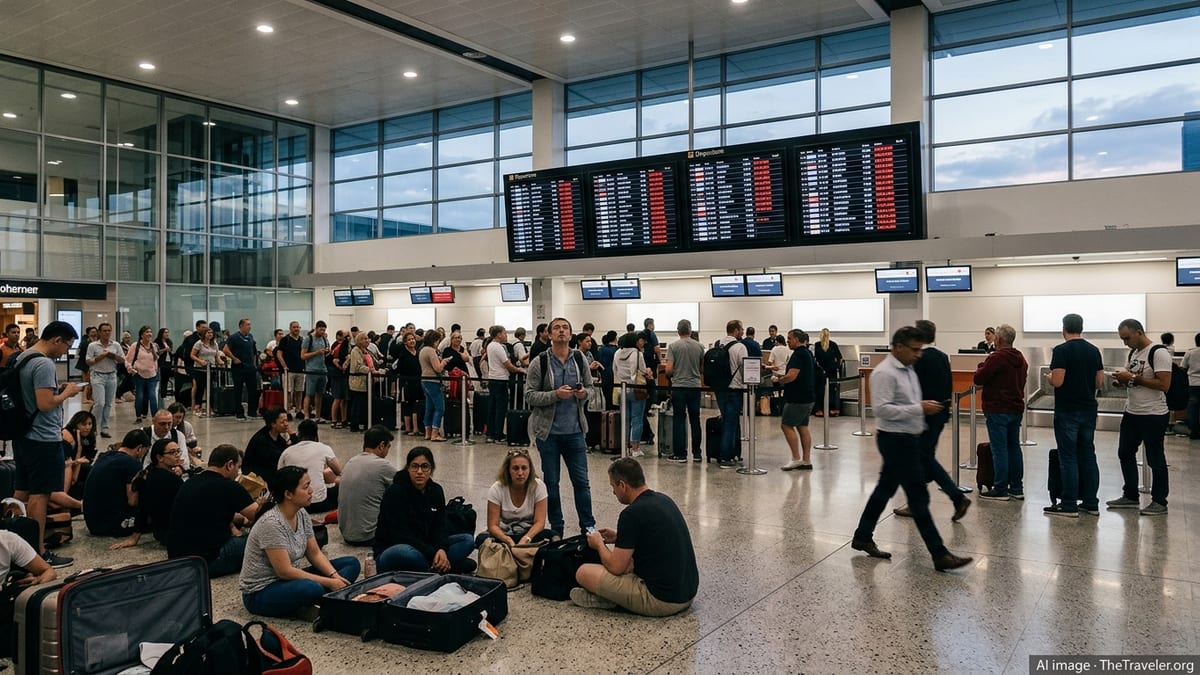
Biometric border checks stretch airport waiting times
The disruption is centred on the EU’s Entry/Exit System, a digital border database that has been rolling out across the Schengen area since late 2025. The scheme logs non-EU visitors’ fingerprints, facial images and travel details on first entry, replacing passport stamps with a biometric record that is verified again when passengers leave.
Airport groups and airlines across the continent report that the extra steps are significantly lengthening passport control, particularly where staffing or equipment is limited. A review by airports association ACI Europe found that border processing times have increased by up to 70 per cent, with waiting times at some hubs rising to as much as three hours during busy periods.
Operational glitches have compounded the problem. Reports from Lisbon, Milan and other major gateways describe malfunctioning fingerprint scanners, inconsistent use of automated kiosks and bottlenecks where only a fraction of available EES machines are in service. In several cases, aircraft have departed with dozens of empty seats because passengers were still stuck in border queues despite arriving well before the scheduled boarding time.
Industry bodies stress that the underlying technology is intended to streamline checks in the long term, but acknowledge that the transition phase is proving far more disruptive than anticipated, especially for passengers unfamiliar with the system or travelling in family groups.
UK travellers told to build in extra hours
The sharpest warnings in recent days have targeted British travellers flying home from European holiday destinations. Coverage of guidance from Wizz Air’s UK arm shows passengers are now being advised to arrive at overseas airports around three hours before flights to the UK, rather than relying on the traditional two-hour rule for short-haul services.
Publicly available briefings highlight concerns that queues at passport control can remain unpredictable, particularly at peak times and at airports handling large numbers of UK leisure travellers. In one reported incident at Milan Linate, more than 100 easyJet passengers were left behind after they failed to clear border checks in time, despite arriving at the airport early. Similar accounts have emerged from airports in Spain, Italy and Portugal during recent school holidays.
Airline and airport managers note that check-in desks for outbound flights often open only two or three hours before departure, limiting how early passengers can physically enter the secure side of the terminal. As a result, any additional delay at border control can quickly turn into a missed boarding time, especially for those travelling with hold luggage or young children.
Travel advisers are therefore urging UK holidaymakers to monitor their airline’s check-in opening times, complete as many formalities as possible online and head to the airport as soon as bag drop is available, instead of assuming that two hours will be sufficient.
Hotspots across Europe as summer approaches
While the new border system applies across much of the Schengen zone, the intensity of disruption varies widely from one airport to another. Reports from Lisbon suggest queues stretching to three hours or more at peak times, with some travellers facing waits of up to six hours following technical issues with the biometric equipment. Local contingency plans have included diverting traffic to other Portuguese airports and temporarily reverting to manual checks when lines become unmanageable.
In Italy, passenger stories from Milan and regional airports such as Pisa and Florence describe long snaking queues as staff guide travellers through EES kiosks one by one. Similar scenes have been noted in parts of Spain and Greece, where the combination of rising visitor numbers and new checks has led to bank-holiday bottlenecks.
Beyond airports, cross-Channel routes are also feeling the strain. Recent coverage from Dover and the Eurotunnel terminal near Folkestone points to car and coach passengers encountering delays of several hours as border officials apply the same EES requirements at ports and juxtaposed controls. Travel operators warn that traffic peaks around UK bank holidays and the main summer getaway could create further flashpoints if processing speeds do not improve.
Conversely, some European hubs report relatively smooth operations after investing in extra staff and a larger number of functioning biometric kiosks. This patchwork of experiences is adding to uncertainty for travellers, who may clear one airport in minutes only to encounter gridlock at another on the same trip.
What the new checks mean for flight plans and connections
The evolving situation is reshaping how UK residents are being advised to plan European journeys. Travel experts now suggest allowing more generous connection times when booking separate flights, particularly where a transfer involves exiting and re-entering the Schengen area. Passengers on multi-leg itineraries are being encouraged to factor in several hours between flights to reduce the risk that long queues at passport control will cause missed onward services.
Guidance from consumer groups and passenger rights organisations emphasises that delays triggered by government border systems are typically classified as outside airlines’ direct control. That can limit entitlement to cash compensation under European air passenger rules, even when travellers arrive late at their final destination. However, carriers may still have duties to provide rebooking or care in certain circumstances, and passengers are being urged to keep records of queue times and any disruption.
Tour operators and insurers are also revisiting their advice. Some package providers now highlight the potential for extended border waits in pre-departure information, while several insurance policies urge customers to allow “ample time” for formalities when travelling to or from the EU as a non-EU national.
For independent travellers, the practical implication is a shift in mindset: the pre-pandemic habit of cutting airport arrival times fine is increasingly seen as risky, particularly for families, older passengers and those with inflexible tickets.
How passengers can prepare for a slower border
Despite the headlines about chaos, travel bodies stress that UK residents can reduce the likelihood of problems by preparing carefully before they reach the terminal. Simple steps such as checking passport validity, completing airline check-in early, and keeping boarding passes and travel documents ready for inspection can help speed individual processing.
Passengers who have previously registered their biometrics under the EES may experience somewhat faster checks on subsequent trips, although experiences vary between airports. Regular travellers are encouraged to familiarise themselves with the layout of local terminals and to follow signage to the correct EES lanes to avoid last-minute confusion.
Families with children, travellers with reduced mobility and those carrying large amounts of luggage are being advised to build in extra time beyond the three-hour guideline, especially during school holidays and summer weekends. Travel commentators note that while long queues cannot always be avoided, arriving earlier can at least shift the stress from the boarding gate to a more manageable wait in the departures hall.
With the main European holiday season about to begin, airlines, airports and border agencies are under pressure to refine procedures, fix technical glitches and improve communication. Until then, publicly available guidance for UK travellers remains clear: treat European departures more like long-haul journeys, and plan to be at the airport hours before take-off.