


More news on this day
Japan’s tourism sector is being jolted by the latest surge in global oil prices linked to the Strait of Hormuz crisis, with rising fuel costs now feeding through to airfares, tour prices and domestic travel budgets just as the country sought to solidify its post‑pandemic visitor recovery.
Get the latest news straight to your inbox!
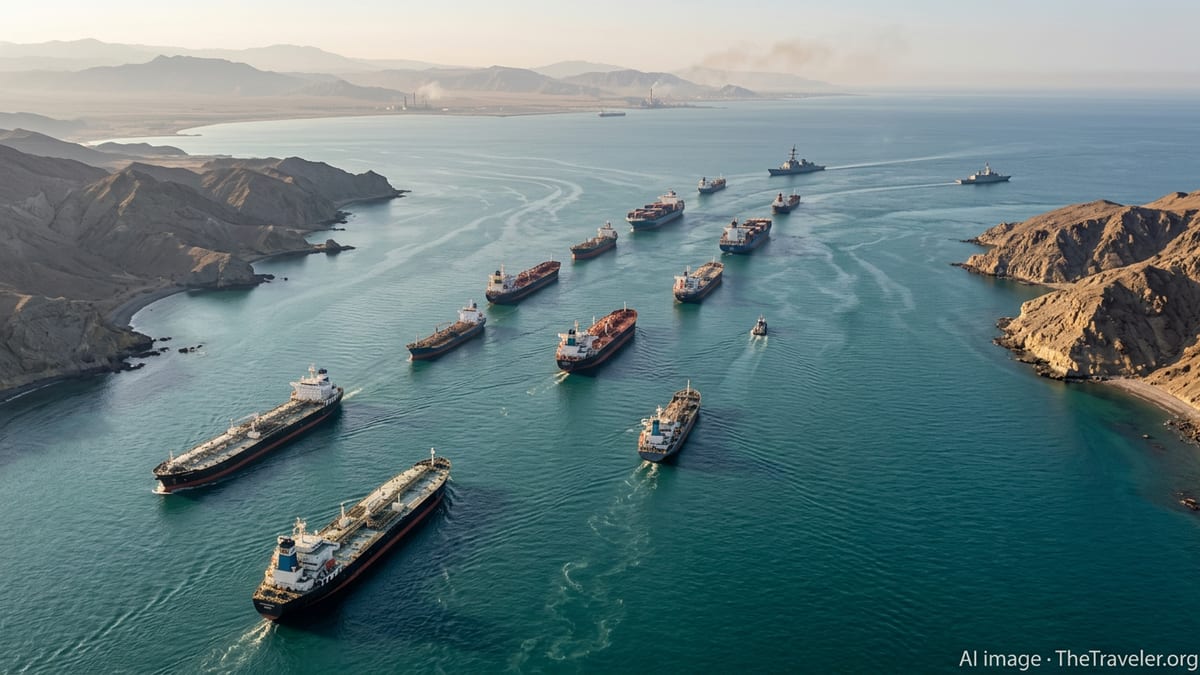
Energy Shock Ripples Through a Tourism-Dependent Economy
The effective closure and threatened blockade of the Strait of Hormuz in March 2026 triggered one of the sharpest oil supply disruptions in years, forcing benchmark Brent crude back above 100 dollars a barrel after briefly easing during ceasefire talks. Analysts note that Japan, which relies on the Middle East for more than 90 percent of its crude imports and channels a large majority of that supply through Hormuz, is among the most exposed advanced economies to sustained energy price spikes.
Publicly available energy security assessments describe Japan as facing “direct risk” from any prolonged disruption in the strait because of the high share of its oil and gas trade that must pass the chokepoint. While government data indicate that Japan maintains strategic reserves covering more than eight months of net imports, financial and policy briefings warn that inventories can cushion but not fully offset the impact of elevated prices on transport, aviation fuel and broader consumer costs.
The timing of the shock is particularly sensitive for tourism. Japan only recently returned to record levels of inbound arrivals and hotel occupancy, supported by a weak yen that made the country relatively affordable for overseas visitors. The sudden jump in energy costs threatens to erode that advantage, raising operating expenses for airlines, rail operators, hotels and attractions that had budgeted using far lower oil benchmarks just weeks earlier.
Travel economists tracking the crisis say that even if physical supply to Japan is maintained via rerouted shipments and reserve drawdowns, the price effect alone is enough to tighten household budgets and corporate travel spending, with tourism one of the most immediately exposed sectors.
Airlines Cut Capacity as Jet Fuel Costs Spike
The steep rise in crude prices has quickly translated into higher jet fuel costs across Asia, with aviation and travel research notes reporting rapid adjustments to airline capacity planning. Regional carriers had already faced rerouting and insurance premium increases on Middle East routes; now, domestic and short-haul networks around Japan are coming under pressure as operators reassess the viability of marginal services.
Japanese and foreign airlines serving the country are widely expected to pass through at least part of the fuel burden to customers via higher base fares and fuel surcharges. Historical analysis of previous oil spikes suggests that once average fuel prices cross certain thresholds, discretionary leisure travel demand begins to soften, particularly on price-sensitive routes used by budget-conscious tourists and younger travelers.
Forward booking commentary from travel platforms points to a growing divergence between high-value long-haul itineraries, which remain relatively resilient for now, and short-break regional trips, which appear more vulnerable to cancellation or downgrading as families and small businesses rework their budgets. Tour operators that had marketed fixed-price packages months in advance are now grappling with thinner margins and are signaling that summer and autumn departures could come with noticeable price adjustments.
Industry-focused market outlooks also highlight the risk of a feedback loop for Japan’s regional airports. Facilities that depend heavily on inbound charter flights and low-cost carriers could see schedules trimmed if fuel-driven cost increases outpace demand, putting strain on local economies that invested heavily in tourism infrastructure in recent years.
Domestic Travel and Hospitality Brace for Higher Costs
The oil shock is not confined to international aviation. Higher fuel prices are feeding into Japan’s broader transport network, including express buses, rental cars and logistics services that underpin the domestic tourism experience. Economic commentaries from Japanese research institutes warn that increases in gasoline and diesel prices are filtering through to food distribution, utilities and everyday goods, raising the overall cost of a holiday within Japan.
Hotel and ryokan operators, particularly outside the major metropolitan areas, report rising utility and procurement costs that could eventually be reflected in room rates and service prices. Many had already absorbed higher wage and food costs; an additional energy burden leaves limited room to discount aggressively to stimulate demand if visitor numbers soften.
Destination marketing organizations around Japan are responding by emphasizing value rather than pure price. Campaign materials are pivoting toward longer stays, off-peak travel and bundled experiences that offer perceived savings even as baseline costs climb. Travel analysts note that such strategies may help sustain visitor numbers in the near term but cannot fully offset the structural impact of an extended period of elevated fuel prices.
Urban tourism hubs, which benefit from dense public transport networks and shorter intra-city travel distances, may prove more resilient than rural destinations that rely on private cars or coach tours. Any sustained divergence could reshape investment priorities, with capital and promotion budgets tilted further toward already popular city and resort areas.
Currency Swings and Consumer Sentiment Complicate Recovery
The Strait of Hormuz turmoil is unfolding against a volatile financial backdrop. Reports from global market desks describe how renewed oil price gains have reignited concerns about imported inflation in Japan, putting pressure on the yen and complicating the outlook for monetary policy. For inbound visitors paying in dollars or euros, a weaker yen can partially offset higher airfares and local prices, preserving Japan’s image as a relatively good value destination.
For Japanese residents considering outbound travel, however, the combined effect of a weaker currency and higher fuel surcharges is significant. Package tour prices to Europe, North America and parts of Asia are rising, and consumer confidence surveys suggest more travelers may choose to holiday at home or shorten their trips abroad. This shift could provide some support to domestic tourism hotspots but may not compensate for any sharp downturn in foreign visitor spending.
Business travel is also under scrutiny. Corporate cost-control measures often target travel budgets early in a downturn or during energy-driven inflation episodes, and consultants are advising Japanese firms to reassess non-essential trips, favoring virtual meetings where possible. Reduced corporate travel would weigh on premium airline cabins and higher-end hotels that had been relying on a steady return of conferences and trade events.
Market strategists warn that if elevated oil prices persist for several quarters, the combination of weaker real incomes, higher transport costs and cautious corporate spending could create a drag on Japan’s broader economy, limiting the room for tourism to act as a growth engine.
Policy Responses Aim to Contain Travel Shock
Tokyo is beginning to deploy its policy toolkit in response to the oil-driven turbulence. Government documentation and financial institution briefings describe a mix of strategic reserve releases, subsidies to cap retail fuel prices and provisional support schemes designed to prevent sharp shocks to households and small businesses. Similar measures were used during past energy disruptions, though the scale of the current Hormuz crisis presents new challenges.
Industry observers say that targeted relief for transport operators, including regional airlines, bus companies and ferry services, is likely to be critical in stabilizing tourism flows. Without some form of support, operators with thin balance sheets could be forced to cut services or raise prices more aggressively, amplifying the impact on travelers and regional economies that depend on visitor spending.
Tourism boards and local governments are also exploring promotional campaigns timed to coincide with any easing in fuel markets, seeking to quickly capture pent-up demand if airfares and transport costs retreat from current peaks. Scenario analyses from energy and economic think tanks suggest that a partial reopening of the Strait of Hormuz and a moderation in crude prices would provide meaningful relief, but they caution that markets remain highly sensitive to geopolitical developments.
For now, Japan’s tourism industry faces an uneasy peak travel season shaped by distant shipping lanes and volatile commodity markets. How quickly the Strait of Hormuz crisis is resolved, and how effectively Japan can shield travelers and operators from the worst of the price shock, will determine whether the current turbulence becomes a short-term squall or a more enduring shift in the country’s travel landscape.