


More news on this day
Jazeera Airways has transported more than 73,000 passengers through a network of alternative hubs since Kuwait International Airport shut to civilian traffic in late February, highlighting how regional carriers are reconfiguring operations amid prolonged airspace closures.
Get the latest news straight to your inbox!
Airport Closure Reshapes Kuwait’s Air Connectivity
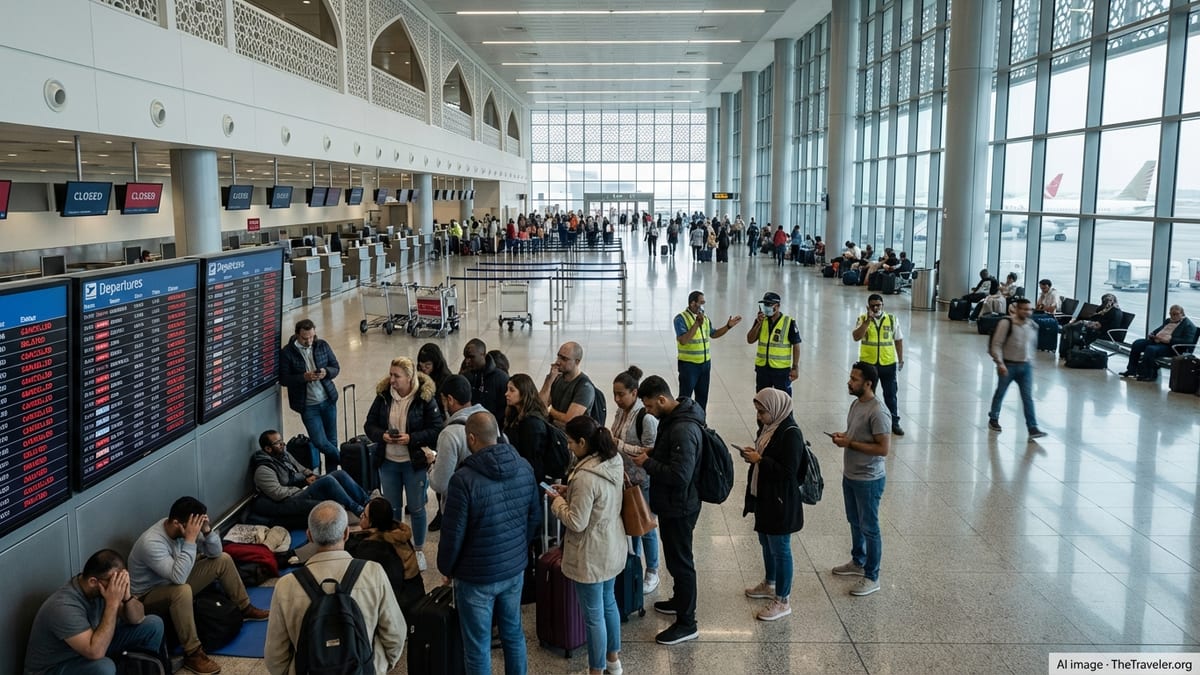
Kuwait International Airport has been closed to regular passenger traffic since February 28, when Kuwaiti airspace was suspended in response to escalating regional security risks. Publicly available information shows that the closure, initially framed as a temporary precaution, has now stretched into its seventh week with no confirmed reopening date.
Reports indicate that the shutdown followed a sequence of regional incidents and strikes affecting critical infrastructure, including aviation facilities in and around Kuwait. Aviation advisories describe a comprehensive halt to civilian movements through the country’s main gateway, with all commercial departures and arrivals suspended.
Travel advisories and local coverage emphasize that while Kuwait’s airspace remains formally restricted, demand for outbound and inbound travel has not disappeared. Instead, traffic has been redirected through neighboring countries, particularly Saudi Arabia and Egypt, as airlines seek to maintain at least partial connectivity for residents, expatriate workers, and transit passengers.
The prolonged closure has left tens of thousands of travelers reliant on indirect routings, often involving overland segments, new check in points, and unfamiliar airports. Within this disrupted landscape, Jazeera Airways has emerged as one of the most active operators in stitching together replacement links for Kuwait based customers.
Jazeera Airways Redeploys Operations Across Alternative Hubs
According to recent briefings and industry coverage, Jazeera Airways has carried approximately 73,000 to 74,000 passengers since March 11 by shifting its operations away from Kuwait City and into a network of five regional hubs. These include airports in Saudi Arabia, such as Qaisumah near Hafar Al Batin and Dammam, as well as Cairo in Egypt, among other points.
The airline’s latest operational update, published this week, outlines a total of about 73,655 passengers moved over 2,300 flights during the 43 day period since Kuwait’s airport closed. The figures underscore the scale of the redeployment, involving not only revised flight patterns but also ground transport arrangements to bridge the gap between Kuwait and the foreign departure points.
Publicly available information shows that Jazeera has been marketing combined air and ground itineraries in which passengers travel by road from Kuwait to Saudi airports before boarding flights to their final destinations. Return journeys follow the reverse pattern, with inbound passengers landing outside Kuwait and continuing overland to reach the country.
The carrier continues to base its core traffic on leisure routes, expatriate worker flows, and regional business links. Even with Kuwait International Airport offline, Jazeera is reportedly serving more than two dozen cities and has signaled ambitions to expand its reachable network to roughly 37 destinations as additional slots and aircraft become available at partner airports.
Logistics, Ground Transfers and Passenger Experience
Reconfigured schedules have required an extensive layer of ground logistics to keep itineraries viable. Travel industry sources describe dedicated bus transfers between Kuwait and Saudi airports such as Qaisumah and Dammam, adding several hours of overland travel at the start and end of each trip.
These hybrid air land journeys introduce new complexities for passengers, including earlier check in times, additional security checks at border crossings, and unfamiliar embarkation points far from Kuwait City. Advisory notices recommend that travelers allow ample time for road segments and consider potential delays at checkpoints.
Reports indicate that Jazeera Airways and its partners have adjusted ground handling and notification tools to cope with these changes, including expanded use of digital alerts to communicate schedule updates, gate changes, and transfer details. However, some passengers continue to report challenges around cancellations, refunds, and short notice alterations as airlines react to evolving airspace permissions.
Despite these difficulties, the scale of operations suggests that a significant share of Kuwait’s outbound demand has successfully migrated to the new routing model. The figure of more than 73,000 passengers moved since March highlights the extent to which hybrid transport chains have become a temporary substitute for direct flights from Kuwait City.
Maintaining Trade and Cargo Links to Kuwait
The disruption is not limited to passenger traffic. Cargo operators associated with Jazeera Airways have also rerouted freight movements through Saudi gateways to maintain the flow of essential goods into Kuwait. Industry reports describe combined air and road corridors designed to support fast moving consumer items and time sensitive perishables.
According to recent logistics updates, the airline’s cargo network has offered substantial capacity from Saudi Arabia into Kuwait, including space for food products, pharmaceuticals, and industrial supplies. These services are framed as critical in supporting retailers and manufacturers that previously relied on direct uplift through Kuwait International Airport.
Public documents and advisories from freight integrators note that, while sea freight and land routes continue to function, the loss of direct air cargo capacity has extended lead times and introduced additional handling points. The alternative corridors built around Jazeera’s flights are being used to offset these pressures, particularly for items that cannot tolerate long transits.
For Kuwait’s wider travel and tourism ecosystem, the maintenance of limited passenger and cargo flows offers a measure of continuity but falls short of pre closure norms. Hospitality businesses, travel agencies, and tour operators remain heavily exposed to the reduced capacity and higher routing costs that have defined the period since late February.
Outlook as Kuwait Awaits Airport Reopening
Official aviation notices and domestic media coverage consistently state that Kuwait International Airport remains closed, with authorities yet to specify a firm reopening timeline. The ongoing security environment in the region continues to influence risk assessments around airspace use, runway safety, and terminal operations.
Airlines serving the Kuwait market, including Jazeera Airways and the national carrier Kuwait Airways, have repeatedly communicated that they stand ready to restore direct flights as soon as regulatory clearances are granted. For now, however, schedules continue to be built around foreign hubs, and customers are advised to monitor carrier announcements for any change in status.
Analysts following Gulf aviation trends note that the current situation is testing the resilience of point to point low cost models, as carriers invest in interim networks that may be needed for weeks or months. In Jazeera’s case, the ability to move more than 73,000 passengers during a 43 day shutdown is being cited as evidence of operational flexibility, but also as a reminder of the cost and complexity imposed by regional instability.
With Kuwait’s main airport still offline in mid April, attention is turning to how quickly airlines can unwind temporary routings and re consolidate operations once conditions permit. For travelers and businesses alike, the scale of Jazeera Airways’ redeployment offers some reassurance that connectivity can be preserved under strain, even as the wider region waits for clearer skies.