


More news on this day
A worsening jet fuel crunch linked to the conflict in Iran is beginning to reshape air travel across Europe in May 2026, with thousands of flights cut from schedules and major tourism hubs such as London, Paris and Athens bracing for a turbulent start to the summer season.
Get the latest news straight to your inbox!
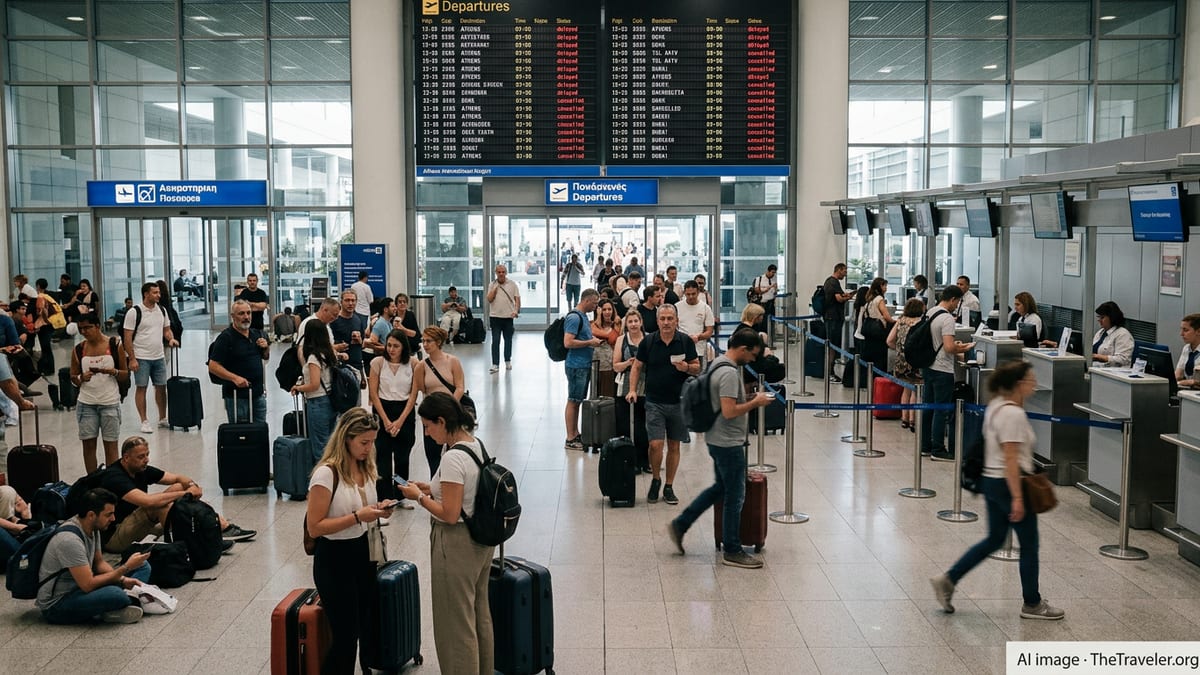
Fuel shock turns into capacity cuts across key hubs
Publicly available industry data and recent coverage indicate that airlines worldwide have already removed more than 13,000 flights and roughly 2 million seats from global schedules for May 2026, with European carriers among the most aggressive in trimming capacity. Analysts attribute the cuts primarily to a jet fuel supply shock and price spike after the closure of shipping lanes around the Strait of Hormuz during the Iran conflict, which has disrupted a significant share of the world’s aviation fuel flows.
London, Paris and Athens are not yet experiencing outright shutdowns, but they sit near the center of the adjustment. Traffic statistics compiled by regional air navigation authorities show that Heathrow and Paris Charles de Gaulle have each seen low single digit percentage reductions in scheduled flights compared with late winter, a reversal from the steady growth that was expected heading into the peak travel season. Athens International Airport is recording some of the highest delay levels in Europe as carriers juggle altered routings, crew rosters and refuelling logistics.
The pressure is mounting as major European groups reshape their summer plans. Lufthansa has announced that it will cancel around 20,000 flights between May and October, while Air France KLM is cutting frequencies on routes where it operates multiple daily services, including trunk connections from Paris and Amsterdam to London and other European capitals. Smaller regional airlines have begun to pull weaker routes entirely, particularly those linking secondary cities to popular holiday destinations in Greece and the Mediterranean.
Industry bodies warn that the picture could deteriorate quickly if fuel stocks fall further. The International Air Transport Association has cautioned that Europe could face more pronounced cancellations by late May if jet fuel supply tightens from elevated prices into outright shortages, particularly at smaller airports with limited storage and fewer alternative supply options.
London, Paris and Athens feel the first wave of disruption
In London, schedule data for May show that capacity at Heathrow and Gatwick remains close to last year’s levels, but there are growing signs of targeted cuts. A limited number of long haul routes from Gatwick, including transatlantic flights, have been removed or merged, while some short haul services to southern Europe have been consolidated so that two lightly booked flights operate as one fuller departure. British and foreign carriers serving London are also lengthening minimum connection times to guard against knock on delays.
Paris Charles de Gaulle, one of Europe’s busiest hubs, has seen a noticeable increase in delays and missed connections on peak days after a series of timetable changes took effect. Travel industry reports describe mid morning departures to London, Amsterdam and Frankfurt leaving late enough that passengers are missing onward North American and African flights, triggering rebookings and overnight stays. Orly, Paris’s second airport, is less affected by the long haul ripple but has lost some low margin leisure flights as airlines reassign aircraft to higher yielding routes.
Athens, which relies heavily on seasonal tourism traffic, has emerged as a particular pinch point. Recent reporting on European network performance indicates that the Greek capital is among the airports with the longest average delays, driven by a combination of congested airspace, high demand and more complex refuelling arrangements for aircraft arriving from outside the eurozone. Some budget carriers have already cancelled spring shoulder season flights from regional French and Italian cities to Athens and the islands, concentrating instead on core weekend services from larger hubs.
So far, the disruptions around these three cities amount more to a slow tightening than a dramatic shutdown. However, with airlines warning that they may need to adjust timetables again at short notice, travellers heading to or through London, Paris or Athens in late May are being urged by consumer groups and travel advisers to monitor their bookings closely and allow extra time for connections.
Price spike, not yet a full-blown physical shortage
Despite the visible wave of cancellations, European institutions are drawing an important distinction between high prices and outright scarcity. Recent briefings from the European Commission and specialist aviation outlets note that, at present, most airlines are cutting capacity primarily because jet fuel has become significantly more expensive, rather than because fuel is physically unavailable at major airports. The combination of elevated costs and uncertainty has made marginal routes harder to justify economically, especially where ticket prices were set months ago.
Fuel historically accounts for roughly a quarter of an airline’s operating costs at typical price levels. With spot prices having at least doubled compared with early winter in the wake of the Iran conflict, that share has jumped sharply, squeezing carriers that are unable to pass the increase on to passengers with existing tickets. Some have responded by retiring older, less efficient aircraft earlier than planned, imposing new surcharges on fresh bookings, and adjusting flight speeds and routings to conserve fuel where operationally possible.
Regulators, however, are signalling that passengers should not bear the brunt of the crisis for flights that are already booked. Fresh guidance from European institutions makes clear that, under existing consumer protection rules, airlines remain liable to refund or compensate passengers for most cancellations linked to fuel issues, except in narrow circumstances where the disruption meets the threshold for being considered extraordinary. That stance is intended to discourage airlines from treating fuel costs as a catch all justification for cutting services without offering redress.
At the same time, safety agencies have issued information bulletins on the correct use of alternative aviation fuels and on contingency procedures in the event that specific airports experience temporary supply problems. The aim is to ensure that, if shortages become more acute at local or regional level later in the summer, airlines and fuel providers have clear protocols in place to manage the situation without compromising safety.
Knock-on effects for tourism and local economies
The emerging pattern of cancellations is already rippling through Europe’s tourism sector, particularly in destinations that rely on dense air links from London, Paris and Athens. Hoteliers in Greek island resorts and Mediterranean coastal towns report higher rates of date changes and booking churn as travellers rebook onto different flights or switch to alternative destinations that currently appear less exposed to disruption. Tour operators are working to consolidate group departures and renegotiate room allocations in anticipation of lower air capacity on some routes.
In the United Kingdom and France, regional airports with strong leisure traffic to southern Europe face an uncertain early summer. If fuel costs remain elevated, airlines are likely to continue prioritising flights from primary hubs, which can sustain higher fares and better load factors, at the expense of thinner point to point routes. That dynamic could limit options for travellers who typically rely on secondary airports for affordable city breaks or direct links to sun destinations.
Athens itself, along with other popular city break destinations such as Paris and London, may experience a mixed impact. While overall visitor numbers could soften if air capacity is reduced, high demand from long haul markets and from travellers determined to proceed with already booked trips may keep hotels and attractions busy, especially on peak weekends. The strain is more likely to show up in uneven occupancy patterns, pressure on alternative transport such as rail and ferries, and volatility in last minute airfares.
Local officials across southern Europe are watching the situation closely because tourism receipts play a central role in their economies. If the jet fuel crunch deepens into the high summer months, analysts warn that the loss of even a modest percentage of expected international arrivals could weigh on seasonal employment, hospitality revenues and tax receipts, particularly in regions that have only recently recovered from the pandemic downturn.
What travellers should expect in the coming weeks
For now, aviation experts emphasise that the majority of flights to and from London, Paris and Athens in May 2026 are still operating. However, passengers are likely to encounter fuller planes, fewer alternative departures on the same day, and a higher probability of schedule changes as airlines keep adjusting their operations in response to fuel market developments. Late night cancellations and early morning delays could become more common as carriers reposition aircraft and crews.
Consumer advocates advise travellers to pay close attention to airline notifications, check flight status regularly in the days before departure, and consider building in extra time for connections within Europe in case of missed onward flights. Those with flexible itineraries may wish to favour non stop services on larger airlines from primary hubs, as these routes are less likely to be trimmed than low frequency services from secondary airports.
Travel insurance is another area drawing scrutiny. According to recent specialist coverage, the jet fuel crisis is now widely viewed by insurers as a known risk, which means that new policies may offer limited or no coverage for cancellations directly linked to fuel issues. Travellers purchasing insurance for upcoming trips are being encouraged to read policy wording carefully and to understand that standard coverage may not fully protect against disruptions sparked by the fuel crunch.
Ultimately, how severe the disruption becomes at London, Paris, Athens and other key gateways will depend on the evolution of both fuel prices and physical supply over the next several weeks. If shipments through the Middle East stabilise and European reserves remain adequate, the current wave of cancellations could level off into a period of tighter but manageable capacity. If the supply squeeze worsens, the industry could be forced into a new round of schedule cuts just as the peak holiday season begins.