


More news on this day
The Netherlands has become the latest aviation hub to pare back flight schedules as a deepening jet fuel crisis and the ongoing Strait of Hormuz disruption trigger cascading cuts to air connectivity with the Middle East and beyond.
Get the latest news straight to your inbox!
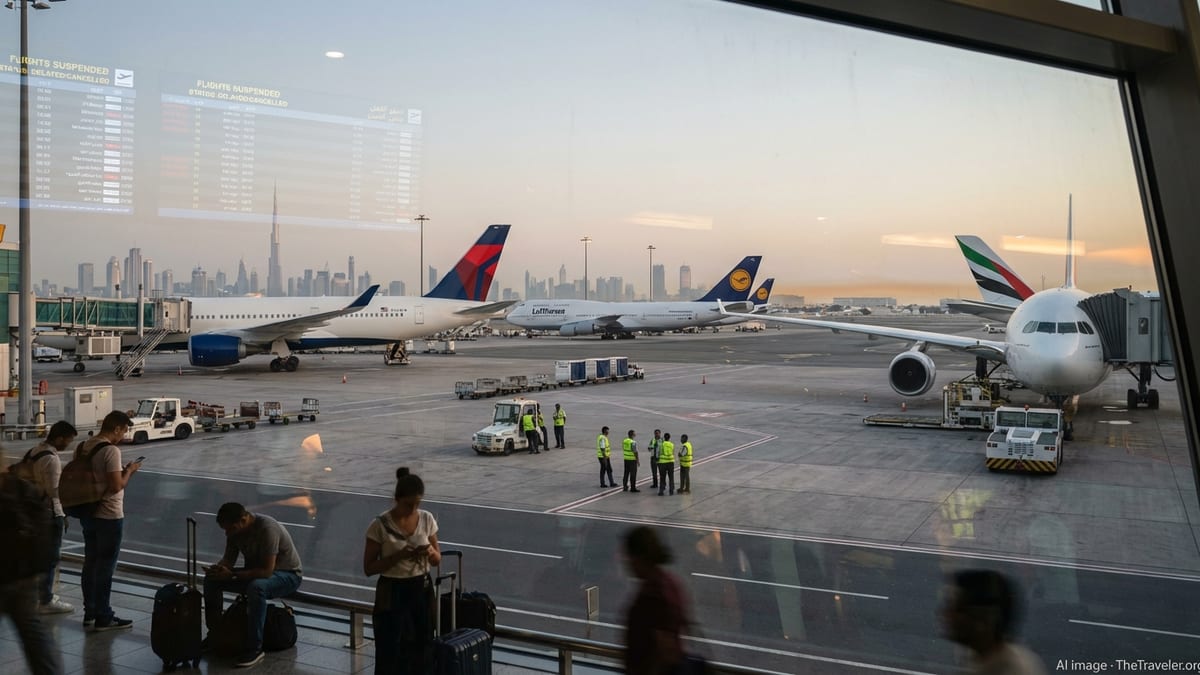
Netherlands Tightens Schedules as European Fuel Crunch Bites
Recent schedule updates from Dutch and wider European carriers show the Netherlands joining Germany, the United Kingdom and other major markets in trimming thousands of flights as jet fuel prices surge to multi‑year highs. KLM and its partners have already removed scores of intra‑European and long‑haul services through May, building on earlier decisions to cut at least 160 flights amid soaring kerosene costs and warnings of systemic shortages across the continent.
The reductions come as European industry bodies caution that regional jet fuel inventories are uncomfortably thin, with commercial stocks measured in weeks rather than months. Publicly available information indicates that airports and airlines have been urged to conserve fuel, consolidate frequencies and prioritize higher‑yield routes, particularly those less exposed to the conflict‑affected Middle East corridor.
Germany’s Lufthansa Group has announced one of its most extensive network adjustments in years, including steep cuts to short‑haul capacity designed to save tens of thousands of tonnes of jet fuel through the peak summer season. Similar capacity trims, schedule thinning and upgauging strategies are emerging around Amsterdam Schiphol, where the Dutch hub’s role as a major connector between Europe, Asia and North America makes it acutely sensitive to fuel price shocks and routing disruptions.
In parallel, UK‑based airlines and airports report that the last significant deliveries of jet fuel that transited the Strait of Hormuz before the crisis have now been processed, intensifying pressure on Northwest European supply chains. Analysts say this has left carriers in the Netherlands and neighboring states more reliant on alternative fuel flows and financial hedging, heightening the risk of further cancellations if the Middle East situation fails to stabilize.
Strait of Hormuz Crisis Drives Global Jet Fuel Shock
The immediate trigger for the current aviation squeeze is the effective closure of the Strait of Hormuz since late February 2026, following a rapid escalation in the Iran conflict. The narrow waterway usually carries around a fifth of the world’s seaborne oil and related products, including key feedstocks for jet fuel refining. With tanker traffic severely curtailed and insurers pricing in elevated risks, refiners in Europe and Asia are facing sharply reduced supplies and higher input costs.
Industry data compiled by energy analysts and aviation bodies shows jet fuel prices more than doubling year on year, with some benchmarks rising by around 100 percent to levels not seen since the post‑pandemic recovery. Research from aviation consultancies indicates that airlines worldwide have already removed more than 10,000 to 13,000 flights from their May schedules in response, on top of cuts implemented in March and April as the conflict intensified.
Financial research agencies tracking airline credit conditions describe the situation as a multichannel shock, combining higher fuel prices, disrupted regional refining, longer routings to avoid conflict zones and mounting insurance and security costs. Carriers with limited fuel hedging, constrained liquidity or heavy exposure to long‑haul networks through the Gulf are considered particularly vulnerable, prompting accelerated capacity reductions across Europe, North America and parts of Asia.
Even carriers that report secure fuel supplies face an unfavorable cost environment. Some Gulf and Asian airlines have introduced fuel surcharges or rebalanced networks toward shorter, more profitable segments, while others are grounding older, less efficient aircraft ahead of schedule. The overall effect is a tightening of global seat capacity and a sharp rise in fares, especially on long‑haul routes that once relied on abundant, relatively cheap jet fuel.
Middle East Air Connectivity Frays Across Lebanon, Iraq, Iran and Gulf States
The shock to jet fuel availability coincides with a severe deterioration in air connectivity across large parts of the Middle East. Flight tracking data and public airline notices show widespread suspensions and reductions on routes touching Lebanon, Iraq, Iran, Israel, the United Arab Emirates, Saudi Arabia, Qatar and neighboring markets, reflecting both security concerns and the surge in operating costs.
Many international carriers began curtailing services soon after the regional conflict escalated in late February, initially as a security precaution. As the Hormuz disruption and refinery outages fed through into jet fuel markets, a growing number of airlines extended or deepened those suspensions, especially for point‑to‑point leisure routes and lower‑yield connecting services. Some European networks that previously funneled passengers via Gulf hubs to Asia and Africa have been partially reoriented through alternate corridors, reducing frequencies into key Middle Eastern cities.
In Lebanon and Iraq, intermittent security alerts and shifting airspace restrictions have compounded the fuel‑driven pressures, leading to rolling cancellations and reduced frequencies by both local and foreign carriers. Publicly available timetables indicate a thinning of services even on traditionally resilient routes, with airlines citing a combination of security, insurance and cost factors when adjusting schedules.
The Gulf’s traditional mega‑hubs in the UAE, Qatar and Saudi Arabia have also seen significant disruption. While some local carriers emphasize robust fuel hedging and supply arrangements, their broader networks remain exposed to rerouting requirements, curfews, and reduced demand from key origin markets. Analysts note that even when technical capacity exists, the economics of maintaining pre‑crisis frequencies are increasingly challenging under the current jet fuel price regime.
Tourism and Business Travel to the Region Slide
The collapse in air connectivity is already feeding through to tourism and business travel numbers across the Middle East. Independent tourism forecasters now project that international arrivals to the wider region could fall by double‑digit percentages in 2026, with the steepest declines expected in non‑Gulf markets such as Iran, Israel and Lebanon, followed by Gulf Cooperation Council states including the UAE, Saudi Arabia and Qatar.
These forecasts reflect a combination of factors: fewer direct flights, longer journey times due to rerouting, elevated fares linked to fuel surcharges, and traveler caution around visiting conflict‑adjacent destinations. Travel trade publications report that tour operators have scaled back programs to Lebanon, Iraq and Iran, while packages to Gulf city‑break destinations are being discounted or postponed as airlines and hotels attempt to stimulate limited demand.
Duty free, airport retail and hospitality sectors that depend heavily on transfer passengers are also feeling the strain. Analysts point out that hub airports in the Gulf, which built expansive commercial ecosystems on high‑volume long‑haul transit traffic, are especially vulnerable to prolonged capacity reductions. With many of the region’s traditional feeder routes from Europe and Asia now constrained by fuel considerations, non‑aeronautical revenues are under pressure.
Business travel has not been spared. Corporate travel managers in Europe, North America and Asia are reportedly re‑routing essential journeys away from the region where possible, relying more on virtual meetings or repositioning via alternative hubs. This shift, combined with capacity cuts and higher fares, risks weakening the Middle East’s role as a crossroads for global commerce at a time when diversification and foreign investment are central to several national economic strategies.
Global Aviation and Tourism Brace for a Prolonged Adjustment
The Netherlands’ decision to join a widening group of countries in cutting flights underlines how intertwined the jet fuel crisis and Middle East conflict have become for global aviation. From Germany and Turkey to the United States, United Kingdom, China, Thailand and Malaysia, airlines are responding to the same fundamental constraints: restricted fuel supply, elevated prices and uncertainty over when normal shipping flows through Hormuz might resume.
Industry economists warn that if the current disruption persists through the northern summer, the sector could face a structural reset similar in scale to the post‑pandemic period, but driven by energy rather than health constraints. That would mean a sustained shift toward leaner schedules, higher average fares and a rebalancing of global hub networks away from the most exposed corridors, with lasting implications for tourism‑dependent economies in the Middle East and beyond.
For travelers, the practical effects are already visible in thinner route maps, more frequent schedule changes and higher prices on formerly competitive long‑haul sectors. For airports and tourism boards in Lebanon, Iraq, Iran, the UAE, Israel, Saudi Arabia, Qatar and neighboring states, the more pressing concern is whether the current collapse in connectivity and visitor numbers proves temporary or evolves into a longer‑term loss of market share to rival destinations.
As of mid‑May 2026, publicly available flight and fuel market data suggest that a rapid normalization is unlikely. Airlines in the Netherlands and other major markets continue to adjust timetables week by week, signaling that the industry is preparing for a drawn‑out period of constrained capacity, volatile fuel costs and uneven recovery across regions, with the Middle East sitting at the epicenter of the turbulence.