


More news on this day
JetBlue Airways is facing mounting scrutiny in July 2026 as it records one of the highest levels of flight cancellations worldwide, while pilots and passengers describe cascading scheduling and technology failures that have stranded crews out of position and travelers across key hubs from Boston to New York.
Get the latest news straight to your inbox!
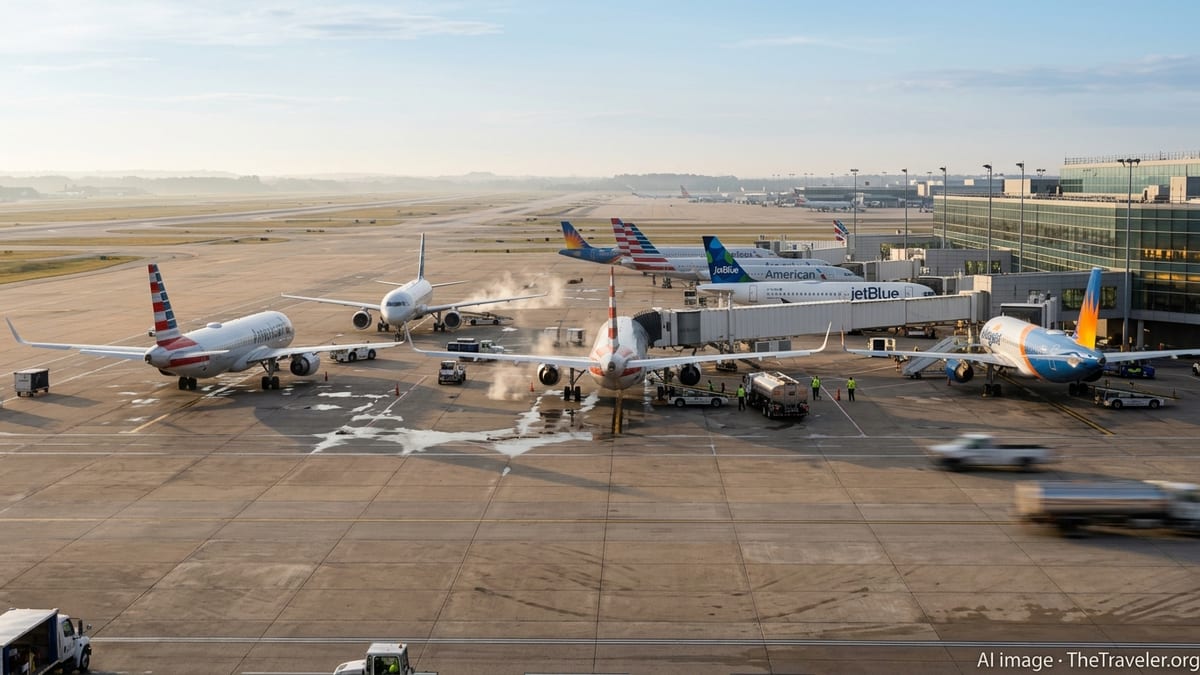
Data Shows JetBlue Outpacing Global Peers on Cancellations
Publicly available flight-tracking and aviation operations data for July indicate that JetBlue has been canceling a higher share of its schedule than many large competitors, particularly on busy transcontinental and Northeast corridor routes. While severe summer thunderstorms across the eastern United States have affected multiple carriers, disruption patterns show JetBlue canceling clusters of departures out of Boston Logan, New York JFK and other East Coast gateways on multiple consecutive days, leaving aircraft and crews out of position.
Industry analysts note that JetBlue’s relatively concentrated network, with a heavy reliance on a few coastal hubs, makes the airline more vulnerable when irregular operations persist over several days. Once aircraft rotations and crew pairings are disrupted, the carrier has fewer backup aircraft and reserve crews than some larger network airlines, making it slower to recover from mass cancellations.
Travel forums and consumer complaint sites reflect a sharp rise in JetBlue-related grievances this month, including reports of last-minute cancellations, inconsistent explanations for disruptions and limited same-day rebooking options. Passengers describe overnight strandings in major hubs as well as in smaller spoke cities, where a single canceled inbound flight can effectively cut off all onward connections for up to 24 hours.
Operational data from regional airports further illustrate the pattern. At Tampa International Airport in early July, for example, the cancellation of a single early morning JetBlue departure to Boston created knock-on effects for connecting passengers heading to secondary East Coast cities, with local aviation reporting describing a backlog that could take up to two days to clear. Similar dynamics have been observed at other mid-sized airports where JetBlue operates relatively few daily frequencies.
Pilots’ Union Highlights System-Wide Scheduling Breakdowns
The Air Line Pilots Association, which represents JetBlue flight crews, has publicly warned of what it describes as system-wide scheduling failures affecting the airline’s operation in July. In a statement issued in late July, the union pointed to recurring problems within crew scheduling platforms that track pilot assignments, legal duty limits and hotel accommodations, asserting that the technology has repeatedly failed during periods of weather and operational stress.
According to the union’s account, these scheduling and tracking tools have struggled to process rapid changes as storms and air traffic control programs prompt rolling delays. When the software stalls or produces incomplete data, pilots can be left waiting for revised assignments, transportation or rest arrangements, even as aircraft and passengers sit ready at departure gates. The association has urged JetBlue to invest in more robust scheduling systems and to ensure adequate staffing in operations centers to handle surges in reassignments.
Pilots have also raised concerns about being stranded away from their home bases without timely hotel bookings or clear onward duty instructions, a situation that can quickly ripple across the network. When a crew times out legally without a replacement on site, a flight must be canceled or delayed, and the aircraft often cannot be repositioned for its next scheduled leg. In a tightly scheduled operation, a single stranded crew can ultimately affect several later departures.
These issues echo broader industry challenges highlighted during other recent IT-related aviation disruptions, where ground stops and software outages at major carriers led to thousands of canceled flights and crew members left in the wrong cities. Analysts say the JetBlue situation underscores how dependent modern airline operations have become on complex, real-time scheduling tools that must remain resilient even under extreme pressure.
Stranded Crews Add to Passenger Chaos Across Hubs
Accounts from pilots, flight attendants and passengers across social platforms describe a July in which JetBlue crews themselves are frequently stuck in airports with limited support, unable to reach company scheduling lines and uncertain when they will next be assigned to operate a flight. Reports indicate that call center hold times for internal crew support have stretched to several hours during peak disruption windows, adding to delays in restoring normal operations.
Travelers at Boston Logan, New York JFK and other JetBlue stations have described seeing pilots and cabin crew waiting in the same customer service lines as passengers as they attempt to secure hotels and transportation after late-night cancellations. In several cases, flights reportedly boarded and then held for extended periods before being canceled when crews exceeded their allowable duty hours without replacements available.
This combination of stranded customers and out-of-position crews has contributed to scenes of crowded gate areas, long lines at service counters and difficulty reaching airline agents by phone or app. Some passengers have recounted flights initially labeled as canceled in digital channels before later departing with limited seating, reflecting what appears to be instability in real-time flight status and inventory systems during the turmoil.
Anecdotal evidence suggests that the strain is particularly acute on routes where JetBlue operates only one or two daily frequencies. When one of those flights is canceled, options to rebook on the same carrier can be scarce for 24 hours or more, especially during peak summer travel days when remaining seats on alternate departures are already sold.
Technology Weak Spots and Legacy Outage Raise Questions
Operational observers trace some of JetBlue’s current difficulties back to long-standing technology vulnerabilities. In March 2026, a brief but widely reported system outage prompted a temporary nationwide ground stop of JetBlue flights after the airline requested the halt while resolving issues in internal systems. At that time, publicly available statements indicated that operations resumed once the outage was addressed, but the episode highlighted how quickly a technical problem can cascade into major schedule disruption.
More recent commentary from pilot representatives suggests that core scheduling and crew-tracking platforms have continued to experience instability under heavy load, particularly when weather causes multiple rolling changes to flight departure and arrival times. If crew tracking data fails to update correctly, dispatchers may not have an accurate picture of which pilots and flight attendants are rested, legal to fly and physically present at each airport.
Analysts note that JetBlue is hardly alone in facing such challenges. Large global carriers have also experienced crippling operational meltdowns linked to outages in crew management software, demonstrating how central these systems are to modern aviation. However, JetBlue’s comparatively smaller scale and more concentrated network can magnify the customer impact when its technology underperforms during peak travel periods.
Aviation technology specialists say airlines under pressure often layer new tools on top of older legacy platforms, creating complex interfaces that may behave unpredictably in abnormal operations. The events of July 2026 are likely to intensify debate around whether carriers such as JetBlue are investing enough in long-term infrastructure upgrades to prevent future breakdowns of this kind.
Travelers Confront Limited Options as Summer Peak Continues
For passengers, the operational turbulence at JetBlue comes at the height of summer vacation season, when flights across the United States and to popular leisure destinations already run near capacity. When a wave of cancellations hits, alternative seats on competing airlines can be scarce or significantly more expensive on short notice.
Reports from affected travelers show many opting to purchase last-minute tickets on rival carriers, rent cars for long-distance drives or delay trips by several days to avoid additional uncertainty. Several passengers describing back-to-back cancellations on JetBlue have indicated that they rebooked future travel on other airlines, citing concerns about recurring midsummer disruptions and difficulties securing timely customer support.
Consumer advocates are advising travelers booked on JetBlue in late July and August to closely monitor flight status, consider building longer connection times into itineraries and familiarize themselves with refund and rebooking policies in case of schedule changes. Observers also point out that certain routes, particularly those connecting through weather-prone Northeast hubs, may face a higher likelihood of disruption as storm patterns persist.
Industry watchers suggest that how quickly JetBlue can stabilize its operation, shore up scheduling systems and rebuild traveler confidence will shape its performance for the remainder of the peak travel season. With demand for air travel remaining strong, the airline faces pressure to reduce cancellation levels, support stranded crews more effectively and demonstrate that the failures seen in July 2026 will not become a recurring feature of its summer schedule.